



 Be The Investor Research
Lambda Seeks Up to $4 Billion at a $14.5 Billion Valuation Ahead of a Planned 2027 IPO

Nvidia-backed Lambda is raising up to $4 billion before a planned 2027 IPO, while backlog reportedly jumped to $50 billion. A $35 billion Anthropic commitment creates both demand visibility and major customer-concentration risk.
AI cloud provider Lambda is preparing what could be its final major private funding round before a planned 2027 IPO.
The supplied source says the company is raising up to $4 billion at a $14.5 billion pre-money valuation, with Coatue Management and Blackstone leading the round.
A letter reviewed by The Wall Street Journal reportedly shows Lambda’s backlog rising from $15 billion in June to $50 billion in September.
That headline growth is impressive, but the composition matters. The source says roughly $35 billion of the increase comes from one commitment by Anthropic.
That concentration creates a clear investor trade-off. A large anchor customer provides visibility and validates Lambda’s ability to secure scarce GPU capacity, but it also makes the company more dependent on one counterparty’s financial health and long-term compute demand.
The capital intensity is the other major risk. Data center expansion is heavily debt-funded, and Lambda raised another $1 billion of debt the week before the reported equity financing.
For neocloud companies, demand is not the only challenge. They must finance huge infrastructure buildouts before revenue is fully realized.
Lambda is expected to join a public-market group that includes other Nvidia-backed AI infrastructure companies such as CoreWeave and Nebius.
BTI’s bottom line: Lambda’s fundraising shows that private investors still value access to AI compute capacity. The IPO case will depend on more than backlog growth, however. Public investors will want to understand customer concentration, debt, capital intensity and whether contracted demand can produce durable free cash flow.
Continue your NVDA research
Related News
Microsoft's Maia 300 Is an Efficiency Bet, Not an Nvidia Exit
Microsoft says Maia 300 will deliver 40% more tokens per megawatt than leading GPU systems and scale in 2027, but the company is still operating a mixed-chip cloud.

Gartner's Neocloud Warning Puts Financing, Not Demand, at Center Stage
Gartner expects more than 80% of neocloud providers to lose independent status by 2030. The risk is a mismatch between heavy infrastructure spending and cash earned before chips age.

ARK's Third Quarter Was Powered by AI Biology, Not Its Famous Names
10x Genomics and other AI-linked biotech holdings drove ARK's third-quarter gains, while Tesla and Rocket Lab detracted. Contribution data show where fund performance actually came from.

Three Stocks Hit New Lows, but the Risks Were Very Different
EyePoint, CoreWeave and Eos Energy touched new lows on the same day. The selloffs reflected three distinct problems: a failed pivotal trial, financing pressure and manufacturing execution risk.

Gartner Sees a $4.9 Trillion Revenue Gap Behind the Neocloud Shakeout
Gartner estimates AI data-center owners need $8.5 trillion of revenue through 2030, against no more than $3.6 trillion available. The gap points to consolidation, not the disappearance of AI demand.

Amazon’s TorchNeuron Lowers the Barrier to Trainium, but CUDA Still Sets the Benchmark
AWS says TorchNeuron can move PyTorch workloads to Trainium with minimal code changes. Easier migration helps adoption, but developers still need independent tests of speed, cost and portability.
AI Stocks Rebound After a Rate Shock, but Valuation Risk Remains

Technology stocks rebounded after a bruising week in which higher bond yields and doubts about AI economics hit semiconductors, cloud providers and megacaps at the same time. The Nasdaq had fallen about 4.5% over the week, the semiconductor group had declined for nine consecutive sessions, and CoreWeave lost 11.9% on Friday.
The macro pressure was straightforward. A 10-year Treasury yield near 5.1% raises the discount rate applied to future profits, which matters most for companies priced on growth expected many years ahead. At the same time, investors confronted forecasts that AI infrastructure spending may outrun the revenue available to support it. Those forces made crowded positions vulnerable even without a collapse in current demand.
Monday’s rebound showed that buyers still view the AI buildout as a durable theme. Early corporate earnings also helped: a large majority of reporting S&P 500 companies had beaten estimates, and blended profit growth was strong. Yet high beat rates can raise the hurdle for technology leaders. When valuations assume exceptional execution, meeting forecasts may not produce much upside.
The market now needs evidence at three levels. Chipmakers must show that orders, pricing and margins remain firm. Hyperscalers must connect data-center capital spending to cloud growth or measurable efficiency. AI infrastructure providers must convert contracts into cash without allowing debt and depreciation to consume the benefit.
That framework explains why a broad rebound and a cautious long-term view can coexist. Lower prices improve entry points, but they do not settle the return-on-capital debate. A sustainable advance would include wider participation, stable yields and earnings guidance that validates spending. If those conditions fail, the rebound could be another sharp move inside a valuation reset rather than the start of a new leg higher.
The next round of guidance will reveal whether confidence has returned or merely paused.
CoreWeave’s Upgrade Rests on Scale, but Debt Still Defines the Risk

CoreWeave rose after Goldman Sachs upgraded the AI cloud provider to Buy, helping lift other infrastructure names such as Nebius and Oracle. The call reflects a more constructive view of operating leverage as CoreWeave adds capacity and converts a large backlog into revenue.
The company’s scale is difficult to dismiss. CoreWeave reported approximately $104 billion of revenue backlog at June 30, excluding more than $25 billion of net new customer commitments added early in the third quarter. It also said operating cash flow had turned positive and continued to expand contracted power, which is the scarce input behind GPU capacity.
Scale does not remove the financing question. CoreWeave raised more than $10 billion of unsecured debt and convertible bonds in the second quarter. Backlog includes obligations and estimated future revenue that remain subject to service availability and delivery conditions. That makes construction schedules, power availability and customer concentration central to the value of the headline number.
The bullish case is that a larger installed base spreads fixed costs, improves utilization and gives CoreWeave more bargaining power. If operating cash flow expands before debt service and capital spending peak, the company can reduce the market’s concern that growth is being financed faster than it creates value. The bearish case is that hardware depreciation, interest expense or delayed sites keep free cash flow negative despite strong demand.
The upgrade is a meaningful sentiment catalyst, but the next earnings report must do the heavier work. Investors should compare revenue growth with cash capital expenditure, interest expense and incremental margins. They should also examine how much backlog converts on schedule. CoreWeave can justify a higher valuation if it proves that scale improves cash economics. If it merely produces more revenue alongside more leverage, the rally will remain vulnerable to every shift in AI spending expectations.
Chip Stocks Snap a Nine-Day Slide as Investors Reprice AI Risk

Semiconductor stocks finally found buyers after nine consecutive down sessions, lifting the broader technology market and helping the Nasdaq recover from its worst week in months. The reversal matters because chips had become the clearest expression of anxiety about AI spending, high interest rates and stretched expectations.
The pressure built quickly. The semiconductor ETF tracked in the source had fallen 3.4% on Friday, while CoreWeave lost 11.9% and the Nasdaq Composite dropped 2.1%. For the week, the Nasdaq was down roughly 4.5%. The 10-year Treasury yield near 5.1% added another challenge because higher discount rates reduce the present value of profits expected far in the future.
Monday’s rebound suggests that forced selling and short-term risk reduction had run far enough to attract capital. It does not settle the fundamental argument. Chipmakers and cloud providers are building for demand that customers expect to persist for years, while the hardware itself can be overtaken by a new generation within a much shorter period. That creates a timing problem: utilization and pricing must remain strong enough to recover investment before the equipment loses economic value.
The next stage of the trade will depend less on broad AI enthusiasm and more on company-specific evidence. Investors should compare order growth with inventory, gross margins and customer concentration. They should also watch whether hyperscalers maintain capital-spending plans and whether those investments produce faster cloud revenue or measurable customer savings.
The rebound is constructive because it shows the market has not abandoned the AI theme. Yet it also marks a shift from narrative to proof. Semiconductor shares can recover sustainably if demand remains broad, margins hold and customers demonstrate returns. If earnings reveal slower orders or another jump in spending without matching revenue, the nine-day decline may look like the beginning of a longer valuation reset rather than an isolated correction.
Nasdaq Rebound Ends a Brutal AI Week, but Expectations Still Set the Risk
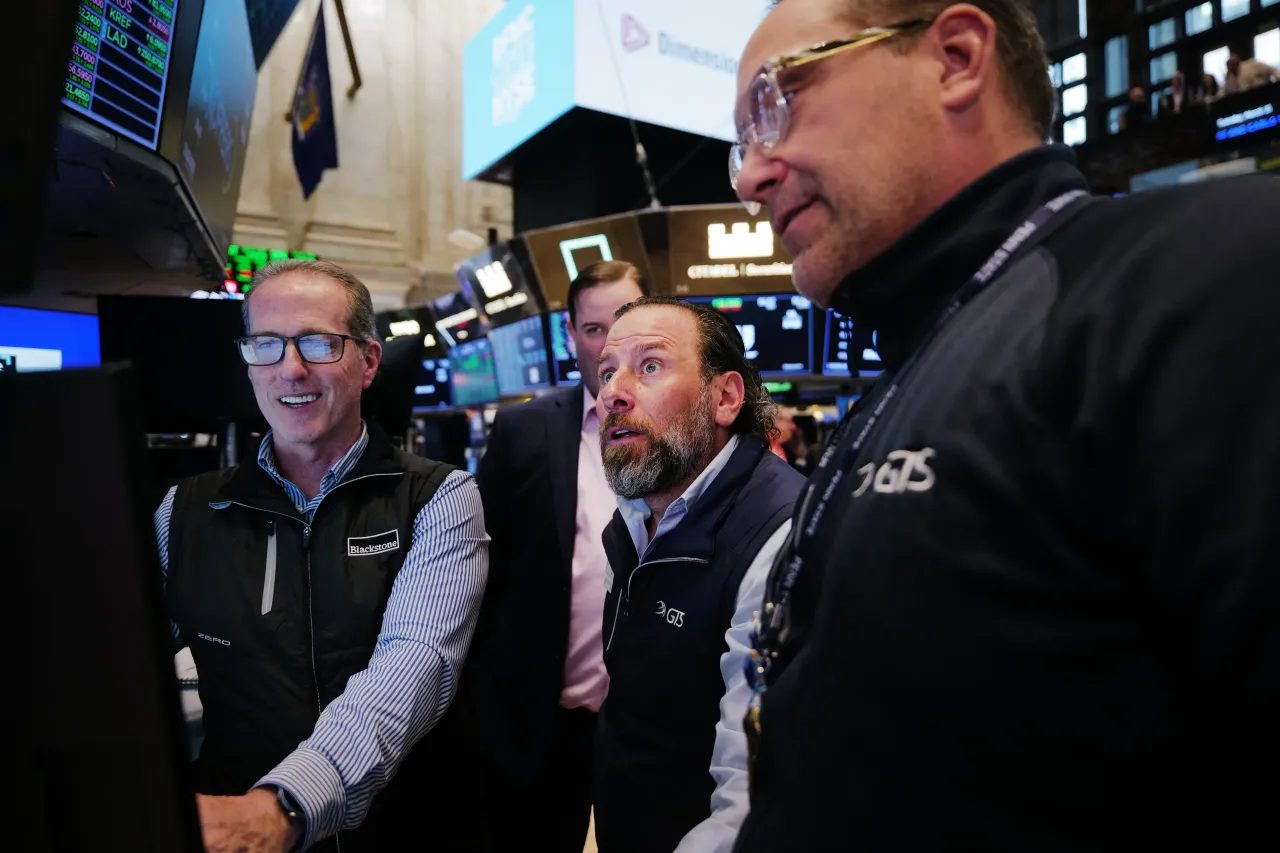
Technology shares rebounded sharply on Monday, giving the Nasdaq 100 its best day in nearly a month after a week that punished many of the market’s most crowded AI trades. Amazon, Apple and Palantir rose, while CoreWeave and other volatile infrastructure names recovered part of their recent losses. The move was broad enough to cool fears that the prior week’s decline had become a disorderly exit.
One session does not erase the damage. The Nasdaq Composite had fallen about 4.5% in the previous week, and semiconductor shares had endured a nine-session losing streak. CoreWeave, a focal point in the debate over AI capital spending, had dropped nearly 12% on Friday alone. Monday’s gains therefore looked partly like short-covering and bargain hunting after a rapid repricing.
The more durable support came from earnings. According to LSEG figures cited by CNBC, 47 S&P 500 companies had reported by Monday morning and 85% had beaten earnings estimates. Blended earnings growth was running near 29%. That is a strong start, but it also explains why investors are unforgiving: valuations embed continued profit growth, especially among the largest technology companies.
The key question is whether the rebound can move beyond a handful of megacaps and speculative AI names. A healthier recovery would combine stronger market breadth with company results that validate capital spending. For Amazon and other hyperscalers, investors need evidence that cloud and AI revenue can scale alongside depreciation and data-center costs. For infrastructure providers such as CoreWeave, financing costs and the pace of capacity delivery matter as much as booked demand.
The day’s rally is therefore best read as a reset in positioning, not proof that the AI correction has ended. Upcoming megacap earnings can support the market if revenue, margins and guidance justify expectations. They can also expose the same asymmetry that drove the selloff: when forecasts are already optimistic, even solid results may not be enough.
Latest comments