



 Be The Investor Research
AI Stocks Rebound After a Rate Shock, but Valuation Risk Remains

A broad technology rebound followed a sharp AI selloff driven by rising yields and profit-taking. The recovery can last only if earnings support the spending and valuation assumptions already embedded in prices.
Technology stocks rebounded after a bruising week in which higher bond yields and doubts about AI economics hit semiconductors, cloud providers and megacaps at the same time. The Nasdaq had fallen about 4.5% over the week, the semiconductor group had declined for nine consecutive sessions, and CoreWeave lost 11.9% on Friday.
The macro pressure was straightforward. A 10-year Treasury yield near 5.1% raises the discount rate applied to future profits, which matters most for companies priced on growth expected many years ahead. At the same time, investors confronted forecasts that AI infrastructure spending may outrun the revenue available to support it. Those forces made crowded positions vulnerable even without a collapse in current demand.
Monday’s rebound showed that buyers still view the AI buildout as a durable theme. Early corporate earnings also helped: a large majority of reporting S&P 500 companies had beaten estimates, and blended profit growth was strong. Yet high beat rates can raise the hurdle for technology leaders. When valuations assume exceptional execution, meeting forecasts may not produce much upside.
The market now needs evidence at three levels. Chipmakers must show that orders, pricing and margins remain firm. Hyperscalers must connect data-center capital spending to cloud growth or measurable efficiency. AI infrastructure providers must convert contracts into cash without allowing debt and depreciation to consume the benefit.
That framework explains why a broad rebound and a cautious long-term view can coexist. Lower prices improve entry points, but they do not settle the return-on-capital debate. A sustainable advance would include wider participation, stable yields and earnings guidance that validates spending. If those conditions fail, the rebound could be another sharp move inside a valuation reset rather than the start of a new leg higher.
The next round of guidance will reveal whether confidence has returned or merely paused.
Continue your SMH research
Related News
Microsoft's Maia 300 Is an Efficiency Bet, Not an Nvidia Exit
Microsoft says Maia 300 will deliver 40% more tokens per megawatt than leading GPU systems and scale in 2027, but the company is still operating a mixed-chip cloud.

ARK's Third Quarter Was Powered by AI Biology, Not Its Famous Names
10x Genomics and other AI-linked biotech holdings drove ARK's third-quarter gains, while Tesla and Rocket Lab detracted. Contribution data show where fund performance actually came from.

Three Stocks Hit New Lows, but the Risks Were Very Different
EyePoint, CoreWeave and Eos Energy touched new lows on the same day. The selloffs reflected three distinct problems: a failed pivotal trial, financing pressure and manufacturing execution risk.

Amazon’s TorchNeuron Lowers the Barrier to Trainium, but CUDA Still Sets the Benchmark
AWS says TorchNeuron can move PyTorch workloads to Trainium with minimal code changes. Easier migration helps adoption, but developers still need independent tests of speed, cost and portability.

Big Tech Rebounds, but Earnings Must Justify the AI Spending Cycle
Technology shares recovered ahead of major earnings reports after a sharp weekly decline. Strong early profit growth supports the market, while elevated expectations leave little tolerance for weak guidance.

Chip Stocks Snap a Nine-Day Slide as Investors Reprice AI Risk
Semiconductor shares finally rebounded after nine consecutive declines. The bounce reduces immediate selling pressure, but investors still need earnings evidence that AI spending will produce durable returns.
Nasdaq Rebound Ends a Brutal AI Week, but Expectations Still Set the Risk
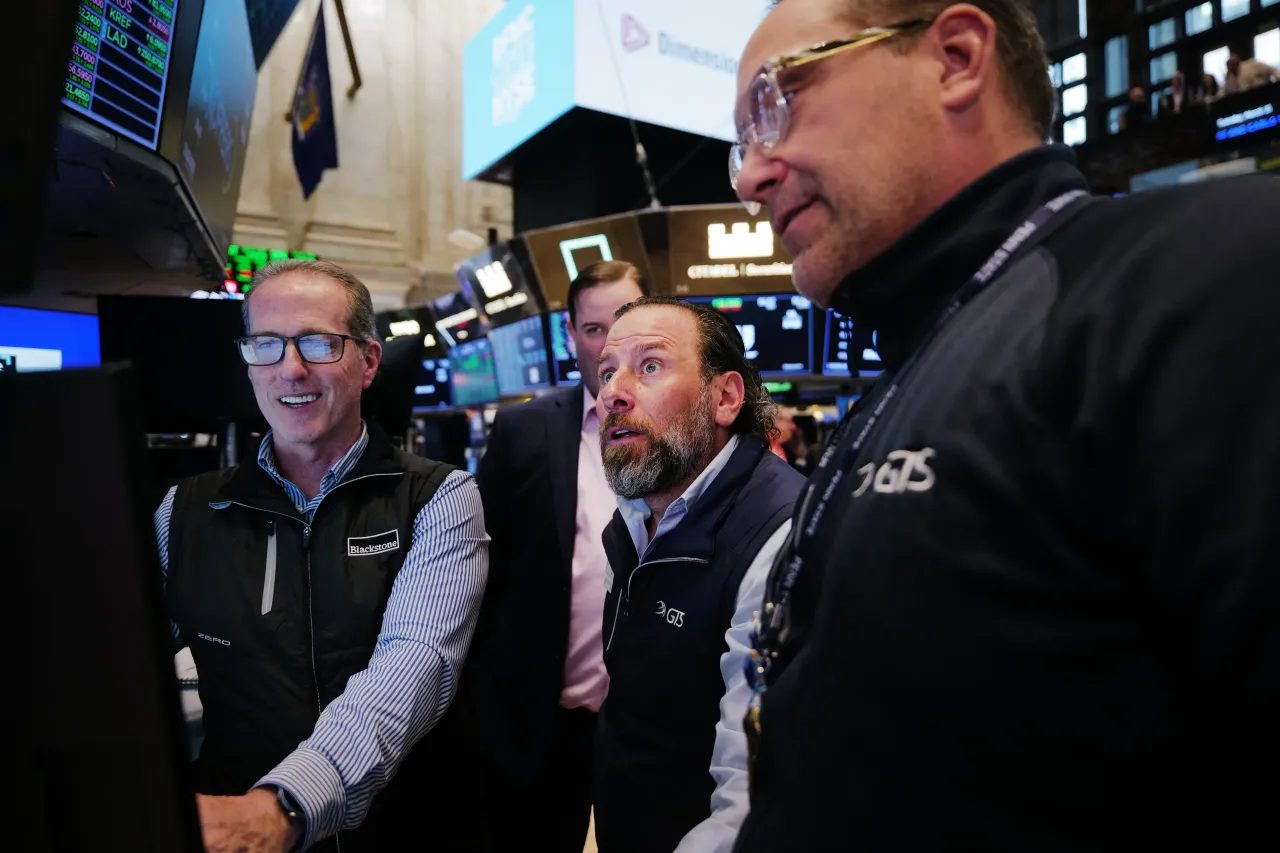
Technology shares rebounded sharply on Monday, giving the Nasdaq 100 its best day in nearly a month after a week that punished many of the market’s most crowded AI trades. Amazon, Apple and Palantir rose, while CoreWeave and other volatile infrastructure names recovered part of their recent losses. The move was broad enough to cool fears that the prior week’s decline had become a disorderly exit.
One session does not erase the damage. The Nasdaq Composite had fallen about 4.5% in the previous week, and semiconductor shares had endured a nine-session losing streak. CoreWeave, a focal point in the debate over AI capital spending, had dropped nearly 12% on Friday alone. Monday’s gains therefore looked partly like short-covering and bargain hunting after a rapid repricing.
The more durable support came from earnings. According to LSEG figures cited by CNBC, 47 S&P 500 companies had reported by Monday morning and 85% had beaten earnings estimates. Blended earnings growth was running near 29%. That is a strong start, but it also explains why investors are unforgiving: valuations embed continued profit growth, especially among the largest technology companies.
The key question is whether the rebound can move beyond a handful of megacaps and speculative AI names. A healthier recovery would combine stronger market breadth with company results that validate capital spending. For Amazon and other hyperscalers, investors need evidence that cloud and AI revenue can scale alongside depreciation and data-center costs. For infrastructure providers such as CoreWeave, financing costs and the pace of capacity delivery matter as much as booked demand.
The day’s rally is therefore best read as a reset in positioning, not proof that the AI correction has ended. Upcoming megacap earnings can support the market if revenue, margins and guidance justify expectations. They can also expose the same asymmetry that drove the selloff: when forecasts are already optimistic, even solid results may not be enough.
AMD's 10% Pullback Tests a 199x Valuation After a Huge Run

A Reddit user claimed to have made $16 million trading AMD and a leveraged semiconductor fund before selling everything. No brokerage proof had been published, so the gain should be treated as unverified. The useful story is not the trader's fortune. It is the tension between AMD's extraordinary share-price run and equally rapid data-center growth.
The stock rose about 361% from early June 2025 to the October 16, 2026 close, according to the source, then fell almost 10% in a week. That pullback followed a large gain rather than a collapse in the broader market.
The operating case remains strong
AMD reported second-quarter revenue of $11.5 billion, up 50% from a year earlier. Data Center revenue reached $6.7 billion, an increase of 107%, driven by EPYC processors and Instinct accelerators. Non-GAAP diluted earnings were $1.66 a share.
The official filing also shows a stronger product mix and the absence of the prior year's export-control inventory charge. That comparison means not every percentage point of margin improvement represents repeatable underlying growth.
Management expected Data Center sales to accelerate in the second half of 2026. The source also cited commitments from large AI customers and tight server CPU supply. Those conditions support revenue, but supply constraints can delay shipments and cap near-term upside.
Valuation makes execution decisive
The article placed AMD near 199 times trailing earnings. A trailing multiple can look unusually high when profit is accelerating, but it still indicates that investors expect years of growth. Gaming revenue fell 31% in the period cited by the source, showing that not every segment is advancing together.
The unverified Reddit sale says nothing about AMD's intrinsic value. The real question is whether Data Center profit can grow quickly enough to bring the valuation down without a large share-price decline.
AMD's next report should be judged on accelerator shipments, server CPU supply, gross margin and third-quarter revenue around the company's guidance. Strong revenue alone will not settle the debate if capital needs, product mix or margins disappoint. After a run of this size, the market needs evidence that earnings are catching up with the stock.
Amazon's AI Upside Now Depends on More Than AWS Growth
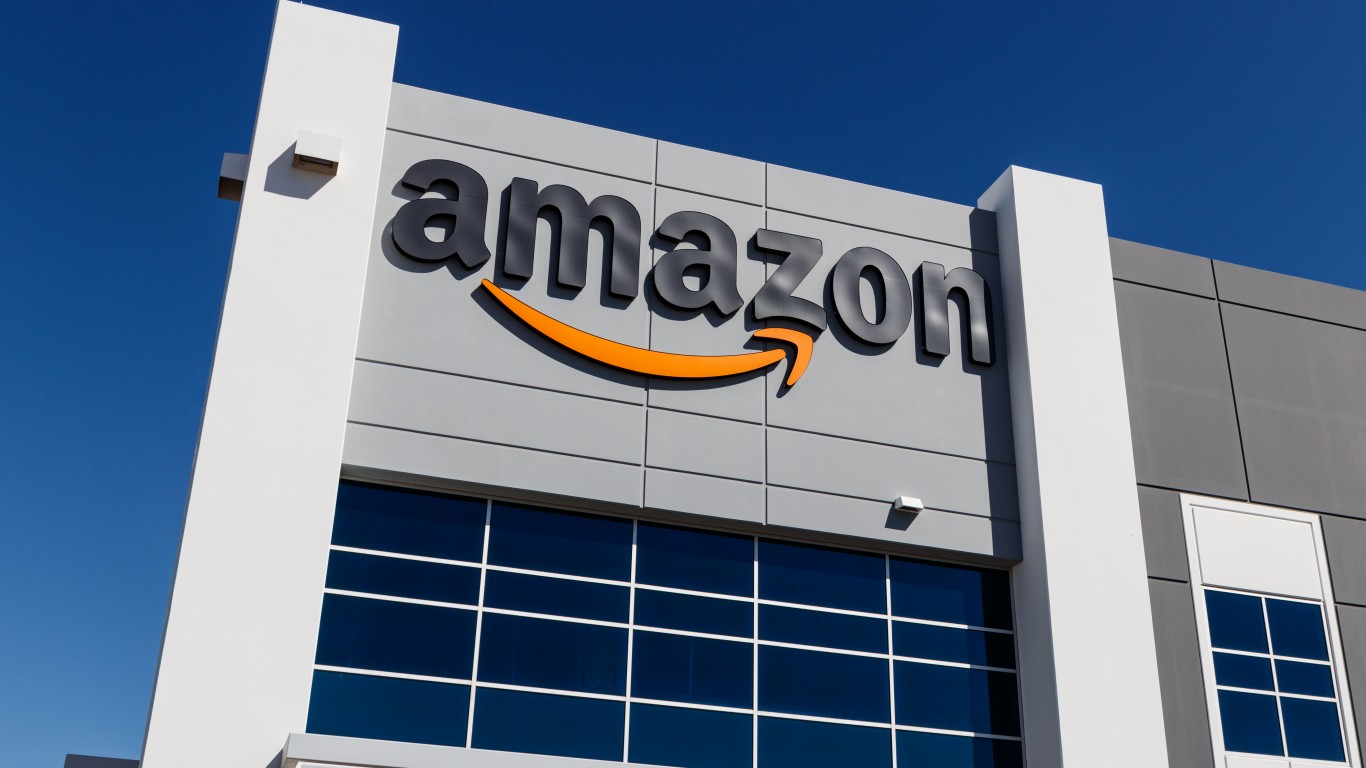
Amazon's 5% rally on October 19 followed a Morgan Stanley upgrade that raised the price target to $350 and made the company a top pick. The headline focused on AWS, but the note also tied the valuation to robotics, AI shopping and Bedrock. That broader mix matters because cloud growth alone does not explain the full earnings forecast.
The cloud case is demanding
Morgan Stanley expects AWS revenue to rise 47% in 2027 and 42% in 2028, up from earlier estimates of 41% and 37%. The bank linked the revision to Nvidia's indication that AWS could deploy about two million additional GPUs across those two years.
It also expects AWS operating margins of 42% in 2027 and 44% in 2028. Combined with other businesses, those assumptions produce estimated Amazon earnings of roughly $16.50 a share in 2028. Applying about 21 times that figure supports the $350 target.
A wider operating story
The note identified two less obvious levers. Better visibility into Bedrock, Amazon's managed generative AI service, could show that customers are using more than raw computing capacity. AI shopping agents could also influence retail conversion and advertising economics, though the holiday season will provide only an early signal.
Robotics offers a more measurable path. Morgan Stanley estimates that each additional 10% of global units processed through robotics-enabled fulfillment centers could generate $2 billion to $4 billion in annual savings. That is an analyst estimate, not company guidance, but it gives investors a way to test whether automation is improving unit economics.
The valuation leaves little room for a mixed outcome
Morgan Stanley outlined a $220 bear case and a $410 bull case. That range shows how sensitive the stock is to growth, margin and multiple assumptions. At the price quoted in the source, the $350 target represented about 33% upside after the rally, less than the roughly 40% measured from the prior close.
The most useful question is therefore not whether Amazon has several AI opportunities. It clearly does. The question is whether AWS demand, retail automation and new AI services can advance together quickly enough to offset the capital required to build them.
Amazon's next earnings report should be judged on that combined scorecard: AWS growth, cloud margin, capital spending and evidence that Bedrock or robotics is contributing to profit. A strong result in only one area would leave much of Morgan Stanley's valuation case unproven.
Amazon's 47% AWS Growth Forecast Raises the Stakes for AI Spending

Amazon gained nearly 5% on October 19 after Morgan Stanley made the stock a top pick and raised its price target to $350 from $335. The more important number was the bank's forecast that Amazon Web Services revenue could grow 47% in 2027 and 42% in 2028. Those estimates turn the investment case into a test of whether enormous AI spending can produce durable cloud demand.
A higher bar for AWS
Morgan Stanley analyst Brian Nowak expects AWS to benefit from roughly two million additional Nvidia GPUs deployed across Amazon's infrastructure in 2027 and 2028. The bank also sees AWS operating like a "rule of 90" business, with growth and margin adding to roughly 90 percentage points. That framework supports an estimate of about $16.50 in Amazon earnings per share for 2028.
The forecast is aggressive. AWS grew 37% in the second quarter of 2026, while operating income reached $16.6 billion on $42.2 billion of sales, a margin near 39%. Morgan Stanley's case therefore requires growth to accelerate from an already strong level while margins remain resilient as Amazon buys chips, builds data centers and secures power.
Power becomes part of the cloud strategy
Amazon also agreed to provide milestone-based funding for feasibility work on a proposed 960-megawatt small modular reactor project in Indiana. X-energy and American Electric Power plan to study a 12-unit Xe-100 facility near the former Breed generating station. The project is not an operating asset or guaranteed source of electricity yet, but it shows how power availability has become a strategic constraint for cloud expansion.
That distinction matters for investors. The nuclear agreement may improve Amazon's long-term access to electricity, but it adds no disclosed near-term revenue and remains subject to development, regulatory and construction risk. It should not be treated as proof that the AWS growth forecast will be achieved.
What the next report must show
Amazon reports third-quarter results on October 29. AWS growth, operating margin and capital-spending guidance will reveal whether the company is converting chip availability into paying workloads. A sustained acceleration would support Morgan Stanley's thesis. Slower growth or a sharp margin trade-off would make the $350 target more dependent on distant assumptions.
The stock move reflects renewed confidence, but the forecast is not yet an outcome. Investors are paying for execution across compute capacity, customer demand and power supply at the same time.
Laplace Uses AI to Stress-Test Robots Before Deployment

Laplace Intelligence is using AI agents to search for the rare failures that can make autonomous vehicles and robots unsafe, moving part of safety testing from public roads and warehouses into interactive simulation.
The University of Michigan spinout builds digital environments from maps, street imagery and traffic data. Its system is based on a post-trained version of Nvidia Cosmos and can reconstruct locations at scale, then change conditions through language prompts. Simulated vehicles and other actors respond to one another rather than following fixed scripts.
The more distinctive layer is automatic scenario generation. Laplace's agents can draw from collision reports, news and other records to design corner cases, meaning unusual situations likely to expose weaknesses. Traditional developers often replay recorded events or rely on engineers to invent scenarios manually.
The approach is especially relevant to general-purpose robots, where developers have far less real-world data than autonomous-driving companies. Simulation can expand coverage, but it cannot prove that a physical system will behave the same way when sensors, weather, hardware and human actions differ from the model.
Laplace says it already generates revenue and a modest profit. Customers include autonomous trucking company Bot Auto and an unnamed Japanese automaker. It also participates with Nvidia and T-Mobile in a no-fee San Jose smart-city pilot and is exploring warehouse robotics. Most contracts are project-based, while management wants recurring revenue.
That gap is the business test. A repeatable safety platform could become valuable to manufacturers, insurers and regulators, but evidence must extend beyond demos. Investors should look for renewal rates, validated reductions in field failures and independent comparisons between simulated findings and real-world outcomes.
Latest comments