


 Be The Investor Research
Amazon’s TorchNeuron Lowers the Barrier to Trainium, but CUDA Still Sets the Benchmark

AWS says TorchNeuron can move PyTorch workloads to Trainium with minimal code changes. Easier migration helps adoption, but developers still need independent tests of speed, cost and portability.
Amazon Web Services is attacking one of Nvidia’s strongest advantages: developer friction. TorchNeuron is designed to let PyTorch users run workloads on AWS Trainium accelerators with a small configuration change rather than rewriting an application for a new hardware stack.
That matters because software compatibility can be more important than chip specifications. AWS says roughly 85% of AI applications use PyTorch. If those teams can test Trainium without rebuilding code, more of them may compare AWS silicon with Nvidia GPUs on real workloads.
AWS cites Deepgram as evidence of the possible economics. In an AWS case study, the voice AI company reported processing between 11% and 70% more audio per dollar, depending on the benchmark and configuration. Those results are useful but not universal. Performance can change with model architecture, batch size, latency targets and engineering effort, and a vendor case study is not a substitute for an independent workload test.
The strategic goal is to reduce dependence on Nvidia’s CUDA ecosystem while keeping customers inside AWS. That creates a second form of lock-in: moving away from CUDA may lower GPU dependence, but services optimized around Trainium can become tied to AWS tools and infrastructure. Buyers should evaluate both directions of portability.
For Amazon, easier migration can improve utilization of its custom chips and support cloud margins if Trainium delivers more computing per dollar at an attractive cost to AWS. For Nvidia, the threat is gradual rather than immediate because CUDA’s libraries, talent base and installed applications remain extensive.
Developers should compare end-to-end cost, latency, accuracy and maintenance burden on the same production-like workload. TorchNeuron is important because it makes that comparison cheaper. The investment significance depends on whether repeated customer tests confirm the advertised gains and whether AWS can turn trials into sustained Trainium usage.
That evidence remains essential.
Continue your NVDA research
Related News

CoreWeave Credit Insurance Tops 1,000 Basis Points as Debt Fears Rise
CoreWeave's five-year credit-default swaps moved above 1,000 basis points while a 2031 bond yielded about 14.5%. Those market prices signal severe perceived credit risk even though the company continues to add long-term customer commitments.

A Second $45 Billion Nscale-Anthropic Deal Would Raise the Financing Stakes
Nscale and Anthropic are reportedly discussing another $45 billion compute agreement, but terms may change and neither company has confirmed it. The scale would deepen both capacity commitments and financing risk ahead of potential IPOs.

AI Stocks Rebound After a Rate Shock, but Valuation Risk Remains
A broad technology rebound followed a sharp AI selloff driven by rising yields and profit-taking. The recovery can last only if earnings support the spending and valuation assumptions already embedded in prices.

Chip Stocks Snap a Nine-Day Slide as Investors Reprice AI Risk
Semiconductor shares finally rebounded after nine consecutive declines. The bounce reduces immediate selling pressure, but investors still need earnings evidence that AI spending will produce durable returns.

AMD's 10% Pullback Tests a 199x Valuation After a Huge Run
An unverified Reddit gain claim drew attention to AMD after a 361% advance from June 2025. The real investment issue is whether accelerating data-center earnings can support a valuation near 199 times trailing profit.

Amazon's AI Upside Now Depends on More Than AWS Growth
Morgan Stanley's $350 Amazon target combines faster AWS growth with robotics savings, Bedrock adoption and AI shopping. The range of assumptions explains both the upside case and the risk in today's valuation.
Amazon's 47% AWS Growth Forecast Raises the Stakes for AI Spending

Amazon gained nearly 5% on October 19 after Morgan Stanley made the stock a top pick and raised its price target to $350 from $335. The more important number was the bank's forecast that Amazon Web Services revenue could grow 47% in 2027 and 42% in 2028. Those estimates turn the investment case into a test of whether enormous AI spending can produce durable cloud demand.
A higher bar for AWS
Morgan Stanley analyst Brian Nowak expects AWS to benefit from roughly two million additional Nvidia GPUs deployed across Amazon's infrastructure in 2027 and 2028. The bank also sees AWS operating like a "rule of 90" business, with growth and margin adding to roughly 90 percentage points. That framework supports an estimate of about $16.50 in Amazon earnings per share for 2028.
The forecast is aggressive. AWS grew 37% in the second quarter of 2026, while operating income reached $16.6 billion on $42.2 billion of sales, a margin near 39%. Morgan Stanley's case therefore requires growth to accelerate from an already strong level while margins remain resilient as Amazon buys chips, builds data centers and secures power.
Power becomes part of the cloud strategy
Amazon also agreed to provide milestone-based funding for feasibility work on a proposed 960-megawatt small modular reactor project in Indiana. X-energy and American Electric Power plan to study a 12-unit Xe-100 facility near the former Breed generating station. The project is not an operating asset or guaranteed source of electricity yet, but it shows how power availability has become a strategic constraint for cloud expansion.
That distinction matters for investors. The nuclear agreement may improve Amazon's long-term access to electricity, but it adds no disclosed near-term revenue and remains subject to development, regulatory and construction risk. It should not be treated as proof that the AWS growth forecast will be achieved.
What the next report must show
Amazon reports third-quarter results on October 29. AWS growth, operating margin and capital-spending guidance will reveal whether the company is converting chip availability into paying workloads. A sustained acceleration would support Morgan Stanley's thesis. Slower growth or a sharp margin trade-off would make the $350 target more dependent on distant assumptions.
The stock move reflects renewed confidence, but the forecast is not yet an outcome. Investors are paying for execution across compute capacity, customer demand and power supply at the same time.
Laplace Uses AI to Stress-Test Robots Before Deployment

Laplace Intelligence is using AI agents to search for the rare failures that can make autonomous vehicles and robots unsafe, moving part of safety testing from public roads and warehouses into interactive simulation.
The University of Michigan spinout builds digital environments from maps, street imagery and traffic data. Its system is based on a post-trained version of Nvidia Cosmos and can reconstruct locations at scale, then change conditions through language prompts. Simulated vehicles and other actors respond to one another rather than following fixed scripts.
The more distinctive layer is automatic scenario generation. Laplace's agents can draw from collision reports, news and other records to design corner cases, meaning unusual situations likely to expose weaknesses. Traditional developers often replay recorded events or rely on engineers to invent scenarios manually.
The approach is especially relevant to general-purpose robots, where developers have far less real-world data than autonomous-driving companies. Simulation can expand coverage, but it cannot prove that a physical system will behave the same way when sensors, weather, hardware and human actions differ from the model.
Laplace says it already generates revenue and a modest profit. Customers include autonomous trucking company Bot Auto and an unnamed Japanese automaker. It also participates with Nvidia and T-Mobile in a no-fee San Jose smart-city pilot and is exploring warehouse robotics. Most contracts are project-based, while management wants recurring revenue.
That gap is the business test. A repeatable safety platform could become valuable to manufacturers, insurers and regulators, but evidence must extend beyond demos. Investors should look for renewal rates, validated reductions in field failures and independent comparisons between simulated findings and real-world outcomes.
AI Tools Let TV Owners Remove Ads, Tracking and Bloat

Some smart-TV owners are using AI coding agents to remove the advertising, tracking and slow interfaces that manufacturers added after the sale. The projects are small, but they reveal a conflict in connected hardware: the owner buys the screen, while the platform continues monetizing attention and viewing data.
Two open-source efforts, dumbtv and cleanyourtv, use Android Debug Bridge tools over Wi-Fi to disable unwanted packages, replace the home screen and limit telemetry. Their developers say the changes do not require root access and can be reversed. Repositories include device-specific checks and blocklists intended to preserve updates and playback.
The target is not only visual clutter. Many smart TVs use automatic content recognition, or ACR, to identify programming through screenshots, audio or digital fingerprints. That data can support recommendations and advertising, creating recurring revenue long after the hardware transaction.
AI makes the modification process easier because an agent can inspect instructions, adapt commands to a device and build a simple launcher. It does not make the process safe. Users reported disabled packages, incomplete installations and at least one bricked Android TV. The projects remain works in progress across platforms from Sony, TCL and Hisense to Fire TV and Nvidia Shield.
The business implication is limited today but worth watching. If consumer-friendly tools make opt-outs common, television makers and advertising platforms could lose data or impressions. Manufacturers could respond by improving controls, locking down software or separating subsidized models from privacy-focused products.
For now, the strongest signal is product dissatisfaction, not a measured revenue decline. Download activity, manufacturer countermeasures and formal privacy options will show whether the movement extends beyond technically adventurous users.
Tenstorrent Raises $1.5 Billion to Scale Open AI Chips
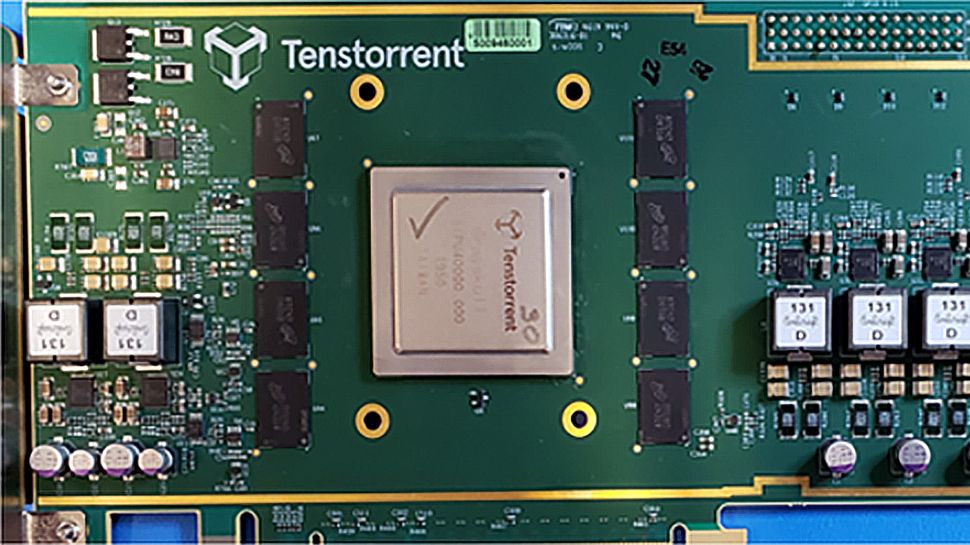
Tenstorrent has raised $1.5 billion at a $6.2 billion post-money valuation, choosing to stay independent after reported acquisition interest from Intel and Qualcomm.
The Series E more than doubled the AI chip startup's late-2024 valuation of $2.6 billion. Trace Capital and Innovation X led the round, while Cadence Ventures, Eclipse, Fidelity, SanDisk and T. Rowe Price participated. Tenstorrent said the money will support volume manufacturing and global commercial expansion.
Chief Executive Jim Keller told Bloomberg that the company's Galaxy servers demonstrated they could run DeepSeek models, helping management decide that independence offered more value than a sale. The company focuses on inference, the process of running trained AI models, and on systems for open-weight models and video generation.
The financing is large enough to move Tenstorrent beyond research hardware, but manufacturing is the harder stage. Volume production requires reliable foundry capacity, packaging, software support and customers willing to deploy a smaller vendor in critical infrastructure. Those needs explain why the company raised an amount closer to a major industrial program than a typical software round.
Tenstorrent is entering a market still dominated by Nvidia but increasingly contested by custom chips, cloud providers and startups. An open architecture can appeal to buyers that want more control, yet technical performance must translate into lower total cost and dependable deployment.
The valuation reflects potential rather than proven market share. Investors should watch shipment volume, named production customers, gross margin and whether commercial revenue grows fast enough to justify the capital intensity. A successful raise secures time; it does not settle the competitive question.
NYSE Extends Options Trading, but Early Volume Shows the Limits

The New York Stock Exchange has extended options trading beyond regular market hours, opening a new test of whether investor demand for near-continuous access can translate into reliable liquidity.
The first phase runs from 7:30 a.m. to 9:25 a.m. Eastern time and from 4:00 p.m. to 4:15 p.m. It covers 29 heavily traded stocks and funds, including Nvidia, Bank of America, the SPDR S&P 500 ETF Trust and the iShares Russell 2000 ETF. NYSE plans to expand trading in the same names to 23 hours a day, five days a week, beginning Dec. 6.
The change follows a similar move by Cboe and reflects competition from crypto, prediction markets and perpetual futures, which conditioned users to expect round-the-clock access. Cboe data cited by CNBC showed extended-hours options volume had reached a record average above 199,000 contracts a day.
NYSE's own opening session was far quieter. Tesla options led activity ahead of earnings, but only a little more than 3,000 contracts changed hands, nearly all calls, with a total value below $100,000 according to SpotGamma. That is too small to establish whether spreads and execution quality will be dependable.
Longer hours can help investors react to overseas news and corporate announcements before the opening bell. They can also fragment liquidity, widen bid-ask spreads and leave retail traders facing prices set by a small number of participants. NYSE's rule filing acknowledged the limited industry experience with physically settled equity options outside regular hours and initially capped the eligible classes.
The experiment will be judged by more than headline volume. Investors should watch quoted spreads, depth, market-maker participation and the frequency of price gaps between extended and regular sessions. Access is valuable only when the market is liquid enough to support fair execution.
Latest comments