



NVIDIA Corporation
NVDA USReal-Time Price
NVIDIA Corporation (NVDA) Stock News
The latest NVIDIA Corporation (NVDA) news in one feed: earnings updates, analyst ratings, product launches and regulatory filings, curated and summarized by BTI.

CoreWeave Credit Insurance Tops 1,000 Basis Points as Debt Fears Rise
CoreWeave's five-year credit-default swaps moved above 1,000 basis points while a 2031 bond yielded about 14.5%. Those market prices signal severe perceived credit risk even though the company continues to add long-term customer commitments.

A Second $45 Billion Nscale-Anthropic Deal Would Raise the Financing Stakes
Nscale and Anthropic are reportedly discussing another $45 billion compute agreement, but terms may change and neither company has confirmed it. The scale would deepen both capacity commitments and financing risk ahead of potential IPOs.

Amazon’s TorchNeuron Lowers the Barrier to Trainium, but CUDA Still Sets the Benchmark
AWS says TorchNeuron can move PyTorch workloads to Trainium with minimal code changes. Easier migration helps adoption, but developers still need independent tests of speed, cost and portability.

AI Stocks Rebound After a Rate Shock, but Valuation Risk Remains
A broad technology rebound followed a sharp AI selloff driven by rising yields and profit-taking. The recovery can last only if earnings support the spending and valuation assumptions already embedded in prices.

Chip Stocks Snap a Nine-Day Slide as Investors Reprice AI Risk
Semiconductor shares finally rebounded after nine consecutive declines. The bounce reduces immediate selling pressure, but investors still need earnings evidence that AI spending will produce durable returns.

AMD's 10% Pullback Tests a 199x Valuation After a Huge Run
An unverified Reddit gain claim drew attention to AMD after a 361% advance from June 2025. The real investment issue is whether accelerating data-center earnings can support a valuation near 199 times trailing profit.

South Korea Sees Chip Strength Through 2027, but Supply Is the Risk
South Korea's finance minister expects semiconductor demand to exceed supply through 2027, supporting exports and tax revenue. The same concentration that lifts growth also amplifies market volatility and future oversupply risk.
TorchNeuron Lowers a Software Barrier to Amazon's Trainium Chips
Amazon's open-source TorchNeuron lets PyTorch code run on Trainium with minimal changes. The tool attacks Nvidia's software advantage, but customer adoption, performance and switching economics will determine whether it changes chip share.

Microsoft Treats AI Agents as Insider Risks, and Sells the Guardrail
Microsoft says autonomous agents need separate identities, limited permissions and independent monitoring because capable models can behave unpredictably. The warning is also a commercial pitch for its expanding security stack.
Amazon's AI Upside Now Depends on More Than AWS Growth
Morgan Stanley's $350 Amazon target combines faster AWS growth with robotics savings, Bedrock adoption and AI shopping. The range of assumptions explains both the upside case and the risk in today's valuation.

Amazon's 47% AWS Growth Forecast Raises the Stakes for AI Spending
Morgan Stanley's bullish Amazon call rests on faster AWS growth, rising cloud margins and heavy infrastructure investment. A separate nuclear agreement shows how urgently Amazon is trying to secure power for that expansion.

Gartner's $3.5 Trillion AI Warning Targets Neocloud Economics
Gartner says more than $3.5 trillion of AI infrastructure spending could face impairment by 2030 and over 80% of neoclouds may lose independence. The forecast highlights timing and financing risk, not an imminent collapse.
Amazon's TorchNeuron Targets Nvidia's Strongest Moat: Software
AWS says TorchNeuron can move PyTorch workloads to Trainium with one configuration change. Easier migration could improve Amazon's custom-chip economics, but developer experience and production performance will determine whether Nvidia's CUDA advantage narrows.
South Korea Sees the Chip Boom Lasting Through 2027, With Supply Risk After
South Korea's finance minister says semiconductor demand should outpace supply through 2027, supporting growth and tax receipts. The counterargument is a capacity wave that could pressure memory prices later in the cycle.

Laplace Uses AI to Stress-Test Robots Before Deployment
University of Michigan spinout Laplace Intelligence builds interactive simulations where AI agents generate rare failure scenarios for robots and autonomous vehicles. Early revenue is encouraging, but contracts remain mostly project-based.

Nvidia Expands Nemotron From Data Centers to Local PCs
Nvidia released a 120-billion-parameter enterprise model and two smaller Bolt models for local AI agents. The strategy links open models to Nvidia hardware while giving customers more control over deployment and data.

AI Tools Let TV Owners Remove Ads, Tracking and Bloat
Open-source projects are using AI coding agents to simplify smart TVs and disable tracking. The trend exposes consumer frustration with ad-funded interfaces, but inexperienced users can also break essential software.
Tenstorrent Raises $1.5 Billion to Scale Open AI Chips
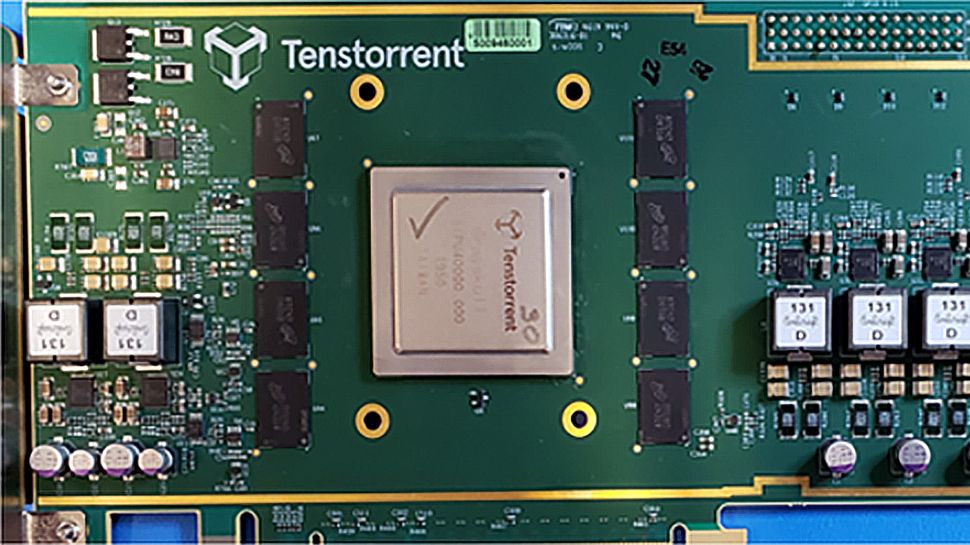
Tenstorrent raised a Series E at a $6.2 billion post-money valuation, more than doubling its 2024 mark. The capital funds manufacturing and commercial expansion as customers seek alternatives to Nvidia.

NYSE Extends Options Trading, but Early Volume Shows the Limits
NYSE added premarket and post-close options sessions for 29 heavily traded stocks and funds. The launch answers demand for longer trading access, but thin initial volume highlights liquidity and execution risks.

South Korea Sees the Chip Boom Lasting Through 2027
Finance Minister Lee Hyoung-il says semiconductor demand still exceeds supply enough to sustain growth through 2027. The forecast supports Korea's fiscal outlook but does not remove the risk of later overcapacity.