
ARK's Third Quarter Was Powered by AI Biology, Not Its Famous Names

10x Genomics and other AI-linked biotech holdings drove ARK's third-quarter gains, while Tesla and Rocket Lab detracted. Contribution data show where fund performance actually came from.
ARK Invest's third-quarter performance came from a less familiar part of its portfolio. 10x Genomics, Twist Bioscience and Tempus AI made large contributions to the firm's innovation funds, while Tesla and Rocket Lab pulled returns lower.
The distinction between contribution and stock return matters. Contribution measures how much a holding added to or subtracted from a fund's total performance, combining the security's return with its portfolio weight. It does not mean a stock itself rose by the number of percentage points shown.
10x Genomics was the clearest example. The holding contributed 9.03 percentage points to ARKG's 28.92% quarterly gain and 2.92 points to ARKK's 10.39% return. ARK linked the move to interest in single-cell sequencing and spatial analysis as data sources for AI-assisted drug discovery, along with early orders for the company's Atera spatial system.
Twist Bioscience contributed 6.51 points to ARKG and 2.55 points to ARKK, while Tempus AI added 3.21 points and 2.08 points, respectively. The pattern shows that investors rewarded companies positioned as suppliers of biological data, tools and services to AI research, not only model developers or semiconductor makers.
Palantir was the broadest technology contributor, adding between 1.47 and 2.39 percentage points across five ARK exchange-traded funds. Nvidia made smaller positive contributions to ARKQ and ARKX.
Tesla was the most consistent drag, subtracting 1.72 points from ARKQ, 1.75 from ARKK and 1.43 from ARKW. ARK attributed the weakness to profitability concerns after second-quarter results, even as it maintained a long-term view around autonomous driving. Rocket Lab subtracted 1.39 points from ARKQ and 2.04 points from ARKX.
The numbers reveal a portfolio reality that headlines about Cathie Wood can obscure. ARK's returns depend on position size and correlation among high-volatility themes. Several holdings can respond to the same change in sentiment toward AI, biotech funding or long-duration growth.
Investors evaluating an ARK fund should therefore look beyond the best and worst stock names. The useful questions are how concentrated the contribution was, whether gains came from repeatable operating progress and how much downside a small group of detractors can create. In the third quarter, AI-enabled biology carried more of that burden than ARK's most famous holdings.
Continue your ARKG research
Related News
Microsoft's Maia 300 Is an Efficiency Bet, Not an Nvidia Exit
Microsoft says Maia 300 will deliver 40% more tokens per megawatt than leading GPU systems and scale in 2027, but the company is still operating a mixed-chip cloud.
ARK Buys CoreWeave as Financing Costs Test the AI Cloud Story
ARK Invest added 132,498 CoreWeave shares after a sharp selloff, but the more important signal is financial: second-quarter net interest expense reached $640 million while the company kept expanding.

Musk Backs Micron's Memory Pricing, but the Verified Case Is Supply Discipline
Elon Musk called Micron's pricing reasonable after a JPMorgan note highlighted tighter memory supply. The stronger evidence is Micron's record 2026 revenue and strategic customer agreements, not the note's most aggressive forecasts.

Tesla, Meta and RTX Earnings Put AI Spending and Industrial Demand to the Test
A concentrated earnings calendar will test two market concerns at once: whether heavy AI spending is producing returns and whether industrial and consumer demand can withstand higher financing costs after a bruising week for technology shares.

Amazon’s TorchNeuron Lowers the Barrier to Trainium, but CUDA Still Sets the Benchmark
AWS says TorchNeuron can move PyTorch workloads to Trainium with minimal code changes. Easier migration helps adoption, but developers still need independent tests of speed, cost and portability.

Big Tech Rebounds, but Earnings Must Justify the AI Spending Cycle
Technology shares recovered ahead of major earnings reports after a sharp weekly decline. Strong early profit growth supports the market, while elevated expectations leave little tolerance for weak guidance.
ServiceNow’s Decagon Denial Refocuses Investors on Organic AI Growth

ServiceNow shares rose after the company denied a report that it was interested in acquiring AI customer-service startup Decagon. The response removed an immediate source of uncertainty about deal price, integration and dilution, and Salesforce also gained as investors reassessed competitive implications.
A denial is not a new product launch or a contract win. Its value is narrower: it tells investors that the specific transaction described in the report is not currently the company’s plan. That matters because large acquisitions can complicate the economics of an otherwise high-margin software model, especially when the target’s revenue and retention are not publicly known.
The episode highlights a strategic tension across enterprise software. Customers want AI agents that can resolve tasks, not merely summarize information. Startups can move quickly in a narrow workflow, while incumbents such as ServiceNow and Salesforce can distribute new tools through existing customer relationships and data systems. The winner will depend on reliability, integration and measurable labor savings, not on the number of AI features announced.
For ServiceNow, the investment case returns to organic execution. Investors should watch adoption of its AI products, net retention, contract size and whether AI usage increases consumption without eroding gross margin. They should also examine how much incremental revenue comes from customers paying for new capability rather than receiving it inside existing bundles.
The share-price bounce is understandable because a costly transaction is no longer the immediate base case. Still, removing one risk does not create growth by itself. ServiceNow must show that its platform can compete with specialist agents while preserving pricing power. The next earnings report should provide a cleaner test than acquisition rumors: bookings and guidance will reveal whether customers are turning AI interest into committed spending.
For now, the rumor’s disappearance improves clarity without changing the company’s operating obligations.
AI Stocks Rebound After a Rate Shock, but Valuation Risk Remains

Technology stocks rebounded after a bruising week in which higher bond yields and doubts about AI economics hit semiconductors, cloud providers and megacaps at the same time. The Nasdaq had fallen about 4.5% over the week, the semiconductor group had declined for nine consecutive sessions, and CoreWeave lost 11.9% on Friday.
The macro pressure was straightforward. A 10-year Treasury yield near 5.1% raises the discount rate applied to future profits, which matters most for companies priced on growth expected many years ahead. At the same time, investors confronted forecasts that AI infrastructure spending may outrun the revenue available to support it. Those forces made crowded positions vulnerable even without a collapse in current demand.
Monday’s rebound showed that buyers still view the AI buildout as a durable theme. Early corporate earnings also helped: a large majority of reporting S&P 500 companies had beaten estimates, and blended profit growth was strong. Yet high beat rates can raise the hurdle for technology leaders. When valuations assume exceptional execution, meeting forecasts may not produce much upside.
The market now needs evidence at three levels. Chipmakers must show that orders, pricing and margins remain firm. Hyperscalers must connect data-center capital spending to cloud growth or measurable efficiency. AI infrastructure providers must convert contracts into cash without allowing debt and depreciation to consume the benefit.
That framework explains why a broad rebound and a cautious long-term view can coexist. Lower prices improve entry points, but they do not settle the return-on-capital debate. A sustainable advance would include wider participation, stable yields and earnings guidance that validates spending. If those conditions fail, the rebound could be another sharp move inside a valuation reset rather than the start of a new leg higher.
The next round of guidance will reveal whether confidence has returned or merely paused.
Chip Stocks Snap a Nine-Day Slide as Investors Reprice AI Risk

Semiconductor stocks finally found buyers after nine consecutive down sessions, lifting the broader technology market and helping the Nasdaq recover from its worst week in months. The reversal matters because chips had become the clearest expression of anxiety about AI spending, high interest rates and stretched expectations.
The pressure built quickly. The semiconductor ETF tracked in the source had fallen 3.4% on Friday, while CoreWeave lost 11.9% and the Nasdaq Composite dropped 2.1%. For the week, the Nasdaq was down roughly 4.5%. The 10-year Treasury yield near 5.1% added another challenge because higher discount rates reduce the present value of profits expected far in the future.
Monday’s rebound suggests that forced selling and short-term risk reduction had run far enough to attract capital. It does not settle the fundamental argument. Chipmakers and cloud providers are building for demand that customers expect to persist for years, while the hardware itself can be overtaken by a new generation within a much shorter period. That creates a timing problem: utilization and pricing must remain strong enough to recover investment before the equipment loses economic value.
The next stage of the trade will depend less on broad AI enthusiasm and more on company-specific evidence. Investors should compare order growth with inventory, gross margins and customer concentration. They should also watch whether hyperscalers maintain capital-spending plans and whether those investments produce faster cloud revenue or measurable customer savings.
The rebound is constructive because it shows the market has not abandoned the AI theme. Yet it also marks a shift from narrative to proof. Semiconductor shares can recover sustainably if demand remains broad, margins hold and customers demonstrate returns. If earnings reveal slower orders or another jump in spending without matching revenue, the nine-day decline may look like the beginning of a longer valuation reset rather than an isolated correction.
Nasdaq Rebound Ends a Brutal AI Week, but Expectations Still Set the Risk
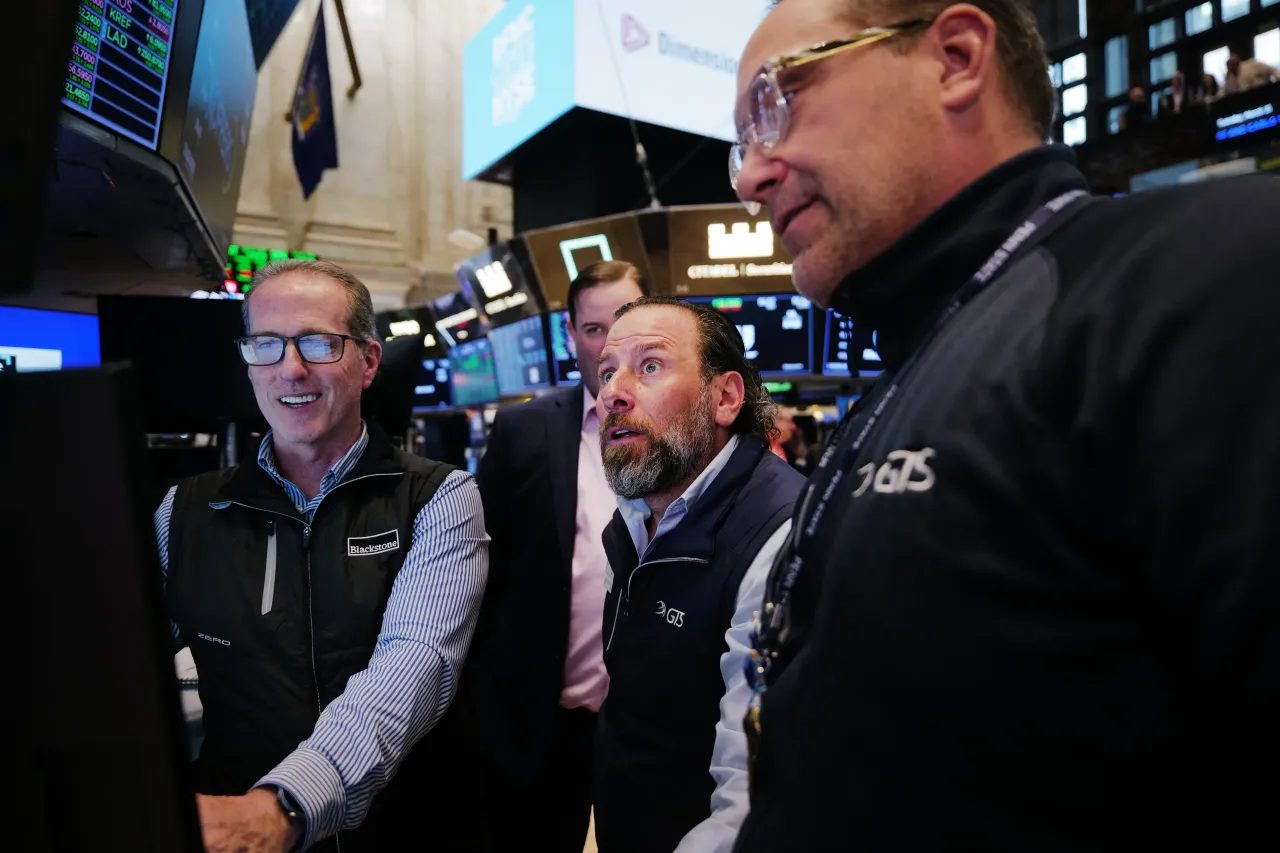
Technology shares rebounded sharply on Monday, giving the Nasdaq 100 its best day in nearly a month after a week that punished many of the market’s most crowded AI trades. Amazon, Apple and Palantir rose, while CoreWeave and other volatile infrastructure names recovered part of their recent losses. The move was broad enough to cool fears that the prior week’s decline had become a disorderly exit.
One session does not erase the damage. The Nasdaq Composite had fallen about 4.5% in the previous week, and semiconductor shares had endured a nine-session losing streak. CoreWeave, a focal point in the debate over AI capital spending, had dropped nearly 12% on Friday alone. Monday’s gains therefore looked partly like short-covering and bargain hunting after a rapid repricing.
The more durable support came from earnings. According to LSEG figures cited by CNBC, 47 S&P 500 companies had reported by Monday morning and 85% had beaten earnings estimates. Blended earnings growth was running near 29%. That is a strong start, but it also explains why investors are unforgiving: valuations embed continued profit growth, especially among the largest technology companies.
The key question is whether the rebound can move beyond a handful of megacaps and speculative AI names. A healthier recovery would combine stronger market breadth with company results that validate capital spending. For Amazon and other hyperscalers, investors need evidence that cloud and AI revenue can scale alongside depreciation and data-center costs. For infrastructure providers such as CoreWeave, financing costs and the pace of capacity delivery matter as much as booked demand.
The day’s rally is therefore best read as a reset in positioning, not proof that the AI correction has ended. Upcoming megacap earnings can support the market if revenue, margins and guidance justify expectations. They can also expose the same asymmetry that drove the selloff: when forecasts are already optimistic, even solid results may not be enough.
AMD's 10% Pullback Tests a 199x Valuation After a Huge Run

A Reddit user claimed to have made $16 million trading AMD and a leveraged semiconductor fund before selling everything. No brokerage proof had been published, so the gain should be treated as unverified. The useful story is not the trader's fortune. It is the tension between AMD's extraordinary share-price run and equally rapid data-center growth.
The stock rose about 361% from early June 2025 to the October 16, 2026 close, according to the source, then fell almost 10% in a week. That pullback followed a large gain rather than a collapse in the broader market.
The operating case remains strong
AMD reported second-quarter revenue of $11.5 billion, up 50% from a year earlier. Data Center revenue reached $6.7 billion, an increase of 107%, driven by EPYC processors and Instinct accelerators. Non-GAAP diluted earnings were $1.66 a share.
The official filing also shows a stronger product mix and the absence of the prior year's export-control inventory charge. That comparison means not every percentage point of margin improvement represents repeatable underlying growth.
Management expected Data Center sales to accelerate in the second half of 2026. The source also cited commitments from large AI customers and tight server CPU supply. Those conditions support revenue, but supply constraints can delay shipments and cap near-term upside.
Valuation makes execution decisive
The article placed AMD near 199 times trailing earnings. A trailing multiple can look unusually high when profit is accelerating, but it still indicates that investors expect years of growth. Gaming revenue fell 31% in the period cited by the source, showing that not every segment is advancing together.
The unverified Reddit sale says nothing about AMD's intrinsic value. The real question is whether Data Center profit can grow quickly enough to bring the valuation down without a large share-price decline.
AMD's next report should be judged on accelerator shipments, server CPU supply, gross margin and third-quarter revenue around the company's guidance. Strong revenue alone will not settle the debate if capital needs, product mix or margins disappoint. After a run of this size, the market needs evidence that earnings are catching up with the stock.
Latest comments