



What Nvidia’s selloff shows about QQQ’s concentration
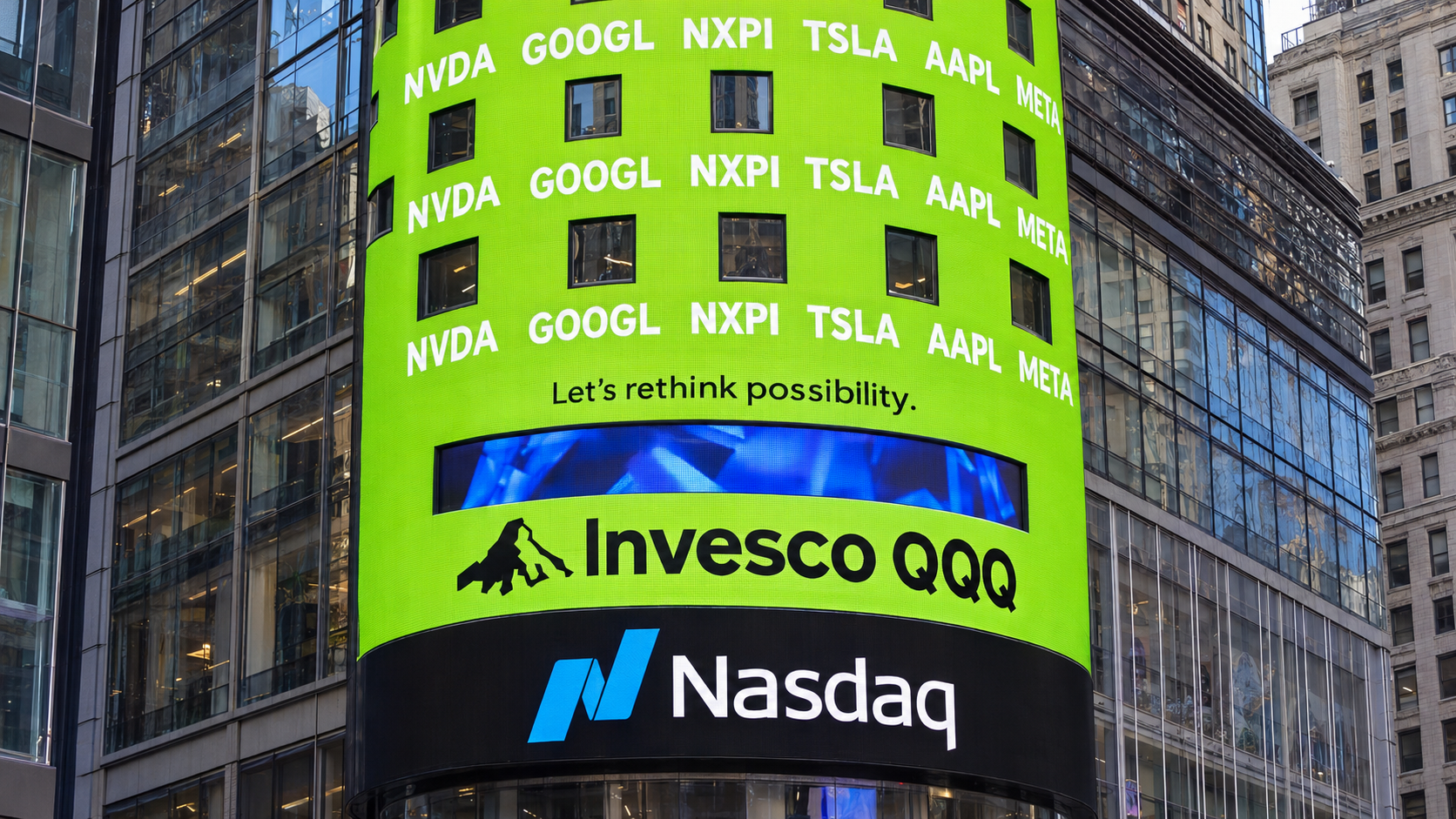
Nvidia’s leadership change hit its shares much harder than the Nasdaq-100 fund. The fund’s June filing puts about $760 of a hypothetical $10,000 position in Nvidia, enough to matter even without owning the stock directly.
A $10,000 position in Nvidia would have been down about $501 at 10:29 a.m. Eastern on November 12. A $10,000 position in the Invesco QQQ Trust would have been down about $58, using the prices reported by 24/7 Wall St. The fund limited the direct hit from one stock. It did not eliminate it.
The fund’s June 30 schedule filed with the SEC lists $36.90 billion in Nvidia against $485.76 billion in net assets. Dividing those amounts gives a weight of about 7.6%, or about $760 in a $10,000 position. Applying Nvidia’s 5.01% decline that morning gives an estimated $38 contribution to the fund position’s loss. Applying the same June weight to the stock’s 27.08% decline over the month gives about $206, compared with the roughly $800 decline in a $10,000 QQQ position using the publication’s 8% fund move. A direct Nvidia position would have lost about $2,708 over that period. The estimate uses a fixed starting weight and cannot isolate actual fund attribution: the fund’s holdings and weights change, and other stocks can rise or fall independently.
Nvidia disclosed that Jensen Huang resigned and that Colette Kress would serve as interim chief executive while keeping her finance role. The board is searching for a permanent successor. The filing did not give a reason for the resignation. On November 8, Nvidia’s board announced that independent directors and outside counsel would examine reports that Huang had been targeted by a foreign intelligence effort. The board said it had no reason at that point to believe national security or company secrets had been compromised. It later said it expected customer commitments and the product roadmap to continue without interruption. Axios reported that Nvidia shares fell as much as 13% before recovering part of the loss. The leadership change arrived after Nvidia reported $96.2 billion of fiscal second-quarter revenue and forecast $108 billion, plus or minus 2%, for the following quarter. Succession and the next results are separate events that can both affect the stock’s weight in funds.
QQQ follows the modified market-cap-weighted Nasdaq-100. Nasdaq’s methodology has rules for checking and adjusting concentrations, including thresholds around a 24% individual weight. That is not a guarantee about any fund’s live weight at every moment. The narrower XLK and SMH funds had substantially larger Nvidia weights in the June snapshots cited by 24/7 Wall St., about 14.65% and 17.55%. Combining funds can therefore add to the same exposure. For example, two equal-sized positions with Nvidia weights of 7.6% and 17.55% would have a combined weight of roughly 12.6%, not 25.15%. What matters is the dollar-weighted exposure across all holdings, not how many different fund names are on the statement.
Continue your NVDA research
Image references: · מקור ייחוס · מקור ייחוס · מקור ייחוס · מקור ייחוס
Frequently asked questions
What is "What Nvidia’s selloff shows about QQQ’s concentration" about?
Using QQQ’s June filing, estimate Nvidia’s contribution to a $10,000 position and see how overlapping funds can increase exposure.
Which stocks and assets does this article cover?
This article relates to NVDA, XLK, SMH.
What is the market context?
A $10,000 position in Nvidia would have been down about $501 at 10:29 a.m. Eastern on November 12. A $10,000 position in the Invesco QQQ Trust would have been down about $58, using the prices reported by 24/7 Wall St. The fund limited the direct hit from one stock. It did not eliminate it. The fund’s June 30 schedule filed with the SEC lists $36.90 billion in Nvidia against $485.76 billion in net…
When was this article published?
It was published on 13 / 11 / 2026 by Be The Investor Research.