



USA Rare Earth has a buyer for its Brazil output. The buyer still needs funding.
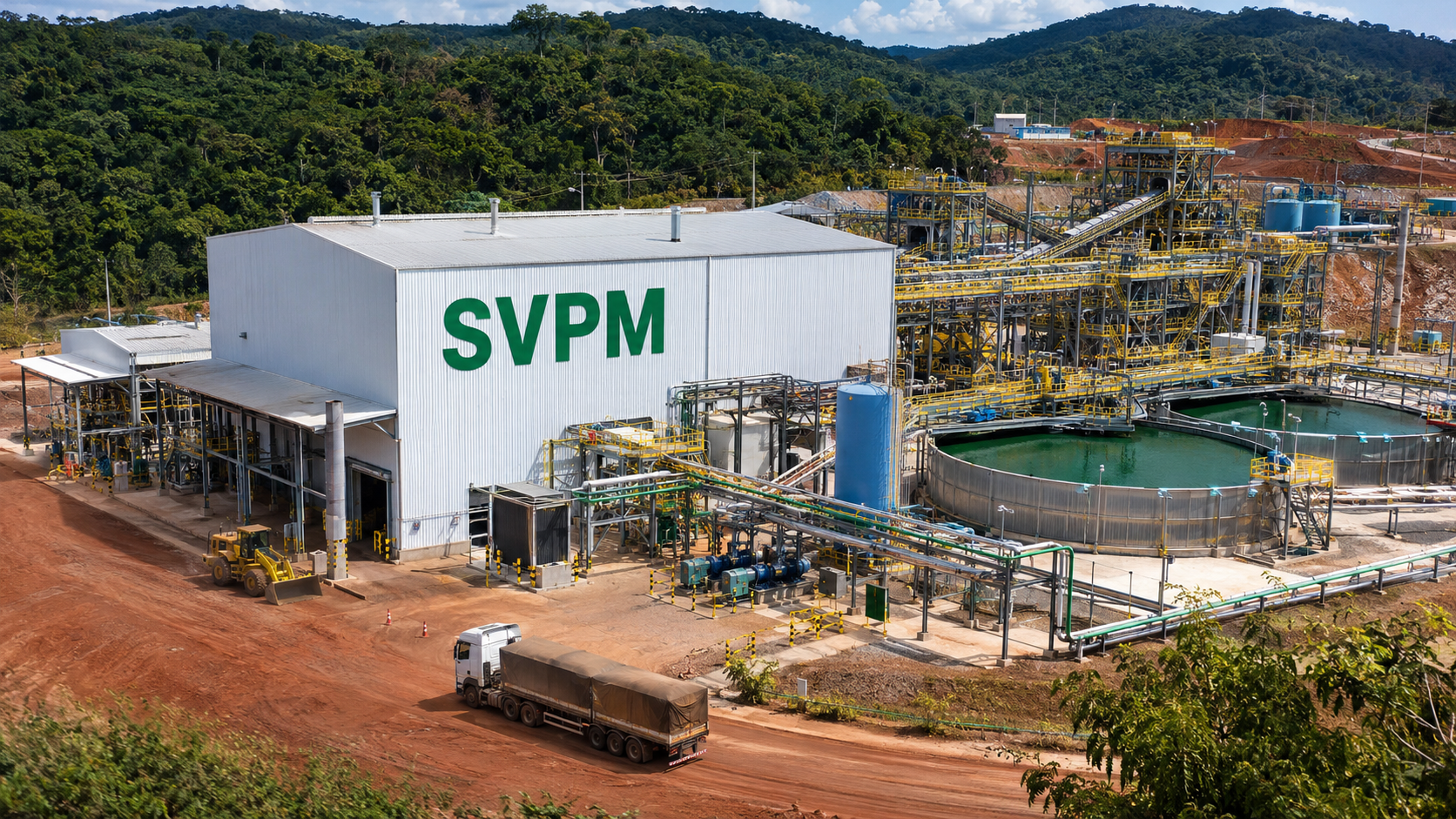
USA Rare Earth's Brazilian operation has begun selling under a long-term contract with price floors. The latest filing shows what protects those sales, what could interrupt them and how much equity the company still needs to raise.
USA Rare Earth's Brazilian mine has made its first commercial sales under an agreement that covers almost all of its first-phase output. The deal gives the company a buyer and minimum prices for the minerals used in rare earth magnets. It does not guarantee that the buyer will always have the money to pay. The quarterly filing, made public after the earnings release, spells out the difference.
USA Rare Earth completed its Serra Verde purchase on September 3. The mine finished the first stage of its expansion in September, began commercial-scale shipments of mixed rare earth carbonate in October and recorded sales in November. It expects to sell material equivalent to at least 325 metric tonnes of total rare earth oxides in the December quarter. Management is targeting an annualized production rate of 4,000 tonnes by the second quarter of 2027 and 6,400 by year-end. Those are production targets, not contracted tonnage already delivered.
The purchase agreement is expected to last about 15 years. US SIIE, LLC, the government-backed buyer, must take or pay for the first phase's covered output, with limited exceptions. The agreement sets floors for four payable elements and lets Serra Verde keep 70% of the increase above the floors when the relevant market indexes are higher. For mixed carbonate, the price also reflects fixed separation costs and assumed recovery yields. For the December quarter to date at the time of its report, USA Rare Earth estimated about $97 per kilogram of total rare earth oxides on that basket basis, versus about $43 at the floor. That is not a quote for every kilogram of material the mine ships.
The November 10-Q says the buyer's proposed $500 million bank facility had not been documented, closed or funded. A conditional commitment letter was enough to put the purchase obligations into effect. The filing says that letter expires at year-end at the latest if the facility has not closed. Support includes $750 million of funding for the buyer and forward purchases of at least $300 million over five years, but the company says insufficient funding could force it to seek different customers. It warns that storage is limited: if deliveries stop and it cannot find other buyers, the mine could have to restrict output. A take-or-pay clause can protect prices and volumes on paper without removing that risk.
The company is still proving it can make and sell magnets at scale. Its Stillwater, Oklahoma, plant recorded its first commercial magnet sales in the September quarter. In Colorado it produced dysprosium and neodymium-praseodymium oxide samples from recycled magnet scrap for customer qualification. It delivered its first commercial-grade yttrium oxide samples to a customer in October. Samples show what the process can make, not how much customers will buy. MP Materials provides a benchmark: it has qualified magnets with General Motors and said saleable deliveries would start in the fourth quarter. Its roughly 10-year federal price support at $110 per kilogram of neodymium-praseodymium equivalent is not directly comparable with Serra Verde's four-element basket.
USA Rare Earth reported $3.0 million of September-quarter revenue and a $141.4 million operating loss. Sales in the first nine months were $14.5 million. The quarterly filing reported $228.2 million of operating cash outflow for those nine months, compared with the $219.0 million announced in the earlier earnings release. USA Rare Earth had $1.09 billion in unrestricted cash and equivalents at September 30, plus $72.7 million held in escrow for its South Carolina property. The unrestricted balance was up from about $360 million at the end of 2025. Holding that cash and having all the money to build the supply chain are two different things.
The U.S. Commerce Department agreements include financing conditions for USA Rare Earth itself, separate from the mine buyer's bank line. The Commerce Department agreements require an additional equity raise of $375 million plus Serra Verde's total cash acquisition costs by March 31, 2027, and another $875 million by December 31, 2027. It also needs a revolving facility of up to $250 million by June 30 and enough equity to cover its required cash collateral. The filing allows up to $300 million of qualifying convertible notes toward the equity milestones. Meeting the terms could dilute holders; missing them could complicate access to government financing.
TIKR put the stock near $8.23 after a roughly 15% weekly loss through November 6, before the earnings release, and at $8.27 on November 11 after an initial post-results slide. It cited a pre-results 2027 revenue estimate of about $710 million and analyst targets from $20 to $45. Those estimates imply a scale of sales the company has yet to demonstrate. Two separate events could make the outlook less speculative: the buyer closing its bank facility and USA Rare Earth making repeat deliveries as Brazil increases production.
Continue your MP research
Image references: · מקור ייחוס · מקור ייחוס · מקור ייחוס · מקור ייחוס
Frequently asked questions
What is "USA Rare Earth has a buyer for its Brazil output. The buyer still needs funding." about?
Serra Verde has made its first sales under a long-term purchase agreement. The buyer’s proposed bank line and USA Rare Earth’s equity deadlines matter.
Which stocks and assets does this article cover?
This article relates to MP.
What is the market context?
USA Rare Earth's Brazilian mine has made its first commercial sales under an agreement that covers almost all of its first-phase output. The deal gives the company a buyer and minimum prices for the minerals used in rare earth magnets. It does not guarantee that the buyer will always have the money to pay. The quarterly filing, made public after the earnings release, spells out the difference.…
When was this article published?
It was published on 17 / 11 / 2026 by Be The Investor Research.