



NIO’s swap network gives it a way to reach drivers beyond its showrooms
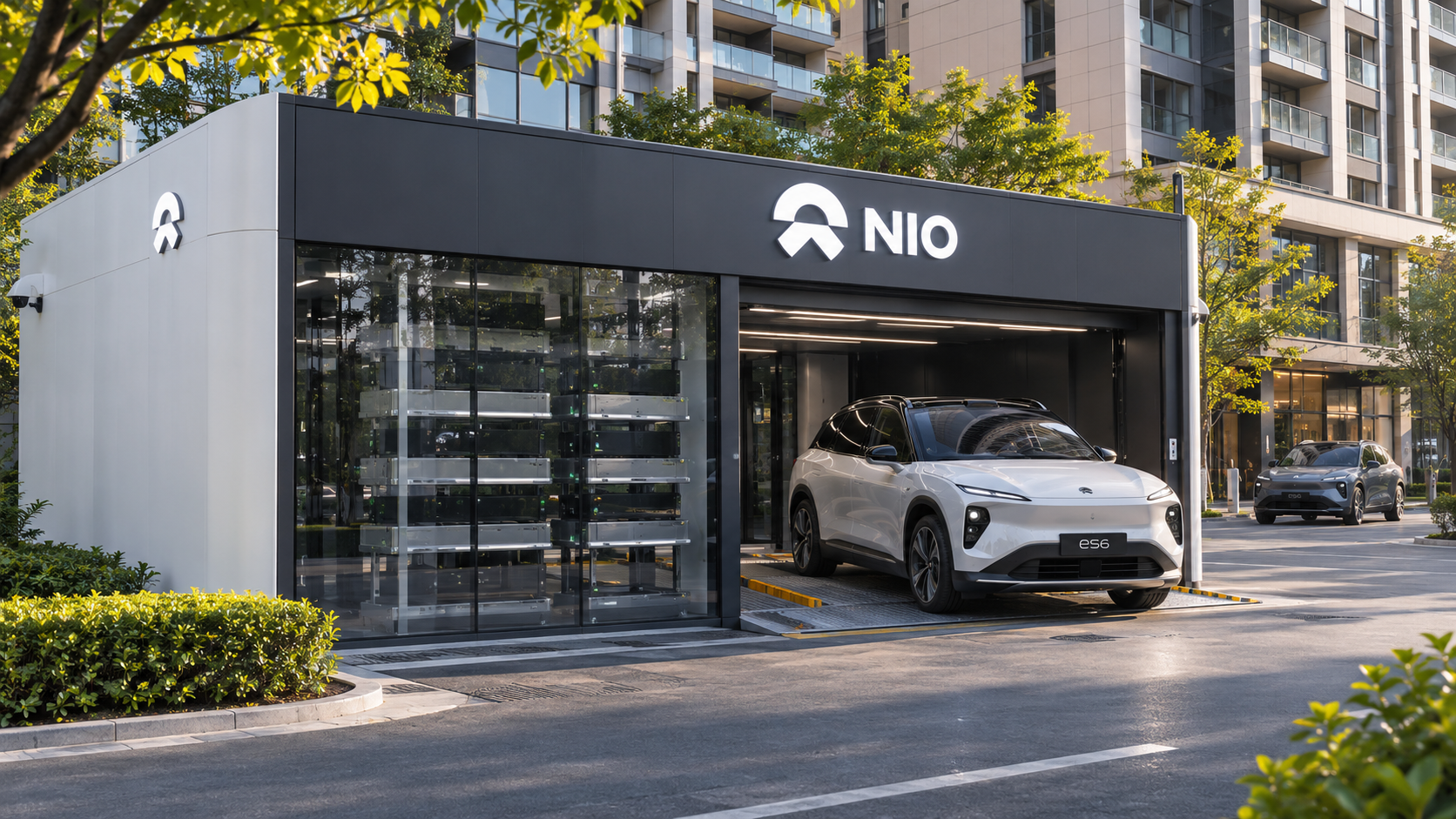
A property partnership gives NIO another route to place swap stations closer to drivers. The network can make a battery subscription more useful, but its fixed costs are an added test while delivery growth and vehicle margins are under pressure.
NIO is looking to put battery swaps closer to where drivers already live and work. CnEVPost reported on November 11 that NIO Power had teamed up with Poly Property to expand access to swap facilities across property projects in China. It is a way to find sites and customers, not a disclosure of how many stations will be built or how much they will earn.
NIO pairs its battery-electric vehicles with a service that lets customers subscribe for a battery and exchange a depleted pack at a station. The stations offer a convenience that a car's sticker price does not capture. They also require equipment, compatible battery inventory and operating costs before enough drivers use them. Growth in the station count is not the same as growth in profitable use. 24/7 Wall St. put the network at 4,123 stations worldwide in its November 10 report, a dated figure rather than a current site count.
That model matters because NIO's vehicle business has made progress but still needs volume. June-quarter revenue rose 69.1% to RMB 32.1 billion. It delivered 107,658 vehicles, up 49.4% year over year, and its vehicle gross margin was 18.5%, compared with 10.3% a year earlier. Excluding share-based compensation, it showed an adjusted net profit of RMB 26.1 million, but it still reported a net loss of about RMB 528 million. Management described operating and free cash flow as positive for the quarter. Its RMB 56.7 billion aggregate included restricted cash, investments and long-term deposits, not just cash available to spend. About RMB 17.45 billion was cash and cash equivalents. Another RMB 13.58 billion was restricted cash.
NIO delivered 109,178 cars in the September quarter, within its forecast, before October volume fell to 34,246. Management had discussed averaging more than 40,000 a month in the December quarter and longer-term annual volume growth of 40% to 50%, neither a guarantee. On the September call, finance chief Stanley Qu said material costs increased by about RMB 14,000 per car from late 2025 and another RMB 2,000 to RMB 3,000 could follow. The annual filing's prior liquidity warning and the contractual structure behind the U.S.-listed depositary shares are risks separate from whether drivers like battery swaps.
XPeng has emphasized driver-assistance and outside engineering work, while Li Auto built its business around extended-range family vehicles and now also sells battery-electric models. NIO's differentiated pitch is that it can sell both a car and recurring access to battery services. The property partnership will make that case stronger if it produces sites that drivers use often enough to support their costs. So far it does not establish that result.
Continue your XPEV research
Image references: · מקור ייחוס · מקור ייחוס · מקור ייחוס
Frequently asked questions
What is "NIO’s swap network gives it a way to reach drivers beyond its showrooms" about?
A property partnership gives NIO more potential battery-swap sites. Its advantage depends on usage as well as sales of its three EV brands.
Which stocks and assets does this article cover?
This article relates to XPEV, LI.
What is the market context?
NIO is looking to put battery swaps closer to where drivers already live and work. CnEVPost reported on November 11 that NIO Power had teamed up with Poly Property to expand access to swap facilities across property projects in China. It is a way to find sites and customers, not a disclosure of how many stations will be built or how much they will earn. NIO pairs its battery-electric vehicles…
When was this article published?
It was published on 20 / 11 / 2026 by Be The Investor Research.