



Occidental signs carbon dioxide deals to get more oil from old wells
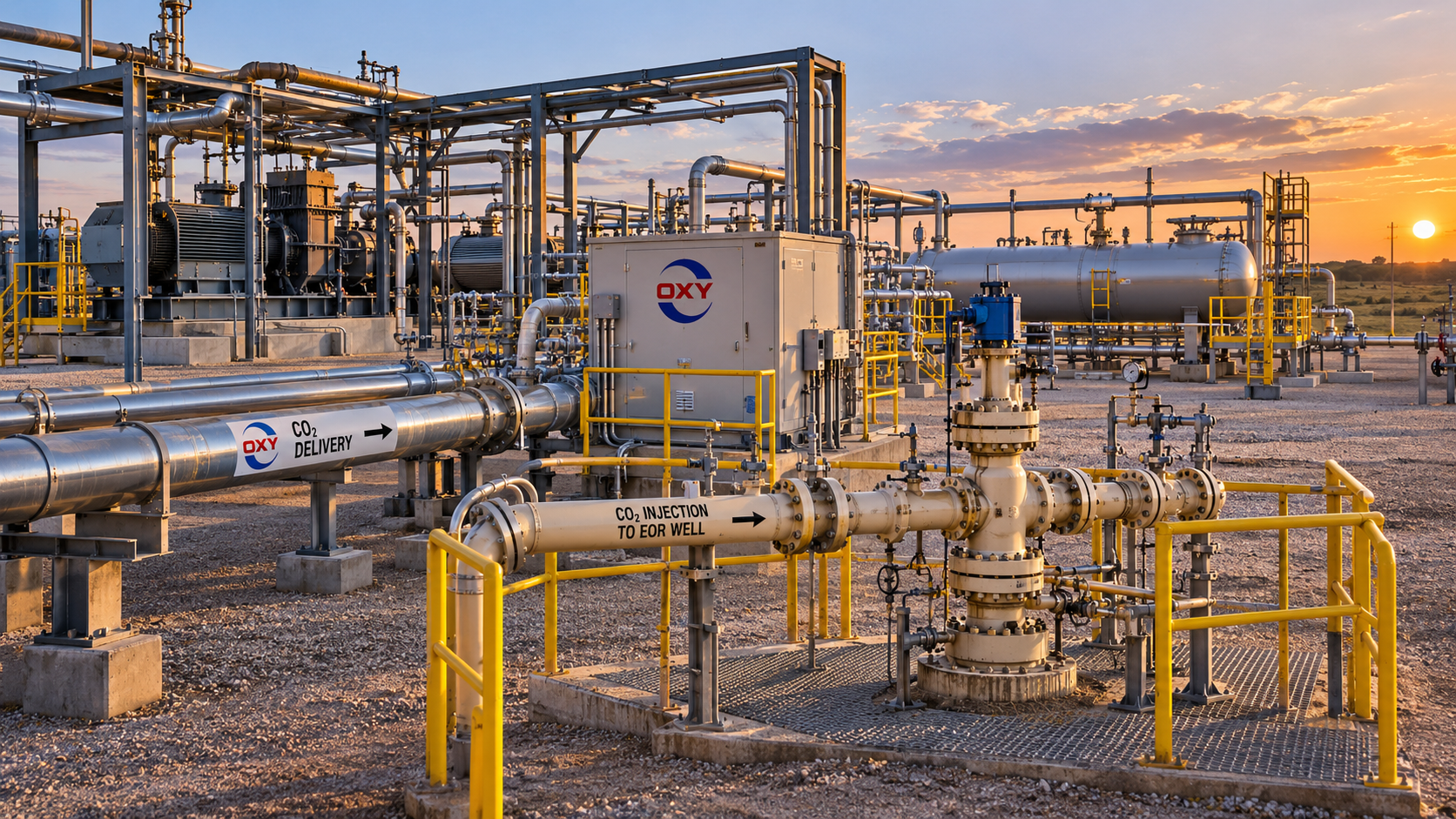
Occidental signed two fixed-fee supply agreements for carbon dioxide it plans to inject into mature Permian fields. The developers still need to commit to building the projects, and first deliveries are expected in 2029.
Occidental Petroleum is trying to get more oil from wells it already owns without spending as much to replace declining production. The company signed two long-term deals on November 9 for carbon dioxide captured at natural gas processing plants in the Delaware Basin. It plans to inject that gas into mature Permian fields to move more oil toward producing wells. The agreements cover capture from gas processing, not extraction from ambient air.
The contracts call for about two million metric tons a year in total, equal to roughly 15% of the carbon dioxide Occidental expects to buy in 2026. The developers will finance and build the capture and delivery infrastructure. The agreements use fixed fees and could expand to four million metric tons a year, but that is potential capacity, not an order for twice as much gas. The projects still need final investment decisions, expected in early 2027, and Occidental anticipates initial shipments in 2029. The company did not disclose the fees or a dollar estimate of the savings.
The near-term recovery program is already contributing. Management said branches drilled from existing wells, known as sidetracks, and new conventional horizontal wells had together added 10,000 barrels of oil equivalent a day by the end of September. That is about 0.7% of the 1.43 million barrels of oil equivalent a day the company averaged in the quarter, a comparison of scale rather than a share of production over the whole period. Occidental began drilling sidetracks in late February, had drilled about 80 by its November call and had identified another 500 candidates. It also estimates it has identified about two billion barrels of oil equivalent in unconventional recovery resources. The first three commercial projects are working toward injection by 2029. Identified resources are not proved reserves or a production forecast.
Power and carbon dioxide represent about 30% of the cost of an enhanced-recovery barrel, management said. The importance of that figure is visible in the current budget: domestic lease operating expense was $8.54 per barrel of oil equivalent in the September quarter, and Occidental expects it to rise in the December quarter partly because of more expensive carbon dioxide. The new agreements cannot reduce that bill this year. They can help change the cost of keeping mature wells productive if the suppliers build the projects and deliver gas at the expected price.
Management wants to cut the annual decline rate of existing production from about 25% to 20% by 2030 and reduce the spending needed to maintain output to about $4.5 billion. Its broader plan targets more than $4 billion of additional annual sustainable cash flow by then against 2025, including gains outside this program such as water injection in Gulf fields and selected international projects. Trefis estimated the $4 billion figure at roughly 7% of Occidental’s $58.5 billion market value at the time. That is a comparison of scale, not a forecast of shareholder returns. The preliminary $5.9 billion capital plan for 2027 assumes roughly flat output, not growth. Trefis said Occidental shares had returned 42.3% over 12 months against 12.2% for the S&P 500 at its November snapshot. It put Occidental near 4.9 times trailing operating cash flow, versus 15.4 for the index. That comparison says little about what it costs to sustain production. The new supply agreements matter if they lower that cost, rather than simply extending the life of wells at today’s expense.
Image references: · מקור ייחוס · מקור ייחוס · מקור ייחוס
Frequently asked questions
What is "Occidental signs carbon dioxide deals to get more oil from old wells" about?
Two planned carbon dioxide supply projects could lower Occidental’s cost of extracting more oil from mature Permian fields.
What is the market context?
Occidental Petroleum is trying to get more oil from wells it already owns without spending as much to replace declining production. The company signed two long-term deals on November 9 for carbon dioxide captured at natural gas processing plants in the Delaware Basin. It plans to inject that gas into mature Permian fields to move more oil toward producing wells. The agreements cover capture from…
When was this article published?
It was published on 17 / 11 / 2026 by Be The Investor Research.