



AST SpaceMobile’s $100 million Space Force award is for sensing
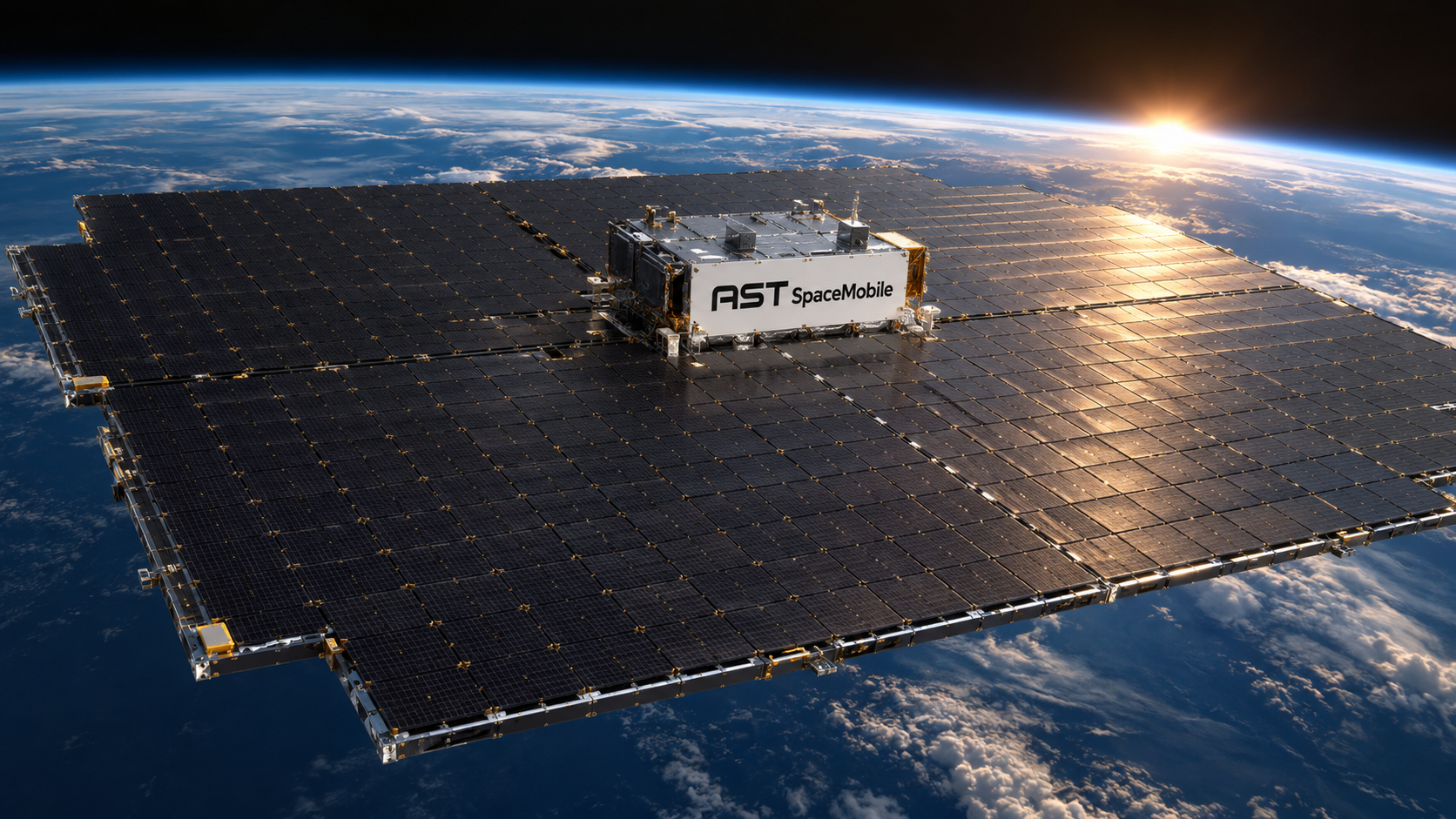
AST SpaceMobile expects about $100 million from a Space Force sensing award. The contract gives it a paying business outside satellite phone service, but the pace of launches still determines when milestones and commercial revenue can arrive.
AST SpaceMobile is building a network to connect ordinary phones from orbit. Its latest Space Force award pays it to do something different: develop advanced space-based sensing capabilities. Management expects roughly $100 million of revenue from the award and described it as an initial step toward a larger program. It is one of 16 government awards the company has secured, not a commitment that the broader program will go to AST.
Government work is already contributing to the company’s accounts. Third-quarter revenue rose 187% from a year earlier to $42.3 million, primarily from deliveries of commercial gateways and completed government milestones. That total includes gateway sales, not just payments from the government. It reported about $88.5 million in the first nine months and maintained its $150 million to $200 million full-year outlook on November 9. That leaves roughly $61.5 million to $111.5 million for the fourth quarter to reach the range. The award’s headline value cannot simply be added to that quarter’s sales.
Getting satellites into orbit is what links the award to the revenue outlook. BlueBirds 20 through 25 were slated to ship in December and January for launches expected in the first quarter of 2027 under a defense priority rating. That is a schedule, not a completed launch or a guarantee that a contract milestone will be met. BlueBirds 14 through 16 had shipped and were awaiting confirmation of their SpaceX launch date. AST now aims to have roughly 45 BlueBirds in orbit by mid-2027, later than the early-2027 objective cited by TIKR. And the revenue opportunity approaching $1 billion that management described covers the first 12 months after commercial service starts. It is not a calendar-year forecast.
AST spent about $310 million on capital projects in the quarter, below its $350 million to $425 million estimate, chiefly because of the timing of launch payments. Lower spending in one quarter does not mean launch costs have disappeared. The company completed a $1.15 billion convertible-note financing in July, which raises cash but can also lead to dilution. At September 30, AST had $2.80 billion in cash and equivalents and another $434.6 million in restricted cash. AST separately plans to build its own Blacklift rocket using engines and support from Firefly Aerospace under an agreement valued above $1.3 billion. The first launch is targeted for late 2028, too late to solve the immediate launch schedule, and management expects several hundred million dollars of additional Blacklift capital spending in 2027. Subsidies for a Japanese satellite manufacturing initiative are another source of funding, not unrestricted cash for all projects.
Trefis put the Space Force award at about 1% of AST’s November 12 equity value of $10.4 billion. That compares estimated contract revenue with equity value, not annual sales or profit. Cantor Fitzgerald reiterated a $90 target before the November 9 earnings report, according to TIKR, citing telecom partners, government demand and launch supply. At the $35.36 price TIKR cited for November 11, that implied roughly 155% upside. TIKR’s November 10 valuation snapshot put the stock at about 23 times forward sales and the target at about 62 times the same sales base. Its 2027 consensus revenue estimate had already fallen from $748 million at the end of June to about $580 million, with $1.65 billion estimated for 2028. Those are analyst estimates, not contracts.
Stocktwits reported about 67.5 million shares sold short ahead of the Blacklift unveiling. ChartExchange dated that count to October 30 settlement and put it at about 25% using its own estimate of freely traded shares, rather than the roughly 22% quoted by Stocktwits. The share count agrees; the percentages are not interchangeable without a common denominator. Neither measures whether AST will meet its launch schedule.
The Space Force award shows that a customer is willing to pay for a capability other than phone service. A stronger case for higher recurring revenue requires AST to get satellites into orbit and deliver what those contracts call for.
Continue your FLY research
Image references: · מקור ייחוס · מקור ייחוס · מקור ייחוס
Frequently asked questions
What is "AST SpaceMobile’s $100 million Space Force award is for sensing" about?
AST SpaceMobile expects about $100 million from a Space Force sensing award, with launch timing and contract milestones still shaping revenue.
Which stocks and assets does this article cover?
This article relates to FLY.
What is the market context?
AST SpaceMobile is building a network to connect ordinary phones from orbit. Its latest Space Force award pays it to do something different: develop advanced space-based sensing capabilities. Management expects roughly $100 million of revenue from the award and described it as an initial step toward a larger program. It is one of 16 government awards the company has secured, not a commitment that…
When was this article published?
It was published on 17 / 11 / 2026 by Be The Investor Research.