


 Be The Investor Research
Ukrainian police took down a crypto scam that stole up to $1 million a month
Investigators identified 62 victims and say more than 46 Ukrainians participated in the alleged operation, underscoring legal, operational and reputational risks for digital-asset businesses and investors exposed to BTC, ETH and SOL markets.
Ukrainian police have dismantled an alleged cryptocurrency scam that investigators say generated as much as $1 million a month. Authorities have identified 62 victims and say more than 46 Ukrainians took part in the alleged operation. The available information does not specify how the scheme operated, which digital assets were used, whether suspects have been charged or whether funds were recovered. It also does not establish losses beyond the reported estimate of up to $1 million in monthly proceeds. For investors, the case highlights the risks surrounding digital-asset platforms, intermediaries and other businesses operating across cryptocurrency markets. Bitcoin (BTC), Ethereum (ETH) and Solana (SOL) support substantial legitimate trading, investment and blockchain activity, but alleged criminal activity can increase scrutiny of the broader ecosystem. The reported scale illustrates the potential financial impact of crypto scams, while the identification of 62 victims provides a measure of the alleged operation’s reach. The stated involvement of more than 46 Ukrainians indicates the investigation’s reported participant count, but does not by itself establish the guilt of every person identified or alleged to be involved. Enforcement actions may affect confidence in digital-asset channels and increase pressure on companies to strengthen customer verification, custody controls, transaction monitoring and regulatory compliance. They may also raise reputational risks for service providers whose systems or counterparties are linked to suspected fraud. The police action does not indicate wrongdoing by BTC, ETH or SOL themselves, nor by all companies operating in those markets. Its significance depends on further details concerning charges, prosecutions, asset seizures, fund recovery and the eventual determination of liability. Until those details emerge, the principal investor takeaway is heightened risk awareness. Investors assessing crypto-related businesses should consider the quality of their compliance frameworks, controls over customer assets and exposure to counterparties under investigation.
Continue your BTC research
Related News

Franklin's Bitcoin DRIP ETFs Turn Stock Dividends Into Crypto
Franklin Templeton's new FBEQ and FIBT ETFs begin with 5% bitcoin exposure and redirect stock dividends into bitcoin. Low headline fees mask a structure that adds crypto volatility, derivative risk and potential tracking differences.

Super League Vote Clears Metaplanet Deal, but Dilution Comes First
Super League shareholders approved Metaplanet's 2,100-Bitcoin investment, but closing conditions, overwhelming control, 381 million warrants and future preferred financing define the risk for existing owners.

BitMine’s Ether Hoard Reaches 4.95% of Supply
BitMine added 10,452 Ether and now holds 6.05 million tokens, or 4.95% of supply. Its staking income, buybacks and exposure to Ether prices matter more as the company nears its 5% accumulation target.

Galaxy Says Bitcoin's June Low May Have Ended the Bear Market
Galaxy Research sees Bitcoin's June low as a possible cycle bottom, citing a 50-week moving-average reclaim and slower movement of old coins. Both signals remain conditional.

Circle's AI-Agent Risk Is Really a Test of USDC Balance Retention
Mizuho says AI assistants could steer cash away from USDC, threatening Circle's reserve income. The warning is hypothetical, but it exposes the company's dependence on balances, yields and distribution partners.
Strategy's $5.1 Billion Liquidity Pool Is Not All Available Cash
Strategy has $4.83 billion reserved for dividends and interest plus $242 million of general cash. That supports near-term payments, but preferred obligations and capital-market access remain central risks.
WisdomTree Withdrew Its XRP Fund Filing, Ending a Claimed Catalyst
A claimed October catalyst for XRP exchange-traded funds does not survive a check of the regulatory record. WisdomTree is not awaiting a current Securities and Exchange Commission decision on the spot XRP fund described in the original report. The trust asked the SEC to withdraw its registration statement on January 6, 2026.
WisdomTree originally filed the fund's Form S-1 in December 2024. The filing described an exchange-traded product that would hold XRP directly and seek to reflect the token's price less expenses. Important terms, including the ticker, custodian and reference-rate details, were still blank in the version reviewed. The later withdrawal request covered that registration statement and its amendments.
That correction changes the article's central question. Another WisdomTree product cannot revive flows unless the sponsor files a new registration or otherwise brings a qualifying product to market. No such new filing was identified in the SEC record reviewed for this rewrite. A withdrawn proposal is neither pending approval nor evidence of an imminent launch.
The underlying fund-flow data still illustrate weak momentum, but they come from a third-party dataset. Citing SoSoValue, 24/7 Wall St. reported that U.S. spot XRP ETFs took in $4.3 million from October 19 through October 22 and no new money on October 23. It put assets under management at $1.48 billion and cumulative net inflows since launch at $1.80 billion. Those figures imply that investment performance and other asset changes reduced current assets by roughly $320 million relative to cumulative inflows.
That gap is not a simple measure of investor losses. Fund assets change with token prices, creations, redemptions, fees and the timing of flows. Still, when an asset falls after investors have added capital, assets under management can sit below cumulative net subscriptions. The relevant comparison is between flows and price performance over matching periods.
The original report also tied weak demand to XRP's price decline and discussed Coinbase as a major crypto custodian. Those observations may help explain sentiment, but they do not restore a WisdomTree deadline that the SEC record contradicts. A new fund from a recognized sponsor could broaden distribution, yet the number of wrappers does not create demand for the underlying token.
Investors should watch verified daily creations and redemptions, current fund assets, fees and any fresh SEC filing. The immediate conclusion is narrower: WisdomTree's 2024 XRP fund registration was withdrawn in January 2026, so it should not be used as an October approval catalyst.
Strive Reaches 43,000 Bitcoin as a $1 Billion SATS Plan Raises the Cost

Strive added 6,182 Bitcoin in one week and created room to sell another $1 billion of preferred stock. The two actions expand its crypto treasury, but they also make the cost of funding that treasury impossible to ignore.
The company paid about $511.4 million for the Bitcoin acquired from October 17 through October 23, or an average of $82,732 per coin including fees. Holdings reached 43,000 Bitcoin. Strive's total cost basis was about $3.8 billion, or $87,785 per coin, while the holdings were worth about $3.5 billion on October 23. That leaves an unrealized shortfall of roughly $300 million at that date, before any subsequent price move.
Liquidity increased at the same time. Cash and cash equivalents rose to $504.4 million from $317.5 million one week earlier. Strive also held 505,000 shares of Strategy's STRC preferred stock worth $50.2 million, bringing cited cash and marketable securities to $554.6 million. Class A shares outstanding rose by about 3.27 million to 118.1 million.
The new at-the-market program allows Strive to sell as much as $1 billion of its 15% Series A Perpetual SATS Preferred Stock through seven agents, including Cantor Fitzgerald and Barclays. The agents may receive commissions of up to 2% of gross proceeds and do not have to sell a minimum amount. The authorization is a ceiling, not a completed capital raise.
SATS has a $100 stated amount and pays cumulative dividends at a 15% annual rate. Strive sold seven million shares in the initial offering at $90 each, generating about $630 million of gross proceeds. If it sold the full new $1 billion at $100 a share, another 10 million shares would be issued and 17 million would be outstanding. The additional shares alone would create a $150 million annual dividend claim at the stated rate, before considering issuance costs.
The first SATS dividend is $0.8710 per share, payable November 9 to holders of record on November 6. Strive's filing says proceeds may fund Bitcoin and related products, working capital, income-producing assets, common or SATA preferred buybacks, and preferred dividends. No amount is committed to any single use.
That flexibility helps Strive buy assets without setting a maturity date, but perpetual preferred stock is not free capital. Dividends rank ahead of the common stock, and issuing below the $100 stated amount can make the effective cash cost higher than the headline 15% for new investors. The program therefore raises two separate questions: whether future Bitcoin returns exceed the preferred financing cost, and whether Strive can cover cash dividends without repeatedly issuing more securities.
The treasury is larger and more liquid than it was a week earlier. Common shareholders also have more shares outstanding, a high-cost security ahead of them in the capital structure, and Bitcoin exposure that was below cost at the latest disclosed valuation.
BitMine and Strive Keep Buying Crypto as Strategy Pauses

Three crypto-treasury companies made very different capital-allocation choices during the latest market pullback. BitMine Immersion Technologies added 10,452 Ether, Strive bought 6,182 Bitcoin, and Strategy reported no new Bitcoin purchase while directing $204.9 million toward its STRC preferred shares.
BitMine's purchase lifted its holdings to 6,051,933 Ether, or 4.95% of the token's reported supply, according to the company's October 26 release. It also held 215 Bitcoin, $514 million of cash and marketable securities, and stakes in Beast Industries and Eightco. More than 5.2 million of its Ether were staked as of October 25, creating yield but also adding operational and protocol risk.
The company paired accumulation with stock repurchases. BitMine bought 2.04 million shares during the week at an average of $22.48 and said it had repurchased 22.9 million shares for about $399.6 million in 2026. Buying both Ether and its own shares concentrates the thesis: shareholders benefit if the assets appreciate and the stock trades below management's estimate of underlying value, but losses can compound if both assumptions fail.
Strive made the larger Bitcoin commitment. A filing-based report said the company bought 6,182 Bitcoin between October 17 and October 23 for $511.4 million, or about $82,732 per coin including fees. The acquisition raised its total to 43,000 Bitcoin. Strive also established an at-the-market program for up to $1 billion of SATS preferred stock, showing how its treasury growth depends on continued access to capital markets.
Strategy took the opposite path for the week. It did not report a Bitcoin purchase and instead repurchased $204.9 million of STRC preferred stock, according to the source. That choice can support a security used in its financing stack, but it also shows that treasury companies must manage dividend obligations, liquidity and market prices alongside their crypto targets.
BitMine Chairman Tom Lee argued that crypto was caught in the same risk-off move as AI stocks and noted that the latest decline was shallower than earlier selloffs. That is an interpretation, not proof of a new bull market. Ether and Bitcoin prices remained the dominant drivers of treasury value, while investors also had to assess dilution, preferred financing and staking execution.
The week therefore revealed more than simple dip-buying. BitMine favored Ether plus buybacks, Strive accelerated Bitcoin accumulation, and Strategy prioritized its capital structure. Those differences will matter if crypto prices stay weak because each company has chosen a different balance between asset exposure and financing risk.
Bitcoin's $80,000 Test Is About ETF Cost Basis, Not a Magic Line
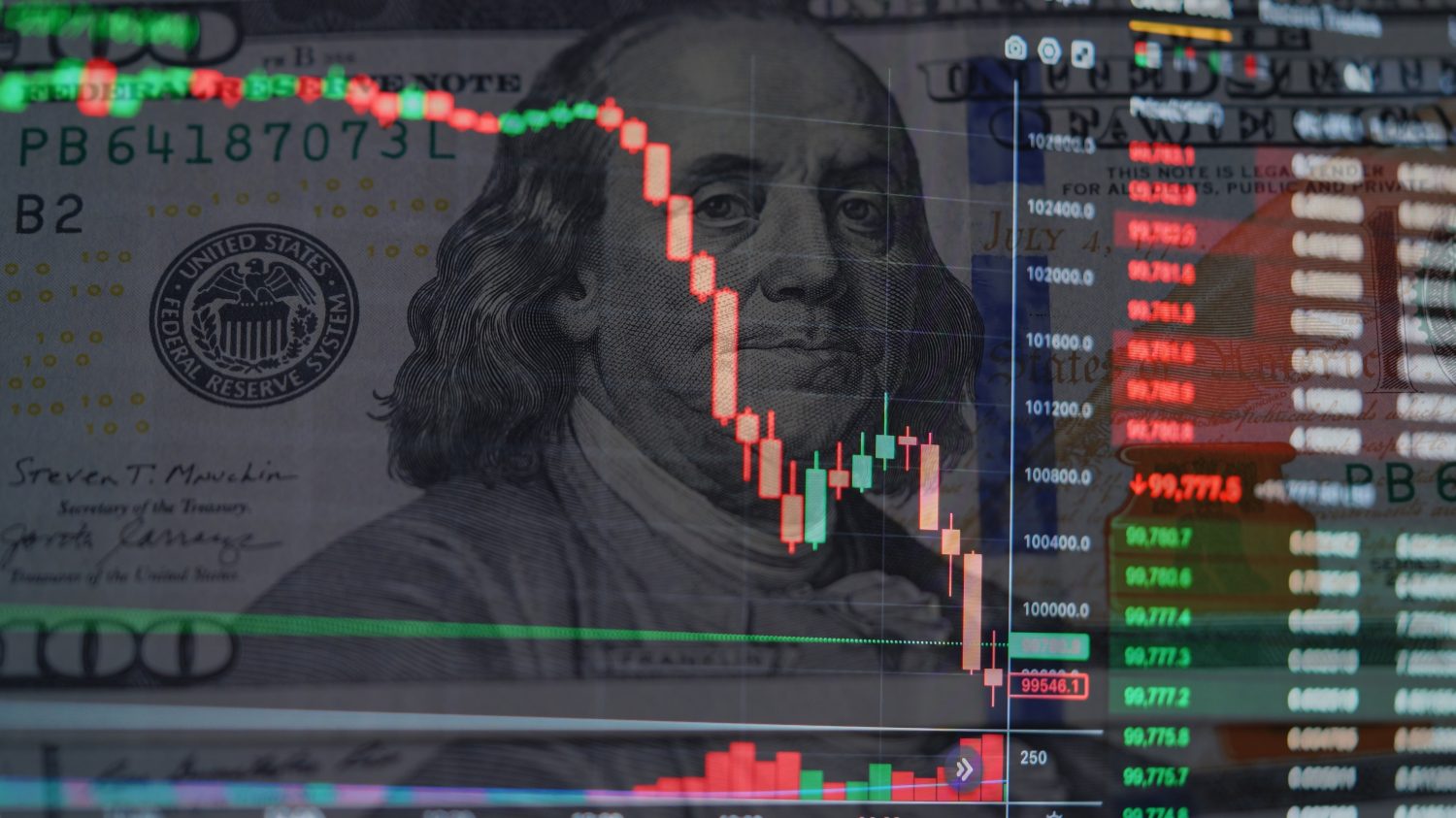
Bitcoin briefly fell below $80,000 over the weekend, putting the market close to the estimated cost basis of U.S. spot exchange-traded fund investors. The level matters because a large group of recent buyers can move from gains to losses together, but it is not a mechanical floor.
The decline followed a sharp reversal in ETF flows. U.S. spot Bitcoin funds recorded a net outflow of about $635.5 million on October 22, the largest daily outflow since June, after more than $500 million flowed in the previous session. One day of redemptions does not establish a lasting trend, but it shows how quickly institutional demand can change.
Glassnode estimated the ETF investor cost basis near $81,500, according to CryptoSlate. Bitcoin was also below its 20-day and 50-day moving averages in the source analysis, leaving many recent buyers with paper losses. If those holders reduce exposure at the same time, selling can reinforce the initial decline.
Leverage adds another layer. The source reported that the largest cluster of net long positions was entered near $81,993, with most of the dollar value above the latest market price. Exchanges can forcibly close leveraged long positions when losses consume collateral. Those liquidations create market sell orders and can accelerate a drop even when long-term demand has not changed.
The weekend timing also complicates interpretation. Reports of possible U.S. and Iranian escalation pushed investors away from risk while stock and bond markets were closed. Bitcoin's continuous trading made it one of the few liquid assets available for immediate hedging. Lower weekend volume can exaggerate price moves, and the initial dip below $80,000 quickly reversed.
Why does $77,600 appear in the discussion? Glassnode identified it as a downside reference near the active-investor cost basis if Bitcoin fails to recover the $80,000 to $81,500 area. It is a data point drawn from prior transaction prices, not a guaranteed target. Price can turn before it, pass through it or remain range-bound.
Bitcoin also held up better than Ether and Solana during the same risk-off period, suggesting that its deeper ETF and treasury-company ownership offered some relative support. The next useful signal is not a single intraday print. It is whether ETF flows stabilize, leverage clears without cascading sales and Bitcoin can close back above the recent buyer cost range.
TRON's Usage, Hyperliquid's Buybacks and Solana's Upgrade Shape the Race

TRON and Hyperliquid were both about 23% below their record highs on October 25, while Solana traded roughly 66% below its peak. The arithmetic favors Hyperliquid, but the distance to a prior high does not by itself predict which token will recover first.
At the prices used in the source analysis, Hyperliquid's HYPE needed a 28.1% gain to return to $98, while TRON's TRX needed 31.1% to revisit $0.43. Solana required a far larger 190.4% gain to reach $293. Those percentages correctly reflect that recovering from a loss requires a larger percentage increase than the original decline.
TRON has the clearest current usage support. Nansen reported $2.21 trillion of stablecoin settlement on the network in the third quarter of 2026, up 5.1% from the previous quarter. Average daily settlement rose 3.9% to $24.05 billion, while rolling monthly active addresses averaged 18 million. Because users need TRX to pay network fees, stablecoin activity provides recurring demand. It does not guarantee rapid price appreciation, especially when the token has recently traded in a narrow range.
Hyperliquid's mechanism is different. The decentralized derivatives protocol directs most fees toward purchases of HYPE, according to the source, creating a direct link between trading activity and token demand. That structure helped make HYPE the closest of the three to its record, but the token had fallen 18.1% over the preceding month. Buybacks can support demand, yet they cannot remove the volatility of a younger derivatives ecosystem.
Solana faces the steepest mathematical climb but has a network catalyst. The first phase of the Alpenglow consensus upgrade launched on October 21 with the goal of reducing transaction finality. Faster confirmation can improve user experience for trading and payments, although the token fell after the launch. Protocol improvement and token performance can diverge for long periods.
The comparison therefore has three different drivers: TRON's stablecoin utility, Hyperliquid's fee-funded purchases and Solana's network upgrade. Hyperliquid needs the smallest rally, but its recent momentum is the weakest. TRON's usage is steadier, while Solana requires a much larger repricing.
A new all-time high will depend on sustained activity and market risk appetite, not just the current gap. Investors should track TRON settlement growth, Hyperliquid fee revenue and Solana's post-upgrade reliability rather than treating the nearest record as the easiest outcome.
Latest comments