


 Be The Investor Research
Chip Weakness Drove the Nasdaq 100’s Worst Week in 18 Months
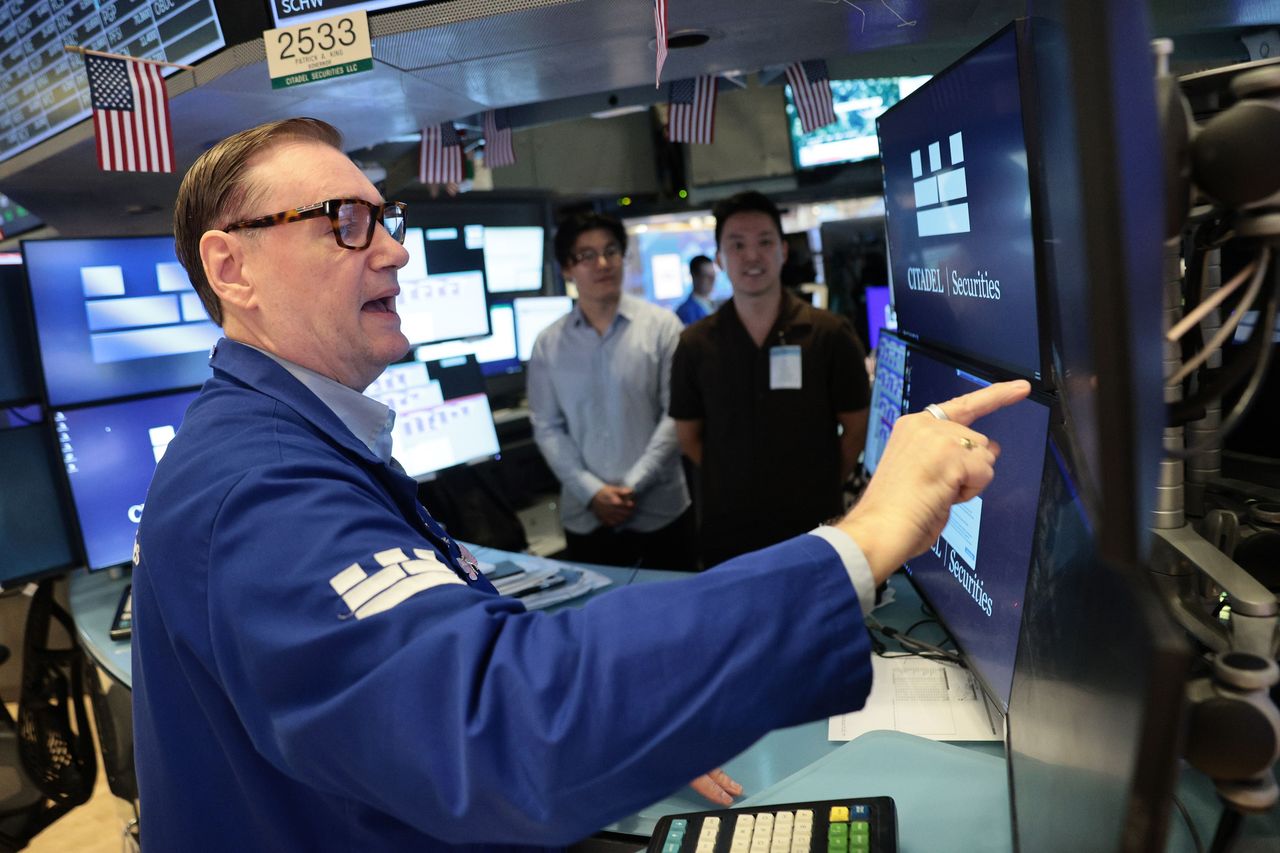
The Nasdaq 100 fell 2.5% on Friday as semiconductor and leveraged AI-infrastructure stocks sold off. The move exposed how quickly financing concerns can spread across a concentrated technology market.
The Nasdaq 100 ended its worst week in more than 18 months with a 2.5% Friday decline, as semiconductor stocks and debt-heavy AI infrastructure companies absorbed the sharpest selling. The S&P 500 fell 1.1%, the Dow slipped 0.3% and the Russell 2000 lost 1.7%, according to the contemporaneous market report.
Semiconductors were the center of pressure. The Philadelphia Semiconductor Index fell for an eighth consecutive session, its longest losing streak since 2008. The VanEck Semiconductor ETF and iShares Semiconductor ETF lost between 3% and 4% on Friday, while the Roundhill Memory ETF fell about 6%. Those moves were broader than any single company and therefore offered a clearer signal than isolated stock declines.
Financing risk added a second layer. CoreWeave dropped almost 12% on Friday and about 25% for the week as investors focused on the debt required to build AI data centers. The concern is not that every project will fail. It is that higher borrowing costs, construction delays or weaker customer economics could compress returns across a capital-intensive supply chain.
The market’s concentration magnifies that transmission. Large technology platforms dominate major indexes, semiconductor suppliers sit inside many overlapping funds, and infrastructure developers depend on the same pool of AI spending. When investors question the durability of that spending, the adjustment can hit chips, cloud infrastructure and broad indexes at the same time.
This was a risk repricing, not proof that AI demand disappeared. The next test is whether earnings and financing disclosures show that contracted demand is turning into cash flow at acceptable returns. Until then, investors should treat the week as evidence that leverage and valuation, not only technological progress, will determine the path of the AI trade.
Continue your QQQ research
Related News

Big Tech Rebounds, but Earnings Must Justify the AI Spending Cycle
Technology shares recovered ahead of major earnings reports after a sharp weekly decline. Strong early profit growth supports the market, while elevated expectations leave little tolerance for weak guidance.

Morningstar Sees Value in LPL, Fiserv and Nu After a Weak Year
Financial stocks lagged the broader market as higher rates and AI concerns changed investor expectations. Morningstar favors LPL Financial, Fiserv and Nu, but each thesis depends on a different operational proof point.

AI Stocks Rebound After a Rate Shock, but Valuation Risk Remains
A broad technology rebound followed a sharp AI selloff driven by rising yields and profit-taking. The recovery can last only if earnings support the spending and valuation assumptions already embedded in prices.

Chip Stocks Snap a Nine-Day Slide as Investors Reprice AI Risk
Semiconductor shares finally rebounded after nine consecutive declines. The bounce reduces immediate selling pressure, but investors still need earnings evidence that AI spending will produce durable returns.

Palantir and Knox Build a Faster Route Into Secure Federal Clouds
Knox Systems will use Palantir's accredited infrastructure to help software vendors reach FedRAMP and IL5 environments. The partnership strengthens Palantir's federal distribution role, but disclosed financial terms and customer commitments are absent.

Nasdaq Rebound Ends a Brutal AI Week, but Expectations Still Set the Risk
The Nasdaq 100’s strongest session in nearly a month interrupted an AI-led selloff. The rebound showed buyers remain willing, while crowded earnings expectations leave little room for disappointment.
NYSE Extends Options Trading, but Early Volume Shows the Limits

The New York Stock Exchange has extended options trading beyond regular market hours, opening a new test of whether investor demand for near-continuous access can translate into reliable liquidity.
The first phase runs from 7:30 a.m. to 9:25 a.m. Eastern time and from 4:00 p.m. to 4:15 p.m. It covers 29 heavily traded stocks and funds, including Nvidia, Bank of America, the SPDR S&P 500 ETF Trust and the iShares Russell 2000 ETF. NYSE plans to expand trading in the same names to 23 hours a day, five days a week, beginning Dec. 6.
The change follows a similar move by Cboe and reflects competition from crypto, prediction markets and perpetual futures, which conditioned users to expect round-the-clock access. Cboe data cited by CNBC showed extended-hours options volume had reached a record average above 199,000 contracts a day.
NYSE's own opening session was far quieter. Tesla options led activity ahead of earnings, but only a little more than 3,000 contracts changed hands, nearly all calls, with a total value below $100,000 according to SpotGamma. That is too small to establish whether spreads and execution quality will be dependable.
Longer hours can help investors react to overseas news and corporate announcements before the opening bell. They can also fragment liquidity, widen bid-ask spreads and leave retail traders facing prices set by a small number of participants. NYSE's rule filing acknowledged the limited industry experience with physically settled equity options outside regular hours and initially capped the eligible classes.
The experiment will be judged by more than headline volume. Investors should watch quoted spreads, depth, market-maker participation and the frequency of price gaps between extended and regular sessions. Access is valuable only when the market is liquid enough to support fair execution.
Apple Sets Oct. 28 Product Event as Touchscreen MacBook Speculation Builds
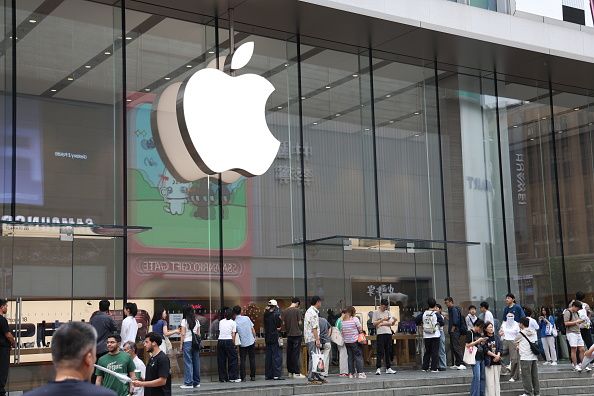
Apple has scheduled a product event for Oct. 28 in Los Angeles, setting up what could be its most consequential Mac redesign in years. The company has not publicly detailed the products, but reporting cited by Stocktwits and Bloomberg points to a touchscreen MacBook Pro, an updated iMac and a refreshed iPad mini.
A touchscreen MacBook would reverse a long-running product distinction. Apple has historically kept direct touch interaction on the iPad while positioning the Mac around a keyboard and trackpad. If the reports are accurate, the change would give Apple a new reason to push users toward premium laptops, but it would also raise questions about price, battery life and whether touch materially improves professional workflows.
The report says Apple stores are preparing to sell new products on Nov. 6. It also says the Mac launch follows strong early demand for the $1,999 iPhone Duo, whose delivery estimates reportedly moved into January 2027 within minutes of preorders opening. Limited supply makes that signal difficult to interpret: a quick sellout can reflect high demand, scarce initial inventory, or both.
Investor expectations are split. KeyBanc maintained an Underweight rating and a $250 price target, citing higher iPhone prices, fewer carrier promotions and longer replacement cycles. Melius kept a Buy rating and a $370 target, arguing that Apple's comparatively restrained AI capital spending supports the stock. Those views frame the central question for the Oct. 28 event: can new form factors expand revenue without relying on unusually aggressive spending?
Apple shares had risen about 26% in 2026 through the report's publication, versus roughly 17% for the Invesco QQQ Trust. The product event will matter less for one day's reaction than for the pricing, availability and upgrade case Apple presents.
CoreWeave, Opendoor and SoFi Hit Lows for Three Different Reasons

CoreWeave, Opendoor and SoFi all touched 52-week lows on October 15, but the common chart pattern did not come from a common business problem. CoreWeave faced debt-market pressure, Opendoor remained tied to housing turnover, and SoFi confronted questions about how quickly revenue growth becomes earnings.
CoreWeave fell to $59.51 as investors focused on $850 million of unsecured debt whose yield was approaching 15%. That cost matters because the company is financing a rapid expansion of AI computing capacity. A large backlog can support future revenue, but borrowing at a high yield raises the return each new data-center investment must earn before it creates value for shareholders. Analysts at Cantor Fitzgerald and Jefferies kept bullish ratings, citing 2027 demand and contract economics, but those views do not remove refinancing or execution risk.
Opendoor reached $1.90 as the housing market remained slow. Pending U.S. home sales were reported at a 12-year low, while the average 30-year mortgage rate reached 7.40% for the week ended October 8. Opendoor depends on transaction volume and accurate home pricing. High mortgage rates can reduce both the number of potential buyers and the speed at which inventory turns.
SoFi fell to $13.86 even after reporting second-quarter revenue of $1.22 billion and raising its full-year revenue outlook to $4.75 billion to $4.85 billion. Its adjusted earnings-per-share outlook stayed near $0.60 as marketing and customer-acquisition spending weighed on profit growth. Keefe, Bruyette & Woods lowered its price target to $15 from $16 and kept an Underperform rating, arguing that rates and balance-sheet growth could pressure capital.
The stocks recovered from their intraday lows and finished the session higher, which shows how quickly positioning can reverse. It does not resolve the underlying questions.
For CoreWeave, the relevant measure is the return on debt-funded capacity after interest expense. For Opendoor, it is inventory turnover and unit economics in a weak housing market. For SoFi, it is the conversion of customer and revenue growth into earnings without consuming excessive capital. Treating the three lows as one “risk-off” event would miss those separate tests.
Earnings Week Tests Credit, AI Spending and the Consumer

The week of October 19 shifts attention from macro data to company execution. Capital One, Meta, Tesla, Netflix and a broad group of industrial, semiconductor, airline and consumer companies report while the economic calendar is relatively light.
Capital One will test consumer credit, funding spreads and Discover integration. Meta will put AI engagement against capital spending. Other reports make those events more informative: airlines and American Express can show whether consumers are absorbing higher fuel and borrowing costs, while Lam Research, Texas Instruments and Western Digital can reveal whether AI infrastructure demand is broadening.
The backdrop raises the standard for a positive reaction. The source report noted that some banks sold off despite headline beats as investors focused on margins, expenses and credit. Higher bond yields reduce the present value of future earnings, while hot inflation can keep the Fed restrictive.
This is more than an earnings calendar. The week provides connected tests of household resilience, AI monetization and industrial demand. Investors should compare credit losses, capital budgets and order trends across companies before drawing a broad conclusion from any single stock move.
Gartner Sees a $4.9 Trillion Revenue Gap Behind the Neocloud Shakeout

Gartner’s latest AI infrastructure forecast turns the neocloud debate into a return-on-capital problem. The firm estimates that data-center owners need $8.5 trillion of cumulative revenue through 2030 to cover announced capital spending, financing costs and a 12% return. It forecasts no more than $3.6 trillion of enterprise and consumer AI revenue attributable to data centers over that period.
The difference is $4.9 trillion. It is not a prediction of an equal amount of realized loss because projects can be canceled, assets can be sold and financing terms can change. It does show why Gartner believes more than $3.5 trillion of infrastructure spending could be exposed to impairment by 2030 and why more than 80% of neocloud providers may cease to operate independently.
Ceasing to be independent includes acquisitions and mergers, not only bankruptcy. Consolidation could help stronger operators by reducing price competition and giving them access to customers, power and capital. It could also leave equity holders with poor outcomes if transactions occur after balance sheets become stressed.
Demand is still expanding. Gartner expects spending on AI-optimized infrastructure as a service to rise from $66 billion in 2027 to $174 billion in 2030. The problem is timing and ownership: the revenue may grow too slowly for infrastructure owners to recover investment before hardware is replaced, while some AI revenue goes to asset-light software providers rather than the companies funding data centers.
Investors should judge neoclouds on contracted demand, customer concentration, power delivery, debt maturity and cash conversion together. A large backlog helps only if capacity arrives on schedule and at an economic cost. Rapid revenue growth helps only if it outruns interest, depreciation and recurring capital needs.
The forecast does not invalidate AI computing demand. It challenges the assumption that every supplier can earn an adequate return from it. The likely industry outcome is a smaller group of scaled operators, with the path determined by financing discipline as much as technical performance.
Latest comments