


 Be The Investor Research
TeraWulf Reaffirms 2026 Lake Mariner Delivery as Power Demand Stays Strong
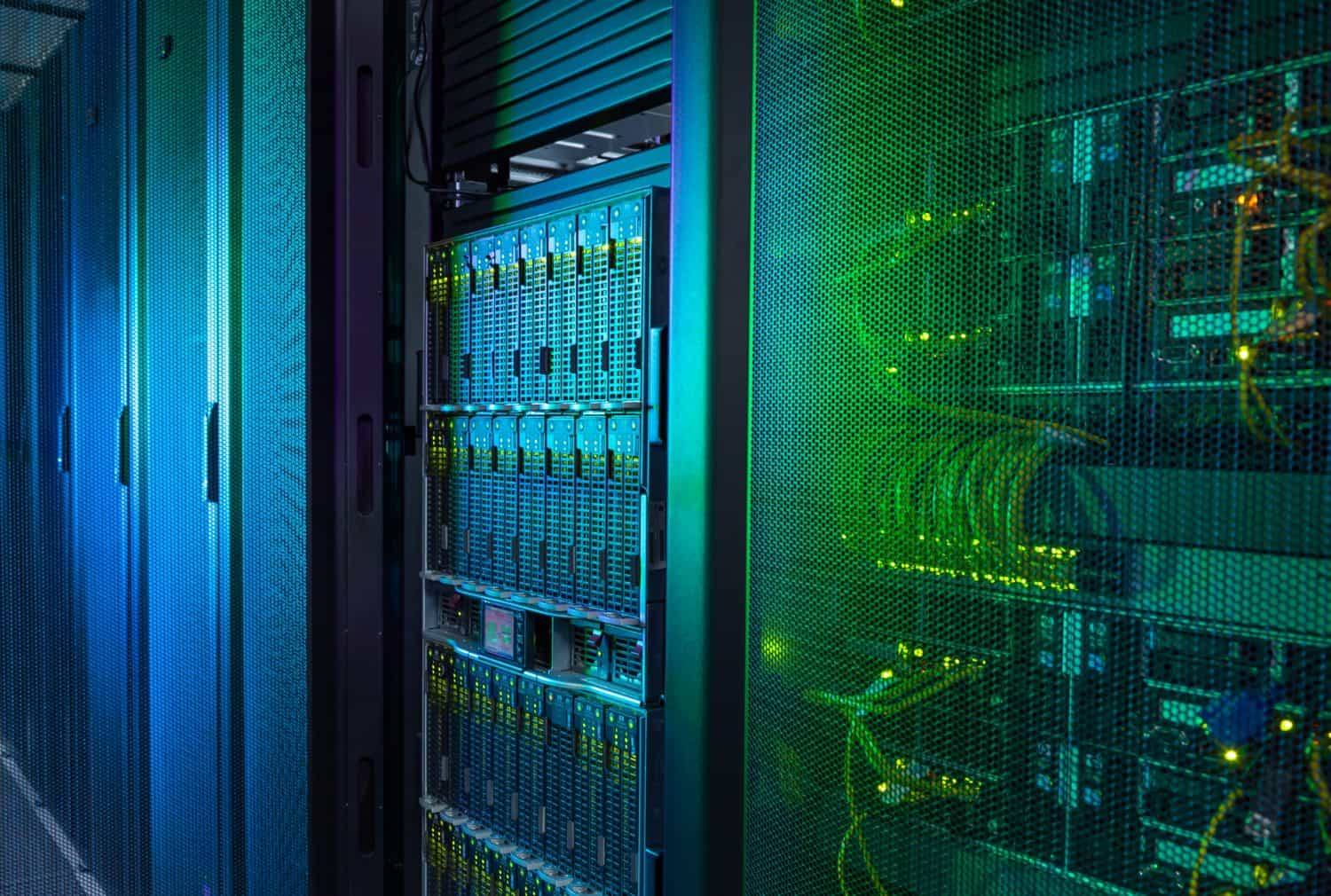
TeraWulf's CEO said demand for 2028 and 2029 power remains strong and reaffirmed a 2026 Lake Mariner delivery. Company filings support the construction milestone but leave customer financing and future capital choices as risks.
TeraWulf chief executive Paul Prager used a social-media update to emphasize demand for powered data-center capacity and to reaffirm a near-term construction milestone. He said demand for 2028 and 2029 power remained extremely strong and that the next Lake Mariner building leased to Fluidstack was on track for delivery this quarter.
The delivery claim has support in TeraWulf's formal disclosures. In its second-quarter results, the company said the first data hall in CB-4 had entered commissioning and that phased delivery and rent commencement were expected during the second half of 2026. It also reported 102 megawatts of revenue-generating critical IT capacity online at Lake Mariner after completing CB-3 in early July.
TeraWulf had another 336MW under construction across CB-4 and CB-5 at the time of that report. CB-5 was targeted to begin phased delivery in early 2027. The distinction matters because one building reaching a delivery milestone does not mean the entire contracted expansion is operating or producing rent.
The customer and credit structure reduce some risk but do not remove execution risk. Fluidstack leases the Lake Mariner capacity, and completion of CB-3 activated $600 million of Google credit support for Fluidstack's lease obligations. TeraWulf still must commission and deliver later phases within schedule and cost guidance. Its second-quarter materials placed construction costs at $8 million to $10 million per critical IT megawatt for the WULF Compute program.
Prager also said TeraWulf would not take on customers' financing risk and that shareholders would not be diluted for the discussed projects. Investors should treat that as management's current financing position, not an unconditional guarantee about every future capital decision. Data-center development is capital intensive, and financing needs can change with construction costs, customer terms and project timing.
The company's balance sheet provides context. TeraWulf reported about $3.0 billion of cash and restricted cash at the end of the second quarter. Restricted cash is not freely available for every corporate purpose, so the combined figure should not be read as fully discretionary liquidity. The same quarter produced $44.8 million of revenue, including $31.9 million from high-performance-computing leases, showing that leasing had already become a material operating business rather than only a future plan.
The market's reported reaction spread to other data-center developers, but TeraWulf had the clearest company-specific catalyst: a reiterated delivery timetable and management commentary on future power demand. The durable evidence will arrive when CB-4 is accepted by the tenant and rent begins. If delivery slips, the revenue start moves with it; if it lands on schedule, TeraWulf adds another proof point that it can turn energized sites into contracted computing infrastructure.
Related News
IREN Secures Civil Works License for Planned 300MW Spain Campus
IREN formed a European unit and secured a civil works license for a planned 300MW AI campus in Badajoz. Initial operations are targeted for 2028, but customers, financing and final execution remain open questions.

PHP2Shell Patches Put Cloudflare's Network Defense to a Live Test
Two critical PHP memory-safety flaws triggered emergency patches and early attack attempts. Cloudflare deployed firewall protections across all plans, but says customers must still update PHP because its rules are only defense in depth.
Salesforce Agrees to Buy Braze for $5.66B in Cash
Salesforce will pay $47.50 a share in cash for Braze, a 58% premium, betting that real-time customer engagement can strengthen Marketing Cloud without changing its current fiscal-year outlook.
Super Cruise Growth Gives GM a Higher-Margin Revenue Path
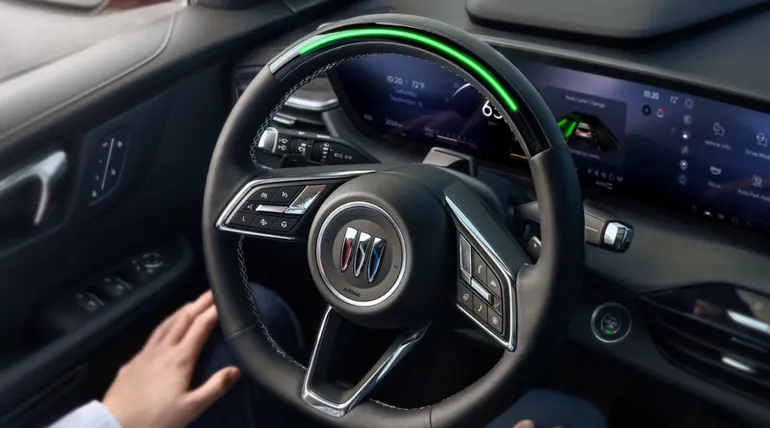
GM says recognized Super Cruise revenue rose about 60% in the third quarter, while deferred software revenue reached $6.8 billion. The next test is converting truck adoption into paying subscribers.
Amazon's Robot Fleet Is Large, but Automation Still Has Room to Run
Jefferies sees more margin potential in Amazon's warehouses and delivery network, but its estimates also show that grocery economics and peak-season execution remain important limits on the automation story.

Salesforce Bets $5.66 Billion on Braze to Repair Marketing Growth
Salesforce will pay $47.50 a share for Braze, adding a faster-growing customer engagement platform while reviving investor questions about acquisition-led growth, margin dilution and integration risk.
European Spectrum Plan Opens a Door for AST, Not a Contract
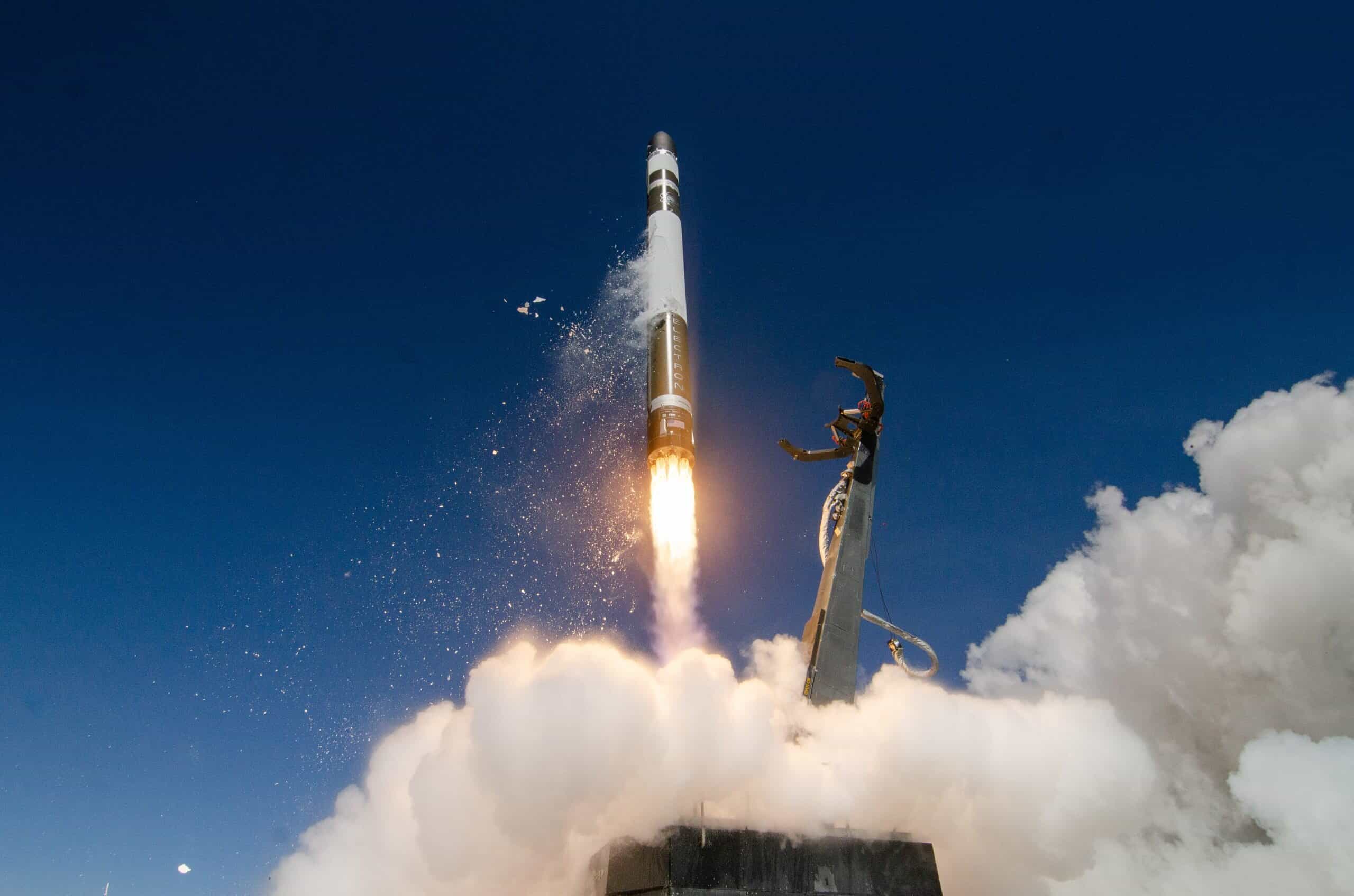
Deutsche Telekom, Orange, Telefónica and Vodafone have signed a letter of intent to explore a joint bid for future European mobile-satellite spectrum. The initiative could create an important route to market for AST SpaceMobile, but it is not yet a spectrum award, a commercial service contract or a decision to use AST's satellites.
The four carriers want to support direct-to-device service, which connects ordinary mobile devices through satellites when terrestrial coverage is unavailable. They plan to build ground-network infrastructure plus coordination and monitoring functions in Europe. A satellite partner would provide the constellation, and the carriers said that partner is still to be selected.
AST is relevant because its Satellite Connect Europe venture is developing European-operated ground infrastructure designed to link BlueBird satellites with mobile operators' core networks. The company has welcomed the carrier initiative and has existing relationships with several of the participants. Those connections make AST a plausible candidate, but they do not remove the competitive process or guarantee any revenue.
The carriers framed the project around coverage in underserved areas, resilience of public networks, protection of critical communications and European control of infrastructure. They also said any resulting service should offer open and nondiscriminatory access to mobile operators. That model may favor a wholesale satellite supplier rather than a closed consumer service.
For AST shareholders, the opportunity is strategic rather than financial at this stage. A joint carrier bid could aggregate spectrum and demand across major national networks, reducing the fragmentation that often slows cross-border deployment. It could also give AST a large anchor market if the company is chosen as the satellite partner.
The limitations are equally important. The bid is exploratory, the spectrum allocation is future-dated, the satellite provider has not been selected and no price, capacity commitment or launch timetable was disclosed. Existing satellite partnerships are not displaced by the letter of intent.
The news strengthens AST's position in the European direct-to-device conversation, but investors should wait for a formal spectrum award and a binding satellite agreement before treating the initiative as backlog or forecast revenue.
Supermicro Brings AI Servers to Telecom Networks With Nokia

Supermicro is working with Nokia and Nvidia to place AI computing inside telecom networks, where operators could run inference workloads closer to users while continuing to handle 5G traffic. The collaboration combines Supermicro servers, Nokia radio-access-network software and Nvidia accelerated computing.
The product range spans individual cell sites and larger network hubs. Supermicro’s ARC-Pro system uses Nvidia Grace C1 processors and RTX PRO 4500 Blackwell GPUs and is rated for up to 1.6 petaflops of FP4 AI performance. Its larger ARC MGX 4U supports as many as eight RTX PRO 6000 Blackwell GPUs. Some Aerial RAN Computer systems are available now, while the dual-Vera ARC MGX 2U is expected later in 2026 and ARC-Pro is scheduled for customer testing before broader availability in the first half of 2027.
The investment logic is that carriers could share infrastructure between network functions and paid AI services, improving utilization at distributed sites. That opportunity is not yet a booked business. Supermicro disclosed no customer contract, order value or revenue forecast tied to the Nokia collaboration.
The announcement arrived beside a much larger near-term catalyst. Supermicro’s unaudited preliminary update raised fiscal first-quarter 2027 revenue expectations to $18.5 billion to $19.5 billion from prior guidance of $14.5 billion to $15.5 billion. It also lifted the estimated gross-margin range to 12% to 12.5% from 10.4% to 10.8%, citing customer and product mix.
Those figures suggest strong demand for AI platforms, but they remain preliminary and subject to revision before final results on November 3. The telecom partnership and quarterly update should also be evaluated separately. One is an early product-market opportunity without disclosed orders; the other is evidence of current data-center demand.
For Supermicro, the next proof points are commercial AI-RAN deployments, unit economics at the network edge and final first-quarter revenue and margin. Until customers and pricing emerge, the collaboration expands the addressable market but does not quantify its contribution.
Nvidia and Nokia Put the First AI-RAN Call on a Live Network
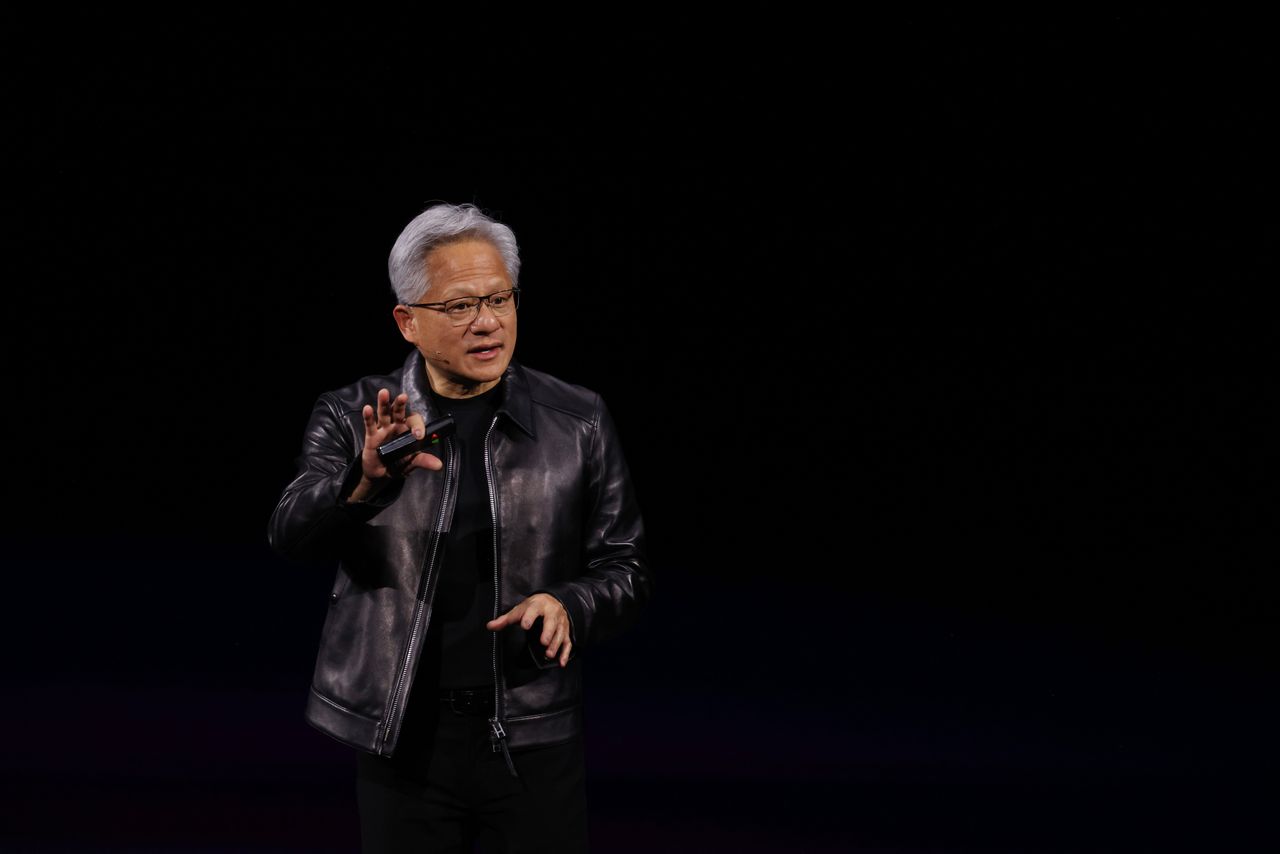
Nvidia, Nokia and T-Mobile have completed what they describe as the first AI-RAN call on a live commercial network. The call used commercial ARC servers, Nokia’s CUDA-accelerated radio software and radios connected to T-Mobile’s existing 5G standalone core and a standard smartphone.
AI-RAN combines radio-access-network functions with accelerated computing on shared infrastructure. In principle, a carrier could use the same distributed hardware to run mobile-network workloads and low-latency AI applications. That could improve utilization at cell sites and metro facilities, but the economics depend on how much compute is available after network obligations and whether customers will pay for edge services.
Nvidia CEO Jensen Huang framed the opportunity at GTC Berlin as roughly 100,000 telecom sites representing about 100 gigawatts of distributed capacity. That is a vision of the addressable infrastructure, not a forecast of contracted AI demand or revenue. Nvidia said nearly 20 operators have announced AI-RAN collaborations, while commercial services are targeted for 2027.
BT, Deutsche Telekom and Elisa have announced pilots on Nokia software, with BT and Deutsche Telekom planning field trials in 2027. Those projects broaden the evidence beyond one U.S. call, but they remain tests rather than production-scale deployments.
The strategic appeal differs by company. Nvidia can sell accelerated computing, Nokia can embed its radio software in a new architecture, and carriers may gain a platform for edge inference. The risk is that shared systems cost more than conventional network equipment before demand for local AI services is proven.
Field trials will reveal whether that utilization case works under live network load.
The milestone verifies that the stack can place a commercial phone call. It does not establish capacity economics, service-level reliability at scale or operator returns. Investors should look next for named commercial deployments, disclosed hardware volumes and evidence that AI workloads generate incremental carrier revenue rather than merely raising capital spending.
Microsoft Locks In 1.1 GW of Indiana Power Through 2048

Microsoft has secured a 20-year electricity agreement for its planned northwest Indiana data-center campus, beginning in 2028. NiSource will add about 1,100 megawatts of generation resources, while Microsoft will fully fund the generation and transmission infrastructure required to serve its load.
The scale is notable. Microsoft said on its July 29 earnings call that it had added about one gigawatt of capacity in the June quarter and expected to roughly double total capacity over two years. A single 1.1-gigawatt utility agreement is therefore comparable with one recent quarter of the company’s global capacity additions.
The contract also shows why chips are not the only constraint on AI growth. Microsoft’s cash capital expenditure rose from $23.9 billion in fiscal 2022 to $116 billion in fiscal 2026, according to the exported analysis. About two-thirds of the roughly $41 billion of capital spending including finance leases in the latest quarter went to shorter-lived assets such as CPUs and GPUs. Those assets cannot produce cloud revenue until powered facilities are ready.
NiSource’s model shifts the direct infrastructure burden to the large-load customer. Microsoft’s funding commitment is designed to protect existing ratepayers from the cost of serving the campus, while the new transmission work may improve reliability for the broader system. The agreement starts two years after signing because generation and grid connections take longer to build than servers.
The direct financial effect on Microsoft is not disclosed. The agreement supplies capacity, but it does not state the power price, minimum payments, campus utilization or expected Azure revenue. It is evidence that demand exceeds currently available supply, not proof of the return on the associated data-center investment.
For Microsoft investors, the sequence is now clearer: secure power, build and connect computing capacity, then earn cloud revenue. The 2028 start date means the contract supports a multiyear build rather than the next quarter. Execution risk sits in permitting, construction and whether customer demand remains strong when the capacity becomes available.
South Korea Sees Chip Demand Outrunning Supply Through 2027
South Korea expects the semiconductor boom to remain solid through at least 2027 because demand still exceeds available supply, Finance Minister Lee Hyoung-Il said at the IMF-World Bank meetings. The view offers a counterweight to a sharp selloff in chip shares, but it is a government assessment rather than a guarantee of pricing or profits.
South Korea has unusually high exposure to memory semiconductors through companies such as SK Hynix and Samsung Electronics. AI servers require large amounts of advanced memory, including high-bandwidth memory, so the buildout has supported exports, corporate earnings and tax revenue.
Lee said producers were expanding capacity but that the demand-supply gap remained wide. He also said stronger semiconductor tax receipts would leave the country in a better fiscal position than initially projected. That benefit links the chip cycle to government finances as well as the stock market.
The concentration creates volatility. Chipmakers carry large weights in South Korean indexes, so changes in interest rates, AI capital spending or Chinese competition can move the wider market even when the domestic economy is stable. Lee acknowledged that semiconductor exposure had amplified market swings during 2026.
There is also credible counterevidence. An opinion in Maeil Business Newspaper cited experts who expect a flood of new supply to make the memory market far more competitive by 2029. Capacity under construction today can arrive after pricing has peaked. Memory is cyclical, and tight supply often encourages the investment that later ends the shortage.
Investors should therefore separate the near-term claim from the longer-term risk. Demand exceeding supply through 2027 would support volumes and pricing, but it does not establish that every chipmaker will gain equally or that current margins will persist. Product mix, manufacturing yields and capital discipline still matter.
The useful indicators are high-bandwidth-memory contract prices, inventory at customers and producers, capacity additions and export growth. If supply expansion catches demand sooner than expected, the first warning may appear in prices and inventories before it appears in headline revenue.
Latest comments