


 Be The Investor Research
Nvidia and Nokia Put the First AI-RAN Call on a Live Network
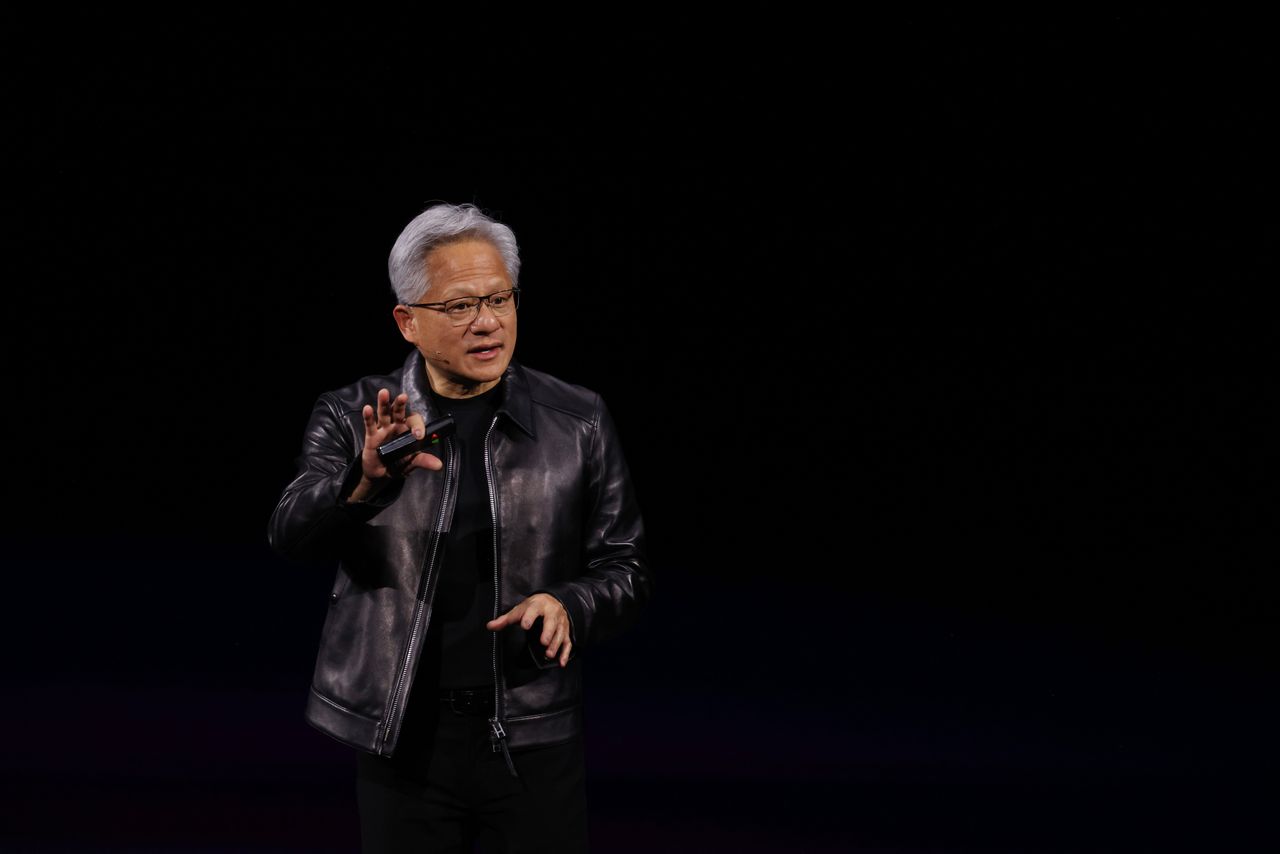
Nvidia, Nokia and T-Mobile completed an AI-RAN call on a commercial network, a technical milestone for shared telecom and AI infrastructure that still lacks disclosed revenue.
Nvidia, Nokia and T-Mobile have completed what they describe as the first AI-RAN call on a live commercial network. The call used commercial ARC servers, Nokia’s CUDA-accelerated radio software and radios connected to T-Mobile’s existing 5G standalone core and a standard smartphone.
AI-RAN combines radio-access-network functions with accelerated computing on shared infrastructure. In principle, a carrier could use the same distributed hardware to run mobile-network workloads and low-latency AI applications. That could improve utilization at cell sites and metro facilities, but the economics depend on how much compute is available after network obligations and whether customers will pay for edge services.
Nvidia CEO Jensen Huang framed the opportunity at GTC Berlin as roughly 100,000 telecom sites representing about 100 gigawatts of distributed capacity. That is a vision of the addressable infrastructure, not a forecast of contracted AI demand or revenue. Nvidia said nearly 20 operators have announced AI-RAN collaborations, while commercial services are targeted for 2027.
BT, Deutsche Telekom and Elisa have announced pilots on Nokia software, with BT and Deutsche Telekom planning field trials in 2027. Those projects broaden the evidence beyond one U.S. call, but they remain tests rather than production-scale deployments.
The strategic appeal differs by company. Nvidia can sell accelerated computing, Nokia can embed its radio software in a new architecture, and carriers may gain a platform for edge inference. The risk is that shared systems cost more than conventional network equipment before demand for local AI services is proven.
Field trials will reveal whether that utilization case works under live network load.
The milestone verifies that the stack can place a commercial phone call. It does not establish capacity economics, service-level reliability at scale or operator returns. Investors should look next for named commercial deployments, disclosed hardware volumes and evidence that AI workloads generate incremental carrier revenue rather than merely raising capital spending.
Continue your NOK research
Related News

Nokia’s AI and Cloud Orders Turn Network Growth Into a Measurable Business
Nokia’s third-quarter sales rose 10%, while AI and cloud revenue more than doubled and new orders reached €1.5 billion. Margin pressure remains, but the order book gives its networking strategy clearer commercial evidence.

T-Mobile's First AI-RAN Call Moves Nvidia Into Live Telecom Networks
T-Mobile completed a commercial-network call using Nvidia and Nokia AI-RAN technology. The test proves technical integration, while 2027 carrier trials will determine whether shared AI and radio infrastructure is economical.
Susquehanna Raises AMD and Qualcomm Targets but Cuts Coherent and Intel
Susquehanna expects modest semiconductor earnings upside from AI demand, yet its target changes split sharply across the group. AMD’s data-center growth supports optimism, while Coherent and Intel face company-specific execution questions.

Apple Adds US Suppliers for Titanium and Advanced iPhone Camera Films
Apple committed up to $100 million to Pennsylvania titanium producer Perryman and expanded work with Qnity on camera films. The agreements deepen US sourcing but remain a small part of Apple’s global supply chain.

Alphabet’s AI Spending Creates More Upside and More Risk Than Apple’s
Alphabet is growing faster and trades at a lower multiple than Apple, but its AI capital spending has sharply reduced free cash flow. Apple offers steadier shareholder returns at a much richer valuation.

Doximity and OpenEvidence Settle AI Dispute Without Disclosing Terms
Doximity and OpenEvidence ended dueling lawsuits involving alleged platform misuse, impersonation and defamation. The case was dismissed with prejudice, leaving both companies to compete in clinical AI without a public financial settlement.
Alaska Airlines Recruits a CVS Technology Veteran to Lead Digital Change

Alaska Airlines has appointed Amaresh Siva as chief information and technology officer, bringing in an executive with experience across health care, retail and industrial companies. The role covers enterprise technology, data, digital products, cybersecurity and artificial intelligence, according to the airline.
Siva joins Alaska after serving in senior technology roles at CVS Health. Alaska said his career spans nearly three decades and also includes Target and GE. The breadth is relevant because airline technology touches reservation systems, operations, maintenance, payments, customer service and employee tools. Failures can interrupt travel, while well-designed systems can reduce costs and improve reliability.
The timing adds significance. Alaska Air Group is integrating Hawaiian Airlines, a process that requires systems, data and operating procedures to work together without disrupting customers. Technology leadership will influence how quickly the group combines platforms, protects sensitive information and delivers a consistent digital experience across brands.
Siva’s appointment is strategically relevant because Alaska’s integration challenge is as much about systems and data as it is about aircraft and routes.
The position does not create an immediate financial forecast. No compensation terms, cost-savings target or technology budget was disclosed in the reviewed materials. A senior hire can improve execution, but the effect must be measured through operational results rather than a résumé alone.
Investors should look for evidence in several areas: fewer technology-related disruptions, better on-time recovery tools, progress toward common customer platforms, stronger cyber controls and clear savings from replacing duplicate systems. AI initiatives should also be judged by observable outcomes such as faster service, better scheduling or lower support costs, not by the number of projects announced.
Alaska included the appointment in its third-quarter corporate update, confirming that Siva joined the executive committee. That gives the technology function direct representation in strategic decisions, which is important during a multi-year integration.
The hire is a sensible step for an airline with a complex transformation ahead. It is not, by itself, a reason to change earnings estimates. The investment value will emerge if Alaska converts Siva’s cross-industry experience into reliable systems, measurable integration progress and a better customer journey while keeping cybersecurity and operational resilience intact.
HPE’s AI Growth Meets a Supply and Margin Reality Check

Hewlett Packard Enterprise’s third-quarter results showed how quickly the company’s scale has changed after the Juniper Networks acquisition. Revenue reached $12.2 billion, up 34% from a year earlier, while reported gross margin was 40.1% and operating margin was 11.4%.
The growth is meaningful, but it needs interpretation. Acquisitions can lift reported revenue before they improve earnings per share or free cash flow. Investors must separate organic demand from the contribution of Juniper, then compare the added profit with integration costs, financing and any new share count.
Management also said supply remained a constraint. That can be a positive demand signal when orders exceed available components, but it can also delay revenue, raise procurement costs and frustrate customers. The financial effect depends on whether HPE can protect pricing and deliver the delayed equipment without losing business.
HPE’s 34% revenue growth is impressive, but durable value will depend on margins, cash conversion and successful integration rather than sales alone.
The original downside analysis emphasized that HPE shares can be volatile and that historical selloffs have sometimes been severe. Historical drawdowns do not predict a new decline, yet they remind investors that hardware businesses are cyclical and sensitive to capital spending. The AI server opportunity adds growth, but it also exposes HPE to expensive components, fast product cycles and strong competition.
Juniper can improve the mix by adding networking software, recurring revenue and higher-value infrastructure. The strategic case is strongest if HPE can sell compute, networking and services together while retaining customers and reducing overlapping costs. Integration missteps would weaken that benefit and make leverage more important.
The next reports should answer three questions. How much of revenue growth is organic? Can gross and operating margins hold as constrained products ship? Is free cash flow improving after working-capital and acquisition-related demands? Clear progress on all three would make the recent growth more investable.
HPE is no longer only a mature enterprise-hardware story. It now has a larger networking platform and more exposure to AI infrastructure. That can raise the company’s growth ceiling, but it also raises the execution standard. Investors should require evidence that scale is producing better economics per share, not merely a larger income statement.
Memory Stocks Slide as Supply Concerns Challenge the AI Trade
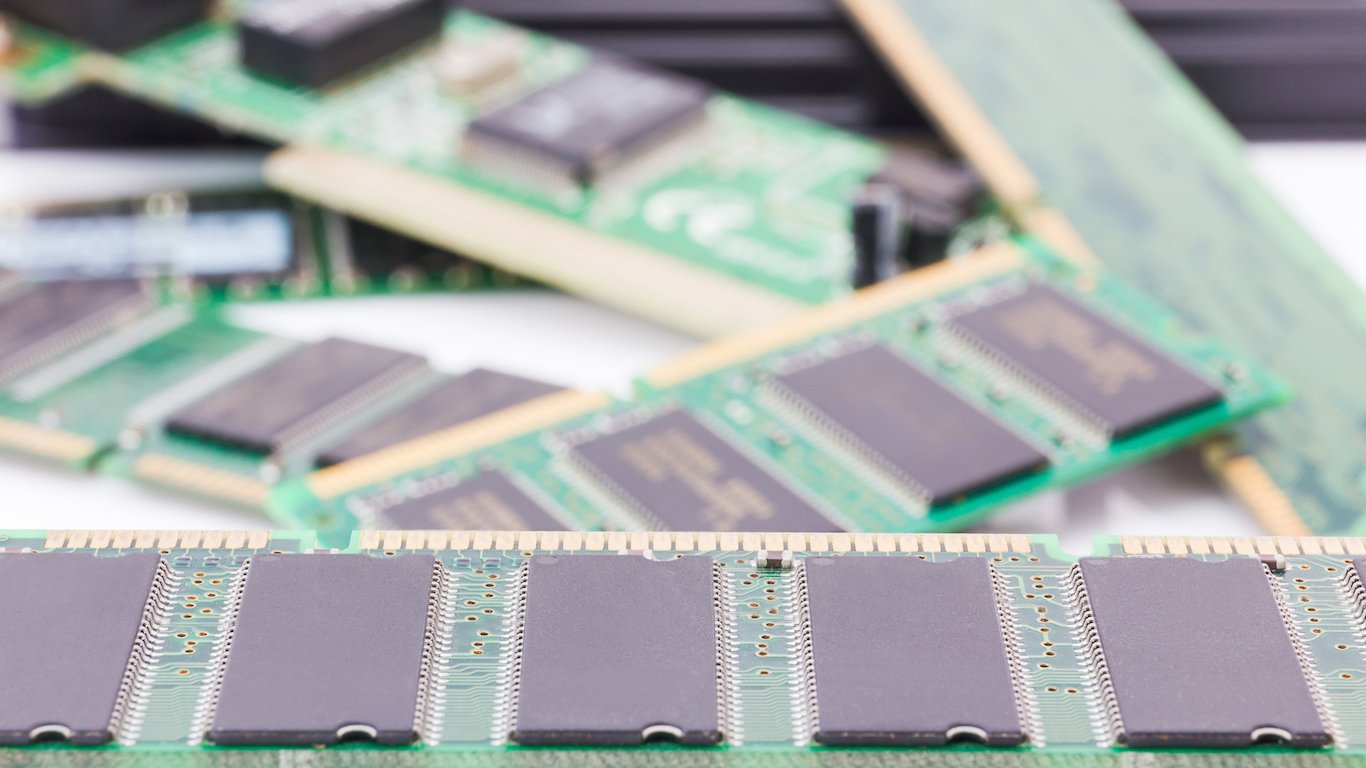
Shares tied to memory and storage fell as investors reconsidered how long the sector’s favorable pricing could last. The selloff followed concern around SK Hynix’s investment plans and the possibility that additional capacity could eventually weaken the shortage conditions that have supported prices.
That reaction captures the central tension in the memory cycle. Artificial intelligence servers require large amounts of high-bandwidth memory and storage, creating strong demand for producers across the supply chain. Yet the same high prices and margins that attract investors also encourage manufacturers to spend more. Because new fabrication capacity takes time to build and qualify, the market can move from shortage to surplus with a delay.
SanDisk enters that debate with powerful recent results. The company reported fiscal 2026 revenue of $20.25 billion, up 175%, while data-center revenue rose 437%. Management said higher pricing contributed to the increase. Those figures confirm that the current cycle is strong, but they also make future comparisons more demanding.
Memory investors are not only betting on AI demand; they are betting that supply will remain disciplined enough for prices and margins to stay elevated.
The read-through from SK Hynix is not mechanically negative. Spending on advanced memory may be necessary simply to serve contracted demand, and some capacity cannot easily shift between products. High-bandwidth memory also carries different technical requirements from standard NAND storage. Still, investors often sell the group when they see signs that industry capital spending could outrun demand growth.
For SanDisk, the most useful indicators are bit shipments, average selling prices, inventory and gross margin. Revenue alone cannot show whether growth comes from sustainable volume or a temporary pricing spike. For Micron and SK Hynix, the timing of new capacity and customer commitments will help reveal whether investment is defensive, growth-oriented or excessive.
The decline therefore does not invalidate the AI storage thesis. It shows that the thesis has moved into a more mature phase. Demand growth is already widely recognized, so the next source of upside must come from earnings that remain strong even as competitors add supply. If pricing softens faster than volumes expand, memory stocks can fall despite continued growth in AI infrastructure.
Nvidia’s SpaceXAI Deal Lifts Chip Stocks, but Benefits Are Uneven

Nvidia’s announcement that SpaceXAI will adopt its Vera CPU gave the semiconductor sector another reason to price in expanding artificial intelligence infrastructure. Nvidia said the deployment would support agentic AI at massive scale and expand Grok infrastructure on the Vera Rubin platform. The announcement did not disclose a purchase volume or contract value.
The direct commercial link is therefore clearest for Nvidia. SpaceXAI selected Nvidia’s technology for a defined infrastructure plan, which can support future processor and platform demand if deployment proceeds. For SanDisk and Intel, the market reaction described by 24/7 Wall St. was a broader read-through rather than evidence of new contracts.
SanDisk can benefit when AI systems require more high-performance storage, and Intel can benefit if data-center spending broadens across processors, networking and systems. However, a customer’s decision to use Nvidia’s CPU does not specify whose storage or complementary silicon will be installed. Investors should avoid converting sector enthusiasm into an unsupported revenue forecast for every chip company.
The SpaceXAI announcement is a direct product endorsement for Nvidia, but only an indirect demand signal for SanDisk and Intel.
SanDisk’s own fundamentals provide a more concrete backdrop. The company reported fiscal 2026 revenue of $20.25 billion, up 175%, with data-center revenue up 437%, helped by pricing and demand. Those figures show that AI infrastructure spending is already affecting its business. They are stronger evidence than a single peer announcement, though such growth rates can also attract new supply and make future comparisons difficult.
The broader lesson is that AI hardware rallies often combine two different ideas: confirmed company-specific demand and expectations that spending will spread through the supply chain. Both can move prices, but they deserve different confidence levels. Nvidia has the confirmed platform selection. SanDisk has separate evidence of strong data-center growth. Intel’s benefit from this particular announcement remains less specific.
Investors should watch for purchase commitments, shipment schedules and customer disclosures that narrow the gap between enthusiasm and revenue. Without those details, the announcement supports the sector’s demand narrative but does not establish equal economic value for every stock that rose alongside Nvidia.
Bloom Energy’s Record Quarter Raises the Bar for Its Valuation

Bloom Energy delivered the kind of quarter that can change how investors value a company. Second-quarter 2026 revenue reached $1.07 billion, up 165.5% from a year earlier, while gross margin expanded to 33.4% and operating income reached $182.2 million. Management also raised full-year guidance.
The results support the idea that Bloom’s solid-oxide fuel-cell systems are moving beyond niche deployments. Data centers, utilities and other power-hungry customers increasingly need generation that can be installed faster than large grid upgrades. Bloom’s systems can provide on-site electricity, giving customers a way to add capacity when transmission connections or new generation take years.
That demand does not make valuation irrelevant. The original Trefis comparison argued that Bloom traded at a rich enterprise-value-to-revenue multiple relative to mature industrial peers such as Cummins and Linde. Those companies have different growth rates, margins and business mixes, so the comparison is not a direct substitute for a discounted cash-flow analysis. It does illustrate how much future execution is already embedded in Bloom’s market value.
Revenue growth of 165.5% and a 33.4% gross margin show real operating momentum, but investors still need to distinguish a durable earnings base from a project-driven surge.
Several variables will decide which interpretation proves right. First is order conversion: large announcements must turn into delivered systems and collected cash. Second is margin durability, because rapid growth can strain manufacturing, service and working capital. Third is customer concentration. A small number of large deployments can make quarterly results volatile even when long-term demand is strong.
Bloom also competes with gas turbines, batteries, grid power and other distributed-energy technologies. The economic choice depends on local power prices, reliability needs, emissions rules and the cost of delay. Fuel cells can be attractive where speed and uptime matter, but they are not automatically the cheapest solution in every market.
The latest quarter gives investors stronger evidence that Bloom can scale. It also raises the hurdle for the next year. If revenue continues to grow while gross margin stays near the current level and cash conversion improves, a premium valuation becomes easier to defend. If growth slows sharply or margins retreat, the same valuation can amplify disappointment. The business has advanced; the stock now needs execution to keep pace.
Latest comments