


 Be The Investor Research
Apple Adds US Suppliers for Titanium and Advanced iPhone Camera Films

Apple committed up to $100 million to Pennsylvania titanium producer Perryman and expanded work with Qnity on camera films. The agreements deepen US sourcing but remain a small part of Apple’s global supply chain.
Apple is expanding its United States supplier network for materials used in the iPhone Duo and iPhone 18 Pro. The company added Perryman Company as a titanium supplier and expanded its relationship with Qnity Electronics, which produces advanced films for the iPhone 18 Pro camera system.
Apple committed up to $100 million over three years to Perryman, a Pennsylvania manufacturer that melts, forges and rolls titanium. Apple said the material contains at least 80% recycled content and will be used in iPhone Duo casings. The commitment provides a defined commercial opportunity for a domestic supplier, although Apple did not disclose unit volumes or pricing.
Qnity, based in Delaware, will supply advanced films for the variable-aperture system in the iPhone 18 Pro’s 48-megapixel main camera. A variable aperture changes how much light reaches the sensor, giving the camera more control across different conditions. The expanded agreement links a specialized US material supplier to a visible product feature rather than a generic localization pledge.
The new contracts add domestic capacity for specific components, but Apple still relies on a global network spanning more than 60 countries.
The agreements are part of Apple’s American Manufacturing Program and its four-year, $600 billion commitment to US manufacturing. Apple says it works with suppliers in all 50 states and supports more than 450,000 jobs. US companies now make nearly 100 components for the iPhone Duo and iPhone 18 Pro across more than a dozen states.
Apple has also expanded domestic sourcing for radio-frequency components, cover glass and semiconductor packaging. Broadcom announced a $1.5 billion modernization of its Fort Collins facility within a larger multiyear Apple agreement, while Corning is expected to produce all cover glass for iPhones and Apple Watches at its Kentucky site by year-end.
For investors, the strategy can reduce exposure to trade restrictions and improve political support in the United States. It may also raise costs if local manufacturing is more expensive than established Asian supply chains. Apple has not provided enough detail to calculate the margin effect of the Perryman and Qnity agreements.
The most useful evidence will be product volumes, supplier investment and any change in component costs. The announcement shows a real shift in sourcing, but not a wholesale relocation of iPhone production.
Continue your AVGO research
Related News
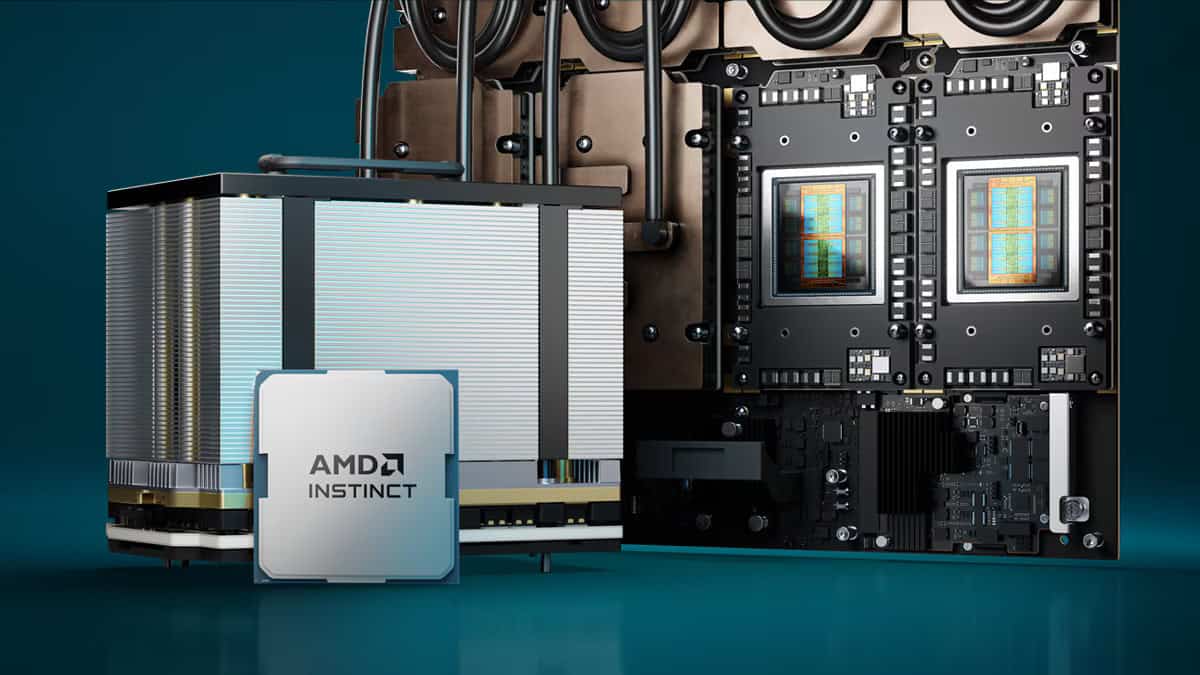
AMD's Valuation Leaves Little Room for a Slow Helios Ramp
AMD's data-center revenue more than doubled, but a third-party model sees little near-term upside after the stock's surge. Helios deployments, gross margin and customer timing now matter more than another ambitious price target.
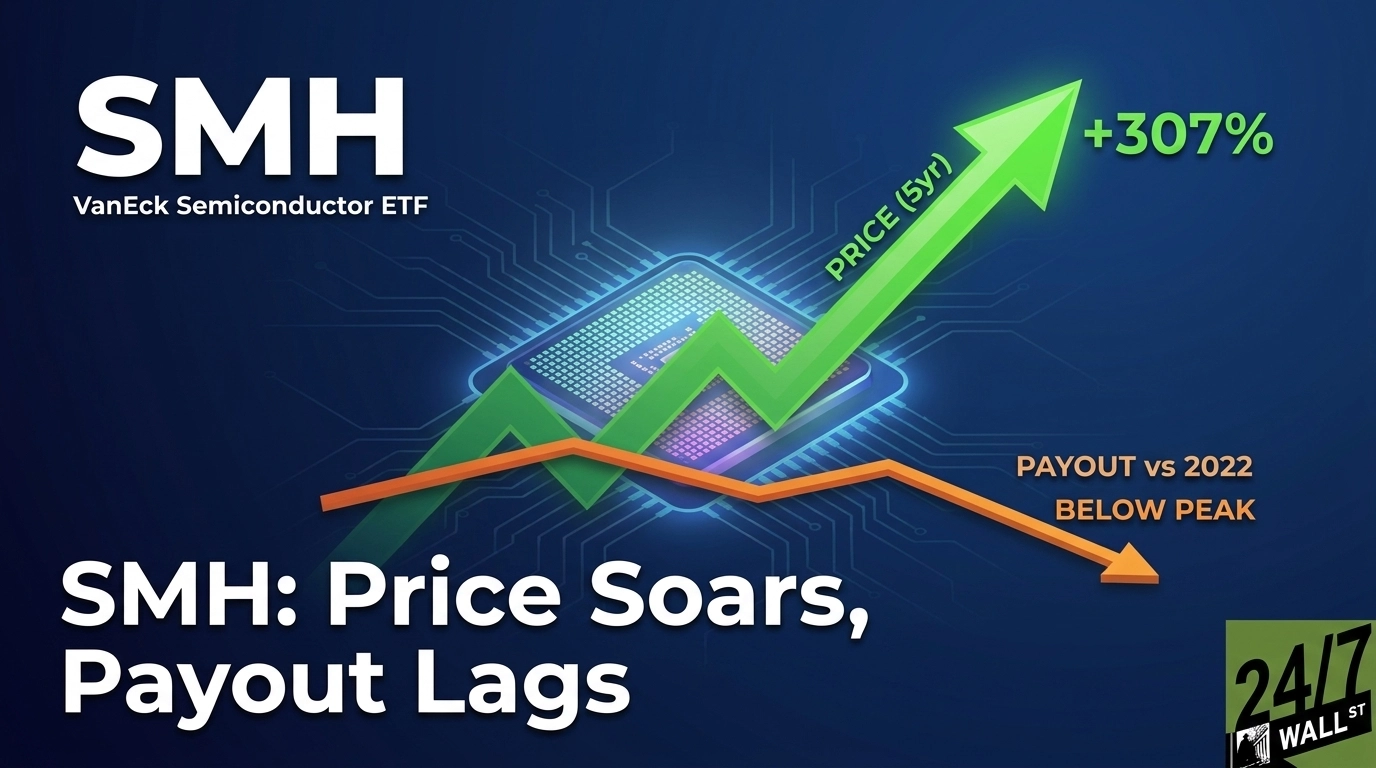
SMH's 0.2% Yield Shows What Semiconductor Investors Are Buying
SMH has delivered strong price gains while its annual distribution remains below its split-adjusted 2022 level. The contrast reflects a concentrated portfolio built for semiconductor growth, not meaningful current income.
Arista's AI Networking Growth Comes With a $9.7 Billion Supply Bet
Arista's AI networking sales and margins are accelerating, but $9.7 billion of non-cancellable purchase commitments meaningfully raises the financial cost of forecasting customer demand incorrectly.

Meta's $35 Billion Equity Plan Makes AI Dilution a Live Risk
Meta is pairing a $22.5 billion forward common-stock sale with $12.5 billion of mandatory convertible preferred shares and plans a separate $60 billion at-the-market program for 2027.
Intel's Server CPU Rally Now Depends on Factory Execution
New Street upgraded Intel on a multiyear server CPU shortage, while Intel's own results show data-center growth and new capacity. The thesis still requires higher output, reliable yields and profitable use of expensive factories.
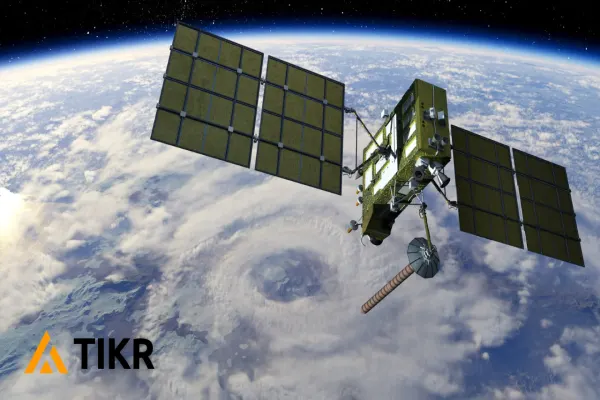
Viasat's FCC Petition Adds a Spectrum Test for AST SpaceMobile
Viasat asked the FCC to reject part of AST SpaceMobile's overseas spectrum request, citing interference and rule conflicts. No ruling has been issued, and AST's broader partner-spectrum model remains intact but approval-dependent.
TeraWulf's Tenant-First Case Meets a $3 Billion Capital Test
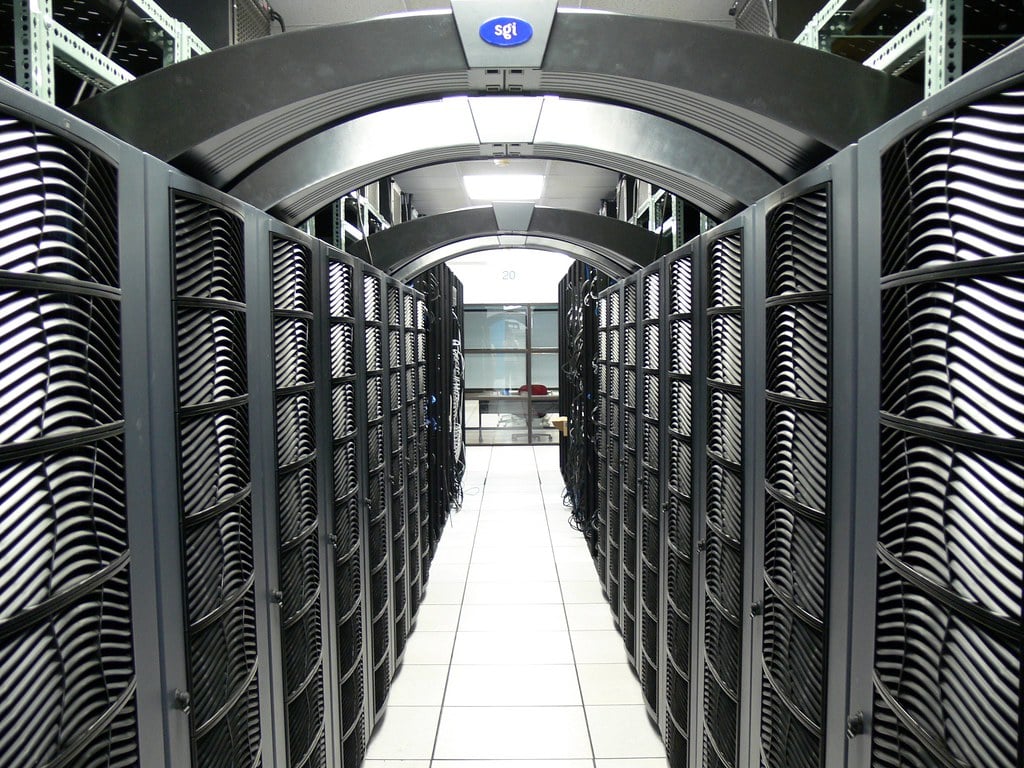
TeraWulf's answer to fears of stranded artificial-intelligence data centers is simple: it says major construction follows power, customers and financing rather than speculative demand. The claim is testable because the company is already shifting from bitcoin mining to high-performance-computing leases while committing substantial capital to new campuses.
Chief Executive Paul Prager pushed back on the idea that partially developed sites are stranded assets, describing them instead as a pipeline. The sequencing matters. TeraWulf says it secures power and interconnection, fixed-price construction arrangements, long-term tenants with strong backing and project financing before completing a facility. Early site work can still occur before every building is finished, so investors need to distinguish prepared land from fully funded, contracted capacity.
The second quarter showed that the transition has begun. TeraWulf reported $44.8 million of revenue, including $31.9 million from high-performance-computing leases. HPC therefore represented about 71% of quarterly revenue. That is a meaningful change from June 2025, when the company had not yet started HPC leasing operations.
The balance sheet gives TeraWulf resources, but the composition matters. It ended June with approximately $3.0 billion of cash and restricted cash. Restricted cash is not freely available for every corporate purpose, so the combined figure should not be read as unrestricted liquidity. The company also reported $56.4 million of second-quarter interest expense, up from $4.0 million a year earlier, largely because of secured and convertible notes issued in 2025.
The capital intensity is visible elsewhere. TeraWulf capitalized $32.7 million of interest during the quarter, recorded $21.2 million of depreciation and recognized $83.9 million of stock-based compensation. These figures do not prove that a project will fail, but they show why contracted revenue, financing terms and delivery schedules matter as much as headline megawatts.
The long-term opportunity is substantial. Company materials say 401 megawatts of critical IT capacity at the Justified Data Campus were leased to Anthropic in July 2026, with about $19 billion of contracted cash flows over an initial 20-year term and two five-year extension options. Contracted cash flow is not the same as profit or cash already received. Construction, financing, operating costs and customer performance determine how much value ultimately reaches shareholders.
Investors should evaluate the tenant-first argument project by project. Useful evidence includes final financing, fixed-price construction coverage, energization dates, tenant credit support and the start of lease revenue. TeraWulf's second-quarter HPC mix shows that conversion is underway, while the rise in interest expense shows the cost of getting there. The strongest rebuttal to stranded-asset concerns will be completed capacity producing contracted cash, not an early share-price rebound.
Shopify's 34% Growth Still Leaves Little Room for Valuation Error

Shopify's second-quarter performance explains why investors continue to pay a high price for its shares. Revenue grew 34% from a year earlier, or 33% in constant currency, while free cash flow margin reached 18%. Growth above 30% across gross merchandise volume, revenue, gross profit and free cash flow shows that the business is expanding on several fronts at once.
The valuation still demands more than a strong quarter. The original analysis put Shopify at about 80 times forward earnings, close to its three-year average of 74 times, and cited a separate estimate of 112 times operating profit. Those are dated market measures and depend on the provider's definitions, but both indicate that investors expect years of rapid earnings growth.
Shopify has already improved its cost structure. The source said operating margin increased from 3.7% in 2023 to 16.4% in 2025, while operating expenses fell to 34.0% of revenue in the second quarter of 2026 from 37.7% a year earlier. Normalized earnings per share roughly doubled from 2023 to 2025, according to the analysis. That history suggests the stock's advance was supported by profit growth, not only a higher multiple.
Artificial-intelligence commerce is the next part of the thesis. Management has said orders attributed to AI search were roughly 15 times their January 2025 level. Shopify can make its merchants' catalogs available to shopping agents, turning a new interface into another source of orders. The opportunity is meaningful if agents broaden merchant reach without weakening Shopify's economics.
The cost side needs equal attention. Subscription gross margin fell to 79.7% in the second quarter from 81.6% a year earlier. The source attributed part of the decline to a $37 million increase in cloud and infrastructure costs, including AI usage, with merchant use of Shopify's Sidekick assistant flowing largely through that expense line. Payments are also growing faster than subscriptions and carry lower margins, which can make revenue growth outpace earnings growth.
That tension is visible in outside forecasts. The source said analysts had raised their 2027 revenue estimate by 15% over the prior year but increased the 2027 earnings-per-share estimate by only 2%. Consensus estimates can change, yet the gap captures the central risk: more commerce does not automatically create proportionate profit when payments mix and AI infrastructure costs rise.
Shopify's next report is scheduled for November 3. Management has guided to revenue growth in the low 30% range and gross-profit growth in the mid-to-high 20% range. Investors should compare those measures with free cash flow margin, subscription gross margin and evidence that AI-originated orders are incremental. At a premium valuation, Shopify needs growth and operating leverage to advance together.
Arista's $3 Billion Quarter Raises the Bar for Its AI Premium

Arista Networks crossed $3 billion in quarterly revenue for the first time in the second quarter of 2026, giving investors unusually strong evidence that spending on cloud and artificial-intelligence networks is reaching the company.
Revenue rose 37.7% from a year earlier to $3.036 billion and increased 12.1% from the first quarter. Reported operating margin was 45.4%, while adjusted operating margin reached 49.9%. Reported diluted earnings per share rose to $0.95 from $0.70, and adjusted earnings per share increased to $1.02 from $0.73.
Those results are more useful than a distant share-price forecast. The original analysis projected a 2028 price using assumed revenue growth, margins and a future price-to-earnings ratio, but its inputs were internally inconsistent with Arista's reported operating performance. A valuation model can show sensitivity to assumptions; it cannot establish what the stock will be worth.
The operating case rests on AI networking. The source reported that more than 100 customers now use Arista's Etherlink switches, compared with only four or five in 2024. It also highlighted the company's "scale-across" opportunity, which links data centers across locations when power or space limits a single campus. Arista's 7800 platform is positioned for that traffic, while next-generation 1.6-terabit products are expected to enter trials in the second half of 2026 before production in 2027.
Financial strength gives Arista room to invest through the cycle. The company ended the quarter with $13.3 billion in cash and marketable securities, according to the source. Yet rapid growth also brings concentration and supply risk. Management expects one or possibly two additional customers to exceed 10% of sales alongside Microsoft and Meta, which means a small group of buyers can materially influence results.
Commitments to suppliers have risen as Arista works to secure chips, memory and other components. The source put purchase commitments at $9.7 billion and said management expects industry supply constraints to persist into 2028. These commitments can support shipments when demand is strong, but they also increase the cost of a slowdown or product transition.
The valuation debate should therefore focus on the durability of revenue growth and margins, not a single target price. A company growing nearly 38% with an adjusted operating margin close to 50% can justify a premium, but maintaining that premium requires continued AI-network wins, successful product transitions and disciplined inventory commitments.
The next signals are customer diversification, gross margin and adoption of the 1.6-terabit generation. If AI spending broadens beyond a few hyperscalers while margins remain resilient, Arista's premium will have operating support. If growth becomes more concentrated or supply commitments outrun demand, the same premium can magnify disappointment.
C.H. Robinson Cuts Freight Quote Times to Minutes With AI Agents

C.H. Robinson is moving its artificial intelligence program from a back-office experiment into the daily work of international freight forwarding. The company says its pricing agents have already produced more than 80,000 air and ocean freight quotes for over 3,600 customers, reducing preparation time to roughly two or three minutes.
That is a sharp operational change. Air-freight quotes previously took about a day, while ocean quotes could take two or three days. Faster answers matter because a customer requesting a shipment price can compare carriers quickly, and a slow response can mean losing the booking before it is ever entered into the system.
The rollout began in 2025 with less-than-container-load ocean shipments for the United States and Canada. C.H. Robinson has since expanded the pricing tools to full-container-load ocean freight and air cargo, with availability in Mexico, Europe, Latin America and Oceania. A China pilot is underway, and the company plans to add Southeast Asia, India, the Middle East and Africa during the fourth quarter of 2026.
Booking automation is the harder test. Chief Technology Officer Mike Neill said digital forms and data connections achieved only about 5% automation for ocean and air booking requests over roughly a decade. The new agents began handling ocean bookings in China in August. C.H. Robinson plans to extend them across Asia in the fourth quarter and globally in the first quarter of 2027.
Customs brokerage offers a second measurable use case. The agents can process more than 48 types of documents used in U.S. customs clearance, and the company reports that they have reduced the time spent on those tasks by 23%. The system draws on a data environment containing about 100 trillion data points and is being developed by roughly 450 software engineers and data scientists.
The evidence so far is operational, not financial. C.H. Robinson has not disclosed a new booking-automation rate, the savings produced by the customs work, or a revenue and profit forecast tied to the program. That distinction matters for investors: minutes saved and documents processed show that the software works, but they do not yet show how much value the company will retain.
The next proof points are adoption and conversion. Investors should look for the share of bookings completed without manual intervention, whether response times improve win rates, and whether productivity gains appear in operating expenses or margins. The planned global booking launch in early 2027 gives the company a clear deadline against which to measure progress.
Aurora's 30,000-Truck Goal Depends on a Sharp Production Ramp
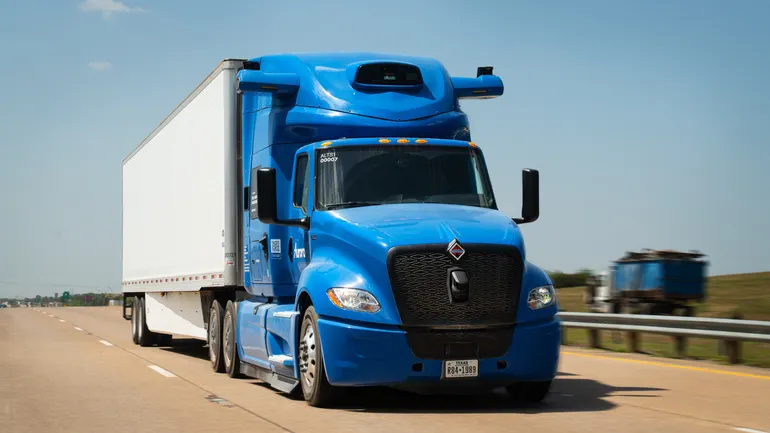
Aurora Innovation has put numbers around its autonomous-trucking ambition: more than 30,000 driverless trucks and more than $5 billion of annual revenue by 2030. The targets are striking because Aurora is still early in commercial deployment. They are management goals, not contracted outcomes, and the path from hundreds of trucks to tens of thousands carries manufacturing, safety, customer and financing risk.
The company expects to exit 2026 with more than 200 driverless trucks in operation, then pass 1,000 trucks and $200 million of revenue in 2027. It targets positive free cash flow on a run-rate basis in 2028 with about 7,500 trucks. Reaching 30,000 by 2030 would require a steep multi-year production and deployment ramp.
Aurora's preferred model is Driver as a Service. Carriers own and operate autonomy-enabled trucks, while Aurora supplies the driving system and charges at least $0.85 per mile. That structure limits Aurora's need to own vehicles and should make the business less capital intensive than Transportation as a Service, where Aurora owns more of the operating assets. Management plans to cap the latter model at roughly 500 trucks.
Existing operations offer early evidence but not proof of scale. Aurora said its trucks have completed more than 500,000 driverless miles since commercial launch. Trucks operating for McLane, Werner and other customers are averaging an annualized rate above 225,000 miles per year, more than twice the utilization Aurora cites for a traditional truck. Higher utilization can create economic value only if maintenance, insurance, remote support and service costs remain controlled.
Hardware supply is another constraint. Aurora said its second-generation commercial hardware is designed for a one-million-mile operating life and costs more than half as much as the prior version. Roush has begun volume upfitting and targeted a production rate of 20 trucks a week in October. At that pace, output would be far below what the 2030 fleet target ultimately requires, so expansion through truck manufacturers such as Volvo and PACCAR is central to the plan.
Some milestones have already moved. Aurora now expects positive gross profit on a run-rate basis in the first half of 2027, later than its previous end-of-2026 goal. Its 2030 gross-margin target is 60%, while an earlier plan targeted 70% by 2028. Management attributed the change to a slower fleet ramp and supply-chain uncertainty.
Customers also have to accept the economics. Werner has said the technology, safety and reliability questions have progressed, but contract pricing still needs work. Long, difficult-to-staff middle-mile routes may provide the clearest early use case because higher truck utilization has immediate value there.
Aurora has defined a credible business model and measurable milestones, but the 2030 forecast requires near-flawless execution across several partners. Investors should track deployed trucks, paid autonomous miles, hardware cost and the timing of positive gross profit. Revenue targets matter only after those operating measures show that the service can scale safely and profitably.
Latest comments