



Who Owns the Bitcoin in IBIT, and What Shareholders Actually Hold

IBIT is a Delaware trust whose shareholders own beneficial interests, not individual bitcoin. Coinbase Custody safeguards most assets, BlackRock-affiliated entities manage the product, and authorized participants handle creations and redemptions.
An investor who buys the iShares Bitcoin Trust ETF, or IBIT, gets economic exposure to bitcoin without owning any identifiable coin. The legal owner of the bitcoin is the Delaware statutory trust. Shareholders own beneficial interests in that trust and can sell those shares for cash, but they cannot withdraw bitcoin to a personal wallet.
The service-provider chain divides responsibility. iShares Delaware Trust Sponsor established the product, and BlackRock Fund Advisors serves as trustee. Coinbase Custody holds the private keys for the trust's bitcoin, while Anchorage Digital is named as an additional custodian. BNY Mellon provides cash-custody and administrative services.
That structure separates the assets from BlackRock's corporate balance sheet. BlackRock does not treat the trust's bitcoin as treasury holdings and cannot spend it for corporate purposes. The trust is also not registered as an investment company under the Investment Company Act of 1940, a distinction disclosed prominently by iShares.
Authorized participants connect the share market to the underlying asset. These large financial firms can create and redeem baskets with the trust under the product's rules. Ordinary shareholders cannot perform that function. They rely on exchange trading and on the creation-redemption process to keep IBIT's market price close to the value of its bitcoin holdings.
The arrangement removes the operational burden of private keys and can fit brokerage and retirement accounts. It adds different risks: investors depend on the trust, custodians, service providers and market infrastructure. The annual filing describes custody controls and insurance, but it also warns that coverage may not be sufficient for every possible loss.
So the answer to who owns the bitcoin depends on the meaning of ownership. The trust holds legal title, custodians control the keys on its behalf, and shareholders own a security whose value is tied to the trust's net assets. Investors who want transferable coins need direct custody. Investors who want price exposure inside a conventional account may prefer the trust structure, while accepting its fees and intermediary risk.
Continue your COIN research
Related News

JPM Coin Goes Live on Ethereum for Institutional Dollar Transfers
JPMorgan made its dollar deposit token available to institutional clients on Ethereum after launching on Base. The move broadens bank-backed settlement but keeps access inside JPMorgan's permissioned client network.
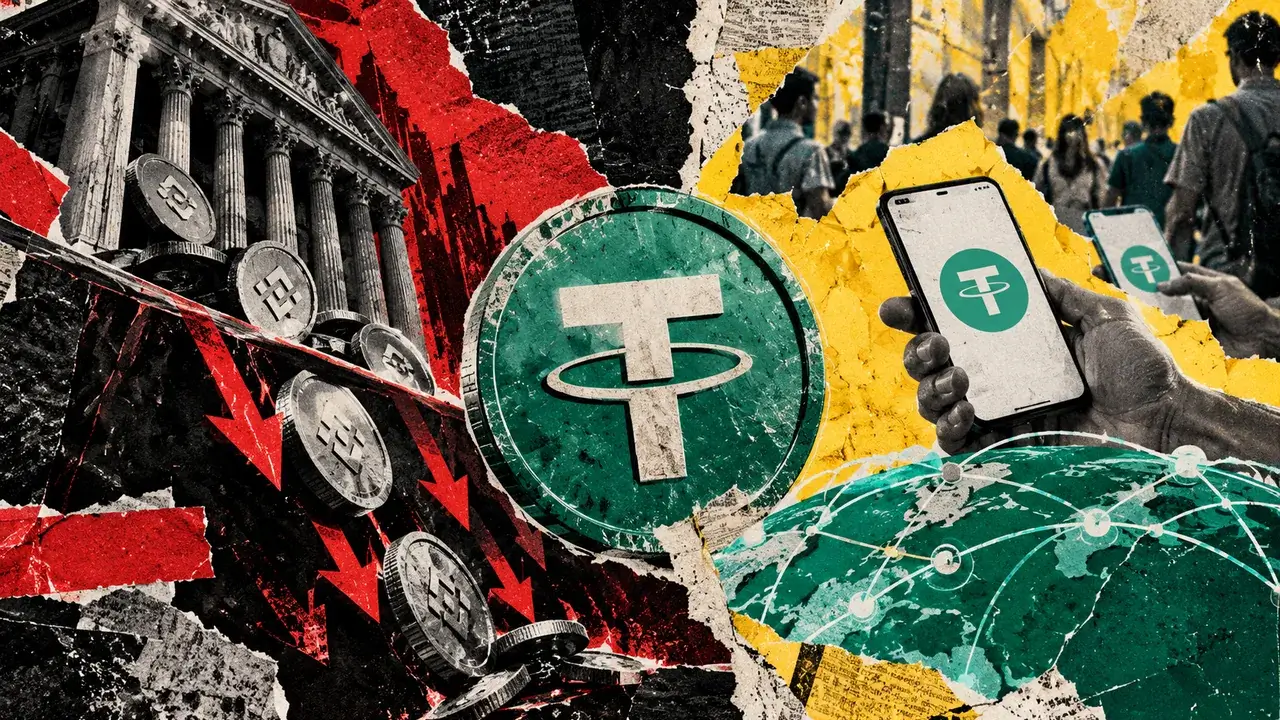
USDT Lost Exchange Balances as Stablecoin Rivals Paid for Distribution
Nineteen selected exchanges and lenders cut USDT balances by $4.6 billion in the third quarter while adding rival tokens. Tether retained a much larger payment footprint, separating trading incentives from adoption.

ARK's Third Quarter Was Powered by AI Biology, Not Its Famous Names
10x Genomics and other AI-linked biotech holdings drove ARK's third-quarter gains, while Tesla and Rocket Lab detracted. Contribution data show where fund performance actually came from.
One BlackRock Fund Drove 93% of Ether ETF Outflows
U.S. spot Ether ETFs lost about $320 million in the week through Oct. 16, but $299 million came from BlackRock's ETHA, making the selloff unusually concentrated.
VOO Beat VXUS Over 10 Years, but That Does Not Set the Next Decade
VOO’s trailing 10-year total return far exceeded VXUS through October 2026, yet the comparison reflects U.S. concentration, currency and valuation as much as fund quality.

What It Really Takes to Generate $4,950 a Month From JEPQ, Realty Income and Main Street
A three-security income portfolio can be modeled to pay $59,400 a year, but the required capital and reliability depend on variable option income, real-estate cash flow and supplemental dividends that are not guaranteed.
Where JEPQ and Main Street Fit in a Taxable Account or IRA

High cash distributions can create a tax bill that looks very different from the headline yield. That makes account placement important for JPMorgan's JEPQ and Main Street Capital, but there is no universal rule that one belongs in a taxable account and the other in an IRA.
JEPQ generates income from stock dividends and an options strategy. The fund's cash distributions can contain ordinary income, qualified dividends, capital gains or return of capital depending on the portfolio's realized activity and tax accounting. The mix is reported after year-end, so an investor cannot safely infer the final tax character from the monthly payment alone. In a taxable account, ordinary income is generally less tax-efficient than qualified dividends or long-term capital gains. In a traditional IRA, current tax is deferred until withdrawal, while qualified Roth IRA withdrawals can be tax-free if the statutory requirements are met.
Main Street is a regulated investment company and business development company. Its distributions likewise do not have a fixed tax character. The company says shareholders receive an annual Form 1099-DIV that identifies ordinary dividends, qualified dividends, capital-gain distributions and any return of capital. Main Street's 2026 estimate anticipated a mix rather than a single category. Supplemental dividends can also vary with portfolio income and realized gains, so neither their amount nor their tax treatment should be assumed in advance.
The practical choice begins with the investor, not the ticker. A person who needs current income before retirement may value the flexibility of a taxable account despite the annual tax cost. Someone in a high tax bracket who can leave the money invested may prefer the shelter of an IRA, especially for distributions ultimately taxed as ordinary income. But using retirement-account space also has an opportunity cost because contribution limits are finite, traditional IRA withdrawals are generally taxable, and early withdrawals can trigger taxes or penalties.
The most defensible process is to review the latest fund tax documents and the investor's own 1099-DIV, then compare after-tax income under realistic assumptions. Distribution rates, tax classifications and personal circumstances can all change. This is a framework for analysis, not individualized tax advice.
Binance's SOXL Perpetual Fell 5.9% Without Breaking Its 3% Price Band
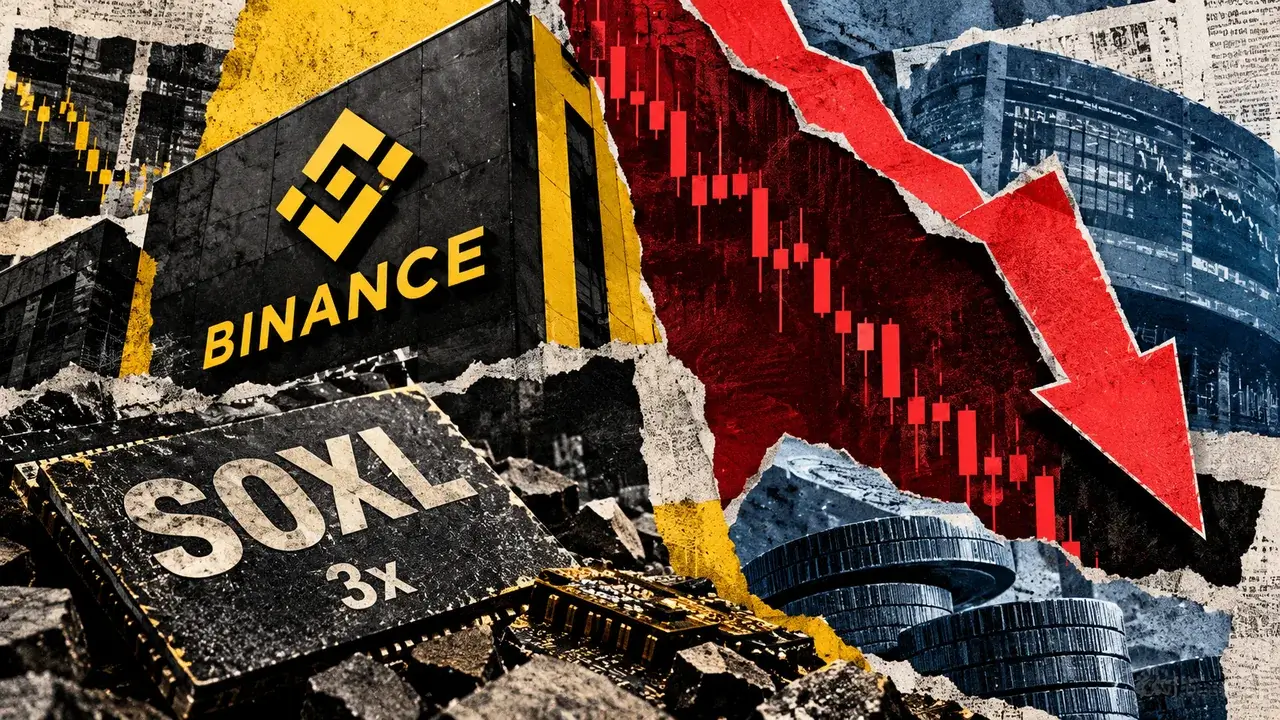
Binance's SOXL-linked perpetual contract fell 5.9% from its opening mark to its intrahour low during an October 17 weekend trading hour. At the same time, all 60 sampled minute-close differences between the mark and its reference index remained below the platform's stated 3% weekend band.
The figures are not contradictory. The 3% rule limits how far the mark can sit from the index at a given time. It does not stop the index itself from moving. During the sampled hour, the reference index declined nearly 4%, carrying the band and the mark lower together.
That distinction matters because Binance's contract trades while the underlying SOXL shares on NYSE Arca are closed. The weekend reference can be derived from crypto order-book inputs and smoothing procedures rather than a new exchange print for the ETF. Traders therefore hold exposure to Binance's reference methodology as well as semiconductor-market expectations.
Liquidation adds another layer. A position is closed when the mark reaches an account-specific threshold determined by collateral, leverage and margin mode. Staying within the mark-to-index band does not protect a highly leveraged position from liquidation after a cumulative price move.
Binance states that the contract tracks the Direxion Daily Semiconductor Bull 3X ETF and permits leverage up to 20 times. SOXL itself targets three times the daily move of a semiconductor index. Combining an equity-based leveraged product with a leveraged perpetual can create risk far beyond what a 3% reference band appears to imply.
GLDM Drew More New Money Than GLD as Fees Took Center Stage

Investors directed almost $500 million into SPDR Gold MiniShares Trust while the much larger SPDR Gold Shares received about $182 million over the reported period through October 14. Both funds hold physical bullion, so the flow gap points less to a new view on gold than to a preference for a cheaper wrapper.
State Street lists a 0.10% annual expense ratio for GLDM and 0.40% for GLD. On a $100,000 position, that difference is $300 a year before compounding. Gold produces no dividend or operating cash flow, and each trust sells a small amount of bullion to pay expenses, so a lower fee leaves investors with more gold exposure over time.
GLD still offers advantages for institutions and active traders. Its larger asset base, heavier trading volume and established options market can reduce execution costs for large or short-term trades. GLDM's lower share price and smaller fee are more relevant to long-term savers, especially when purchases are modest and options liquidity is not needed.
Taxes can overwhelm the annual savings for existing holders. Selling appreciated GLD in a taxable account realizes a gain, while both physical-gold trusts can face the higher U.S. collectibles tax rate on long-term gains. A switch therefore makes the cleanest economic case inside a tax-advantaged account or for new contributions.
The flow data does not prove GLDM will outperform gold or that GLD is obsolete. It shows that when two funds deliver nearly the same underlying exposure, investors are increasingly treating cost and trading purpose as separate decisions.
Bank OZK's Rising Dividend Is Well Covered, but Credit Still Sets the Limit

Bank OZK raised its quarterly common dividend to $0.49 on Oct. 1, the 65th consecutive quarterly increase. The new annualized rate is $1.96 per share, and the source calculated a forward yield of about 4.3% at the price then quoted.
The dividend is well covered by recent earnings. Trailing 12-month earnings of $6.06 imply a payout ratio of about 32%. Put differently, the bank retains roughly two-thirds of reported profit for capital, growth and credit losses.
Second-quarter earnings were $1.49 per diluted share, down from $1.58 a year earlier but up from $1.44 in the first quarter. Net income available to common shareholders was $163.3 million. Those figures support the current payment, even without assuming faster profit growth.
Bank OZK is also returning capital through repurchases. It authorized a new $200 million program in June after using most of a previous authorization over the preceding four quarters. Buybacks below tangible book value can increase value per remaining share, but only if the bank's assets and credit reserves are sound.
That qualification matters because Bank OZK has a large commercial real estate and construction-lending franchise. Management said Real Estate Specialties Group repayments approached $10 billion over four quarters, reducing concentration. It expected construction loans to fall below the relevant concentration guideline around year-end or early 2027.
Credit indicators were not uniformly benign. Special-mention loans increased, and the bank charged off $22 million on a Seattle office property. Special mention is not the same as nonperforming, but it identifies loans that require closer monitoring. Management said reserves had been built before the charge-off and warned that additional problem assets could emerge.
The dividend record is therefore supported by arithmetic rather than tradition alone. A payout near one-third of earnings, steady quarterly profitability and retained capital give the board room for small increases.
The limit is credit. If losses in office, life-science or other construction exposures rise faster than allowances, earnings and capital will absorb the damage before the dividend. Investors should watch special-mention balances, charge-offs, reserve coverage and the pace of RESG repayments alongside the next one-cent increase.
Bank OZK is scheduled to report third-quarter results after the market close on Oct. 20. That release will provide fresher evidence than the dividend history about whether the yield remains comfortably funded.
Moderna's Melanoma Data Must Justify a Rally Analysts Do Not

Moderna's shares rose to a fresh 52-week high ahead of a full Phase 3 melanoma presentation scheduled for Oct. 24 at the ESMO Congress. The move put an unusual gap between the market price and the caution embedded in analyst targets.
Goldman Sachs raised its target to $137 from $120 but kept a Neutral rating. At the roughly $238 share price reported by the source, the new target was about 42% lower. The target increase was therefore not a conventional bullish call. It acknowledged greater pipeline value while signaling that the recent rally had already priced in substantial success.
The central asset is intismeran autogene, also known as mRNA-4157 or V940, a personalized cancer vaccine developed with Merck's Keytruda. Moderna said in August that the Phase 3 study in resected high-risk melanoma met its primary endpoint of recurrence-free survival and the key secondary endpoint of distant metastasis-free survival.
Meeting an endpoint is important, but the full dataset determines how important. Investors need the hazard ratios, confidence intervals, follow-up duration, subgroup consistency, treatment discontinuations and adverse-event profile. A hazard ratio below 1.0 favors the combination, while the distance from 1.0 indicates the estimated size of the relative risk reduction. Confidence intervals show the precision of that estimate.
Goldman's analyst said a recurrence-free survival hazard ratio below 0.70 would be needed to support the share price. That is an analyst's valuation threshold, not a regulatory requirement. Regulators and physicians will consider the total evidence, including absolute event rates, durability, safety and clinical relevance.
The stock had gained about 66% over the month described by the source, helped by the positive topline result, a return to the Nasdaq-100 and reports of a public-private cancer-vaccine initiative. Those catalysts can amplify demand for shares before the medical details are known.
That makes the Oct. 24 presentation a validation event rather than merely another update. Strong, consistent and durable benefit could support a broader cancer-vaccine platform. A weaker effect size, wide uncertainty or difficult tolerability would challenge a valuation built on more than one indication.
The distinction is simple: Moderna has already said the trial succeeded statistically. The market now needs to learn how much patients benefited, how confidently that benefit was measured and whether the result can support adoption.
Latest comments