



Where JEPQ and Main Street Fit in a Taxable Account or IRA

JEPQ and Main Street can create attractive cash income, but the tax character may change from year to year. Account placement should follow the actual 1099, liquidity needs and each investor's marginal tax situation.
High cash distributions can create a tax bill that looks very different from the headline yield. That makes account placement important for JPMorgan's JEPQ and Main Street Capital, but there is no universal rule that one belongs in a taxable account and the other in an IRA.
JEPQ generates income from stock dividends and an options strategy. The fund's cash distributions can contain ordinary income, qualified dividends, capital gains or return of capital depending on the portfolio's realized activity and tax accounting. The mix is reported after year-end, so an investor cannot safely infer the final tax character from the monthly payment alone. In a taxable account, ordinary income is generally less tax-efficient than qualified dividends or long-term capital gains. In a traditional IRA, current tax is deferred until withdrawal, while qualified Roth IRA withdrawals can be tax-free if the statutory requirements are met.
Main Street is a regulated investment company and business development company. Its distributions likewise do not have a fixed tax character. The company says shareholders receive an annual Form 1099-DIV that identifies ordinary dividends, qualified dividends, capital-gain distributions and any return of capital. Main Street's 2026 estimate anticipated a mix rather than a single category. Supplemental dividends can also vary with portfolio income and realized gains, so neither their amount nor their tax treatment should be assumed in advance.
The practical choice begins with the investor, not the ticker. A person who needs current income before retirement may value the flexibility of a taxable account despite the annual tax cost. Someone in a high tax bracket who can leave the money invested may prefer the shelter of an IRA, especially for distributions ultimately taxed as ordinary income. But using retirement-account space also has an opportunity cost because contribution limits are finite, traditional IRA withdrawals are generally taxable, and early withdrawals can trigger taxes or penalties.
The most defensible process is to review the latest fund tax documents and the investor's own 1099-DIV, then compare after-tax income under realistic assumptions. Distribution rates, tax classifications and personal circumstances can all change. This is a framework for analysis, not individualized tax advice.
Related News

A Roth IRA Is Not Automatically the Best Home for Every High-Yield Stock
Tax-free Roth growth can help high-yield investments, but MLP income, REIT distributions, contribution limits, liquidity needs and account-space trade-offs make simple one-size-fits-all placement rules unreliable.

What It Really Takes to Generate $4,950 a Month From JEPQ, Realty Income and Main Street
A three-security income portfolio can be modeled to pay $59,400 a year, but the required capital and reliability depend on variable option income, real-estate cash flow and supplemental dividends that are not guaranteed.

ARK's Third Quarter Was Powered by AI Biology, Not Its Famous Names
10x Genomics and other AI-linked biotech holdings drove ARK's third-quarter gains, while Tesla and Rocket Lab detracted. Contribution data show where fund performance actually came from.

One BlackRock Fund Drove 93% of Ether ETF Outflows
U.S. spot Ether ETFs lost about $320 million in the week through Oct. 16, but $299 million came from BlackRock's ETHA, making the selloff unusually concentrated.

VOO Beat VXUS Over 10 Years, but That Does Not Set the Next Decade
VOO’s trailing 10-year total return far exceeded VXUS through October 2026, yet the comparison reflects U.S. concentration, currency and valuation as much as fund quality.

Binance's SOXL Perpetual Fell 5.9% Without Breaking Its 3% Price Band
Binance's SOXL-linked perpetual fell 5.9% from its hourly open even though sampled mark-to-index gaps stayed below 3%. The episode shows why a price band does not cap trading losses.
GLDM Drew More New Money Than GLD as Fees Took Center Stage

Investors directed almost $500 million into SPDR Gold MiniShares Trust while the much larger SPDR Gold Shares received about $182 million over the reported period through October 14. Both funds hold physical bullion, so the flow gap points less to a new view on gold than to a preference for a cheaper wrapper.
State Street lists a 0.10% annual expense ratio for GLDM and 0.40% for GLD. On a $100,000 position, that difference is $300 a year before compounding. Gold produces no dividend or operating cash flow, and each trust sells a small amount of bullion to pay expenses, so a lower fee leaves investors with more gold exposure over time.
GLD still offers advantages for institutions and active traders. Its larger asset base, heavier trading volume and established options market can reduce execution costs for large or short-term trades. GLDM's lower share price and smaller fee are more relevant to long-term savers, especially when purchases are modest and options liquidity is not needed.
Taxes can overwhelm the annual savings for existing holders. Selling appreciated GLD in a taxable account realizes a gain, while both physical-gold trusts can face the higher U.S. collectibles tax rate on long-term gains. A switch therefore makes the cleanest economic case inside a tax-advantaged account or for new contributions.
The flow data does not prove GLDM will outperform gold or that GLD is obsolete. It shows that when two funds deliver nearly the same underlying exposure, investors are increasingly treating cost and trading purpose as separate decisions.
Bank OZK's Rising Dividend Is Well Covered, but Credit Still Sets the Limit

Bank OZK raised its quarterly common dividend to $0.49 on Oct. 1, the 65th consecutive quarterly increase. The new annualized rate is $1.96 per share, and the source calculated a forward yield of about 4.3% at the price then quoted.
The dividend is well covered by recent earnings. Trailing 12-month earnings of $6.06 imply a payout ratio of about 32%. Put differently, the bank retains roughly two-thirds of reported profit for capital, growth and credit losses.
Second-quarter earnings were $1.49 per diluted share, down from $1.58 a year earlier but up from $1.44 in the first quarter. Net income available to common shareholders was $163.3 million. Those figures support the current payment, even without assuming faster profit growth.
Bank OZK is also returning capital through repurchases. It authorized a new $200 million program in June after using most of a previous authorization over the preceding four quarters. Buybacks below tangible book value can increase value per remaining share, but only if the bank's assets and credit reserves are sound.
That qualification matters because Bank OZK has a large commercial real estate and construction-lending franchise. Management said Real Estate Specialties Group repayments approached $10 billion over four quarters, reducing concentration. It expected construction loans to fall below the relevant concentration guideline around year-end or early 2027.
Credit indicators were not uniformly benign. Special-mention loans increased, and the bank charged off $22 million on a Seattle office property. Special mention is not the same as nonperforming, but it identifies loans that require closer monitoring. Management said reserves had been built before the charge-off and warned that additional problem assets could emerge.
The dividend record is therefore supported by arithmetic rather than tradition alone. A payout near one-third of earnings, steady quarterly profitability and retained capital give the board room for small increases.
The limit is credit. If losses in office, life-science or other construction exposures rise faster than allowances, earnings and capital will absorb the damage before the dividend. Investors should watch special-mention balances, charge-offs, reserve coverage and the pace of RESG repayments alongside the next one-cent increase.
Bank OZK is scheduled to report third-quarter results after the market close on Oct. 20. That release will provide fresher evidence than the dividend history about whether the yield remains comfortably funded.
Moderna's Melanoma Data Must Justify a Rally Analysts Do Not
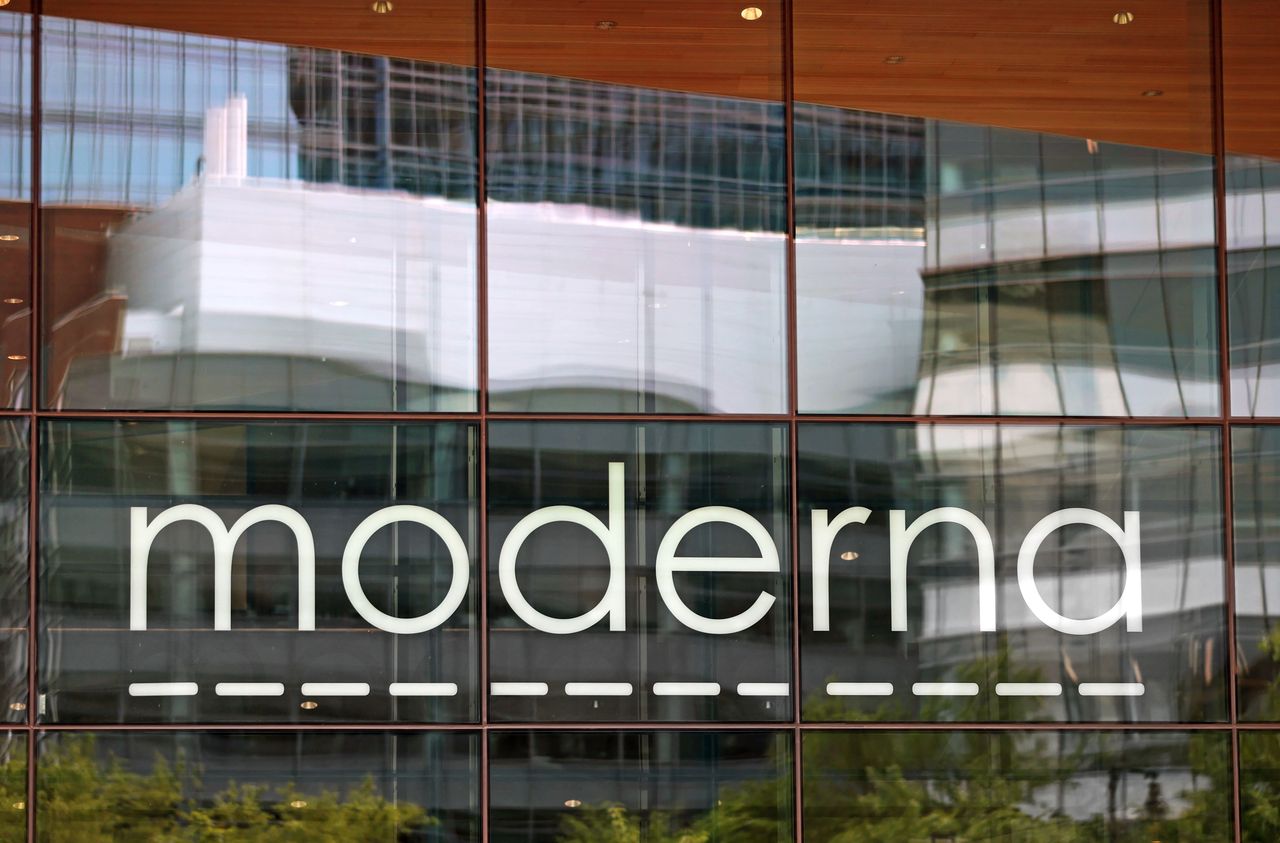
Moderna's shares rose to a fresh 52-week high ahead of a full Phase 3 melanoma presentation scheduled for Oct. 24 at the ESMO Congress. The move put an unusual gap between the market price and the caution embedded in analyst targets.
Goldman Sachs raised its target to $137 from $120 but kept a Neutral rating. At the roughly $238 share price reported by the source, the new target was about 42% lower. The target increase was therefore not a conventional bullish call. It acknowledged greater pipeline value while signaling that the recent rally had already priced in substantial success.
The central asset is intismeran autogene, also known as mRNA-4157 or V940, a personalized cancer vaccine developed with Merck's Keytruda. Moderna said in August that the Phase 3 study in resected high-risk melanoma met its primary endpoint of recurrence-free survival and the key secondary endpoint of distant metastasis-free survival.
Meeting an endpoint is important, but the full dataset determines how important. Investors need the hazard ratios, confidence intervals, follow-up duration, subgroup consistency, treatment discontinuations and adverse-event profile. A hazard ratio below 1.0 favors the combination, while the distance from 1.0 indicates the estimated size of the relative risk reduction. Confidence intervals show the precision of that estimate.
Goldman's analyst said a recurrence-free survival hazard ratio below 0.70 would be needed to support the share price. That is an analyst's valuation threshold, not a regulatory requirement. Regulators and physicians will consider the total evidence, including absolute event rates, durability, safety and clinical relevance.
The stock had gained about 66% over the month described by the source, helped by the positive topline result, a return to the Nasdaq-100 and reports of a public-private cancer-vaccine initiative. Those catalysts can amplify demand for shares before the medical details are known.
That makes the Oct. 24 presentation a validation event rather than merely another update. Strong, consistent and durable benefit could support a broader cancer-vaccine platform. A weaker effect size, wide uncertainty or difficult tolerability would challenge a valuation built on more than one indication.
The distinction is simple: Moderna has already said the trial succeeded statistically. The market now needs to learn how much patients benefited, how confidently that benefit was measured and whether the result can support adoption.
Novavax's Selloff Puts the Sanofi Partnership Under the Microscope

Novavax shares fell 12% on Oct. 16, a steeper drop than the broader biotechnology market and slightly worse than Moderna's decline. The move put attention back on the company's partner-led model rather than a single new clinical failure.
Sanofi now leads commercial activity for Nuvaxovid in major markets, including the United States, and has expanded the protein-based COVID-19 vaccine into Germany, Canada and other countries for the 2026 to 2027 season. Novavax supplies product during the transition and earns royalties on Sanofi sales.
The arrangement gives Novavax distribution and regulatory reach it could not reproduce cheaply on its own. It also changes the character of the investment. Revenue depends on a partner's launch priorities, demand forecasting and development timetable.
Novavax said it is eligible for royalties in the high teens to low twenties as a percentage of Sanofi's global net Nuvaxovid sales. It could also receive up to $350 million of Phase 3 and commercial milestones tied to Sanofi's influenza and COVID-19 combination products. New vaccines using Matrix-M can generate additional milestones and mid-single-digit royalties.
Those are contingent economics, not booked revenue. Milestones require specified development or commercial events, and royalties depend on actual sales. The company did not provide guidance for those categories in its full-year revenue framework, underscoring their uncertainty.
The Matrix-M adjuvant broadens the thesis beyond seasonal COVID-19 demand. A January agreement gave Pfizer a non-exclusive license to use Matrix-M in up to two disease areas, with a $30 million upfront payment, up to $500 million of additional milestones and high mid-single-digit royalties on resulting products. Pfizer controls development and commercialization, while Novavax supplies the adjuvant.
That capital-light structure can produce attractive margins if partners succeed. It can also make quarterly results lumpy and reduce management's control over timing. An early C. difficile program adds optionality but is not yet large enough to anchor the valuation.
The selloff therefore reflects a real debate. Novavax has lowered the cost of running a global vaccine franchise by handing commercial work to larger companies. In exchange, it has accepted partner concentration and less visibility. Investors need evidence from Sanofi's vaccine sales, realized royalties and milestone progression, not only the maximum payments listed in partnership agreements.
Microsoft's Maia 300 Is an Efficiency Bet, Not an Nvidia Exit

Microsoft plans to make its Maia family the primary inference system for its own products and services as it begins multi-gigawatt deployments in 2027. That is a meaningful change in infrastructure strategy, but it is not evidence that Microsoft is abandoning Nvidia.
Maia 200 is already serving production workloads including Microsoft Copilot and is being deployed in the United States, Europe and Australia. Microsoft says it runs OpenAI models, the company's own MAI models and leading open-source families.
Maia 300 is due to enter production deployments in 2027. Microsoft expects the system to deliver 40% more tokens per megawatt than leading GPU-based systems and up to seven times Maia 200's rack-scale token throughput in a 96-accelerator configuration. The design uses eight HBM4 memory stacks per accelerator, 18 terabytes per second of peak memory bandwidth and a 950-watt thermal envelope.
Those are Microsoft-defined comparisons, not independent benchmarks. The company did not publish a direct comparison with Google's tensor processing units, and workload mix can materially change tokens-per-watt results. Investors should treat the figures as engineering targets until customers and third parties can test them at scale.
The economic logic is straightforward. Inference is becoming a recurring cost across Copilot, GitHub, Teams and Azure services. A custom system optimized around Microsoft's own workloads could lower power use and reduce the share of value paid to outside chip vendors.
That does not make Nvidia optional. Microsoft describes Azure as a heterogeneous platform and says it will continue to use innovations from across the ecosystem. Training frontier models, serving diverse customer workloads and meeting rapid capacity growth require more than one accelerator family.
Maia therefore changes Microsoft's bargaining position and internal cost curve before it changes the competitive map. If the chip performs as expected, Microsoft can direct suitable inference workloads to its own silicon while reserving GPUs for tasks where they remain the better fit.
The real test will arrive after deployment begins: utilization, service reliability, power efficiency on production workloads and changes in capital spending per unit of AI output. Until then, Maia 300 is a credible efficiency program with strategic value, not proof that Microsoft has closed the gap with Nvidia or Google.
Latest comments