

Optics Stocks Drop on Anthropic News, WSJ Report: Lumentum Down 10%, Corning Down 8%, AXT Down 12%

Lumentum, Corning and AXT fell sharply despite intact operating catalysts, as Anthropic revenue expectations, ballooning AI infrastructure commitments and a 5.31% 30-year Treasury yield drove rotation from semiconductors into defensive sectors.
Optics stocks sold off Tuesday as investors reduced exposure to AI hardware names. Lumentum (NASDAQ:LITE) fell 10.1% near $877, Corning (NYSE:GLW) declined 8.2%, and AXT (NASDAQ:AXTI) dropped 12.5% near $84. The catalyst was macro rather than optics-specific. Anthropic told investors that annualized revenue reached $65 billion at the end of July, below Silicon Valley whisper figures. On the All In Podcast, Gavin Baker said he had heard Anthropic’s annual recurring revenue exceeded $80 billion. Reuters reported Anthropic estimates 2028 revenue of $190 billion to $200 billion, while Baker and David Sacks expected next year-end ARR of $400 billion to $500 billion. OpenAI’s reported ARR of about $40 billion also disappointed relative to its spending plans. The Wall Street Journal reported that nine major technology companies had approximately $3 trillion in off-balance-sheet commitments, mostly AI-related, based on securities-filing footnotes. Those obligations are growing faster than traditional capital expenditure, which totaled about $600 billion over the past year and was roughly triple their leases and long-term borrowings. That spending supports the optics supply chain, including seven previously profiled non-chip suppliers. The 30-year Treasury reached 5.31% Monday, a fresh multiyear high weighing on long-duration growth stocks. Positioning amplified the decline. Nothing changed in the indium phosphide market after AXT led Monday’s rally on reported shortages and price increases, pulling Coherent and Lumentum higher. Lumentum remains up 19% in a week and 163% year to date; AXT is up 109% in a month and 487% year to date; Corning is up 98% year to date. Fabrinet (NYSE:FN) fell about 20% despite a clear beat. It reported record fourth-quarter revenue of $1.316 billion, up 45% year over year, non-GAAP EPS of $4.10 versus $2.65, fiscal 2026 revenue up 36% to $4.64 billion, and fiscal first-quarter 2027 guidance of $1.375 billion to $1.425 billion. Fundamentals remain intact. Lumentum guided fiscal first-quarter 2027 revenue to $1.225 billion to $1.275 billion, with its CEO saying the target model was being reached more than a quarter early. Corning raised its Springboard Plan to $20 billion annualized by year-end 2026 and $40 billion by year-end 2030. AXT reported second-quarter revenue of $47.59 million, up 165% year over year. Investors should watch the rotation: semiconductors are broadly lower while software, Healthcare, Industrials, Consumer Defense, Energy and Financials attract defensive flows. Lower yields could stabilize optics; higher yields could extend profit-taking.
Continue your AXTI research
Related News

Bank OZK's Rising Dividend Is Well Covered, but Credit Still Sets the Limit
Bank OZK raised its quarterly dividend for a 65th straight quarter. A payout near one-third of earnings provides room, while construction-loan credit remains the main constraint.
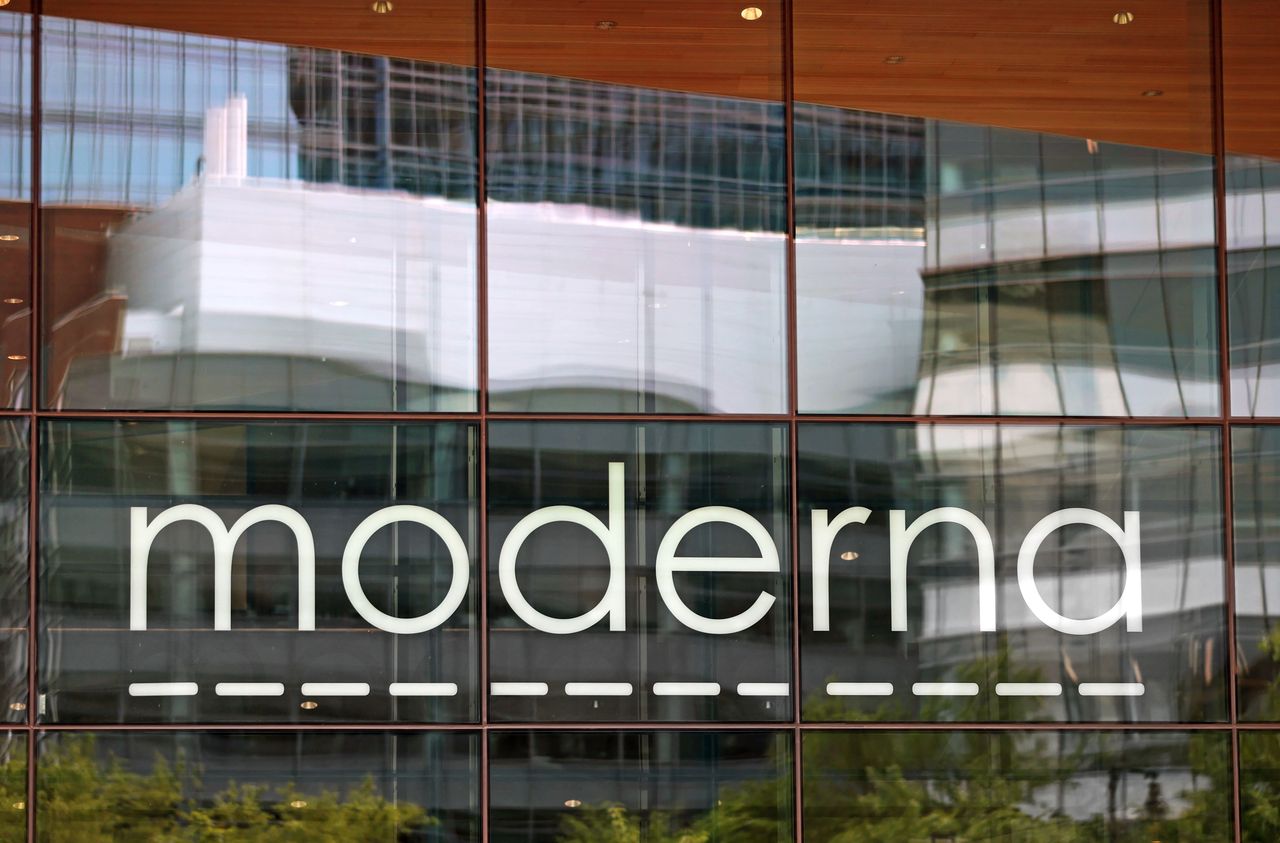
Moderna's Melanoma Data Must Justify a Rally Analysts Do Not
Moderna rallied ahead of full Phase 3 melanoma data due Oct. 24, even as Goldman Sachs kept a Neutral rating and set a target well below the share price.

Novavax's Selloff Puts the Sanofi Partnership Under the Microscope
Novavax fell harder than the broader biotech market as investors reconsidered a partner-led business. Sanofi gives the company reach, but royalty and milestone timing remain outside Novavax's control.
Microsoft's Maia 300 Is an Efficiency Bet, Not an Nvidia Exit
Microsoft says Maia 300 will deliver 40% more tokens per megawatt than leading GPU systems and scale in 2027, but the company is still operating a mixed-chip cloud.
Adobe's AI Usage Is Growing Faster Than Its Backlog
Adobe delivered 13% reported revenue growth and more than 150% growth in AI-first ARR, but remaining performance obligations rose only 8%, keeping monetization under scrutiny.

Gartner's Neocloud Warning Puts Financing, Not Demand, at Center Stage
Gartner expects more than 80% of neocloud providers to lose independent status by 2030. The risk is a mismatch between heavy infrastructure spending and cash earned before chips age.
ARK's Third Quarter Was Powered by AI Biology, Not Its Famous Names

ARK Invest's third-quarter performance came from a less familiar part of its portfolio. 10x Genomics, Twist Bioscience and Tempus AI made large contributions to the firm's innovation funds, while Tesla and Rocket Lab pulled returns lower.
The distinction between contribution and stock return matters. Contribution measures how much a holding added to or subtracted from a fund's total performance, combining the security's return with its portfolio weight. It does not mean a stock itself rose by the number of percentage points shown.
10x Genomics was the clearest example. The holding contributed 9.03 percentage points to ARKG's 28.92% quarterly gain and 2.92 points to ARKK's 10.39% return. ARK linked the move to interest in single-cell sequencing and spatial analysis as data sources for AI-assisted drug discovery, along with early orders for the company's Atera spatial system.
Twist Bioscience contributed 6.51 points to ARKG and 2.55 points to ARKK, while Tempus AI added 3.21 points and 2.08 points, respectively. The pattern shows that investors rewarded companies positioned as suppliers of biological data, tools and services to AI research, not only model developers or semiconductor makers.
Palantir was the broadest technology contributor, adding between 1.47 and 2.39 percentage points across five ARK exchange-traded funds. Nvidia made smaller positive contributions to ARKQ and ARKX.
Tesla was the most consistent drag, subtracting 1.72 points from ARKQ, 1.75 from ARKK and 1.43 from ARKW. ARK attributed the weakness to profitability concerns after second-quarter results, even as it maintained a long-term view around autonomous driving. Rocket Lab subtracted 1.39 points from ARKQ and 2.04 points from ARKX.
The numbers reveal a portfolio reality that headlines about Cathie Wood can obscure. ARK's returns depend on position size and correlation among high-volatility themes. Several holdings can respond to the same change in sentiment toward AI, biotech funding or long-duration growth.
Investors evaluating an ARK fund should therefore look beyond the best and worst stock names. The useful questions are how concentrated the contribution was, whether gains came from repeatable operating progress and how much downside a small group of detractors can create. In the third quarter, AI-enabled biology carried more of that burden than ARK's most famous holdings.
Rocket Lab's Iridium Deal Faces an FCC Competition Challenge
Rocket Lab's proposed $8 billion acquisition of Iridium has drawn a competition challenge at the Federal Communications Commission, adding another uncertainty to a company already managing a delay to its Neutron rocket.
Ligado Networks asked the FCC to examine whether Iridium has used regulatory filings to slow competing satellite services. Ligado has a direct commercial interest: its planned SkyTerra Next service with AST SpaceMobile would use satellite connectivity for direct-to-device communications and could compete with Iridium.
The filing does not amount to an FCC finding. It is an allegation from an interested party in an active proceeding, and Rocket Lab and Iridium will have an opportunity to respond. Investors should distinguish that process from a rejection or a formal enforcement action.
The underlying transaction is much larger than a spectrum dispute. Rocket Lab agreed in June to pay $54 per Iridium share in cash and stock, valuing the company at about $8 billion including debt. Iridium brings a global L-band network, more than 2.55 million active subscribers, over 500 distribution partners and recurring communications revenue. Rocket Lab would add those assets to launch, spacecraft manufacturing and satellite components.
That vertical integration could lower launch costs for a future Iridium constellation and give Rocket Lab immediate exposure to direct-to-device, Internet of Things and positioning services. It also increases execution risk. The deal requires regulatory approvals, financing and the integration of a profitable network with a capital-intensive launch company.
Neutron makes the timing harder. Rocket Lab moved the medium-lift rocket's first flight into 2027 after identifying manufacturing defects in a carbon-composite propellant-tank component. Neutron is central to the logic of launching larger constellations internally, so further delays could postpone some expected benefits even if the acquisition closes.
Rocket Lab shares had fallen about 25% over the prior week and 38% from the Oct. 7 close reported by the source. Price action reflects both issues, but they should be monitored separately. Neutron is an engineering and schedule risk. The Iridium proceeding is a regulatory and competitive risk.
The FCC challenge is not proof that the transaction will fail. It does mean the public-interest case will receive closer scrutiny, especially around spectrum and competitor access. For investors, the next evidence is the applicants' response, the FCC timetable and whether Neutron's revised tests support a credible 2027 launch plan.
Blur's Shutdown Shows How Far the NFT Trading Boom Has Fallen
Blur plans to shut its marketplace website on Nov. 12 and stop arranging new loans through Blend, a sharp reversal for a platform that once controlled most Ethereum NFT trading volume.
The company's smart contracts are expected to remain on the Ethereum blockchain. That distinction matters. Closing the website removes the main user interface and ends active product support, but it does not automatically erase assets or transactions recorded on decentralized contracts. Users still need to understand how to access positions, repay loans and move assets without relying on the familiar front end.
The business decline was severe. Blur launched in 2022 with tools aimed at professional traders, including faster execution, lower fees and token rewards. Monthly trading volume reached about $1.43 billion in early 2023, when the platform captured more than 70% of Ethereum NFT activity. By March 2026, monthly volume was below $7 million, a decline of roughly 99.5%.
That collapse exposes a weakness in marketplace models built around incentives. Token rewards can attract liquidity quickly, but they can also encourage activity that disappears when subsidies fall or asset prices stop rising. A platform still needs recurring demand from collectors and traders once the incentive phase ends.
Blend added leverage to the ecosystem by matching NFT-backed borrowers and lenders. Stopping new loans reduces future exposure, but existing users need clear information about outstanding positions. The source report did not provide a detailed wind-down schedule beyond the Nov. 12 cutoff, so investors and users should not assume every loan or contract ends on that date.
Blur is also the second NFT marketplace reported to close in October, after Blast announced a shutdown earlier in the month. Two closures do not prove that NFTs have no durable use, but they do show that the 2021 to 2023 trading model has not produced enough recurring fee volume for every venue.
The BLUR token fell more than 20% after the announcement, according to the source. That reaction is understandable because a governance or incentive token is only as useful as the network of products and users around it. The larger lesson is that on-chain persistence does not guarantee a sustainable business. Contracts can keep running long after the company that made them stops investing.
Interactive Brokers Adds Ether Staking to Its One-Account Model
Interactive Brokers has added Ether staking for eligible U.S. clients, turning a cryptocurrency holding into a potential source of rewards without moving it away from the broker's platform.
Clients of Interactive Brokers LLC can submit staking and unstaking requests through a dashboard in Client Portal and monitor transactions there. Zerohash provides the staking infrastructure. Rewards are credited as additional staked Ether, so they can compound while the position remains staked.
The product fits Interactive Brokers' broader strategy of putting digital assets beside stocks, options, futures and bonds in a single account. The broker supports trading in 20 digital assets and stablecoin funding with USDC, RLUSD and PYUSD. Crypto commissions range from 0.12% to 0.18% of trade value, with a $1.75 minimum per order.
The convenience does not remove staking risk. Ether used in proof-of-stake helps secure the network, and rewards compensate holders for committing assets to that process. Returns are variable rather than guaranteed. Clients can also face waiting periods when entering or leaving staking, technology or provider risk, tax consequences and the possibility that a decline in Ether's price overwhelms the rewards earned.
Eligibility and jurisdiction therefore matter as much as the advertised yield. Interactive Brokers did not announce a timetable for adding other proof-of-stake assets, and the initial rollout is limited to Ether.
For IBKR, the direct revenue effect is unlikely to be visible immediately. The strategic benefit is stickiness. A client who can trade, transfer, fund with stablecoins and earn staking rewards in one place has less reason to move assets to a specialist crypto platform. That could deepen balances and activity without requiring Interactive Brokers to become a token issuer or run its own validator infrastructure.
The service also narrows the product gap between conventional brokers and crypto-native exchanges. Interactive Brokers still competes on its strongest advantage: a wide multi-asset account with established risk controls and global market access. Ether staking adds another feature to that account, but investors should judge the initiative by client adoption, assets staked and any disclosure of economics rather than by the announcement alone.
Standard Chartered Brings Direct Crypto Trading to UAE Wealth Clients
Standard Chartered has opened direct Bitcoin and Ether trading to eligible wealth clients in the United Arab Emirates, extending digital-asset services from institutional desks into private banking.
The service is initially limited to clients classified as professional investors. They can buy and sell the two largest cryptocurrencies through existing bank accounts without opening a separate exchange account or managing an external wallet. Standard Chartered said custody and settlement would remain within a closed-loop bank environment.
That design is the product's main differentiator. Crypto-native platforms often require clients to move money and tokens among banks, exchanges and wallets. Keeping funding, trading, custody and settlement inside one regulated institution can reduce operational handoffs and make compliance records easier to maintain.
It does not remove market risk. Bitcoin and Ether remain volatile assets, and a bank wrapper does not protect clients from price losses. The closed-loop structure may also limit transfers to outside wallets, depending on the final terms. Eligible investors need to understand fees, execution arrangements, custody protections and withdrawal rights before comparing the service with an exchange.
The UAE launch follows Standard Chartered's institutional spot trading service through its U.K. branch, introduced in 2025. The bank has also expanded digital-asset custody and offers selected clients access through exchange-traded funds, structured products and over-the-counter derivatives. The new service moves direct ownership closer to the core wealth offering.
For the bank, the near-term earnings contribution is probably modest. The strategic value is that digital assets become another product inside an existing advisory and custody relationship. That can help Standard Chartered retain wealthy clients who might otherwise move assets and activity to specialist platforms.
The launch also tests whether regulated banks can win trust without recreating every feature of crypto exchanges. A bank can offer familiar controls, consolidated reporting and a recognized balance-sheet counterparty. Exchanges may still compete on token selection, transfer flexibility and around-the-clock functionality.
The important evidence will be client adoption and the economics of custody and trading, neither of which Standard Chartered disclosed. Even so, the move is significant because it treats Bitcoin and Ether as products that can sit beside conventional wealth assets, under eligibility rules, rather than as a separate experimental channel.
Latest comments