


 Be The Investor Research
China Access Talks Put Mastercard and Citi Licenses Back in Focus

U.S. officials raised Mastercard and Citigroup access in talks with China after Visa received preliminary approval for a domestic clearing unit. The distinction between permission to prepare and a final operating license remains crucial.
U.S. officials pressed China on market access for Mastercard and Citigroup during finance meetings in Bangkok, bringing two long-running licensing requests back into view. The talks followed China's October 13 approval allowing Visa to prepare a wholly foreign-owned domestic bank-card clearing institution.
The regulatory distinction matters. Visa has permission to build the institution and has up to a year to prepare, but it still needs review by the People's Bank of China and the National Financial Regulatory Administration before receiving an operating license. The move therefore opens a process; it does not yet create domestic transaction revenue.
Mastercard already clears yuan-denominated card payments through a joint venture with NetsUnion that began operating in 2024. The pending request described by a U.S. Treasury official would allow the company to operate independently. Citigroup, meanwhile, is seeking a wholly owned securities license covering A-share brokerage, underwriting, research and principal trading. CNBC reported that Citi applied in late 2021 and plans to expand the unit to about 100 employees if approval advances.
These are potentially useful concessions for U.S. financial firms, but their economic value is uncertain. China's domestic payments system remains dominated by UnionPay, while capital controls and state-backed competitors limit the addressable opportunity. Visa's preliminary approval shows Beijing can move on a stalled application, yet the remaining license review demonstrates how much regulatory discretion still sits between an announcement and commercial operation.
For Mastercard and Citi investors, the next evidence is formal rather than diplomatic: an independent clearing license for Mastercard, a securities license for Citi, and disclosures on the cost and pace of building each business. Until then, the Bangkok talks are a constructive signal, not a completed opening of either market.
Continue your C research
Related News

CFTC Challenges CME's Standing in U.S. Perpetual-Futures Fight
The CFTC argues CME has not shown injury from the agency's policy permitting regulated bitcoin perpetual futures. The procedural dispute could shape how quickly U.S. exchanges list the products.

Tether Disputes Senate Iran Report as Sanctions Scrutiny Deepens
Tether says its freezes have reduced Iran-linked activity and often preceded official sanctions. A Senate report alleges USDT remains important to Iran's shadow banking, keeping compliance evidence under scrutiny.

Rubio's Jamnagar Visit Puts Reliance's 1.4 Million-Barrel Refinery in Focus
Marco Rubio's planned visit to Reliance Industries' Jamnagar complex highlights energy cooperation and the refinery's export capacity. It does not establish a diesel supply deal, despite speculation tied to high U.S. fuel prices.

Russia’s G20 Return Exposes a Wider Transatlantic Split
Russia’s finance minister returned to G20 talks under the U.S. presidency, highlighting a widening divide with European allies over sanctions, energy policy, diesel trade and Ukraine.

France's €54 Billion Budget Push Collides With Mass Protests
About 550,000 people joined French protests that turned violent ahead of a pivotal budget vote. The unrest raises the political cost of €54 billion in planned savings and threatens further business disruption.
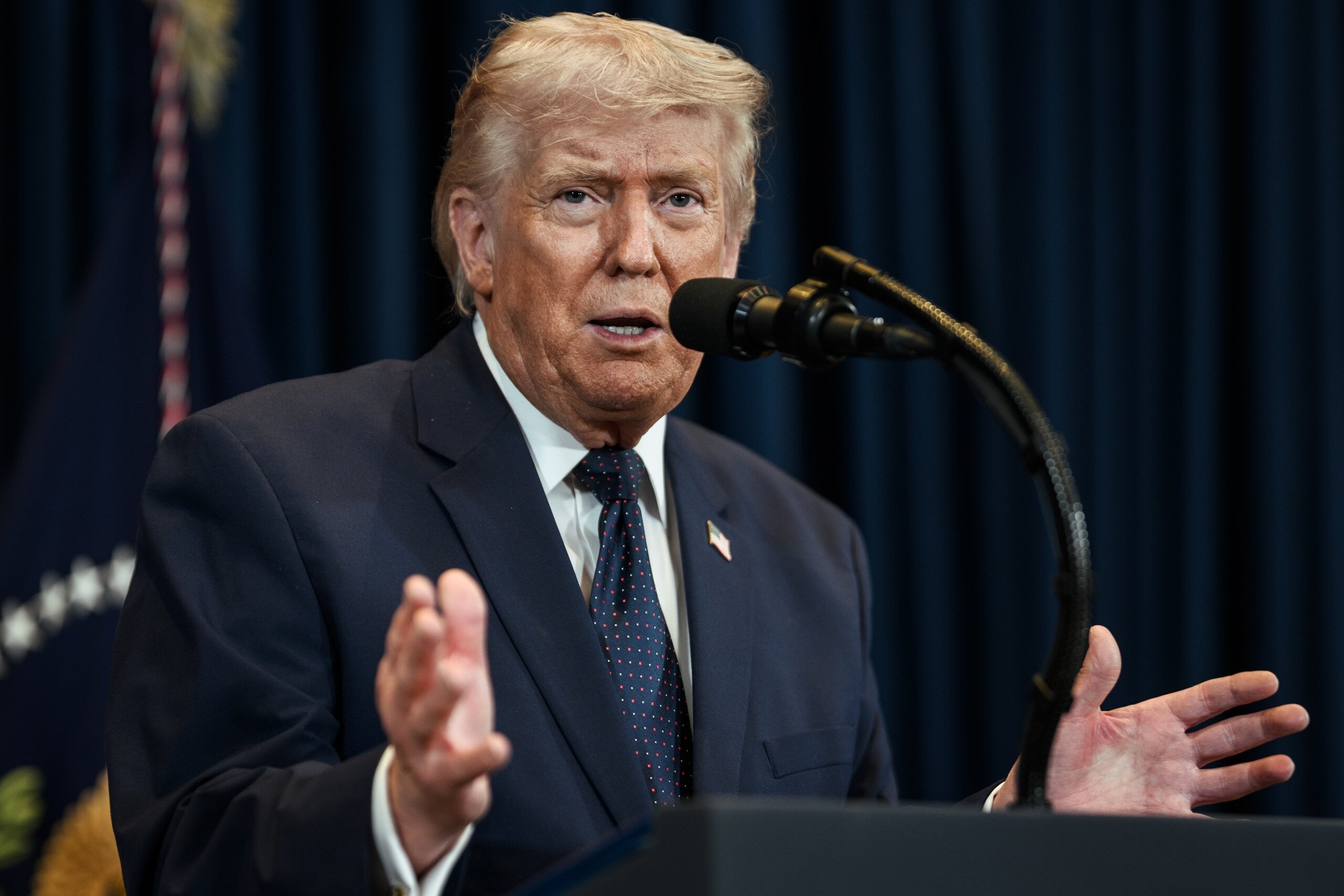
Trump Media and Rumble Fell Faster Than the Market as Merger Risk Loomed
Trump Media dropped 6% and Rumble 8% during a broader selloff, highlighting their high volatility. For DJT, the pending TAE merger adds execution, dilution and fusion-development risk.
JPM Coin Goes Live on Ethereum for Institutional Dollar Transfers

JPMorgan has made JPM Coin available to institutional clients on Ethereum, extending the bank's deposit token beyond Base and its private Kinexys infrastructure. The token represents dollar deposits at JPMorgan and supports transfers between approved institutional clients.
The public-network deployment matters because Ethereum already hosts a large ecosystem of tokenized assets, stablecoins and financial applications. Clients can move bank deposits on the same network used for collateral and settlement, reducing the need to bridge between a private ledger and public blockchain infrastructure.
JPM Coin is not a public stablecoin available to any wallet. Access remains tied to JPMorgan client relationships, compliance checks and the bank's deposit structure. That distinction gives institutions a bank claim rather than exposure to a separate reserve company, but it limits open distribution.
JPMorgan says its Kinexys network processes more than $7 billion of transactions daily. Adding Ethereum can widen the set of counterparties and tokenized assets that connect to its deposit token, although transaction volume on the new network has not yet been disclosed.
For JPMorgan, the opportunity is deeper client integration and fee-generating payment infrastructure rather than a direct speculative token. For Ethereum, the launch is evidence that a major bank is willing to settle institutional deposits on its main network. The next measure is actual client volume, not the announcement alone.
Ethereum's Faster Proofs Still Need a Worst-Case Cost Limit

Ethereum's zero-knowledge proof systems are becoming fast enough to prove ordinary blocks in near real time, but Vitalik Buterin says speed is no longer the only test. He has called for a hard upper bound on prover cost relative to the amount of gas in a block.
Gas is intended to meter execution work and keep blocks within a resource budget. Proof generation can impose a different workload. A block that is inexpensive for a conventional execution client may contain operations that are unusually expensive for a prover, so a speed result on typical blocks does not establish a worst-case guarantee.
ZKsync reported that one modern GPU proved 99% of a sample of 7,200 Ethereum blocks in under 10 seconds each. That is an important engineering milestone. It still measures the selected historical blocks, not every workload Ethereum rules permit an adversary to assemble.
EIP-7904 reaches a similarly narrow conclusion from the other direction. Its current analysis recommends no change to compute gas costs at a targeted native-execution throughput, but the document explicitly says it does not specifically address zero-knowledge proof generation.
A credible bound would need stated hardware, security settings, implementations and a maximum proving deadline. Without it, independent operators may have to provision for uncertain peaks or risk falling behind. Ethereum's next proof milestone is therefore not another average-speed record. It is a reproducible demonstration that the hardest valid blocks remain within a predictable resource envelope.
Binance's SOXL Perpetual Fell 5.9% Without Breaking Its 3% Price Band
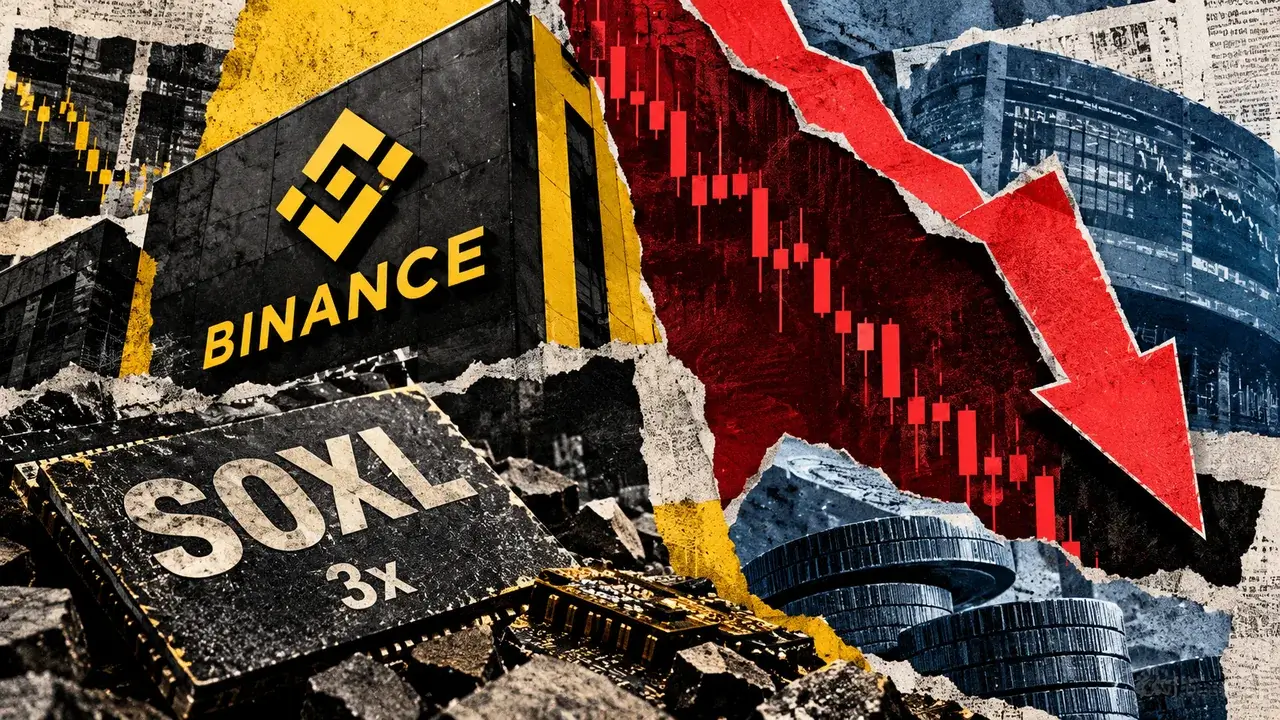
Binance's SOXL-linked perpetual contract fell 5.9% from its opening mark to its intrahour low during an October 17 weekend trading hour. At the same time, all 60 sampled minute-close differences between the mark and its reference index remained below the platform's stated 3% weekend band.
The figures are not contradictory. The 3% rule limits how far the mark can sit from the index at a given time. It does not stop the index itself from moving. During the sampled hour, the reference index declined nearly 4%, carrying the band and the mark lower together.
That distinction matters because Binance's contract trades while the underlying SOXL shares on NYSE Arca are closed. The weekend reference can be derived from crypto order-book inputs and smoothing procedures rather than a new exchange print for the ETF. Traders therefore hold exposure to Binance's reference methodology as well as semiconductor-market expectations.
Liquidation adds another layer. A position is closed when the mark reaches an account-specific threshold determined by collateral, leverage and margin mode. Staying within the mark-to-index band does not protect a highly leveraged position from liquidation after a cumulative price move.
Binance states that the contract tracks the Direxion Daily Semiconductor Bull 3X ETF and permits leverage up to 20 times. SOXL itself targets three times the daily move of a semiconductor index. Combining an equity-based leveraged product with a leveraged perpetual can create risk far beyond what a 3% reference band appears to imply.
Aave's Proposed USAT Gateway Adds Permission Risk to the Return Trip

TokenLogic has proposed a permissioned GHO Stability Module on Avalanche that would let approved counterparties exchange waUSAT for GHO. The design could add institutional stablecoin liquidity to Aave, but it creates an important asymmetry: receiving and transferring GHO would not guarantee the ability to reverse the original swap.
Approval would be checked in both directions. If access were revoked after a counterparty deposited waUSAT and received GHO, the participant could still transfer GHO but could not use the module to recover waUSAT. The proposal says that restriction should be reflected in commercial agreements.
Even a successful reverse swap would return a receipt token rather than dollars. The holder would still need to withdraw USAT from Aave, subject to available liquidity and reserve conditions, and then meet Anchorage Digital Bank's requirements for issuer redemption. Each step has its own permission and operational risk.
The proposal separates 65 million GHO of reserve funding, a 25 million GHO module draw limit and a 20 million waUSAT exposure cap. Some contract addresses and pricing details remain unspecified, and the forum post still requires governance approval and an implementation proposal.
The plan may deepen GHO liquidity, but investors should treat it as a proposal rather than an operating product. The decisive questions are whether governance approves the module, whether final contracts preserve the described limits, and how counterparties are protected if access is revoked after entry.
Latest comments