



 Be The Investor Research
ARK's $4,400 Tesla Target Is Mostly a Robotaxi Bet

ARK's 2031 Tesla model assigns most enterprise value to robotaxis and assumes millions of vehicles at scale, making regulation, safety, utilization and unit economics more important than today's car deliveries.
ARK Investment Management's new base-case value for Tesla is about $4,400 a share in 2031. The figure comes from a Monte Carlo model that varies 32 inputs, not from a contractual forecast. Its bull and bear outputs are about $5,000 and $3,300, respectively, and all three depend on assumptions far beyond Tesla's current automobile business.
Robotaxis carry most of the value. ARK's model assumes roughly 8.1 million cumulative robotaxis by 2031 and assigns the service about 80% of projected enterprise value. That requires Tesla to move from limited commercial operation to a network spanning many jurisdictions, while maintaining safety, vehicle availability and attractive prices at enormous scale.
The model also gives significant value to Optimus robots. Tesla does not yet have meaningful outside revenue from the product, and management has described manufacturing it as unusually difficult because many components and processes are new.
These are not ordinary growth assumptions. A robotaxi network combines software reliability, regulatory permission, insurance, fleet operations and customer demand. Revenue can be large while profit remains modest if vehicles are underused or local competition pushes fares down. Conversely, high utilization and low operating costs could make the network exceptionally valuable.
ARK is also a Tesla shareholder, so investors should understand that the research comes from an interested owner. The firm publishes its model and assumptions, which makes the analysis testable, but transparency does not reduce execution risk.
The useful way to read the target is as a map of what must happen, not as an expected return. Tesla needs rapid growth in unsupervised miles, approvals in major markets, evidence of safe operation and a credible cost per ride. Optimus needs paying external customers and a manufacturable design. Until those milestones arrive, the $4,400 figure says more about the scale of ARK's robotaxi assumptions than about the value of Tesla's current earnings.
Related News

A 13.5% Income Portfolio Comes With Concentrated Risk
Six high-yield securities could produce about $10,159 a year on $75,000 at recent distributions, but the largest payouts come from leveraged mortgage REITs and a BDC that has already cut its dividend.

Mounjaro and Zepbound Drive 65% of Lilly Revenue
Eli Lilly's two leading incretin drugs produced about $14.9 billion of second-quarter sales, making prescription growth and net pricing the central variables behind the company's premium valuation.

AEP and Amazon Study a 960 MW Nuclear Project in Indiana
AEP and X-energy will evaluate twelve small modular reactors at a former Indiana coal site, with Amazon funding development and planning a long-term power agreement if the project reaches a final investment decision.

Skyworks Sets a $500 Million Synergy Test After Qorvo Deal
Starboard Value reportedly sees upside in the combined Skyworks-Qorvo business, but the investment case now rests on delivering at least $500 million of annual savings without losing ground at Apple or in mobile chips.

Wall Street's Monday Calls Split AI Winners From Cyclical Laggards
Analysts upgraded CoreWeave, Datadog and Intel while cutting several financial, consumer and travel names. The dispersion matters more than the headline count because target changes often reflected very different business risks.
Moderna, Coca-Cola and Visa Hit Highs for Three Very Different Reasons
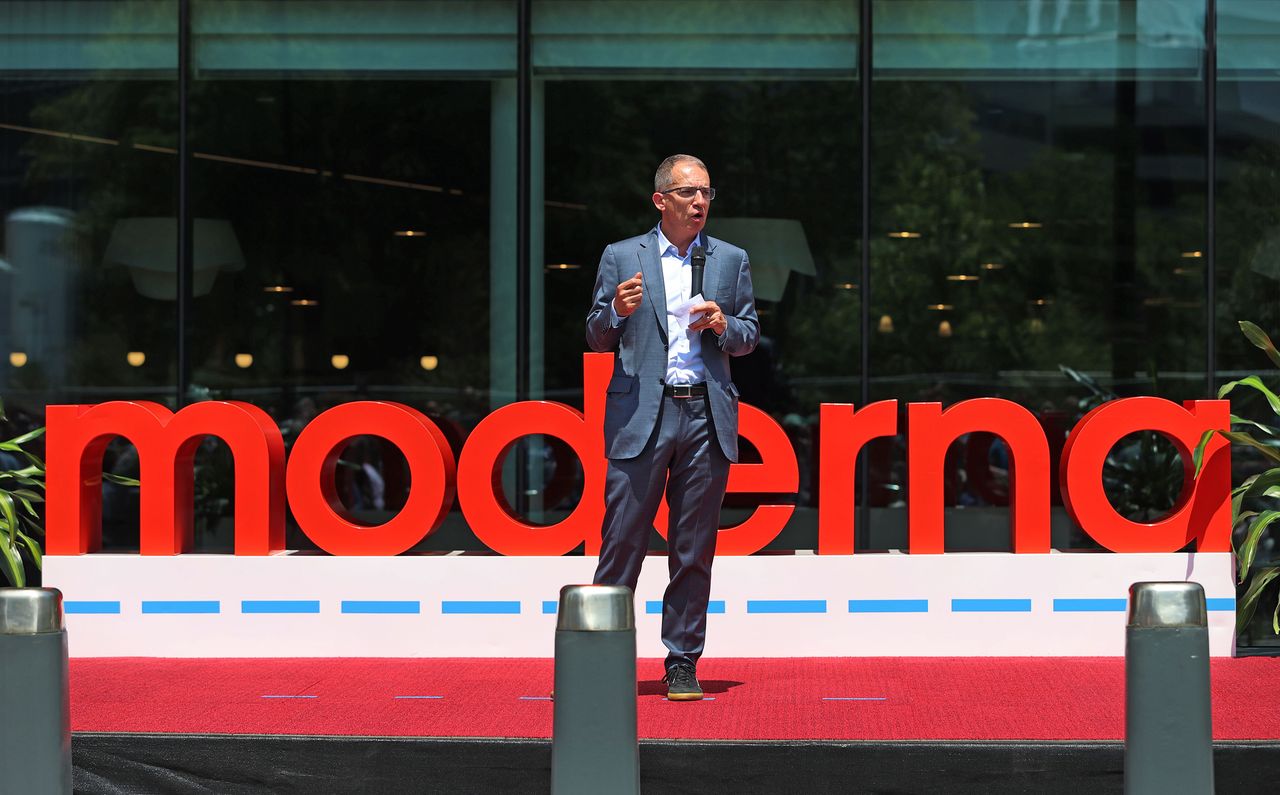
Moderna, Coca-Cola and Visa reached new highs on separate catalysts: cancer-vaccine expectations, a KFC beverage deal and services growth. The shared price milestone does not make the underlying investment cases comparable.
Fiserv Shareholder Case Tests Claims Behind Its 2025 Growth Reset

Fiserv shareholders are asking a federal judge to let a securities case proceed, arguing that the payment processor's October 2025 business reset revealed weaknesses that earlier disclosures had concealed. Fiserv denies the allegations and has moved to dismiss the case. At this stage, the claims are accusations in civil litigation, not findings by a court.
The amended complaint covers investors who bought shares from February 6, 2024 through October 28, 2025. Plaintiffs allege that Fiserv overstated the durability of organic revenue growth, used temporary measures to boost its Clover point-of-sale business and relied heavily on price increases tied to hyperinflation in Argentina. They also contend that some merchants moved from the older Payeezy system to Clover were presented in a way that exaggerated new-customer growth.
Fiserv's position is that the plaintiffs have not pleaded securities fraud and are reacting to a sharp stock decline. The company has also said a former chief executive's stock sale followed an ethics agreement connected to his federal nomination. Those defenses matter because a disappointing operating result is not, by itself, proof that earlier statements were knowingly false.
The operating record explains why the litigation has investor attention. Fiserv's official third-quarter 2025 release reported organic revenue growth of 1% and an 11% decline in adjusted earnings per share. Free cash flow for the first nine months was $2.88 billion, down from $3.34 billion a year earlier. Management cut its outlook and described a reset focused on customer relationships and execution. Those figures document a deterioration in performance, but they do not resolve the plaintiffs' separate claim about intent.
Fiserv's 2026 quarterly filing says the consolidated action asserts claims under Sections 10(b) and 20(a) of the Securities Exchange Act and Rule 10b-5. The company said it could not estimate a possible loss and intended to defend the matter. That disclosure is the appropriate boundary for investors: the case may create legal cost and governance scrutiny, but its financial outcome is not yet measurable.
The next useful evidence will come from the court's ruling on the dismissal motion, Fiserv's subsequent filings and operating results from Clover and the financial-institutions segment. A surviving complaint would allow the case to advance; it would not establish liability. A dismissal could also be appealed or amended. Investors should keep the legal process separate from the business question of whether the reset is producing more durable growth.
Zscaler’s Lower Multiple Still Depends on Margin Execution
Zscaler’s 8.1% weekly decline was not triggered by a guidance cut. It reflected a harder valuation question: what multiple should investors pay when a cybersecurity company moves from roughly 25% growth toward the high teens?
The company ended fiscal 2026 with annual recurring revenue of about $3.8 billion, up 25%, and a record 24% non-GAAP operating margin, according to the source. At its October investor day, Zscaler reaffirmed fiscal 2027 guidance for revenue of $3.908 billion to $3.938 billion, representing growth of 16.6% to 17.5%. ARR guidance was $4.396 billion to $4.426 billion.
That deceleration does not mean the business is weak. Zscaler’s zero-trust platform remains relevant as companies replace network-perimeter security with controls that connect users directly to applications. The company’s research unit also reported rapid growth in ransomware data theft, supporting continued security spending.
The valuation has already reset. TIKR placed the stock near 42 times forward earnings, down sharply from triple-digit multiples several years earlier. Its model assumed about 16.7% revenue growth, a 24.9% operating margin and a similar exit multiple. The projected upside therefore depends less on multiple expansion than on management reaching the modeled margin.
Cash flow is the complication. The source said fourth-quarter free cash flow fell to 7% of revenue as capital spending nearly tripled to $219 million. One quarter of elevated investment does not define the trend, but investors need evidence that free-cash-flow margin can recover toward management’s longer-term targets.
Zscaler’s next phase is about quality of growth. If recurring revenue expands near guidance while margins and cash conversion improve, the lower multiple can support attractive returns. If growth slows without corresponding operating leverage, a 42-times earnings multiple may still be demanding.
The next reports should be read across four measures together: ARR growth, large-customer additions, non-GAAP operating margin and free-cash-flow margin. Any valuation argument that ignores one of those four is incomplete.
Robinhood’s Valuation Leaves Little Room for a Growth Stall
Robinhood’s second quarter was strong enough to set records, yet the stock’s valuation still requires more than stability. Revenue rose 32% year over year to $1.31 billion, diluted earnings per share increased 48% to $0.62 and net deposits reached roughly $22 billion.
Trefis tested what would happen if the quarter simply repeated for a full year. Multiplying quarterly profit by four produced about $2.24 billion of annual earnings. That is a scenario, not company guidance, and it ignores seasonality and changes in trading activity. Even under that assumption, the source estimated a valuation near 39.6 times earnings, well above the S&P 500 comparison it used.
The exercise is useful because Robinhood’s revenue responds to customer activity, asset prices, interest rates and trading volumes. A flat quarter can still be profitable, but a premium multiple normally reflects continued gains in funded accounts, assets, deposits and higher-value products.
The operating data remain encouraging. Robinhood reported 4.8 million Gold subscribers in the second quarter. July net deposits were later finalized at $5.6 billion, and the company said trailing 12-month deposits represented 25% growth relative to the prior-year asset base. Management also lowered and tightened its 2026 adjusted operating-expense and stock-compensation outlook.
The downside is that a high multiple can contract before earnings deteriorate. Robinhood experienced that dynamic during the 2022 market shock, when revenue declined and the company posted an operating loss. Today’s business is broader and more profitable, but trading-sensitive income still introduces cyclicality.
The next report should be judged on net deposits, platform assets, subscriber growth, transaction revenue mix and expense control. Investors should also separate reported results from annualized scenarios: repeating one record quarter does not prove a durable run rate.
Robinhood does not need growth to avoid losses. It needs growth to defend the price investors are paying. If deposits and product adoption remain strong, the premium can persist. If they stall, valuation compression may matter more than near-term profitability.
Ondas Has $270 Million of Orders, but Execution Matters More Than Short Interest

Ondas shares have fallen despite a rapid series of defense orders, acquisitions and a new artificial-intelligence venture. That tension has encouraged retail traders to frame the stock as a possible short squeeze. The business evidence points to a more useful question: can Ondas convert its order announcements into revenue and cash?
The company said it secured more than $165 million of orders from the second half of August through October 1. Combined with roughly $105 million disclosed earlier in the third quarter, orders since June 30 exceeded $270 million. Ondas also formed Regna AI with Palantir, a standalone venture intended to bring specialized AI models into sovereign and defense environments.
Those developments expand the opportunity set, but orders are not the same as recognized revenue. Delivery schedules, acceptance milestones, production capacity and customer funding determine when booked demand reaches the income statement. Defense contracts can also be lumpy and subject to changing procurement timetables.
The source reported short interest above 40% and quoted comparisons with GameStop. That is sentiment, not a fundamental catalyst. A high short-interest ratio can amplify price moves in either direction, but it does not establish the value of Ondas’s order book or guarantee a squeeze.
Capital structure is another necessary part of the analysis. Ondas completed a large registered direct offering in January 2026, generating approximately $959 million of net proceeds. That improves funding capacity, but the issuance also increased the share base. Investors should evaluate growth per share, not just aggregate orders.
The next decisive evidence will be backlog conversion, gross margin, operating cash flow and updated delivery schedules. Regna AI will also need named customers or disclosed economics before it can be valued as more than an early strategic initiative.
Ondas has created a stronger operational story than the recent share decline suggests. Still, the route to durable equity value runs through execution and capital discipline, not social-media enthusiasm or the percentage of shares sold short.
SK Hynix’s Selloff Is Really a Test of HBM Durability

SK Hynix lost 11.9% in the week through Monday’s close, more than three times the Nasdaq 100’s decline, as two different fears hit memory stocks at once: expanding Chinese capacity in standard DRAM and tighter financing for AI data centers.
The distinction between those risks matters. China’s CXMT said a denser DRAM design could enter server memory by the end of 2026. Elon Musk separately argued that China could ramp low-power memory quickly by 2028, while calling high-bandwidth memory, or HBM, a harder technical challenge. SK Hynix’s premium economics depend heavily on HBM, the specialized memory used alongside AI accelerators.
The company’s recent results show why investors care. SK Hynix reported second-quarter revenue of 79.3 trillion won and said high-value products and AI demand drove record performance. The source cited a 76% operating margin and a jump in revenue from the prior year. Management also discussed long-term agreements with major customers, which can reduce some cycle risk.
Yet memory remains cyclical. The source noted that gross margin had been below 1% in the September 2023 quarter before reaching an unusually high level in 2026. That swing is a reminder that tight supply and premium pricing can reverse when capacity catches demand.
Valuation reflects skepticism. The article placed the Seoul shares near three times forward earnings, below their five-year average, and the U.S.-traded shares near four times 2027 estimates. Those multiples can look cheap while profits are near a cyclical peak, so the denominator matters as much as the price.
The October 28 report should clarify 2027 customer commitments, HBM4 production timing, pricing and capital spending. Firm multi-year demand and on-time HBM4 shipments would support the view that AI memory has become structurally less cyclical. Delays, weaker pricing or broadening Chinese competition would argue that today’s low multiple is anticipating lower earnings rather than overlooking value.
Latest comments