



 Be The Investor Research
Robinhood’s Valuation Leaves Little Room for a Growth Stall
Robinhood posted record second-quarter revenue and deposits, but its premium earnings multiple assumes continued expansion. A simple no-growth scenario shows why deposit momentum and operating discipline matter.
Robinhood’s second quarter was strong enough to set records, yet the stock’s valuation still requires more than stability. Revenue rose 32% year over year to $1.31 billion, diluted earnings per share increased 48% to $0.62 and net deposits reached roughly $22 billion.
Trefis tested what would happen if the quarter simply repeated for a full year. Multiplying quarterly profit by four produced about $2.24 billion of annual earnings. That is a scenario, not company guidance, and it ignores seasonality and changes in trading activity. Even under that assumption, the source estimated a valuation near 39.6 times earnings, well above the S&P 500 comparison it used.
The exercise is useful because Robinhood’s revenue responds to customer activity, asset prices, interest rates and trading volumes. A flat quarter can still be profitable, but a premium multiple normally reflects continued gains in funded accounts, assets, deposits and higher-value products.
The operating data remain encouraging. Robinhood reported 4.8 million Gold subscribers in the second quarter. July net deposits were later finalized at $5.6 billion, and the company said trailing 12-month deposits represented 25% growth relative to the prior-year asset base. Management also lowered and tightened its 2026 adjusted operating-expense and stock-compensation outlook.
The downside is that a high multiple can contract before earnings deteriorate. Robinhood experienced that dynamic during the 2022 market shock, when revenue declined and the company posted an operating loss. Today’s business is broader and more profitable, but trading-sensitive income still introduces cyclicality.
The next report should be judged on net deposits, platform assets, subscriber growth, transaction revenue mix and expense control. Investors should also separate reported results from annualized scenarios: repeating one record quarter does not prove a durable run rate.
Robinhood does not need growth to avoid losses. It needs growth to defend the price investors are paying. If deposits and product adoption remain strong, the premium can persist. If they stall, valuation compression may matter more than near-term profitability.
Related News

Wall Street's Monday Calls Split AI Winners From Cyclical Laggards
Analysts upgraded CoreWeave, Datadog and Intel while cutting several financial, consumer and travel names. The dispersion matters more than the headline count because target changes often reflected very different business risks.
Moderna, Coca-Cola and Visa Hit Highs for Three Very Different Reasons
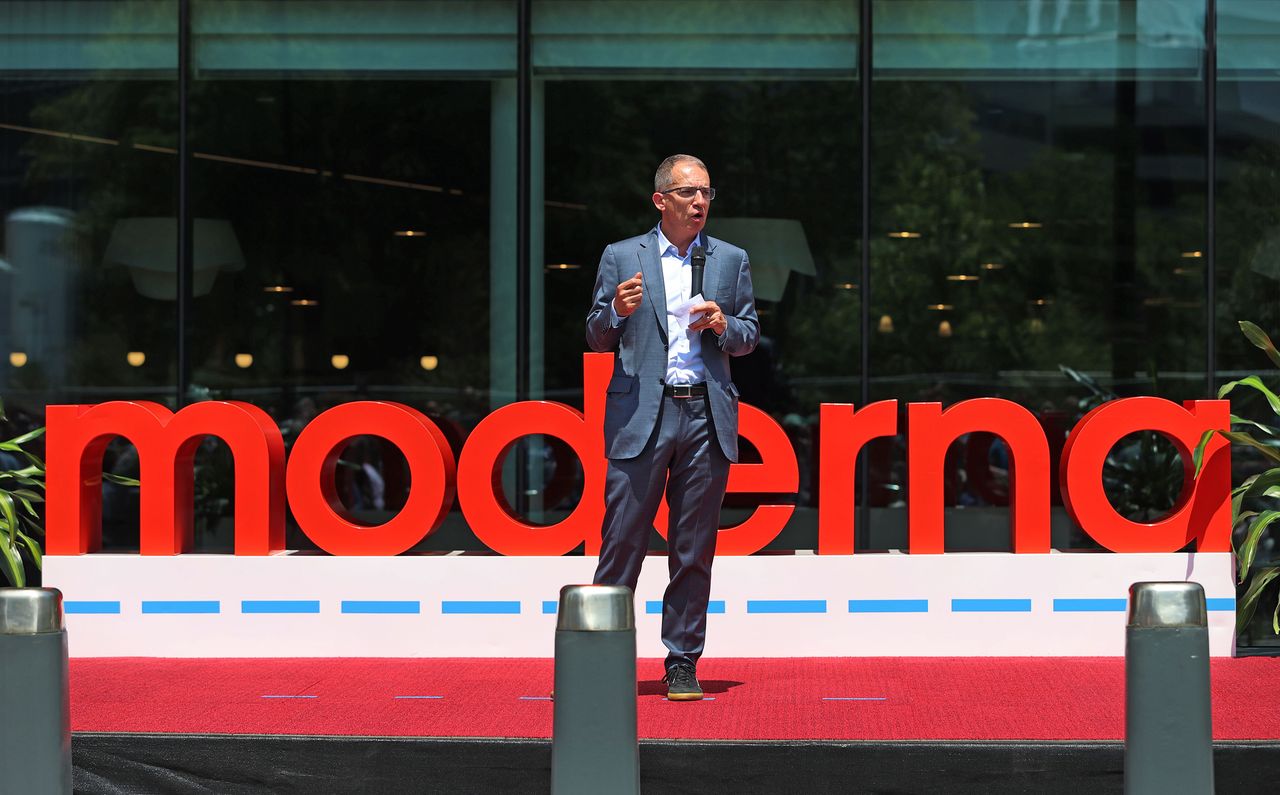
Moderna, Coca-Cola and Visa reached new highs on separate catalysts: cancer-vaccine expectations, a KFC beverage deal and services growth. The shared price milestone does not make the underlying investment cases comparable.

Fiserv Shareholder Case Tests Claims Behind Its 2025 Growth Reset
Shareholders say Fiserv masked weaknesses in Clover growth and relied on Argentina's hyperinflation, while the company denies securities fraud. The dispute remains at the pleading stage, with no judicial finding on the allegations.

Zscaler’s Lower Multiple Still Depends on Margin Execution
Zscaler’s shares fell as investors reset expectations from 25% growth toward fiscal 2027 guidance near 17%. The valuation case now depends on cash flow and sustained operating leverage.

Ondas Has $270 Million of Orders, but Execution Matters More Than Short Interest
Ondas has announced more than $270 million of orders since June and formed an AI venture with Palantir. Investors should focus on delivery, cash conversion and dilution rather than squeeze speculation.

SK Hynix’s Selloff Is Really a Test of HBM Durability
SK Hynix shares fell almost 12% in a week as memory competition and AI financing concerns resurfaced. The valuation is low, but the next earnings call must confirm durable HBM demand.
CoreWeave’s $104 Billion Backlog Faces a Cost-of-Capital Test

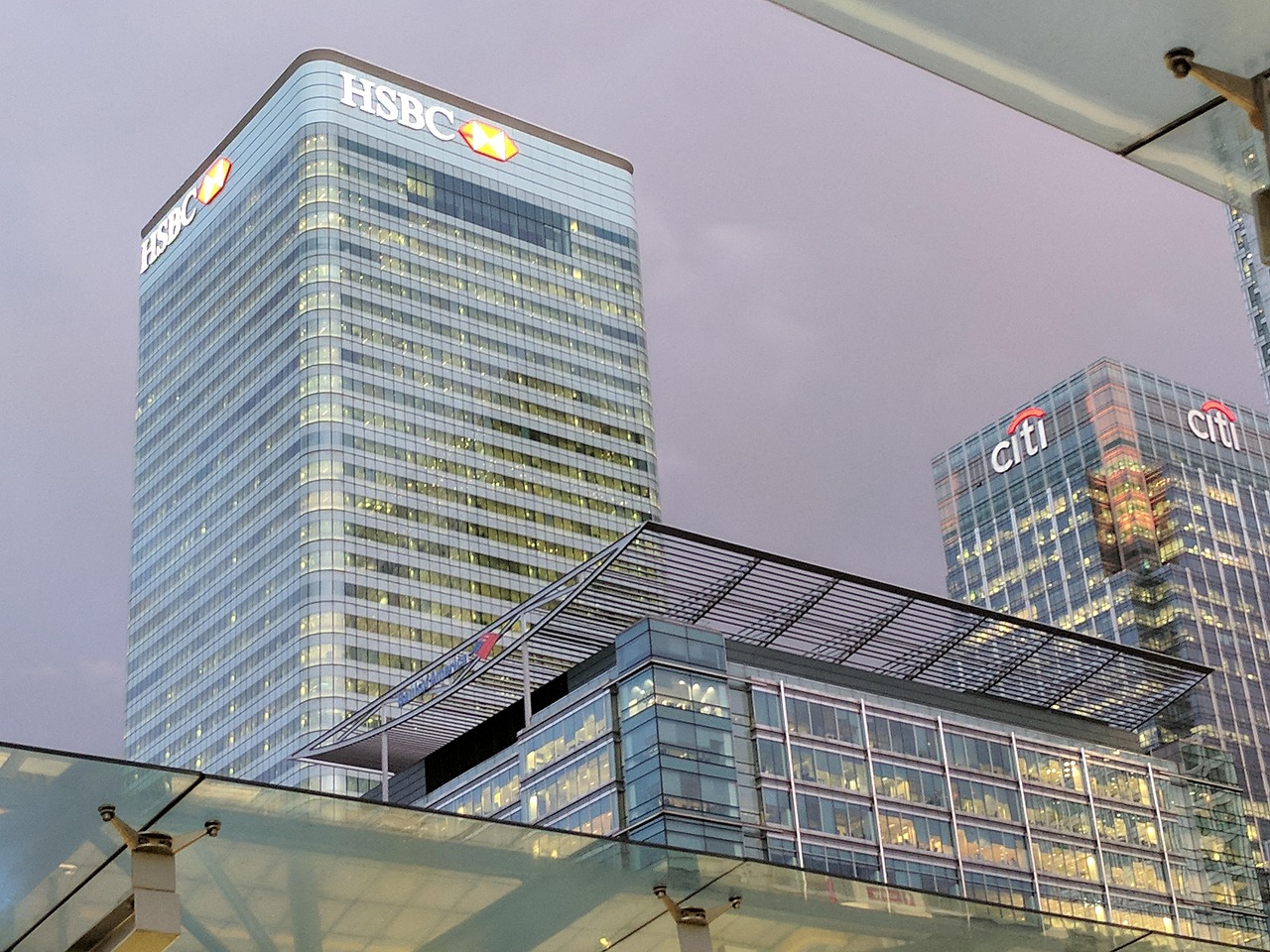
CoreWeave’s backlog is large enough to support years of growth, yet the cost of building that capacity is becoming the central investment risk. HSBC maintained a Reduce rating and a $39 price target, which implied about 36.5% downside from the stock’s prior close, according to Stocktwits.
The bank’s concern is not a lack of customers. CoreWeave reported approximately $104 billion of revenue backlog at June 30. The company also signed large contracts during 2026 and has relationships across the AI ecosystem. The question is whether those contracts can generate returns above a financing cost that has risen sharply.
HSBC estimated that CoreWeave could produce about $12 million of annual revenue per megawatt of capacity in 2027, compared with $17 million to $18 million for larger cloud providers. It also modeled long-term operating margins of 15% to 16%, below management’s cited target near 25%. Those are bank estimates, not company guidance, but they explain why the stock can fall even while backlog expands.
Debt markets add pressure. The source said CoreWeave bond yields were near 15%. The company’s April offering included $1 billion of 9.75% senior notes due in 2031, and it later announced a $3.5 billion senior-note offering. High coupons can consume a meaningful share of project economics before shareholders receive any benefit.
CoreWeave’s second-quarter release showed both sides of the case. Backlog rose to $104 billion, giving strong visibility, while the balance sheet included billions of dollars of current recourse and non-recourse debt. Contracted revenue is valuable, but it arrives over time; interest and construction spending arrive sooner.
The next test is not whether AI demand exists. It is whether new capacity comes online on budget, revenue per megawatt holds up and operating cash flow begins to cover the capital structure. If those measures improve, the backlog can justify the risk. If they do not, more growth may increase financing pressure rather than create equity value.
Oracle’s $638 Billion Backlog Carries a Customer Concentration Risk

Oracle’s $638 billion backlog looks like extraordinary revenue visibility. It also raises a less comfortable question: how much of that demand depends on one customer’s ability to keep funding a historic computing expansion?
Investor Steve Eisman said in an October 16 interview that roughly half of Oracle’s backlog is tied to OpenAI. That would equal about $319 billion. Oracle has not publicly broken out the customer’s share, so the figure should be treated as Eisman’s estimate, not as company disclosure.
Oracle’s reported numbers establish the scale. The company ended fiscal 2026 with $638 billion of remaining performance obligations, up from $553 billion one quarter earlier. Fiscal-year revenue was about $67.4 billion. In other words, contracted business now spans many years of current revenue, and the pace at which it becomes recognized sales matters as much as the headline amount.
The concentration question is sharper because Oracle is building capacity before receiving all of that revenue. The source cited negative free cash flow of $23.7 billion for fiscal 2026 and total debt of about $167 billion. Those figures mean the company is financing a substantial portion of the buildout while customers scale their own economics.
A large backlog is valuable only if contracts are enforceable, customers can pay, and infrastructure becomes available on schedule. Customer concentration increases the damage from renegotiation, delayed deployment or weaker demand, even if the total order book remains unchanged.
There is a bullish interpretation. OpenAI and other model developers need scarce computing capacity, Oracle’s cloud infrastructure revenue rose 93% in its latest reported quarter, and the backlog may support years of growth. The bear case is that one customer represents too much of the promised demand while Oracle bears capital costs now.
Investors should resist turning Eisman’s estimate into a settled fact. The better test is observable: watch how quickly remaining obligations convert into revenue, whether capital expenditure produces improving free cash flow, and whether Oracle discloses broader customer diversification. Until then, the backlog is both the company’s strongest asset and its most important concentration risk.
Kimberly-Clark Pays More, but Unilever’s Dividend Has More Room

Kimberly-Clark’s cited yield of 5.4% was well above Unilever’s 3.6%, but the two dividends offer different kinds of security.
Kimberly-Clark’s quarterly payment of $1.28 a share grew about 3.3% annually from fiscal 2020 through 2025. The payout used roughly 92% of free cash flow over the twelve months through June 2026, leaving little room for a weak year. Cash generation improved in the first half, when cash from operations rose to $1.7 billion from $1.1 billion.
Unilever’s dividend used about 59% of free cash flow over the same general period, according to TIKR. Free cash flow covered the dividend in every year shown since fiscal 2016. That is a much wider cushion for inflation, investment or an operating setback.
Currency changes the comparison
Unilever declares its dividend in euros, so a U.S. investor’s dollar income changes with the exchange rate. The source calculated that the dividend per share slipped about 0.5% annually in its home currency from fiscal 2020 through 2025. A strong balance-sheet payout can still disappoint a dollar-based retiree if the currency or local payment weakens.
Kimberly-Clark’s main near-term risks are its planned Kenvue acquisition and disruption in China. The company said false claims on Chinese social media reduced sales and created a roughly 210-basis-point drag on adjusted operating-profit growth in the second quarter.
Unilever’s risks are slower dividend growth and commodity inflation, particularly in Home Care. Its lower yield means more of the investment case depends on business growth rather than immediate income.
For investors who need the larger check today, Kimberly-Clark is the stronger fit. For investors who value coverage and flexibility, Unilever’s 59% cash payout offers more protection. Kimberly-Clark’s case improves if cash flow stays near management’s roughly $2 billion annual objective after the Kenvue transaction. Until then, the higher yield comes with a visibly thinner cushion.
Hormel’s 6% Yield Has More Cash Support Than Kimberly-Clark’s

Hormel Foods offered a 6.0% yield in the source comparison, above Kimberly-Clark’s 5.4%. More important, Hormel’s dividend used about 82% of free cash flow over its latest twelve months, while Kimberly-Clark’s used roughly 92%.
Both companies had a warning in fiscal 2025. Dividends exceeded free cash flow at each business. The more recent figures show improvement, but neither payout has a large cushion.
Hormel’s third-quarter cash from operations rose 54% to $241 million, and the company returned $161 million to shareholders through dividends. Cash on hand reached $840 million. Management also raised fiscal 2026 adjusted EPS guidance to $1.45 to $1.51.
The weak point is demand. Third-quarter net sales fell to $2.96 billion from $3.03 billion and organic net sales declined 2%. A dividend can be covered for a period by working-capital improvement, but sustained raises ultimately require earnings and cash growth.
Kimberly-Clark’s transition adds complexity
Kimberly-Clark reported first-half cash from operations of $1.7 billion, up from $1.1 billion, and second-quarter adjusted earnings per share from continuing operations increased 10.4%. At the same time, social-media misinformation in China hurt diaper sales, and the planned Kenvue acquisition introduces integration and financing risk.
Hormel’s dividend grew faster over the prior five years and starts from the higher yield. Kimberly-Clark has a stronger recent profit trend, but its thinner cash coverage and transaction risk reduce the margin for error.
For a retiree focused on near-term income, Hormel currently offers the better combination of yield and cash coverage. The conclusion is not permanent. Hormel must prove that fiscal 2025 was a temporary cash shortfall and that weak organic sales do not become a prolonged volume problem.
The next full-year report should be judged on free cash flow after capital spending, not only adjusted earnings. Kimberly-Clark’s next proof points are cash conversion and the financing terms around Kenvue.
Kimberly-Clark’s Covered Dividend Beats Clorox’s Higher Yield

Clorox’s 6.2% cited yield stands above Kimberly-Clark’s 5.4%, but the larger payment depends on a cash-flow recovery that had not yet arrived by the end of fiscal 2026.
Clorox paid $602 million of dividends against $405 million of free cash flow over the year ended June 30, according to TIKR. Cash from operations fell to $612 million from $981 million, while adjusted earnings per share declined to $5.53 from $7.72. The company guided to adjusted EPS of $5.70 to $6.00 for fiscal 2027 and expected gross margin near 42%.
The GOJO acquisition adds both growth potential and financial pressure. Clorox completed the deal in April, adding Purell and other hygiene products. It funded the transaction primarily with debt, and the source placed net debt near 4.3 times EBITDA, up from 1.8 times a year earlier.
Tight is different from uncovered
Kimberly-Clark’s dividend consumed about 92% of free cash flow over the twelve months through June 2026. That is not a generous cushion, but cash from operations improved to $1.7 billion in the first half from $1.1 billion a year earlier. Its second-quarter adjusted operating profit rose 6.2%, while the company absorbed acquisition costs and disruption in China.
Kimberly-Clark is also preparing to acquire Kenvue, so its balance sheet and cash use will change. Management has said the existing business can generate roughly $2 billion of adjusted free cash flow annually, but the merger makes integration costs and financing central to dividend safety.
Clorox can close the gap if fiscal 2027 free cash flow rises above the annual dividend while debt declines. Until that happens, its higher yield is partly compensation for an uncovered payout and acquisition leverage.
Kimberly-Clark is not low risk, but its current dividend is backed by more cash. Investors should watch free cash flow after capital spending, net leverage and whether both companies keep dividend increases aligned with cash generation rather than management intent alone.
Latest comments