


 Be The Investor Research
Synopsys' AI Strength Masks a Slower Chip-Design Market
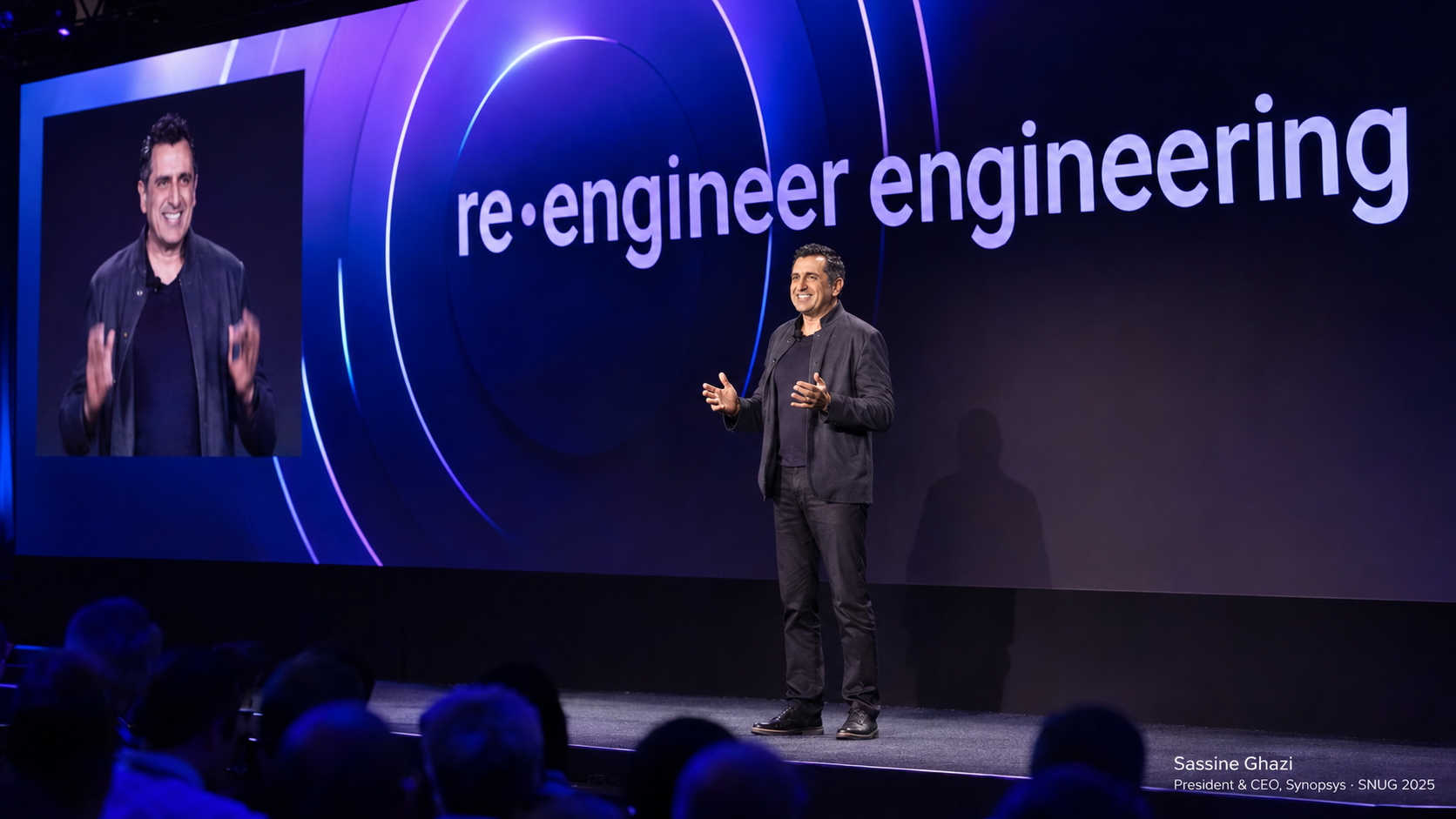
Synopsys is growing quickly as AI and Ansys lift results, but slower chip-design activity outside AI leaves its premium valuation dependent on a narrower set of customers.
Synopsys is benefiting from an AI-driven surge in chip complexity, but its strongest market is also becoming its biggest concentration risk. Management said design starts outside AI and high-performance computing had slowed before stabilizing, while activity among AI customers continued to accelerate. That divergence matters because investors are paying for broad, durable growth, not only one unusually strong spending cycle.
The company's fiscal third-quarter results were strong. Revenue rose to $2.48 billion from $1.74 billion a year earlier, according to Synopsys, and both reported and adjusted earnings exceeded the top of management's prior guidance. The company raised its full-year revenue midpoint to $9.72 billion and expects double-digit growth in electronic design automation, or EDA, for fiscal 2026.
Part of that growth came from the Ansys acquisition, so total revenue does not show the underlying pace of the legacy design-software business by itself. The source material reports that EDA revenue grew 8.5% in the quarter, while Design IP returned to growth with revenue up about 11%. Those figures are encouraging, but they are much slower than the 42% increase in consolidated revenue, which included roughly $711 million from Ansys.
The risk is not that AI demand suddenly disappears. It is that Synopsys becomes more dependent on a small group of customers whose capital spending is unusually concentrated in advanced computing. Chip projects outside AI broaden demand across industrial, automotive, consumer and communications markets. If those projects remain subdued, AI customers must continue increasing design activity fast enough to offset weaker starts elsewhere.
Synopsys also carries integration and accounting complexity after the Ansys deal. Its full-year target implies a reported operating margin near 10.4%, while the adjusted target is about 41.5%. Most of that gap comes from acquired-intangible amortization, stock compensation and restructuring charges. Investors should keep those definitions separate when judging profitability and comparing the company with peers.
Management said non-AI design starts had stopped declining, which is meaningful counterevidence to the concentration concern. The next test is whether that stabilization turns into renewed growth. Fiscal fourth-quarter guidance calls for revenue of $2.53 billion to $2.58 billion, and the company expects about $2.98 billion of Ansys revenue for the full year.
Synopsys' AI exposure remains a powerful growth engine, but the investment case is stronger if non-AI design activity also recovers. Until then, EDA growth, Design IP performance and the mix of organic versus acquired revenue deserve more attention than the headline revenue increase alone.
Image references: · SNPS factual product/event reference (Reference copyright retained by its owner; factual visual research, no CC grant claimed.)
Frequently asked questions
What is "Synopsys' AI Strength Masks a Slower Chip-Design Market" about?
Synopsys is growing quickly through AI and Ansys, but slower chip-design activity outside AI makes business mix and organic EDA growth the next test.
What is the market context?
Synopsys is benefiting from an AI-driven surge in chip complexity, but its strongest market is also becoming its biggest concentration risk. Management said design starts outside AI and high-performance computing had slowed before stabilizing, while activity among AI customers continued to accelerate. That divergence matters because investors are paying for broad, durable growth, not only one…
When was this article published?
It was published on 04 / 11 / 2026 by Be The Investor Research.