


 Be The Investor Research
Multiple IRAs Do Not Mean Multiple RMD Payments

Required minimum distributions must be calculated for each traditional IRA, but the total can generally be withdrawn from one or more IRAs. Accurate aggregation matters because shortfalls can trigger excise tax.
Owners of multiple traditional IRAs must calculate a required minimum distribution for each account, but they can generally take the combined amount from one or more of those IRAs. That flexibility is useful, yet it can cause mistakes when one account is overlooked.
Consider three year-end balances of $400,000, $250,000 and $150,000, with a Uniform Lifetime Table divisor of 24.6. The separate calculations are $16,260.16, $10,162.60 and $6,097.56 after rounding to cents. Together they total $32,520.32. A custodian may calculate only the RMD for assets it holds, so investors with several custodians must reconcile the totals themselves.
If the $400,000 account were omitted, the shortfall would be $16,260.16. The standard excise tax on a missed required minimum distribution is 25%, which would equal $4,065.04 in this illustration. IRS rules can reduce the rate to 10% when the shortfall is corrected within the applicable correction window, and the IRS may waive the tax for reasonable error when the taxpayer takes corrective steps and files the required explanation.
Aggregation is not universal across retirement plans. The IRA rule should not be assumed to apply in the same way to employer plans, and inherited accounts can have different schedules. Roth IRAs owned by the original owner do not require lifetime distributions.
A clean process starts with a complete account list, prior year-end balances and the correct divisor for the owner's age and circumstances. Calculate each IRA, document the total, choose where to withdraw it and confirm completion before year-end. The flexibility to use one account is helpful only after every account has been counted.
Continue your SCHW research
Related News

German Business Confidence Rises, but Current Conditions Weaken
Germany's ifo index rose to 90.2 as expectations improved, but current conditions deteriorated. Manufacturing strengthened while services, trade and construction remained uneven and financing costs stayed high.

USPS Adds a Weekly Fuel Surcharge to Package Shipping in 2027
USPS will introduce a weekly domestic fuel surcharge for four package services in January 2027. The change makes postal pricing more responsive to energy costs and more similar to private carriers.

Brazil's Election Upset Triggers a Historic Market Repricing
Lula's surprise fourth-term victory sent Brazil's currency, stocks and bonds sharply lower. The reaction reflects fiscal uncertainty and company-specific exposure, not proof that every Brazil-linked business faces the same damage.
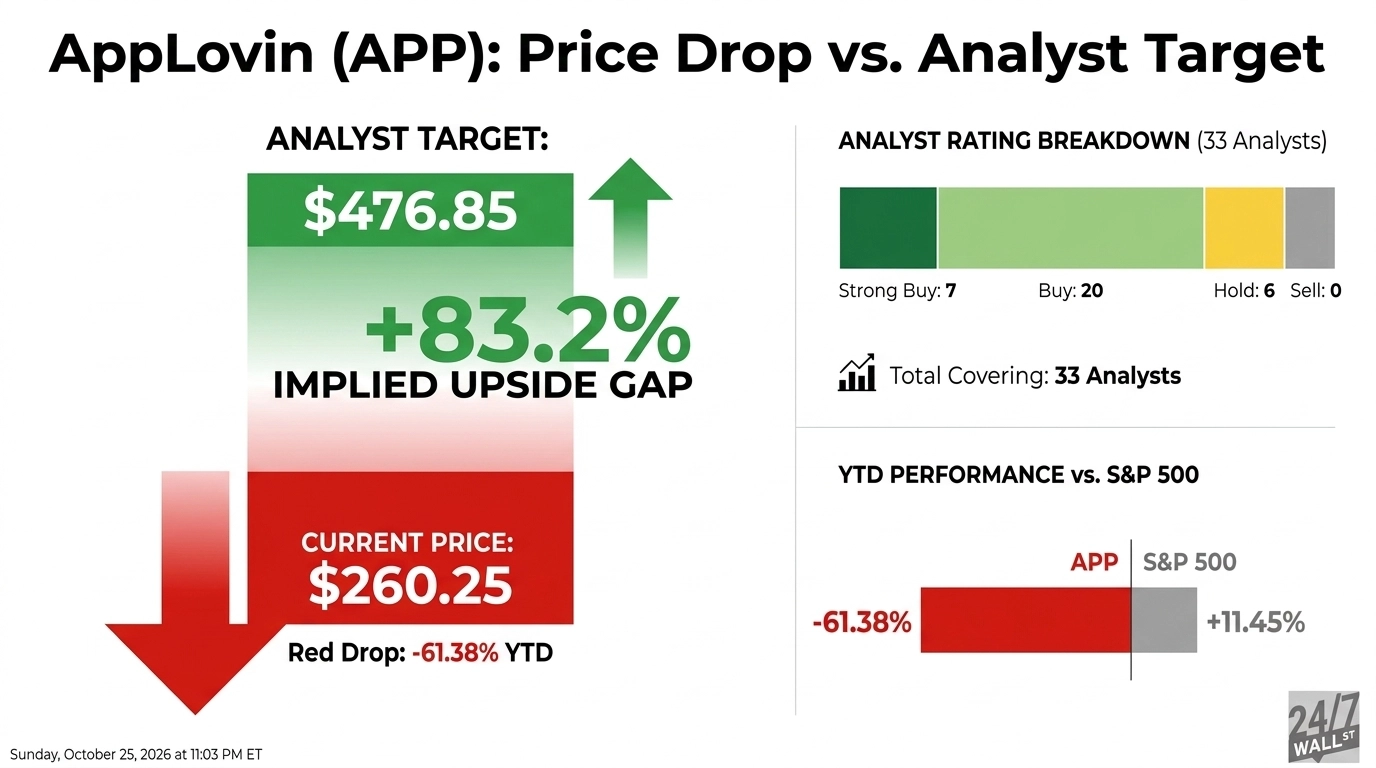
AppLovin's 61% Slide Turns Its Next Quarter Into a Model Test
AppLovin's second-quarter revenue and cash flow still grew rapidly, yet a small revenue miss and slower model improvements changed the market's confidence. The November 4 report now carries unusual weight.

Alibaba's Cloud Growth Cannot Yet Offset Its Commerce and Cash Costs
Alibaba's shares have fallen with Chinese internet stocks, but the operating picture is more complicated: cloud revenue is accelerating while commerce weakness, AI spending and a wider free-cash-flow outflow weigh on the case.

Cyprus' First Gas Project Turns a Discovery Into a 2028 Export Plan
Eni and TotalEnergies are moving the Cronos gas field into construction with contracts worth up to $1.8 billion, using Egypt's existing infrastructure to target first production in 2028.
Meta's $135 Billion AI Budget Shifts Attention to Amphenol

Meta's artificial intelligence budget is now large enough to shape results well beyond Meta itself. Aptus Capital Advisors portfolio manager David Wagner argues that the spending should be viewed from both sides: capital expenditure for Meta becomes revenue for the companies supplying data centers, networking equipment and cloud capacity.
That argument gained firmer numerical support in Meta's third-quarter results. The company spent $34.91 billion on capital expenditures, including principal payments on finance leases, during the quarter and narrowed its full-year 2026 forecast to $135 billion to $145 billion. Meta also said its AI investments are already lifting advertising revenue through better recommendations, engagement and monetization.
The cost is visible too. Meta generated $32.79 billion of operating cash flow in the third quarter but reported negative free cash flow of $2.12 billion. It ended September with $82.45 billion of cash, cash equivalents and marketable securities. The company has since said it plans to fund its infrastructure with a mix of operating cash flow, investment-grade debt, strategic partnerships and equity capital. That makes Wagner's point about debt capacity more specific: Meta has substantial resources, but the buildout is big enough to require several funding channels.
Amphenol is one way investors can express the supplier side of that thesis. The company sells connectors, cables and related systems into the IT and data communications market, making it exposed to the physical expansion of AI infrastructure. Wagner named Amphenol alongside Amazon and Meta among stocks he favors. The connection is economically plausible, but it is not a guarantee that every dollar of Meta spending reaches Amphenol. Customer mix, component pricing, competition and the shift between copper and optical connections will determine how much of the industry budget becomes Amphenol revenue.
The next company-specific check arrives quickly. Amphenol is scheduled to report third-quarter results on October 28. Investors can then compare the broad supplier thesis with actual IT and data communications sales, orders and guidance. Meta's spending plan supports demand, while Amphenol's own results will show how much of that demand it is capturing.
Affirm's Q1 Setup Turns on GMV Growth Above Guidance

Affirm enters its November 5 earnings report with analysts expecting growth above management's own starting point, but the gap between expectations and guidance is now a source of risk as well as potential upside.
Morgan Stanley lowered its Affirm price target to $79 from $82 and kept an Equal Weight rating, according to the original report. The firm still expects fiscal first-quarter gross merchandise volume, or GMV, to grow about 34%, compared with roughly 31% at the high end of the company's implied outlook. The report says investors may be positioned for growth closer to 37%, which means a result above management's range could still disappoint if it falls short of the market's unofficial bar.
A second firm took a more bullish position. Monness Crespi initiated coverage with a Buy rating and a $90 target, arguing that buy-now-pay-later providers and neobanks have taken a larger share of spending and lending. The next phase depends on customers using the services more often and on changes in customer mix, not simply adding more users.
Affirm's own outlook calls for first-quarter GMV of $13.7 billion to $14.0 billion and revenue of $1.19 billion to $1.22 billion. The original report cites Fiscal.ai consensus revenue of $1.21 billion and earnings of $0.38 per share, compared with $0.23 a year earlier. Revenue consensus therefore sits inside the company's range, while the more demanding debate is about GMV growth and profitability.
The company also expects a GAAP operating margin of 11.5% to 13.5% and an adjusted operating margin of 28% to 30%. Its outlook assumes a promotional event with a large merchant will not repeat and that another merchant's move to its own wallet will remain a year-over-year headwind for part of the quarter. Affirm also expects short-term benchmark rates to be higher in fiscal 2027 than in fiscal 2026, adding pressure to funding economics.
Affirm reports after the market closes on November 5, with its conference call scheduled for 5 p.m. ET. A clean beat requires more than strong transaction volume. Investors should compare GMV with revenue less transaction costs, which the company guides to $575 million to $590 million, and check whether credit performance and funding costs support the margin forecast.
Amazon's AWS Forecast Raises the Bar Ahead of Q3 Earnings
Amazon's third-quarter report on October 29 has a narrow test at its center: can Amazon Web Services accelerate again without making the returns on the company's AI spending harder to see? Bank of America's forecast says the cloud business can clear that bar, but the rest of the quarter leaves little room for a weak margin result.
The bank forecasts Amazon revenue of $202.0 billion and operating income of $26.4 billion. The revenue estimate is just below the $202.2 billion consensus cited in the original report, while operating income is slightly above the cited $26.1 billion consensus. Amazon's own guidance calls for revenue of $197 billion to $202 billion and operating income of $22.5 billion to $26.5 billion. In other words, the analyst's case sits near the top of management's ranges rather than assuming a broad companywide beat.
Bank of America expects AWS revenue to grow 40% from a year earlier, two percentage points above the consensus rate cited in its note. It estimates AWS will add roughly $4 billion of revenue from the second quarter and produce a 39% operating margin. The note attributes that growth to added capacity, price increases, AI laboratory contracts and enterprise demand for inference, while greater use of Amazon's Trainium chips and Bedrock platform could help absorb higher depreciation.
The starting point is already strong. In the second quarter, AWS sales rose 37% to $42.2 billion and AWS operating income reached $16.6 billion, according to Amazon. Advertising grew 26%, and total operating income rose to $27.5 billion. Yet Amazon's trailing free cash flow was a $7.6 billion outflow after property and equipment spending increased by $66.1 billion, mainly for AI infrastructure. That gap between reported operating profit and cash generation is the central counterweight to the cloud growth story.
The retail and advertising businesses could make the comparison less clean. Bank of America expects North American retail growth to slow to 6%, while advertising growth eases to 15% because Prime Day timing becomes less favorable. It forecasts fourth-quarter revenue guidance of $239 billion to $246 billion, with a midpoint below the consensus cited in the note, and operating income guidance of $29 billion to $34 billion.
A 40% AWS result would be encouraging, but investors also need evidence that new capacity is being used efficiently. The most revealing figures will be AWS operating margin, total capital spending, depreciation and the fourth-quarter profit range. Rapid cloud growth matters more if it can convert Amazon's unusually heavy AI investment into durable cash returns.
Roku's Home Screen Advantage Needs Measurable Ad Conversion

Roku is asking advertisers to treat the television home screen as the start of a measurable customer journey, not simply as a place to buy reach. The strategy fits the company's operating-system position, but the most important claims still come from Roku and its partners rather than independently audited campaign data.
Lauren Benedict, Roku's vice president of global ad sales and partnerships, told Beet.TV that Roku reaches 100 million households globally and meets viewers when they first switch on their televisions. She said users spend nearly 16 minutes searching for content and return to Roku on roughly 25 days each month, compared with about eight days for the next most-used app. Those figures explain why Roku believes menu, home-screen and in-content ads can work as a sequence rather than isolated impressions.
The commercial pitch is moving toward outcomes. Benedict cited Roku and Omnicom research in which a home-screen placement followed by sequential streaming messages produced nearly six times the purchase intent. A Roku case study said Toyota's multi-format campaign lifted ad recall by 8.1%, with 98% of campaign reach coming exclusively from sponsorship media. These are useful examples, but investors should treat them as company-reported evidence until methodology and control-group details are available.
Industry infrastructure is becoming more supportive. IAB Tech Lab introduced standardized signals for connected-TV formats such as pause, menu, overlay and squeeze-back ads. Common definitions can reduce manual work and make new inventory easier to buy programmatically, which may help Roku scale formats that appear before or between programs.
Roku's financial results show why this matters. Reuters reported that first-quarter 2026 platform revenue rose 28% to $1.13 billion, beating the estimate it cited, and Roku raised its full-year platform revenue forecast to $5 billion, or 21% growth. Devices revenue fell 16% to $118 million, reinforcing that advertising and other platform services, not hardware sales, are the larger economic opportunity.
The next proof point is not another household milestone. Roku needs to show that home-screen access, sequential formats and data partnerships increase advertiser spending and platform revenue without overwhelming viewers or relying on one-off case studies. Standardization makes the inventory easier to transact, but repeatable campaign performance will determine whether the operating-system advantage becomes durable cash flow.
Apparel Selloff Masks Three Different Turnaround Problems
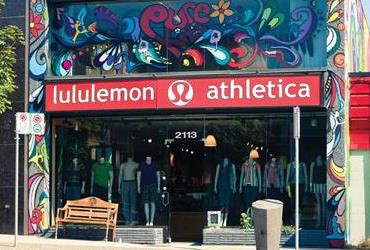
A broad retail selloff pushed Lululemon and Under Armour down about 4% on October 23, while Nike fell roughly 2%. The similar share moves concealed three different operating problems, and investors should not treat the group as a single bet on consumer spending.
The macro backdrop was not uniformly weak. The U.S. Census Bureau estimated September retail and food-services sales at $745.0 billion, up 0.8% from August and 6.3% from a year earlier. The report was adjusted for seasonal and trading-day effects but not for price changes. With the SPDR S&P Retail ETF down about 2% that day and no fresh announcement from the three companies, the stock moves looked more like a repricing of discretionary risk than a response to new company results.
Lululemon has the clearest near-term demand problem. Second-quarter revenue fell 4% to $2.4 billion, Americas revenue declined 8%, and Americas comparable sales dropped 12%. Reported gross margin rose 200 basis points to 60.5%, but a $134.5 million tariff refund added 560 basis points. Operating margin still declined 190 basis points to 18.8%. Management guided third-quarter revenue to $2.29 billion to $2.32 billion, a 10% to 11% decline, and expects full-year revenue to fall 5% to 7%.
Under Armour's weakness is spread across channels and categories. Its first-quarter fiscal 2026 revenue declined 4% to $1.1 billion, with North America down 5%, wholesale down 5% and direct-to-consumer revenue down 3%. Footwear fell 14%, a sharper contraction than the 1% decline in apparel. The company reported $13 million of restructuring charges and held $911 million of cash, including $400 million raised in senior notes to help address $600 million of notes due in June 2026.
Nike is further along in parts of its turnaround, but the recovery is uneven. Fiscal first-quarter 2027 revenue fell 4% to $11.2 billion, while North America grew 2%. Performance categories grew at a high-single-digit rate, helped by running and global football, but Sportswear, Jordan and Greater China remained material drags. Nike ended the quarter with $8.4 billion in cash and short-term investments, giving it more financial room than the other two companies.
The October 23 selloff therefore did not prove that shoppers had suddenly stopped spending. It highlighted different tests: Lululemon must stabilize Americas comparable sales without relying on one-time tariff refunds, Under Armour must make restructuring produce durable demand and margin improvement, and Nike must turn strength in performance products into a broader brand recovery.
Latest comments