



 Be The Investor Research
Applied Digital’s Revenue Surge Was Mostly Fit-Out Work, Not Rent

Applied Digital reported $341.9 million of fiscal first-quarter revenue, but only $65.8 million was base rent. Long-term value depends on converting construction activity into recurring lease income.
Applied Digital’s fiscal first-quarter revenue more than quadrupled to $341.9 million, but the composition matters more than the headline growth. Only $65.8 million came from base rent in its high-performance computing hosting segment.
The segment generated $262.6 million in total. Tenant fit-out services contributed $183.5 million, meaning construction and preparation work produced far more revenue than recurring rent. Fit-out revenue can be economically valuable, but it does not carry the same durability as a 15-year take-or-pay lease.
The company still reported a $221.0 million net loss from continuing operations attributable to common shareholders, or $0.76 a share. That included a $67.5 million non-cash investment charge and $41.3 million of one-time stock compensation, so the reported loss mixes operating costs with unusual items.
Applied Digital expects to place more than 600 megawatts into service over the following 12 months and said it was pursuing about 250 megawatts of expansion leases by year-end 2026. Management suggested new lease rates could be more than 15% above earlier agreements, but did not disclose a precise price.
Growth is being financed with substantial borrowing. The company ended the quarter with about $6.4 billion of debt and $2.9 billion of cash, with most principal due in fiscal 2031 or later. The next test is base rent, not total construction revenue: investors need to see energized capacity turn into recurring cash flow without leverage rising faster than contracted income.
Continue your MARA research
Related News

Strive Added 3,311 Bitcoin, but the Purchase Came With More Shares
Strive bought 3,311 bitcoin for about $280 million, lifting holdings to 32,773. The acquisition increased its treasury scale while new common and preferred shares highlighted the financing cost.
Microsoft's Maia 300 Is an Efficiency Bet, Not an Nvidia Exit
Microsoft says Maia 300 will deliver 40% more tokens per megawatt than leading GPU systems and scale in 2027, but the company is still operating a mixed-chip cloud.
Adobe's AI Usage Is Growing Faster Than Its Backlog
Adobe delivered 13% reported revenue growth and more than 150% growth in AI-first ARR, but remaining performance obligations rose only 8%, keeping monetization under scrutiny.

Gartner's Neocloud Warning Puts Financing, Not Demand, at Center Stage
Gartner expects more than 80% of neocloud providers to lose independent status by 2030. The risk is a mismatch between heavy infrastructure spending and cash earned before chips age.
Rocket Lab's Iridium Deal Faces an FCC Competition Challenge
Ligado asked the FCC to scrutinize Rocket Lab's $8 billion Iridium acquisition, adding regulatory risk as investors also absorb a delay to the Neutron rocket.

SpaceX's Spectrum Deal Raises the Stakes for Verizon
SpaceX's planned 800 MHz purchase sharpened fears about direct-to-device competition, but Verizon's more immediate defense is fiber, cash flow and execution after the Frontier acquisition.
ARK Buys CoreWeave as Financing Costs Test the AI Cloud Story
ARK Invest bought 132,498 CoreWeave shares on Oct. 19, adding to the AI cloud provider after a decline that had pushed the stock toward a third straight losing week. The purchase split between 102,280 shares for ARKK and 30,218 for ARKW, worth about $8.1 million at the reported trade prices.
The trade is notable, but it does not resolve the question weighing on CoreWeave: how much of its growth will accrue to shareholders after financing the infrastructure behind it.
CoreWeave reported $2.58 billion of revenue for the second quarter of 2026, more than double the year-earlier figure, and a revenue backlog of about $104 billion. Demand is not the immediate problem. The pressure sits below the operating line. Net interest expense rose to $640 million from $267 million a year earlier, and the company posted a $626 million net loss.
CoreWeave is financing data centers and accelerators years before much of the contracted revenue arrives. That structure can work when capacity remains scarce, customers honor long commitments and refinancing markets stay open. It becomes less forgiving when interest rates rise or investors demand more protection.
The company has tried to broaden its funding base. In March, it closed an $8.5 billion delayed-draw facility backed by GPU infrastructure and a customer contract, which received investment-grade ratings from Moody's and DBRS. In September, it proposed $3 billion of convertible notes. Those transactions show that CoreWeave still has market access, but they also underline how central outside capital is to the expansion plan.
Analysts are divided for the same reason. Goldman Sachs upgraded the shares to Buy, arguing that tight AI capacity can support attractive returns. MoffettNathanson and BNP Paribas cut price targets, focusing on obligations and the risk that financing becomes more expensive.
ARK's purchase is therefore a vote on more than AI demand. It is a bet that CoreWeave can convert a large backlog into cash before its capital structure becomes the limiting factor. The next useful evidence will be cash generation, interest coverage and the terms of new financing, not the size of one fund manager's trade.
Cipher’s Zero-Coupon Notes Show the Hidden Cost of AI Data Centers

Cipher Digital priced $850 million of 0% convertible senior notes due 2032 as it expands from bitcoin mining into high-performance computing. A zero coupon lowers current cash interest, but the financing is not free. Investors give the company capital in exchange for a bond plus the possibility of converting into equity.
That structure can be attractive for a builder with heavy near-term capital needs and future lease revenue. It preserves cash during construction and can reduce refinancing pressure. The trade-off arrives if the share price rises enough for conversion, increasing the diluted share count, or if the business underperforms and the principal must still be repaid.
Contract value and financing value are different
Cipher has also extended the Barber Lake lease term to 20 years, lifting reported contracted revenue above $9 billion. Long-duration revenue can support project finance, but investors still need the delivery schedule, tenant credit support, operating costs and residual value to estimate economics. Contracted revenue is not equivalent to present value or free cash flow.
The financing also included an exchange of convertible notes due 2030. Exchanges can push maturities outward and simplify the capital structure, but the final effect depends on conversion prices, call provisions and the amount of old debt retired. Those terms matter more than the 0% coupon in isolation.
Peers illustrate the same broader challenge. Applied Digital reported $5.0 billion of debt and $4.2 billion of cash, cash equivalents and restricted cash at May 31, 2026. TeraWulf paired long leases with asset sales and large equity issuance. Each company is assembling a different mix of debt, equity, project finance and tenant support to bridge construction.
For Cipher, the clearest measures are remaining construction cost, unrestricted liquidity, interest and principal obligations, and diluted shares under conversion scenarios. If Barber Lake reaches service on time, the financing may look efficient. If delivery slips or capital needs grow, the zero coupon will not protect shareholders from dilution or refinancing risk.
AI Infrastructure Stocks Rebound, but Contracted Power Is the Real Test
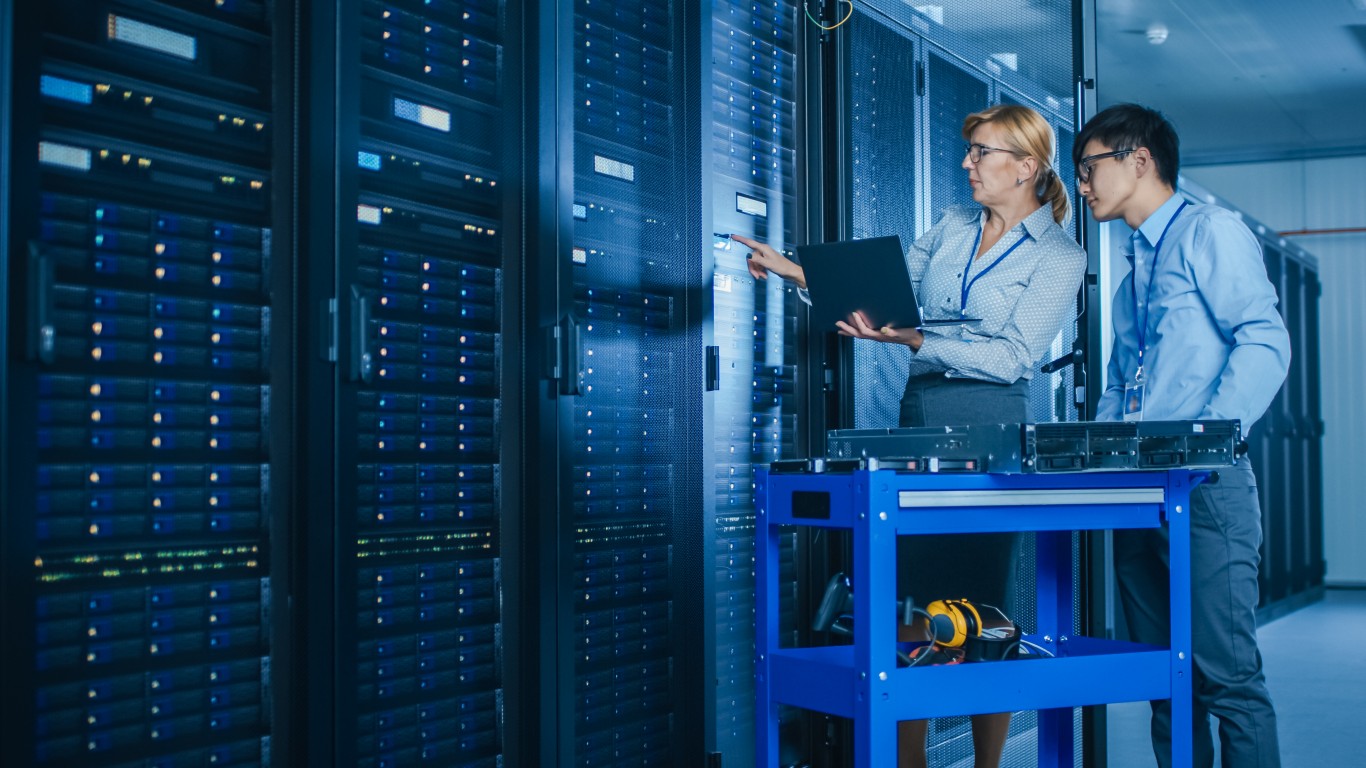
Applied Digital, TeraWulf and IREN rebounded after a broad selloff in AI-infrastructure shares. The price move matters less than the operating question behind it: how much announced capacity is funded, powered, built and producing rent.
These companies are converting power access and former crypto-mining sites into data centers for artificial-intelligence workloads. That strategy can create long contracts, but it requires heavy construction spending before revenue arrives. The result is a business where contract headlines and cash flow can be separated by years.
TeraWulf shows both sides of the model. Its 20-year Anthropic lease at the Justified campus covers about 401 megawatts of critical IT load and is expected to generate roughly $19 billion of contracted revenue over the initial term. Initial capacity is scheduled for the second half of 2027, with the full load targeted for early 2028. The contract is large, but revenue depends on construction, interconnection and delivery.
Applied Digital has also raised large sums to fund campuses. At May 31, 2026, it reported $4.2 billion of cash, cash equivalents and restricted cash alongside $5.0 billion of debt. Restricted cash is not freely available for every corporate purpose, so headline liquidity must be matched to project obligations.
What the rebound does not prove
A rising share price does not lower construction risk, guarantee utility delivery or turn contracted revenue into current free cash flow. It can, however, make equity financing less dilutive and improve confidence among counterparties. That feedback loop helps only if management keeps milestones and avoids repeated funding gaps.
Investors should compare the companies on four measurements: delivered megawatts, tenant credit support, project-level financing and cash retained after interest and construction. Bitcoin exposure and power-market economics add another layer for companies that still operate mining businesses.
The next durable catalyst is not another sector rally. It is evidence that a campus moves from signed demand to energized capacity on schedule and within budget. Until that happens, the stocks remain claims on execution as much as on AI demand.
Optics Stocks Rally, but Earnings Must Confirm the AI Backlog

Shares of Applied Optoelectronics, Lumentum and Coherent rose 5%, 4% and 2%, respectively, in the session described by the original report. The move came before early-November earnings reports and after a year in which AI-network demand pushed optical-component expectations sharply higher.
The industry logic is straightforward. Larger AI clusters need faster connections between servers, racks and buildings. Optical transceivers and related components move data over those links with less power and greater reach than copper at high speeds. The investment question is harder: whether suppliers can convert booked demand into shipments and margins quickly enough to justify valuations.
Backlog is not the same as revenue
Lumentum's fiscal 2026 results provide evidence of strong demand. The company reported fourth-quarter revenue of $1.01 billion, while management described constrained supply across parts of its cloud and networking portfolio. Coherent has been promoting PhotonLink, an optical interconnect platform for data-center campuses, as it moves from product introductions toward customer sampling and revenue.
Applied Optoelectronics is more concentrated and therefore can react more sharply to changes in hyperscale orders. That creates upside when a large customer ramps, but it also raises customer-concentration and execution risk. For all three companies, capacity additions, product yields and the timing of customer qualification can separate reported revenue from headline demand.
The approaching earnings dates turn the rally into a measurable test. Investors should compare revenue growth with gross margin, inventory and capital spending. Strong shipments paired with falling margins could mean suppliers are paying heavily to serve demand. Stable or improving margins alongside faster revenue would be better evidence that scarcity is translating into pricing power.
The three stocks do not offer identical exposure. Lumentum and Coherent have broader optical portfolios, while Applied Optoelectronics carries more concentration risk. Their next reports should be judged on company-specific conversion of orders into cash, not on the sector's AI label alone.
A short rally can reflect positioning before earnings. The more durable signal will be management's quantified capacity, shipment and margin outlook for the December quarter and beyond.
AI Data Centers Tighten Fiber Supply, Putting Corning in Focus
Artificial-intelligence data centers are becoming a much larger buyer of optical fiber just as specialized capacity remains tight. TrendForce estimates global demand at 577 million fiber-kilometers in 2026 and says data centers will account for 18% to 20% of that total, rising to 30% to 35% in 2027.
The mix matters because AI clusters need dense internal and campus networks, not just long-haul telecom links. TrendForce says prices for bend-insensitive fiber, used where cables must fit through compact routes, have risen more than fivefold from 2025 levels. It also estimates prices for AI-backbone fiber at roughly 2.8 times the 2025 level and telecom fiber at about 3.7 times.
Corning has the clearest direct exposure among the companies named in the original report. The company makes optical fiber and cable and has already signed a multiyear supply agreement with Verizon covering more than 80 million miles of fiber from 2027 through 2032. That contract gives Corning demand visibility while helping Verizon secure supply for network construction.
Who benefits, and who pays
Higher fiber prices are not automatically pure profit. Corning must expand production, manage raw-material costs and deliver on long contracts. Verizon gains supply assurance, but the agreement also commits it to a large build program whose returns depend on customer demand and network utilization.
Coherent is adjacent to the same infrastructure cycle through optical components and transceivers, but it should not be treated as a direct proxy for commodity fiber pricing. The distinction matters because a shortage in one layer of the optical stack can shift demand and costs without producing the same margin effect for every supplier.
The strongest evidence is the change in purchasing behavior. A six-year, 80-million-mile commitment is an operational signal that carriers expect fiber availability to matter well beyond a single quarter. TrendForce's forecast also suggests data centers could consume roughly 173 million to 202 million fiber-kilometers in 2027 if total demand were unchanged, though actual industry demand will move too.
For investors, Corning's next reports should show whether pricing and volume growth outweigh the cost of new capacity. Verizon's capital spending and deployment pace will reveal whether secured supply turns into productive network assets rather than inventory.
Latest comments