


 Be The Investor Research
Oracle Splits a $20 Billion Raise Between Stock and High-Coupon Debt
Oracle priced $10 billion of common stock and $10 billion of senior notes to fund its cloud buildout. The transaction reduces near-term financing uncertainty, but dilution and coupons as high as 8.65% raise the execution hurdle.
Oracle has put exact terms around the financing needed for its cloud expansion. The company priced 86,206,897 common shares at $116 each for roughly $10 billion of equity and issued another $10 billion of senior notes. The debt carries coupons ranging from 7.0% to 8.65%, with maturities extending from 2031 to 2076. Closing is expected on November 4, subject to customary conditions.
The transaction resolves one question and sharpens another. Oracle had already told investors that new capital raised through fiscal 2030 would be capped at $20 billion, split between equity and debt. Pricing the full amount now gives suppliers and customers more confidence that near-term infrastructure commitments can be funded. It also means the company has used the announced allowance, leaving future expansion more dependent on operating cash flow, customer financing or a change in that policy.
The cost is visible. The new shares equal about 3% of Oracle's existing share count, based on the original report's estimate, so current holders will own a slightly smaller percentage of the company. The notes add substantial annual interest expense, and the highest coupons are expensive for an investment-grade technology issuer. Those costs are manageable only if the cloud capacity being built produces revenue and cash on the schedule management has presented.
Oracle's investor-day targets are ambitious. Management expects revenue above $225 billion in fiscal 2030, a non-GAAP operating margin above 40%, and non-GAAP earnings above $21 a share. It also expects free cash flow to turn positive in the second half of fiscal 2028 and exceed $30 billion in fiscal 2029. Those are company goals, not guaranteed outcomes.
The financing also sits beside rapid demand growth. Oracle's first-quarter release reported triple-digit growth in cloud infrastructure revenue, supporting the case for capacity investment. But the size of the raise shows that revenue growth and cash generation are currently on different timelines. Building data centers requires cash before contracted cloud sales are fully recognized.
Investors should judge this transaction as a funding bridge, not as proof that the buildout will earn an adequate return. The immediate positive is lower near-term financing uncertainty. The offset is dilution, high interest expense and less room under the stated capital-raising cap. Oracle's next results need to show that remaining performance obligations are converting into revenue fast enough to keep the free-cash-flow timetable credible.
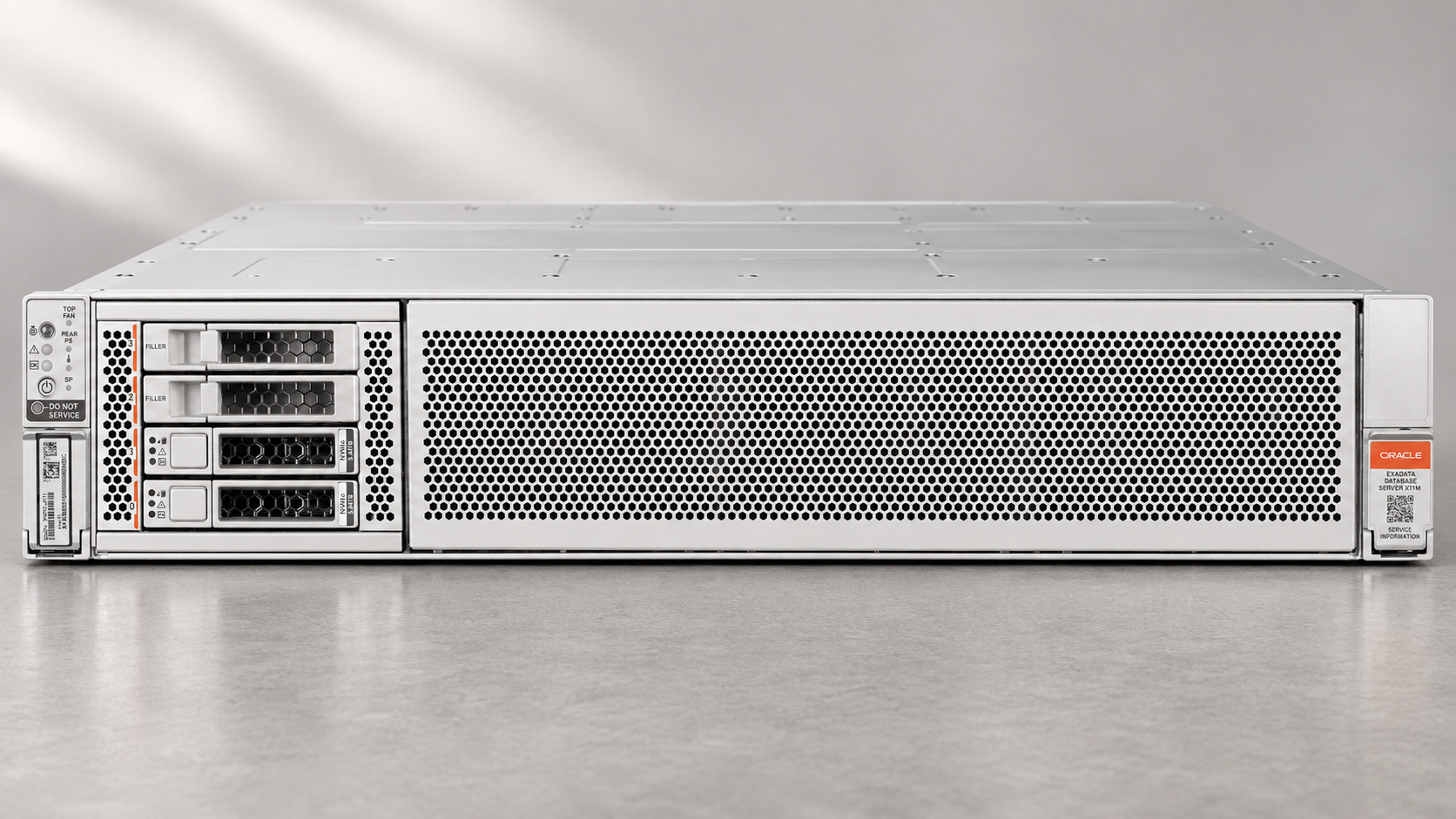
Image references: · Oracle official Exadata X11M front panel reference (Reference copyright retained by its owner; factual visual research, no CC grant claimed.)