



Pfizer Raises Guidance as Moderna and Merck Face Different Tests
Pfizer raised its 2026 outlook after a steady quarter, Moderna approached earnings after a sharp rally, and Merck began a large COPD trial. The three catalysts carry very different levels of evidence.
Three large drugmakers moved in different directions on November 3, but the headlines were not comparable. Pfizer had completed a quarter and raised guidance. Merck had begun a Phase 3 trial whose outcome remains years away. Moderna was still three days from reporting results after a powerful share-price rally. Treating those events as one sector signal would obscure the evidence investors actually received.
Pfizer reported third-quarter revenue of $16.58 billion, essentially flat from a year earlier, and adjusted diluted earnings of $0.87 per share. Revenue excluding Comirnaty and Paxlovid grew 7% operationally, while recently launched and acquired products grew 32%. The company raised its 2026 revenue forecast to $62 billion to $64 billion from $60.5 billion to $62.5 billion. It also lifted and narrowed adjusted diluted earnings guidance to $2.95 to $3.05 per share from $2.80 to $3.00.
The mix explains why a beat-and-raise quarter did not produce an unambiguously stronger story. Pfizer's COVID products continued to contract, with the source reporting Comirnaty sales down 29% and Paxlovid down 63% from a year earlier. Eliquis sales rose 25% and Padcev sales increased 55%, helping offset that decline. The investment question is whether newer products and the pipeline can replace mature revenue fast enough, not simply whether one quarter clears consensus.
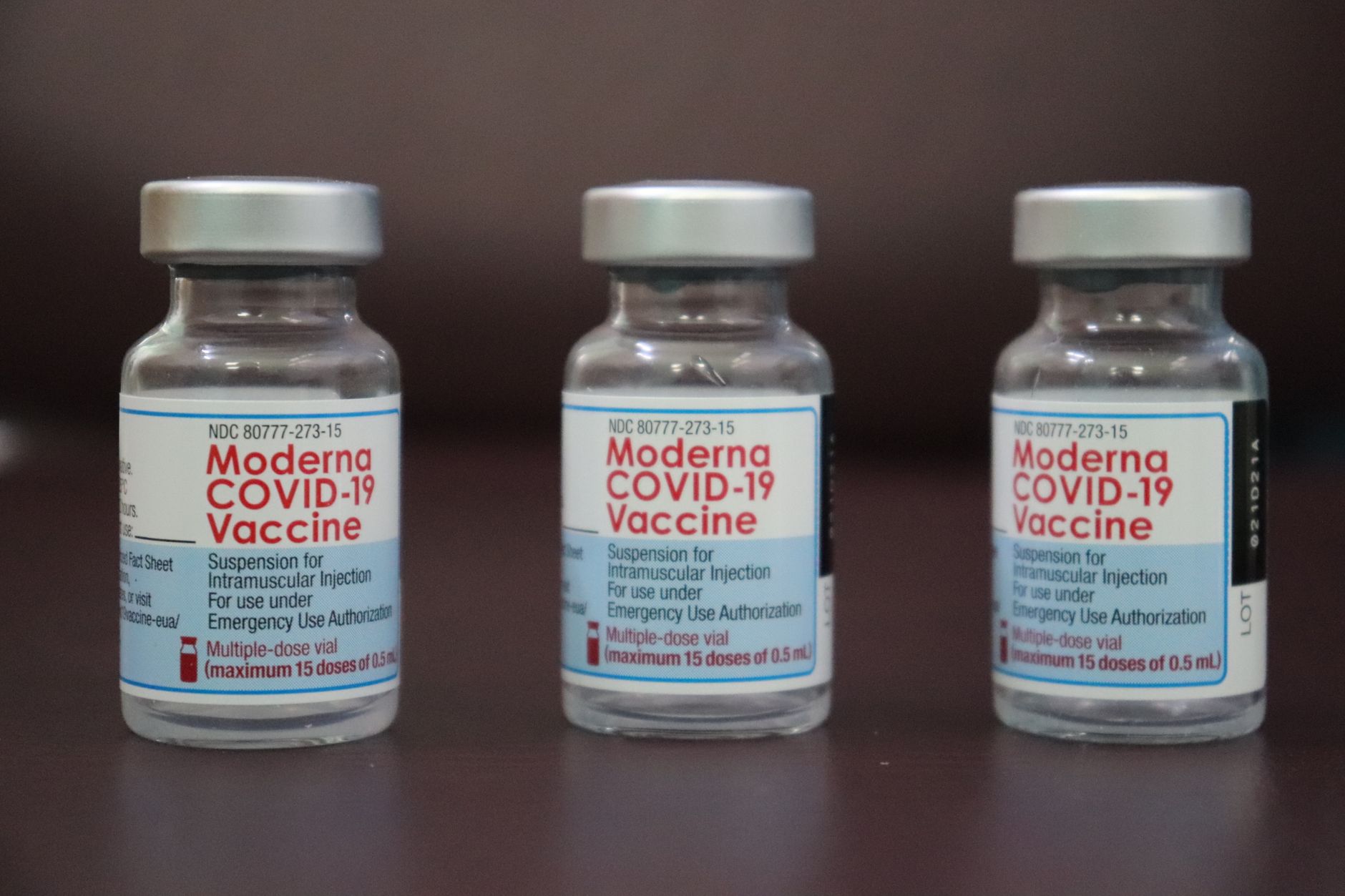
Moderna faced a different burden of proof. Its shares were up 5% at $231.52 in the source's afternoon snapshot and had risen 685% in 2026 before its November 6 earnings call. The most recent official report showed second-quarter revenue of about $145 million and a GAAP net loss of about $782 million. That combination makes the next report unusually important: the market value had risen far faster than the company's current revenue base.
Liquidity and legal obligations also matter. Moderna paid $950 million in July to resolve worldwide patent litigation with Arbutus and Genevant. The agreement removed future royalties for specified infectious-disease vaccines, but an appeal could trigger an additional payment of as much as $1.3 billion. That contingent amount had not been accrued at June 30 because Moderna did not consider a loss probable. Investors therefore need to separate a known cash payment from a conditional legal exposure.
Merck's announcement was earlier in the clinical process. The company began ENHANCE-3, a randomized, double-blind, placebo-controlled Phase 3 study of Ohtuvayre in adults with chronic obstructive pulmonary disease who had experienced an exacerbation despite standard therapy. The study plans to enroll about 2,136 patients in 28 countries. Its primary endpoint is the annualized rate of adjudicated moderate or severe exacerbations over 52 weeks.
Ohtuvayre is already approved in the United States as a maintenance treatment for adults with COPD, and Merck reported $184 million of third-quarter sales after acquiring Verona Pharma. ENHANCE-3 is testing whether the drug can add evidence for preventing exacerbations on top of standard care. Starting the study is strategically relevant, but it is not evidence that the new use works and it does not create an immediate revenue step-up.
The three stocks therefore require three different questions. Pfizer must convert a raised forecast into durable non-COVID growth. Moderna must show that commercial progress and cash resources can support expectations embedded in a much higher share price. Merck must enroll and complete a large trial before investors can judge the proposed expansion of Ohtuvayre's role. Price moves on a single afternoon cannot put those evidence stages on equal footing.