



Retatrutide's Phase 3 Win Comes With an Unresolved Legal Question
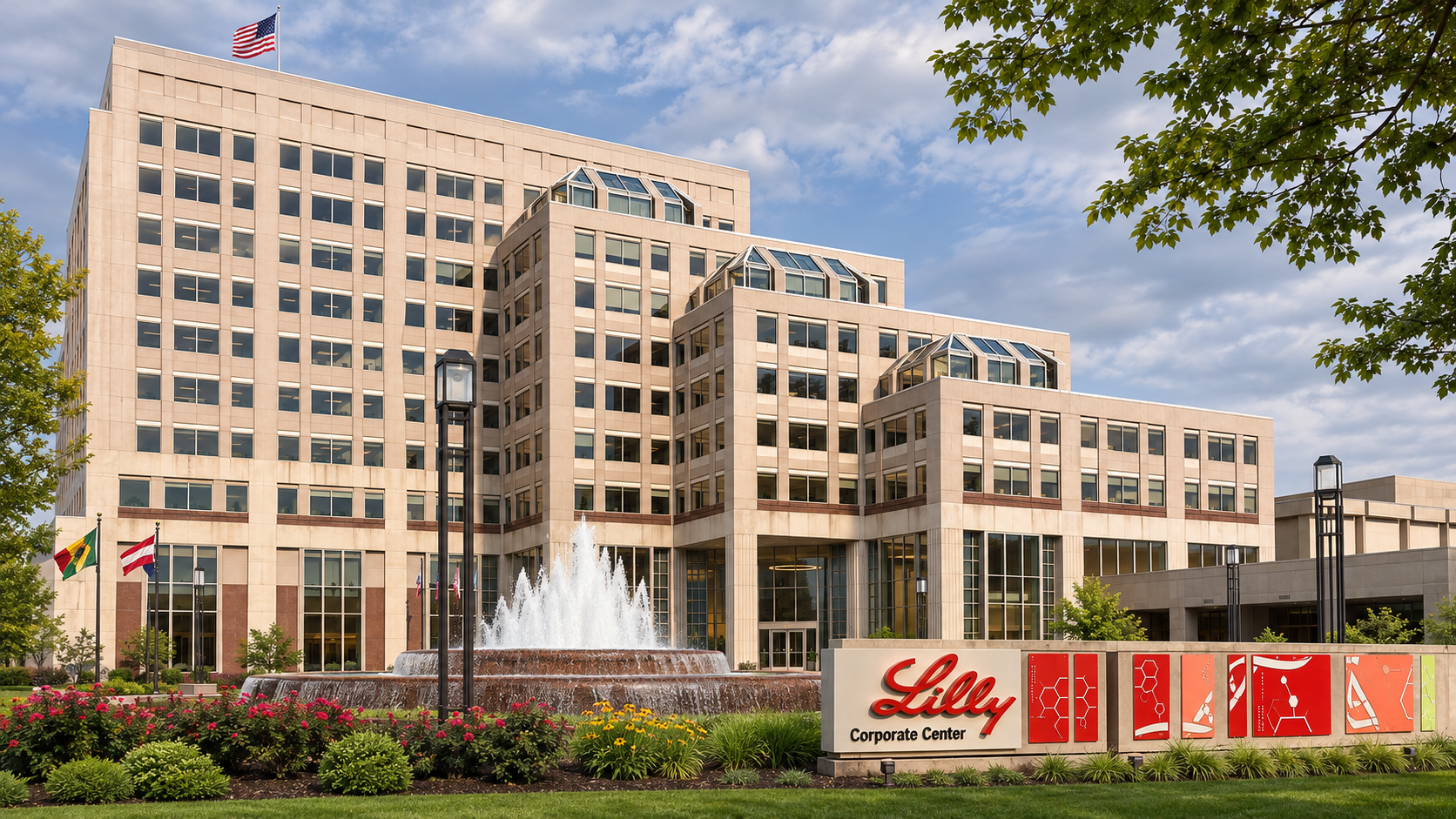
Retatrutide beat Ozempic 2 mg on A1C and weight loss in a Phase 3 trial. Lilly still faces approval, launch and regulatory-classification questions that could affect its economics.
Eli Lilly's next obesity drug now has strong Phase 3 efficacy data, but investors should separate that evidence from celebrity enthusiasm and from a legal dispute that could affect how long the product is protected after approval.
Lilly reported that retatrutide reduced A1C by 2.2 percentage points at both tested doses in a head-to-head trial of adults with type 2 diabetes. Ozempic 2 mg reduced A1C by 1.8 percentage points. After 80 weeks, patients taking retatrutide lost an average of 19.5% to 20.9% of body weight, compared with 9.4% for Ozempic. Lilly said the trial met its primary and key secondary endpoints.
The result is commercially important because retatrutide could extend Lilly's leadership beyond Mounjaro and Zepbound. It is still an investigational drug, however, and no regulator has approved it. Topline trial results also do not answer every question about safety, labeling, manufacturing capacity or payer coverage.
That caution matters because Lilly is already highly dependent on its current incretin franchise. Mounjaro generated $10.72 billion in third-quarter revenue and Zepbound generated $5.35 billion. Together they accounted for about 66% of Lilly's $24.4 billion quarterly revenue, based on company figures. Volume increased 53% from a year earlier while realized prices fell 15%.
Lilly raised its 2026 revenue guidance to $91 billion to $92 billion, but the quarter included about $900 million of benefits. That amount included $410 million of Jardiance milestone revenue, and Lilly said no further milestones remain. The company also recorded $4.57 per share of acquired in-process research and development charges. Those items make the underlying growth and cost base more important than the headline earnings beat.
Retatrutide also sits inside an unresolved regulatory-classification case. In 2025, a federal district court upheld part of the FDA's reasoning that retatrutide did not qualify as a protein under the agency's amino-acid-count approach. The court separately found the FDA's treatment of the product as an analogous biological product arbitrary and capricious, vacated that portion of the decision and sent it back to the agency. Lilly appealed, and the Seventh Circuit heard oral argument on September 24, 2026.
The dispute does not determine whether retatrutide works, and it does not replace the FDA's review of any future marketing application. It could affect the regulatory pathway and the period of exclusivity after approval, which matters for the lifetime value of a medicine expected to generate substantial sales.
For investors, the Phase 3 comparison is genuine positive evidence. The larger question is how much of that promise is already reflected in Lilly's valuation before approval, launch and legal classification are settled. Retatrutide strengthens the pipeline, but the next milestones are a filing, regulatory review and a clearer resolution of the classification case, not social-media praise.
Continue your NVO research
Image references: · Momoneymoproblemz (CC BY-SA 4.0)