



IonQ's $2 Billion Stock Sale Buys Time at a High Dilution Cost

IonQ paired an all-stock Elisity acquisition with a $2 billion equity financing. The cash extends its runway, but common shares, pre-funded warrants and long-dated warrants raise dilution risk.
IonQ's 24% monthly share-price decline followed two transactions that expand its ambitions and its potential share count. The company agreed to acquire cybersecurity firm Elisity in an all-stock deal valued at up to $1.3 billion, then priced a $2 billion equity financing two days later.
The financing structure matters more than the headline amount. IonQ sold 20.5 million common shares at $40 each and pre-funded warrants covering another 29.5 million shares at roughly the same effective price. The investor also received seven-year warrants to buy as many as 100 million additional shares at $69.46. The first two components represent 50 million share equivalents for the initial $2 billion of gross proceeds. The long-dated warrants create further dilution only if they are exercised, which would require IonQ's share price to support that decision.
Elisity adds zero-trust networking and microsegmentation technology that IonQ says can help enterprises prepare for security threats from future quantum computers. The acquisition includes up to $150 million of earnout value tied to Elisity's performance. Strategic logic does not settle the financial question: IonQ must integrate a conventional cybersecurity business while continuing to fund quantum hardware development and convert system orders into revenue.
The new cash materially reduces near-term funding pressure. The source article cites analyst expectations for about $740 million of cash burn in 2027, implying that $2 billion could cover close to three years at that rate before acquisition costs, working-capital changes or a different investment pace. That is a rough runway comparison, not company guidance.
Dilution is harder to quantify precisely. The source says IonQ had about 397 million shares before the transactions. The 50 million initial share equivalents alone would add roughly 13% to that base. The 100 million additional warrants could add another 25% if fully exercised. Shares issued for Elisity would come on top, but the final number depends on the transaction terms, share price and earnout performance. Treating the full announced value as immediate dilution would overstate what is known.
The broader quantum sector also weakened, with D-Wave and Rigetti falling more than IonQ over the same month. That indicates that interest-rate concerns and risk aversion contributed to the move, although IonQ's financing choices created company-specific pressure.
IonQ's next report is scheduled for November 5. Investors should focus on cash, operating expenses, the expected Elisity closing and integration costs, plus delivery progress for Superion systems. The financing gives management time to execute. It also raises the amount of future enterprise value that must be spread across a potentially much larger share count.
Continue your QBTS research
Related News

D-Wave's Cash Cushion Buys Time, Not Proof of Scale
D-Wave has $546.2 million of cash and up to $100 million of federal funding, while new products and deliveries show progress. The harder question is whether capital can bridge the gap to durable commercial revenue without heavy dilution.

D-Wave's Bookings Surge Still Has to Become Revenue
D-Wave reported $35.5 million of first-half bookings and $40.7 million of remaining obligations, but only $5.9 million of first-half revenue. A new securities complaint makes conversion and delivery evidence central to the next report.
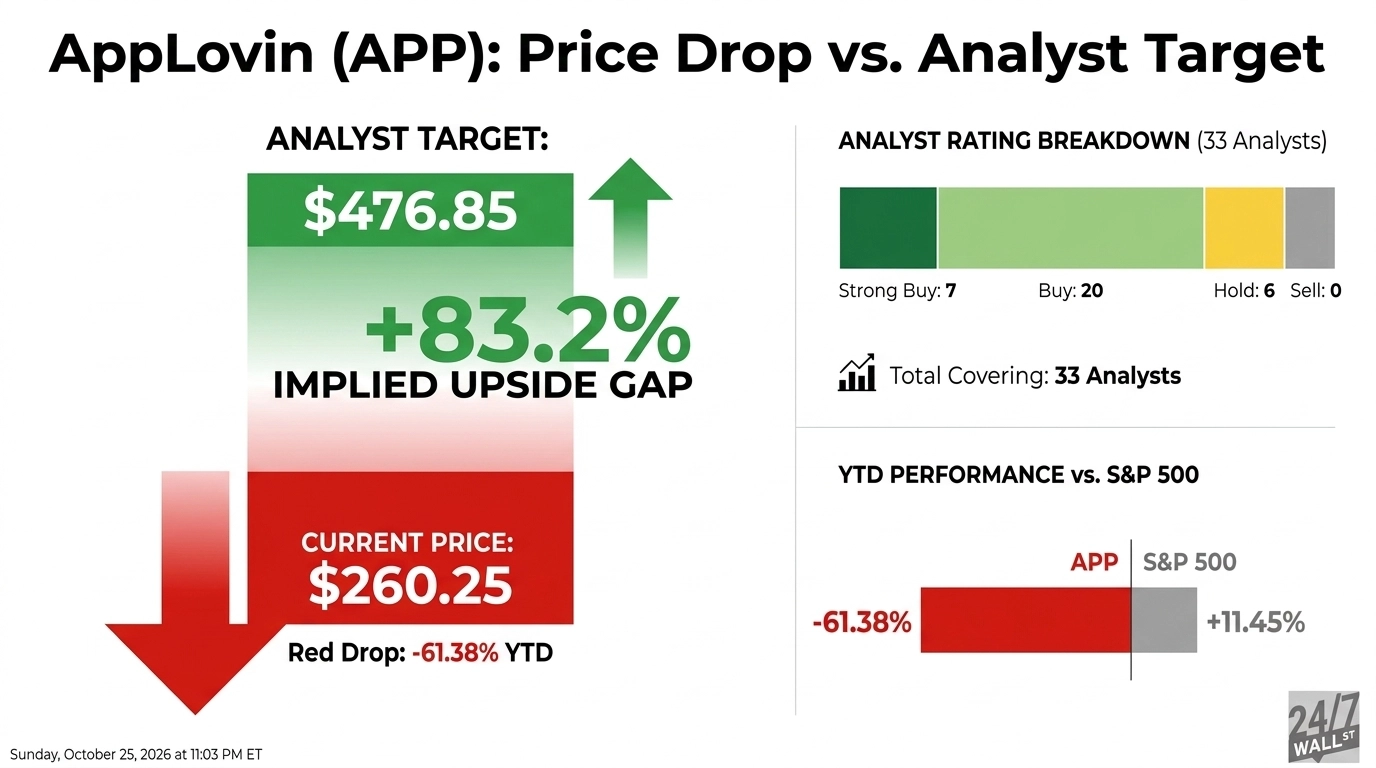
AppLovin's 61% Slide Turns Its Next Quarter Into a Model Test
AppLovin's second-quarter revenue and cash flow still grew rapidly, yet a small revenue miss and slower model improvements changed the market's confidence. The November 4 report now carries unusual weight.

Alibaba's Cloud Growth Cannot Yet Offset Its Commerce and Cash Costs
Alibaba's shares have fallen with Chinese internet stocks, but the operating picture is more complicated: cloud revenue is accelerating while commerce weakness, AI spending and a wider free-cash-flow outflow weigh on the case.

Meta's $135 Billion AI Budget Shifts Attention to Amphenol
Meta's spending plan strengthens the revenue case for data-center suppliers such as Amphenol, but negative free cash flow and new financing plans show why investors are also questioning the cost of the buildout.

Apparel Selloff Masks Three Different Turnaround Problems
Lululemon, Under Armour and Nike fell together, but their evidence points to different problems: collapsing Americas comps, restructuring and category weakness, and an uneven performance-led recovery.
ARK's Archer and Joby Purchases Put Execution Ahead of Hype

ARK Invest's latest purchases of Archer Aviation and Joby Aviation are a visible vote of confidence in electric air taxis, but the size of the trades is less important than the operating milestones the two companies still need to deliver.
Stocktwits reported that ARK bought 1,161,604 Archer shares for about $4.5 million and 434,012 Joby shares for about $2 million. The purchases were spread across the ARK Autonomous Technology & Robotics ETF and the ARK Space Exploration & Innovation ETF. ARKQ received 781,854 Archer shares and 292,119 Joby shares, while ARKX added 379,750 Archer shares and 141,893 Joby shares.
Those transactions show how an active manager is positioning its funds. They do not establish that commercial demand, certification or unit economics have improved. ARKQ itself describes its strategy as actively managed, which means holdings can change as the portfolio team revises its views.
Archer has supplied a clearer operating narrative in Texas. The company announced plans for air-taxi networks in Austin, Dallas-Fort Worth and Houston, linking airports and other high-traffic destinations. Archer says its Midnight aircraft could reduce trips that take 60 to 90 minutes by car to flights lasting 10 to 20 minutes. That is a company goal, not evidence of a functioning commercial network today.
The company is also trying to broaden its aerospace exposure through agreements to acquire Boeing's Wisk, SkyGrid and Insitu businesses. Archer says Insitu generates more than $200 million in annual revenue, based on company estimates. The waiting period under U.S. antitrust law has expired, but the transaction still depends on other closing conditions and is expected to close by the end of 2026.
Joby has moved into real-world test operations through the Federal Aviation Administration's Electric Vertical Takeoff and Landing Integration Pilot Program. In October, it began a week of piloted flights over representative routes in Texas, including the Dallas-Fort Worth area. The program is designed to start with flights under FAA oversight and progress toward passenger operations. That progression is useful operational evidence, but it is not the same as full certification or scaled commercial service.
The market has already punished the gap between ambition and execution. Stocktwits reported that Archer and Joby shares were down 47% and 64%, respectively, in 2026 when the article was published. It also noted that Morgan Stanley had cut its Joby price target to $10 from $13 while keeping an Equal Weight rating.
ARK's roughly $6.5 million purchase may help sentiment at the margin, but it does not solve the central investor questions. Archer must turn network plans and acquisitions into funded operations, while Joby must move from supervised demonstration flights toward certified passenger service. Until those steps are visible, the trade is best read as a portfolio manager's conviction, not confirmation that the air-taxi business model has arrived.
Stellantis Faces an October 28 Test of Its Fragile Turnaround

Stellantis enters its October 28 third-quarter update with a share price that reflects deep doubt and operating figures that still leave little room for error. The stock traded at $3.95 on October 23, down 63.7% in 2026 at that point, according to 24/7 Wall St. The immediate question is not whether the shares look cheap. It is whether the company can turn recovering vehicle volumes into margins and cash.
The second quarter offered the clearest evidence for both sides of the argument. Stellantis reported revenue of €43.5 billion, up 13% from a year earlier, but adjusted operating income was only €0.8 billion, equal to a 1.8% margin. Net profit was €0.3 billion. Industrial free cash flow was positive €1.0 billion in the quarter, yet remained negative €0.9 billion for the first half.
Management maintained its 2026 outlook for mid-single-digit revenue growth, a low-single-digit adjusted operating margin and better industrial free cash flow than in 2025. It also expects industrial free cash flow to become positive in 2027. Those goals make the next update a test of direction rather than a single-quarter finish line.
Volume data show why the turnaround remains uneven. Stellantis estimated 1.286 million consolidated shipments in the third quarter, down 1% year over year. Shipments are deliveries to dealers, distributors and direct customers that generally trigger revenue recognition, not retail purchases by consumers. Enlarged Europe rose 10%, but North America fell 12%, the Middle East and Africa declined 21%, and Asia Pacific fell 6%.
North America matters because the region has historically supplied much of Stellantis's profit. The source report cited a negative 3.4% first-half adjusted operating margin in North America and contrasted it with a 6.2% adjusted margin at General Motors's North American business. It also pointed to improving Ram pickup sales and the return of the HEMI V-8 as early support for a recovery. Higher shipments will only strengthen the case if pricing, incentives and factory utilization convert them into profit.
The balance-sheet debate is equally important. CNBC reported that Stellantis burned €4.5 billion of free cash flow in 2025, while Reuters reported a $26.5 billion charge tied to changes in the company's electric-vehicle strategy. The valuation case also rests partly on a consensus price target of $6.96 cited by the source, but that target cannot substitute for evidence that cash generation is stabilizing.
The October 28 report therefore has three practical tests. First, does management keep its 2026 guidance after the third-quarter shutdowns it had already flagged? Second, do North American margins improve as product availability recovers? Third, does the path to positive 2027 industrial free cash flow become more credible?
A low share price can magnify gains if execution improves, but it can also reflect a business whose earnings power has reset lower. For Stellantis, the next proof point is not a multiple. It is whether revenue recovery begins to produce durable margins and cash.
NIO's Slower Growth Is Not the Same Risk as a Neocloud Selloff
CoreWeave, IREN and NIO all touched 52-week lows on Monday, but the shared chart obscures two different problems. CoreWeave and IREN reacted to a warning about debt-funded AI infrastructure. NIO is dealing with slower electric-vehicle growth and intense competition in China.
Stocktwits reported that CoreWeave fell as low as $51.24 after Elon Musk said SpaceX had no interest in buying a specialized AI cloud provider and predicted heavy consolidation in the sector. The shares recovered to close nearly 2% higher. IREN also reached a 52-week low at $23.72 before finishing more than 2% higher. Those reversals show that the intraday lows were not a clean verdict on demand. They reflected a debate about financing, utilization and whether expensive data centers can earn enough before their hardware depreciates.
NIO closed 1% lower at $3.24, extending a four-day decline. Its operating evidence is more balanced than the selloff suggests. The company reported second-quarter revenue of RMB32.14 billion, up 69.1% from a year earlier, while vehicle deliveries rose 49.4% to 107,658. Vehicle margin improved to 18.5% from 10.3% a year earlier, although it slipped from 18.8% in the first quarter.
Profitability also improved sharply from the previous year without becoming straightforward. NIO's second-quarter net loss narrowed to RMB528 million from RMB4.99 billion a year earlier, but widened from RMB332 million in the first quarter. Selling, general and administrative expenses rose 26.5% sequentially as the company supported new product launches. The balance sheet included RMB56.7 billion of cash, restricted cash, short-term investments and long-term time deposits, so that headline is broader than freely available cash alone.
The slowdown appeared in the third quarter. NIO delivered 109,178 vehicles, up 25.4% year over year and within management's 108,000-to-111,000 guidance. September deliveries rose only 7.7% to 37,408. Growth therefore decelerated from the second quarter, but the company did not miss its own delivery range. That distinction corrects the impression that every recent operating measure disappointed.
For CoreWeave and IREN, investors need to compare contracted demand with interest expense, debt maturities and actual utilization. For NIO, the near-term test is whether slower unit growth can coexist with a durable vehicle margin and tighter operating spending. One market selloff placed all three at annual lows, but it did not give them the same investment thesis. NIO's next results must show whether margin gains can survive price competition as delivery growth normalizes.
Vistra’s $4.2 Billion Nuclear Loan Does Not Solve Its Texas Risk

Vistra received a conditional federal loan commitment of up to $4.2 billion to finance nuclear uprates and modernization in Pennsylvania and Ohio. The support can add 433 megawatts of generation from plants the company already operates, but it does not remove Vistra’s larger earnings exposure to power prices in Texas.
The Department of Energy announced the commitment on October 5 through its Office of Energy Dominance Financing. The projects cover uprates, which increase output from existing reactors, and modernization at Vistra’s Beaver Valley, Davis-Besse and Perry facilities. Using existing sites can avoid some of the construction and permitting risks associated with new nuclear plants.
A conditional commitment is not a funded loan. Vistra still must satisfy technical, legal, environmental and financial conditions before the government closes and disburses the financing. The final terms, timing and project costs will determine how much of the economic benefit belongs to shareholders.
The location of the projects also matters. The three plants are in the PJM power market, where tightening supply and rising demand have supported stronger pricing. The source says the commitment could help keep almost 4 gigawatts of existing nuclear capacity operating while adding the 433-megawatt uprate. That combination can create value if the incremental output is delivered on budget and sold at attractive prices.
Texas remains the counterweight. On Vistra’s August 7 call, management said ERCOT power prices averaged about $30 per megawatt-hour through 2026, roughly flat with 2025. The company also said 2027 adjusted EBITDA was trending toward the low end of its $7.4 billion to $7.8 billion range. A federal loan for PJM assets does not directly improve realized prices in ERCOT.
The market reaction included a broader nuclear trade. Vistra rose after the loan announcement, then gained again when Constellation Energy disclosed a 20-year agreement with Google that included 890 megawatts of uprates at existing reactors. Those are separate transactions. Constellation’s contract demonstrates demand for nuclear output, but it does not give Vistra the same customer or pricing terms.
Vistra plans to update its 2027 outlook with third-quarter results on November 6, subject to the timing of its Cogentrix acquisition. The source article proposes an adjusted EBITDA midpoint near $8.1 billion after Cogentrix and new data-center contracts as one scenario. That figure is an analytical benchmark, not company guidance. Investors should compare management’s actual outlook with the previous $7.4 billion to $7.8 billion range and ask what changed in Texas, PJM and the acquisition.
The federal commitment is useful because lower-cost financing can improve the returns on long-lived nuclear upgrades. It is not a substitute for strong operating execution or favorable market prices. Vistra’s next report needs to show that Texas has not deteriorated enough to offset the benefit from the PJM nuclear projects.
Lakeland Offers the Cleaner Dividend Case, While Busey Is Cheaper

Lakeland Financial and First Busey offer similar cash yields, but their latest operating figures describe different kinds of dividend risk. Lakeland enters the comparison with cleaner credit and faster recent payout growth. First Busey offers greater scale, active repurchases and improving efficiency, but its problem assets moved in the wrong direction during the second quarter.
Lakeland paid a quarterly dividend of $0.52 in the second quarter of 2026, 4% more than a year earlier. Revenue rose 7% to $70.9 million, net interest income increased 6% to $58.3 million and net interest margin expanded seven basis points to 3.49%. Those gains help support the payout with recurring banking income rather than relying only on capital returns.
Credit quality is Lakeland's strongest advantage. Net charge-offs were just $24,000 in the quarter, and nonperforming assets fell 36% from a year earlier to $20.0 million, or 0.28% of total assets. The caveat is that watch-list loans rose 9% from the first quarter to $198 million, so the clean headline does not remove the need to monitor future migration into problem categories.
Lakeland also carries a cost challenge. Its efficiency ratio worsened to 48.6% from 45.9% a year earlier as noninterest expense increased 13%. A lower efficiency ratio generally means a bank uses fewer operating expenses to generate each dollar of revenue, so that deterioration matters even though the ratio remains better than First Busey's 54.0%.
First Busey's appeal is different. The larger bank ended the second quarter with $18.19 billion of assets and a common equity tier 1 capital ratio of 12.53%. It paid a $0.26 quarterly dividend and repurchased 2.34 million shares for $63.1 million at an average price of $26.98. Its efficiency ratio improved to 54.0%, evidence that integration and expense control can add value if the credit book remains manageable.
The credit trend is less comfortable. First Busey's nonperforming assets increased to $70.3 million from $49.9 million in the first quarter, lifting the ratio to 0.39% of assets. Classified assets rose by $50.3 million from a year earlier to $226.0 million, and quarterly net charge-offs were $6.4 million. The allowance for credit losses still covered nonperforming loans 2.44 times, providing a buffer rather than eliminating the risk.
The source comparison used October 20 share prices to argue that First Busey traded at lower book-value and forward-earnings multiples. Those market figures are time-sensitive and were not refreshed here, so they should not be treated as current quotes. The durable point is that First Busey's lower valuation case comes with a weaker recent asset-quality trend, while Lakeland's cleaner balance sheet and dividend record command a richer valuation.
For an income-focused investor, Lakeland presents the more conservative current profile. Its stronger credit metrics and faster payout growth outweigh its rising expenses, provided watch-list loans do not deteriorate. First Busey may offer more total-return upside through buybacks and improved efficiency, but that case depends on integration gains outrunning higher problem assets.
Latest comments