


 Be The Investor Research
Alphabet's New TPUs Turn AI Capital Spending Into a Cloud Product
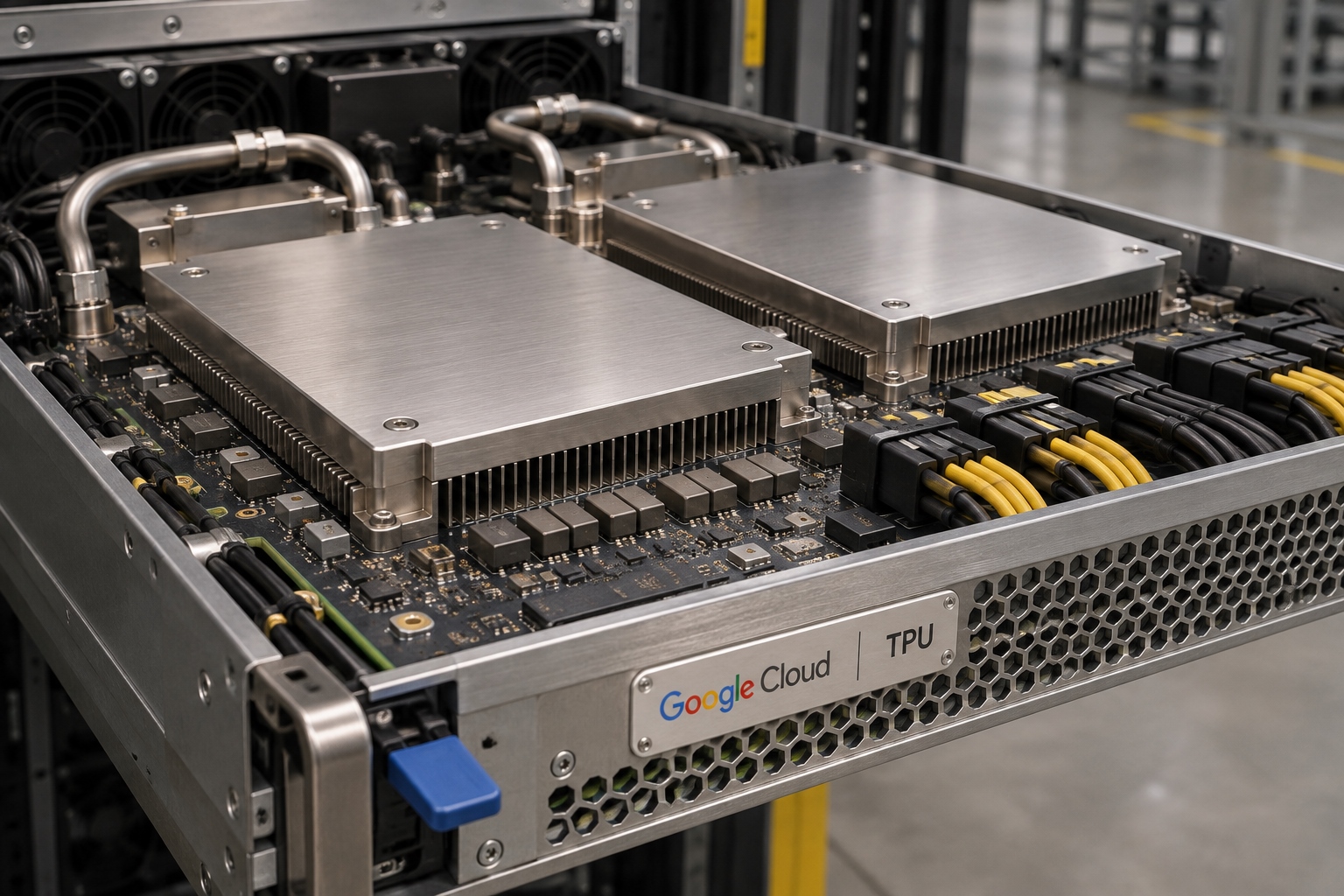
Google introduced TPU 8i Max for large-context workloads and confidential TPU 8tx for secure inference. Strong Cloud growth shows demand, but capital spending still exceeds near-term free cash flow.
Google's new TPU 8i Max and TPU 8tx systems clarify how Alphabet plans to earn a return on its enormous AI infrastructure budget. The chips are not only internal tools for Gemini. Google Cloud can sell access to them, turning data-center investment into a product for external customers.
TPU 8i Max is designed for models with very large context windows and high rack density. TPU 8tx adds confidential computing for inference, allowing customers to protect data while workloads are being processed. Google said the two systems will become available in 2027. It also said that nearly 100 customers are using its TPU portfolio and that 2026 was the first year it introduced four TPU systems.
Demand is visible in the financial results. Alphabet's third-quarter revenue rose 25% to $127.6 billion, while Google Cloud revenue increased 103% to $30.7 billion. Management said TPU system sales made a meaningful contribution. Cloud backlog reached $561 billion, with roughly 55% expected to be recognized over the next 24 months.
The cost arrives before all of the revenue. Capital expenditures were $51.4 billion in the quarter, compared with operating cash flow of $42.3 billion, leaving free cash flow at negative $9.1 billion. Alphabet expects 2026 capital spending of $195 billion to $205 billion and said 2027 spending will increase significantly. At September 30, the company held $265.1 billion of cash, cash equivalents and marketable securities, but also had $125.1 billion of long-term debt and large purchase and lease commitments.
That makes product differentiation critical. TPU 8i Max must deliver useful performance on long-context training and inference, while TPU 8tx must persuade customers that confidential processing is worth adopting. Google also needs software, networking and developer tools that let customers move workloads onto the systems without excessive integration cost.
The new TPUs strengthen the case that Alphabet can monetize infrastructure through Cloud rather than treating AI spending only as a defensive cost for Search. They do not resolve the cash-flow question on their own because availability begins in 2027 and capital commitments are already large. The next evidence should be customer adoption, pricing, utilization and the share of Cloud growth that comes from repeatable TPU services rather than one-time hardware sales.
Continue your GOOG research
Image references: · Alphabet (Official factual background)
Frequently asked questions
What is "Alphabet's New TPUs Turn AI Capital Spending Into a Cloud Product" about?
TPU 8i Max and confidential TPU 8tx expand Google Cloud's AI hardware lineup as Alphabet's capital spending outpaces near-term free cash flow.
Which stocks and assets does this article cover?
This article relates to GOOG.
What is the market context?
Google's new TPU 8i Max and TPU 8tx systems clarify how Alphabet plans to earn a return on its enormous AI infrastructure budget. The chips are not only internal tools for Gemini. Google Cloud can sell access to them, turning data-center investment into a product for external customers. TPU 8i Max is designed for models with very large context windows and high rack density. TPU 8tx adds…
When was this article published?
It was published on 11 / 11 / 2026 by Be The Investor Research.