


 Be The Investor Research
Core Scientific's AI Pivot Reaches 92% of Quarterly Revenue
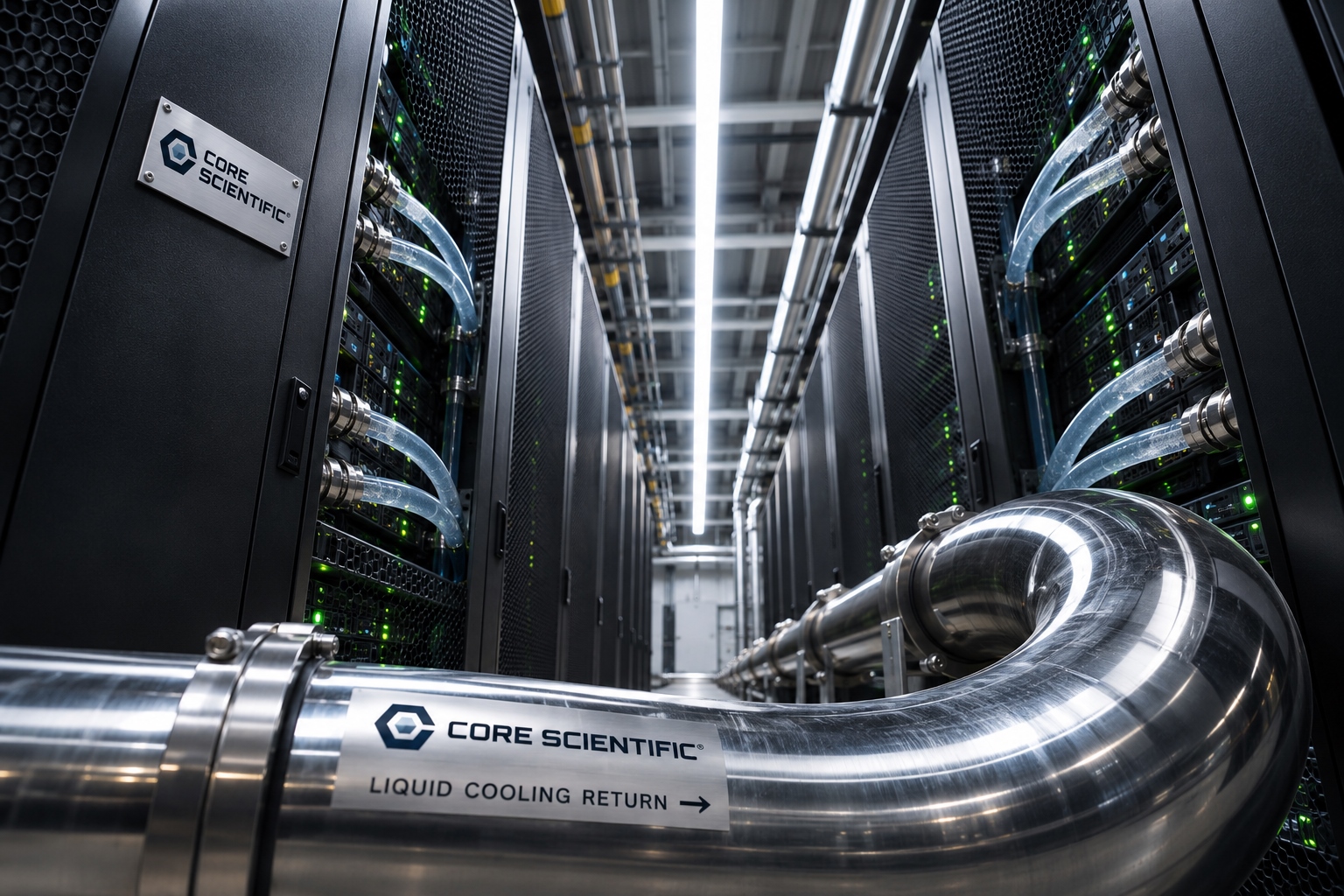
Core Scientific now gets 92% of revenue from AI colocation and plans to exit bitcoin mining, but the transition concentrates revenue in one customer and requires heavy capital spending.
Core Scientific's third quarter showed that its shift from bitcoin mining to artificial-intelligence infrastructure is no longer a side business. Colocation revenue reached $215.4 million, or about 92% of total revenue of $232.9 million, as 485 megawatts of contracted capacity entered billing.
The new mix produced $133.6 million of adjusted EBITDA, equal to 57% of revenue, and management said billed colocation capacity now represents more than $700 million of annualized revenue. Those figures give the transition operating substance. They also require non-GAAP context because adjusted EBITDA excludes costs that still matter to shareholders.
Core Scientific plans to end hosted mining by December 31 and wind down its own mining operations. The company recorded a $266.5 million impairment tied to mining assets, evidence that the exit has an economic cost rather than being a simple relabeling of existing capacity. The move should reduce direct exposure to bitcoin prices and mining difficulty, but it removes a source of diversification.
The replacement business brings a different concentration risk. The company's filing identifies one customer as the source of substantially all current colocation revenue. Core Scientific also signed a 530-megawatt agreement connected to AMD and Neocloud, with service expected to begin in 2027, but that future capacity still requires construction and successful delivery.
Capital intensity is the other constraint. Third-quarter capital spending was $985.1 million. Reported liquidity of $1.744 billion included restricted cash, so not all of it was freely available for general corporate use. The distinction matters as the company finances new data-center capacity while carrying substantial debt.
Core Scientific has built a real AI infrastructure business, not merely announced an ambition. The next phase will test whether it can deliver new capacity on time, diversify its customer base and fund construction without eroding the attractive economics shown by the current contracts. The economics should also be tested after interest, depreciation and stock compensation, not only against adjusted EBITDA.
Continue your AMD research
Image references: · Core Scientific (Official factual background)
Frequently asked questions
What is "Core Scientific's AI Pivot Reaches 92% of Quarterly Revenue" about?
Core Scientific generated 92% of quarterly revenue from AI colocation and plans to exit bitcoin mining, while customer concentration and CapEx remain key risks.
Which stocks and assets does this article cover?
This article relates to AMD.
What is the market context?
Core Scientific's third quarter showed that its shift from bitcoin mining to artificial-intelligence infrastructure is no longer a side business. Colocation revenue reached $215.4 million, or about 92% of total revenue of $232.9 million, as 485 megawatts of contracted capacity entered billing. The new mix produced $133.6 million of adjusted EBITDA, equal to 57% of revenue, and management said…
When was this article published?
It was published on 11 / 11 / 2026 by Be The Investor Research.