


 Be The Investor Research
Baker Hughes' Data Center Orders Are Building a Second Growth Engine
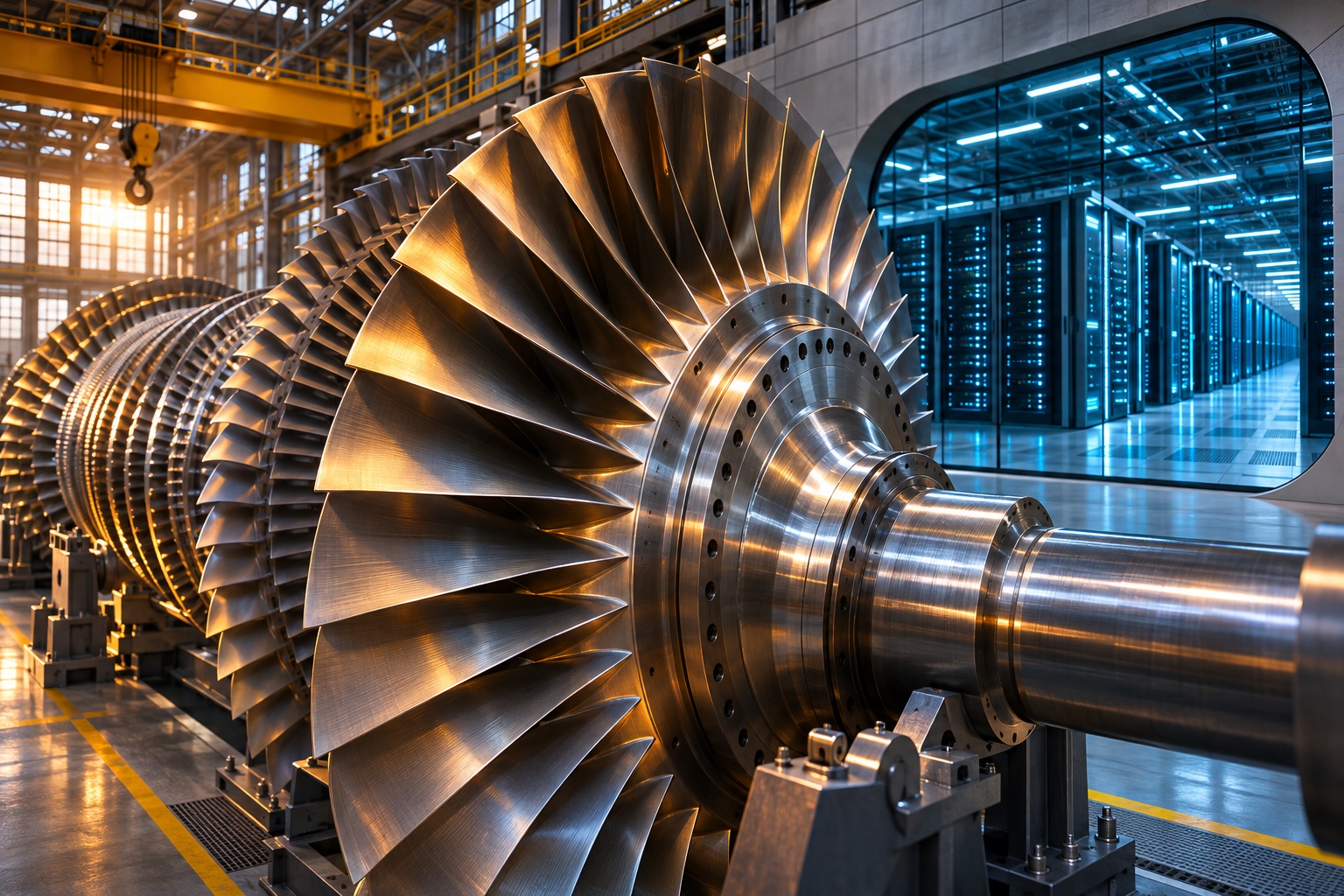
Baker Hughes' third-quarter results show data center power demand expanding its industrial equipment backlog while oilfield spending stays restrained. Record remaining performance obligations provide visibility, but the Chart acquisition complicates growth comparisons.
Baker Hughes is still an oilfield services company, but its order book is increasingly tied to the power systems needed for data centers, liquefied natural gas and industrial infrastructure. That mix helps explain why a broad market selloff can obscure stronger operating evidence underneath the share price.
Third-quarter orders reached $10.8 billion, including $5.9 billion in the Industrial and Energy Technology segment. Remaining performance obligations rose to $46.4 billion, with a record $39.4 billion in IET. Management said demand across data centers, space, LNG and gas infrastructure supported a higher long-term order outlook.
The company reported $8.03 billion of revenue, up 14% from a year earlier, but much of that increase came from the Chart Industries acquisition. GAAP net income fell 33% to $411 million, while adjusted net income rose 2% to $695 million. Adjusted EBITDA increased 14% to $1.42 billion. Those differences make it important to separate acquisition scale from underlying improvement.
The data center opportunity is tangible because large computing campuses require dependable power and cooling before servers can operate. Baker Hughes sells gas turbines, compression, cooling and control systems, giving it exposure to the physical bottlenecks behind AI infrastructure. In October, the company also announced that a major U.S. technology customer selected its power generation and cooling solutions for high-density computing.
Oilfield services remains a major part of the business, and management expects global producer spending to be broadly flat. That limits one traditional growth engine even as international mature-field work creates selected opportunities. Baker Hughes signed a multi-year contract covering more than 120 wells in Pakistan, for example, combining subsurface, production and digital services.
The balance between these businesses matters. Industrial orders can create long-duration equipment and aftermarket revenue, but large projects bring execution and supply-chain risk. The Chart acquisition also adds integration work and makes year-over-year comparisons less clean.
The clearest measure for the next quarter is not the daily share price. It is whether IET orders, remaining obligations and cash conversion continue to support the idea that Baker Hughes can grow through power infrastructure even when oilfield spending is subdued.
Image references: · Baker Hughes (Official factual background)
Frequently asked questions
What is "Baker Hughes' Data Center Orders Are Building a Second Growth Engine" about?
Baker Hughes' record industrial backlog shows data center power demand becoming a second growth engine while oilfield spending stays restrained.
What is the market context?
Baker Hughes is still an oilfield services company, but its order book is increasingly tied to the power systems needed for data centers, liquefied natural gas and industrial infrastructure. That mix helps explain why a broad market selloff can obscure stronger operating evidence underneath the share price. Third-quarter orders reached $10.8 billion, including $5.9 billion in the Industrial and…
When was this article published?
It was published on 11 / 11 / 2026 by Be The Investor Research.