



 Be The Investor Research
Always-Listening AI Devices Shift Privacy Risk to the Wearer

New wearables can interpret conversations without saving audio, testing wiretap laws written for older technology. In some states, the user may face liability when bystanders have not consented.
The newest AI wearables do not need a wake word to become legally complicated. Devices from Apple, Amazon, Meta and smaller companies can listen continuously, interpret conversation and produce summaries. Some products say they process speech without retaining the underlying audio, but privacy lawyers are asking whether extracting meaning can still count as an interception.
That question matters because U.S. consent rules vary by state. Massachusetts defines an intercepting device broadly enough to include equipment that transmits, receives, amplifies or records a communication, while the contents can include its substance and meaning. A system that hears speech and turns it into a written summary could therefore fall within the law even if no audio file survives.
New Hampshire presents a similar issue. Its statute covers the “aural or other acquisition” of a communication’s contents. Daniel Pi, a University of New Hampshire law professor cited by CNBC, said a wearer could potentially face civil or criminal liability for using an audio-intelligence feature during a private conversation without everyone’s consent. He also said prosecution would be unlikely where no one was harmed and it was difficult to prove the feature was active.
The shift from accidental activation to deliberate, continuous processing changes who may carry the risk. Earlier litigation against smart-speaker makers often focused on devices activating by mistake or storing unintended recordings. With wearables, the user may have knowingly enabled the feature. That can move responsibility away from the manufacturer and toward the person wearing it.
The bystander problem is broader than formal liability. A person can be analyzed by someone else’s glasses, pendant, watch or wristband without owning the device or knowing what it does. Notices inside an app do little for people standing nearby.
For technology companies, this is a product-design and adoption problem as much as a legal one. Clear indicators, easy pauses, local processing and deletion controls can reduce risk, but they cannot create consent on behalf of another person. State laws also remain unsettled on whether real-time interpretation without storage is legally equivalent to recording.
The investment consequence is not a proven near-term loss for any one company. It is a growing compliance and trust burden around a product category whose usefulness depends on being present in everyday conversations.
Continue your AAPL research
Related News

Gartner's Neocloud Warning Puts Financing, Not Demand, at Center Stage
Gartner expects more than 80% of neocloud providers to lose independent status by 2030. The risk is a mismatch between heavy infrastructure spending and cash earned before chips age.

Reddit's 61% Growth Supports Its Premium, but the Next Quarter Slows
Reddit's second-quarter revenue rose 61% and weekly active uniques reached 514.6 million, supporting a richer valuation than slower-growing peers. Management's third-quarter guide, however, implies a clear deceleration and leaves search traffic as a risk.

Tesla, Meta and RTX Earnings Put AI Spending and Industrial Demand to the Test
A concentrated earnings calendar will test two market concerns at once: whether heavy AI spending is producing returns and whether industrial and consumer demand can withstand higher financing costs after a bruising week for technology shares.

Big Tech Rebounds, but Earnings Must Justify the AI Spending Cycle
Technology shares recovered ahead of major earnings reports after a sharp weekly decline. Strong early profit growth supports the market, while elevated expectations leave little tolerance for weak guidance.

Nasdaq Rebound Ends a Brutal AI Week, but Expectations Still Set the Risk
The Nasdaq 100’s strongest session in nearly a month interrupted an AI-led selloff. The rebound showed buyers remain willing, while crowded earnings expectations leave little room for disappointment.

AI Tools Let TV Owners Remove Ads, Tracking and Bloat
Open-source projects are using AI coding agents to simplify smart TVs and disable tracking. The trend exposes consumer frustration with ad-funded interfaces, but inexperienced users can also break essential software.
Microsoft's Maia 300 Is an Efficiency Bet, Not an Nvidia Exit
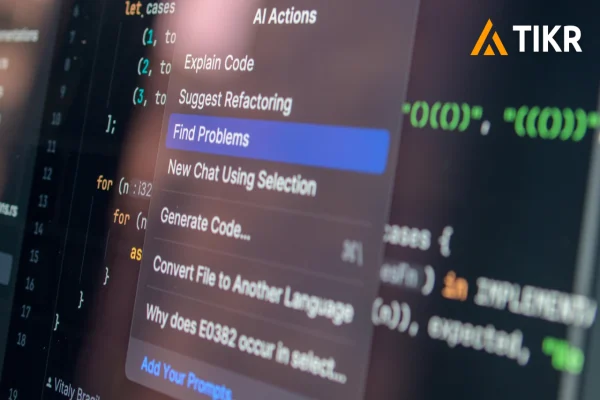
Microsoft plans to make its Maia family the primary inference system for its own products and services as it begins multi-gigawatt deployments in 2027. That is a meaningful change in infrastructure strategy, but it is not evidence that Microsoft is abandoning Nvidia.
Maia 200 is already serving production workloads including Microsoft Copilot and is being deployed in the United States, Europe and Australia. Microsoft says it runs OpenAI models, the company's own MAI models and leading open-source families.
Maia 300 is due to enter production deployments in 2027. Microsoft expects the system to deliver 40% more tokens per megawatt than leading GPU-based systems and up to seven times Maia 200's rack-scale token throughput in a 96-accelerator configuration. The design uses eight HBM4 memory stacks per accelerator, 18 terabytes per second of peak memory bandwidth and a 950-watt thermal envelope.
Those are Microsoft-defined comparisons, not independent benchmarks. The company did not publish a direct comparison with Google's tensor processing units, and workload mix can materially change tokens-per-watt results. Investors should treat the figures as engineering targets until customers and third parties can test them at scale.
The economic logic is straightforward. Inference is becoming a recurring cost across Copilot, GitHub, Teams and Azure services. A custom system optimized around Microsoft's own workloads could lower power use and reduce the share of value paid to outside chip vendors.
That does not make Nvidia optional. Microsoft describes Azure as a heterogeneous platform and says it will continue to use innovations from across the ecosystem. Training frontier models, serving diverse customer workloads and meeting rapid capacity growth require more than one accelerator family.
Maia therefore changes Microsoft's bargaining position and internal cost curve before it changes the competitive map. If the chip performs as expected, Microsoft can direct suitable inference workloads to its own silicon while reserving GPUs for tasks where they remain the better fit.
The real test will arrive after deployment begins: utilization, service reliability, power efficiency on production workloads and changes in capital spending per unit of AI output. Until then, Maia 300 is a credible efficiency program with strategic value, not proof that Microsoft has closed the gap with Nvidia or Google.
Adobe's AI Usage Is Growing Faster Than Its Backlog

Adobe's fiscal third quarter offered evidence that customers are using its AI products at scale. It also left investors with a harder question: how quickly will that usage convert into durable contracted revenue?
Revenue rose 13% as reported to $6.76 billion, and non-GAAP earnings per share reached $6.13. Adobe raised its full-year targets to $26.576 billion to $26.626 billion of revenue and $24.45 to $24.50 of non-GAAP EPS.
The strongest operating signal came from AI adoption. AI-first annual recurring revenue exceeded $650 million and grew more than 150% from a year earlier. Firefly ending ARR from the app and credit packs increased 40% from the prior quarter. Creative freemium monthly active users passed 100 million, up more than 70%.
Those figures show reach, but they measure different stages of the funnel. Freemium users indicate product exposure. Credit consumption shows activity. ARR shows contracted or recurring monetization. Investors need all three to rise without heavy discounting or damage to Adobe's high-margin subscription model.
The counterpoint is remaining performance obligations, which grew 8% to $22.16 billion. Current RPO rose 9%. Both were slower than reported revenue growth, which can indicate that the future contracted base is not accelerating as quickly as current usage. It is not a forecast of decline, but it explains why the market remains skeptical despite solid quarterly results.
Cash generation stayed strong. Operating cash flow reached a quarterly record of $2.52 billion, and Adobe repurchased about 9.5 million shares. The company had approximately $24.55 billion left under its April 2026 buyback authorization.
Leadership is also changing. Anil Chakravarthy becomes president and chief executive on Dec. 1, while Shantanu Narayen moves to executive chair. Chakravarthy inherits a company with a large installed base and fast-growing AI engagement, but also pressure to prove that generative tools expand Adobe's economics rather than commoditize creative work.
The next phase is therefore about conversion. Adobe must turn free users into paying customers, grow Firefly and agentic products without eroding core pricing, and lift net new ARR. The quarter showed that AI demand exists inside Adobe's ecosystem. It did not yet settle how valuable that demand will be.
Rocket Lab's Iridium Deal Faces an FCC Competition Challenge
Rocket Lab's proposed $8 billion acquisition of Iridium has drawn a competition challenge at the Federal Communications Commission, adding another uncertainty to a company already managing a delay to its Neutron rocket.
Ligado Networks asked the FCC to examine whether Iridium has used regulatory filings to slow competing satellite services. Ligado has a direct commercial interest: its planned SkyTerra Next service with AST SpaceMobile would use satellite connectivity for direct-to-device communications and could compete with Iridium.
The filing does not amount to an FCC finding. It is an allegation from an interested party in an active proceeding, and Rocket Lab and Iridium will have an opportunity to respond. Investors should distinguish that process from a rejection or a formal enforcement action.
The underlying transaction is much larger than a spectrum dispute. Rocket Lab agreed in June to pay $54 per Iridium share in cash and stock, valuing the company at about $8 billion including debt. Iridium brings a global L-band network, more than 2.55 million active subscribers, over 500 distribution partners and recurring communications revenue. Rocket Lab would add those assets to launch, spacecraft manufacturing and satellite components.
That vertical integration could lower launch costs for a future Iridium constellation and give Rocket Lab immediate exposure to direct-to-device, Internet of Things and positioning services. It also increases execution risk. The deal requires regulatory approvals, financing and the integration of a profitable network with a capital-intensive launch company.
Neutron makes the timing harder. Rocket Lab moved the medium-lift rocket's first flight into 2027 after identifying manufacturing defects in a carbon-composite propellant-tank component. Neutron is central to the logic of launching larger constellations internally, so further delays could postpone some expected benefits even if the acquisition closes.
Rocket Lab shares had fallen about 25% over the prior week and 38% from the Oct. 7 close reported by the source. Price action reflects both issues, but they should be monitored separately. Neutron is an engineering and schedule risk. The Iridium proceeding is a regulatory and competitive risk.
The FCC challenge is not proof that the transaction will fail. It does mean the public-interest case will receive closer scrutiny, especially around spectrum and competitor access. For investors, the next evidence is the applicants' response, the FCC timetable and whether Neutron's revised tests support a credible 2027 launch plan.
SpaceX's Spectrum Deal Raises the Stakes for Verizon

SpaceX's agreement to buy nationwide 800 MHz spectrum from Grain Management has forced investors to revisit a threat that once looked distant: satellite service becoming a meaningful alternative to terrestrial wireless.
The reported transaction value was about $8 billion, and the purchase still requires Federal Communications Commission approval. The spectrum alone does not create a national mobile network. SpaceX would also need satellites, ground infrastructure, devices and substantial capital before Starlink Mobile could compete broadly with Verizon, AT&T or T-Mobile.
The strategic direction is still clear. Lower-band spectrum travels farther and penetrates buildings better than higher-frequency signals, making it valuable for wide-area coverage. SpaceX has said upgraded Starlink Mobile service using next-generation satellites is targeted for the end of 2027. Even a limited service could affect carrier pricing if it becomes credible in rural coverage, emergency connectivity or wholesale arrangements.
Verizon enters that contest with a mixed financial profile. Its 2025 operating revenue was $138.2 billion, up from $134.8 billion in 2024, and free cash flow was $20.1 billion. Total unsecured debt was $131.1 billion at year-end, although net unsecured debt declined to $110.1 billion and the company's net unsecured debt to adjusted EBITDA ratio was 2.2 times. Those figures are more precise than treating every liability as operating debt.
The Frontier acquisition is Verizon's most important answer. The deal closed on Jan. 20 and expanded the combined network to roughly 30 million fiber passings. Fiber lets Verizon bundle home broadband with mobile service, potentially reducing churn and giving households a reason to keep multiple services with one provider.
That defense must show up in operating results. Verizon guided to 2% to 3% growth in mobility and broadband service revenue for 2026, at least $21.5 billion of free cash flow and a fiber build pace of at least 2 million passings. Meeting those goals would give the company room to invest while supporting its dividend.
SpaceX is not likely to take a large share of wireless subscribers quickly. The nearer risk is that its presence changes negotiations before it changes market share, pressuring wholesale economics or forcing carriers to spend more. For Verizon, the differentiator is no longer a simple claim of having the best mobile network. It is whether the company can combine wireless, fiber and service quality into a package that satellite connectivity cannot easily replace.
ARK Buys CoreWeave as Financing Costs Test the AI Cloud Story
ARK Invest bought 132,498 CoreWeave shares on Oct. 19, adding to the AI cloud provider after a decline that had pushed the stock toward a third straight losing week. The purchase split between 102,280 shares for ARKK and 30,218 for ARKW, worth about $8.1 million at the reported trade prices.
The trade is notable, but it does not resolve the question weighing on CoreWeave: how much of its growth will accrue to shareholders after financing the infrastructure behind it.
CoreWeave reported $2.58 billion of revenue for the second quarter of 2026, more than double the year-earlier figure, and a revenue backlog of about $104 billion. Demand is not the immediate problem. The pressure sits below the operating line. Net interest expense rose to $640 million from $267 million a year earlier, and the company posted a $626 million net loss.
CoreWeave is financing data centers and accelerators years before much of the contracted revenue arrives. That structure can work when capacity remains scarce, customers honor long commitments and refinancing markets stay open. It becomes less forgiving when interest rates rise or investors demand more protection.
The company has tried to broaden its funding base. In March, it closed an $8.5 billion delayed-draw facility backed by GPU infrastructure and a customer contract, which received investment-grade ratings from Moody's and DBRS. In September, it proposed $3 billion of convertible notes. Those transactions show that CoreWeave still has market access, but they also underline how central outside capital is to the expansion plan.
Analysts are divided for the same reason. Goldman Sachs upgraded the shares to Buy, arguing that tight AI capacity can support attractive returns. MoffettNathanson and BNP Paribas cut price targets, focusing on obligations and the risk that financing becomes more expensive.
ARK's purchase is therefore a vote on more than AI demand. It is a bet that CoreWeave can convert a large backlog into cash before its capital structure becomes the limiting factor. The next useful evidence will be cash generation, interest coverage and the terms of new financing, not the size of one fund manager's trade.
Latest comments