


 Be The Investor Research
CoreWeave rents the chips. Supermicro has to sell the racks.
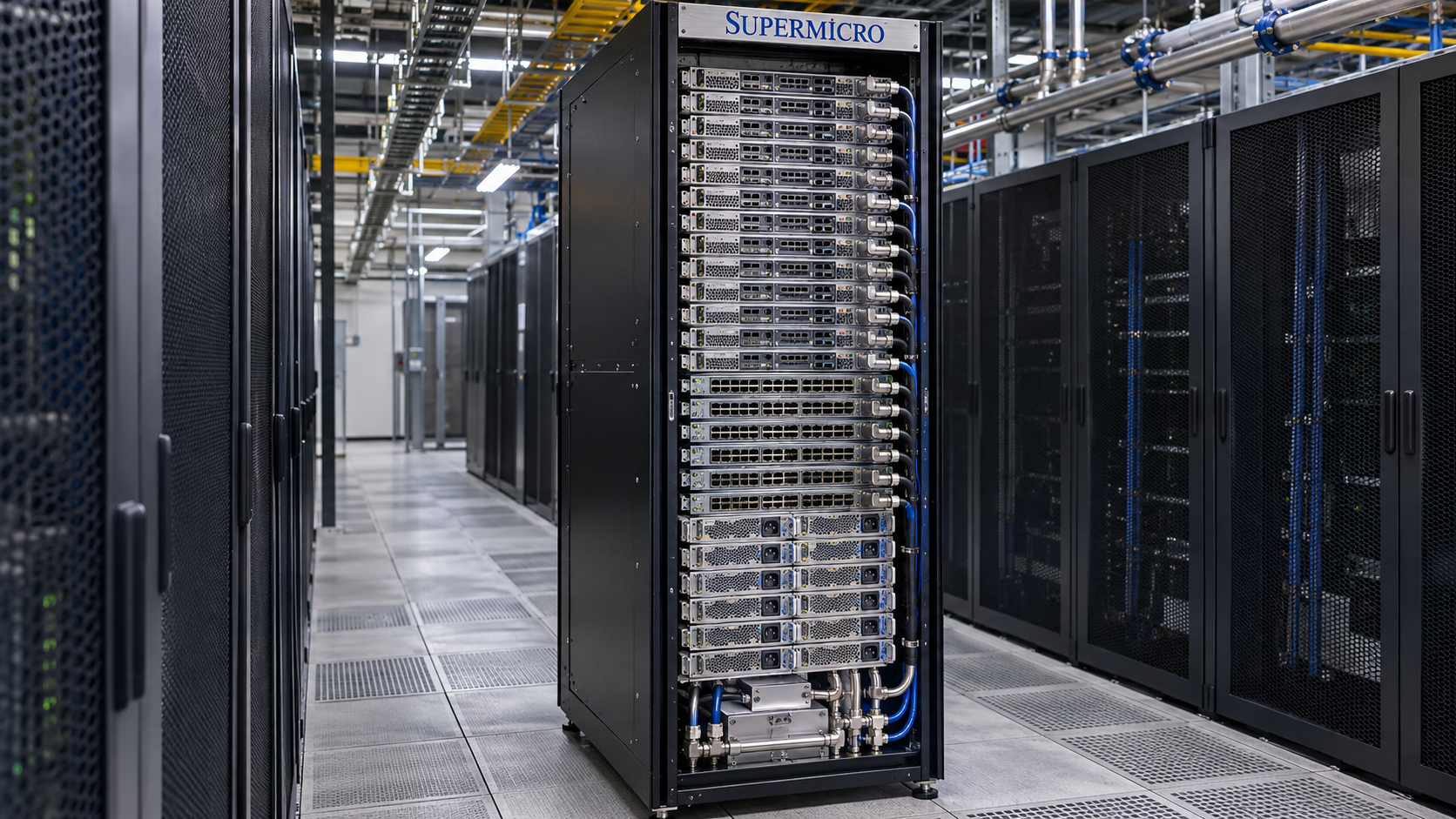
CoreWeave and Supermicro both reported rapid sales growth before Nvidia’s CEO change. CoreWeave needs customer deposits to help finance computing capacity, while Supermicro faces customer concentration and scrutiny of where its equipment ends up.
CoreWeave earns money by renting computing capacity. Supermicro gets paid for building the systems that supply it. Both rely heavily on Nvidia hardware, but their September-quarter results show why an Nvidia leadership change or a delay in deliveries would reach their accounts differently.
CoreWeave reported $3.66 billion of revenue, up 168%, and a $132.5 billion revenue backlog. CoreWeave’s adjusted operating margin reached 10%, but quarterly interest expense reached $846 million and it still recorded a net loss. Management expects about $9 billion in customer advances and deposits over three months. It said more than $3 billion relates to older infrastructure whose original financing has already been repaid. That cash would not carry the same financing burden as installing a new rack. Management also said rental pricing on its older Ampere and Hopper GPUs rose 30% to 50% from the June quarter, even as it introduced newer hardware. CoreWeave says qualified demand through the end of 2027 is about ten times expected available capacity. That is not ten times as much contracted revenue.
Supermicro reported $19.9 billion of fiscal first-quarter revenue, roughly four times the year-earlier figure. At Supermicro, AI products made up about 71% of sales, according to 24/7 Wall St., and one customer accounted for about 44%. Adjusted gross margin was 12.8%, up from 9.5% a year earlier. That is a gross margin for a hardware maker, not comparable to CoreWeave’s operating margin. Supermicro ended September with $6.9 billion of cash and equivalents and $8.6 billion of bank debt and convertible notes. Its December-quarter sales outlook is $19.5 billion to $21.5 billion, within a full-year forecast of $72 billion to $82 billion.
Nvidia announced Jensen Huang’s departure on November 12. Nvidia had invested $2 billion in CoreWeave equity and the cloud company had announced access to Nvidia’s newer Rubin platform. CoreWeave Chief Executive Michael Intrator said he saw no reason the relationship would change, 24/7 Wall St. reported. That is management’s view, not a commitment by Nvidia’s new leadership. Separately, Bloomberg reported a U.S. inquiry into whether entities linked to Alice Huang helped divert Supermicro equipment. An inquiry is not a finding against Supermicro; the company said it cooperated with U.S. and Taiwanese authorities.
On Thursday, 24/7 Wall St. put Supermicro down 11.3% to $26.99 and CoreWeave down 6.9% to $56.60. Those price moves do not measure the companies’ business exposure. CoreWeave expects $1.05 billion to $1.15 billion in December-quarter interest expense, making the timing of customer payments consequential. For Supermicro, a delay at one large customer can affect a quarter’s rack sales even without a broad slowdown in AI demand.
Continue your CRWV research
Image references: · מקור ייחוס · מקור ייחוס
Frequently asked questions
What is "CoreWeave rents the chips. Supermicro has to sell the racks." about?
CoreWeave pays to finance the GPUs it rents. Supermicro sells racks into a concentrated customer base. Their latest results show where the risks differ.
Which stocks and assets does this article cover?
This article relates to CRWV, NVDA.
What is the market context?
CoreWeave earns money by renting computing capacity. Supermicro gets paid for building the systems that supply it. Both rely heavily on Nvidia hardware, but their September-quarter results show why an Nvidia leadership change or a delay in deliveries would reach their accounts differently. CoreWeave reported $3.66 billion of revenue, up 168%, and a $132.5 billion revenue backlog. CoreWeave’s…
When was this article published?
It was published on 17 / 11 / 2026 by Be The Investor Research.