


 Be The Investor Research
Boeing, Microsoft Build Dataliner to Connect Airline Maintenance Data
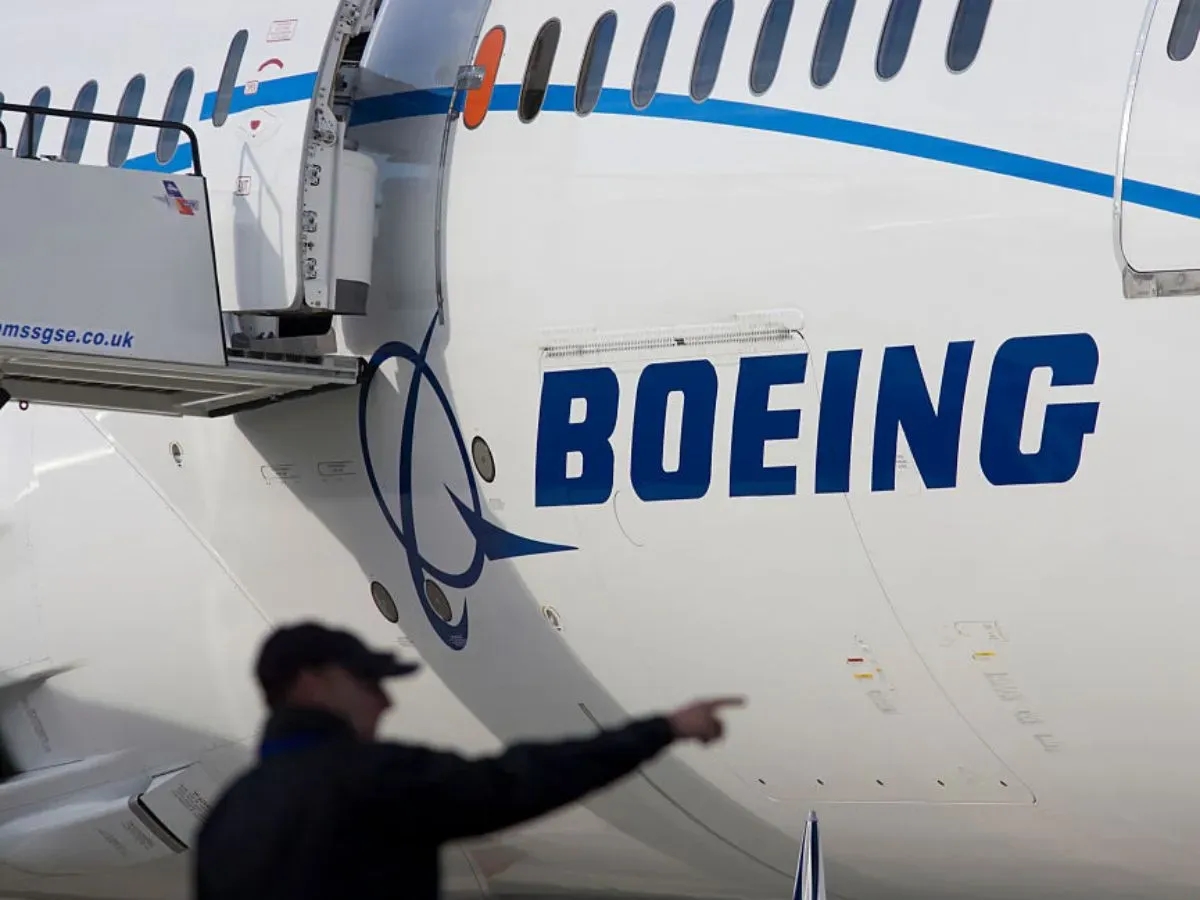
Boeing's new Dataliner platform uses Microsoft Azure tools to combine fleet data with aircraft expertise while letting airlines keep information in their own environments. The launch targets maintenance decisions, but neither company disclosed customers, pricing or revenue.
Boeing has introduced Dataliner, an AI-powered platform built with Microsoft technology to help airlines connect maintenance, operations and aircraft-condition data across an entire fleet. The product addresses a familiar aviation problem: useful information often sits in separate systems for individual aircraft, limiting a carrier's ability to identify patterns early.
Dataliner combines airline data with Boeing's engineering and aircraft knowledge. Boeing says the platform can support maintenance planning, emerging-risk identification and operational decisions through applications, APIs, analytics and AI-enabled tools.
The architecture is designed around customer control. Airlines can keep data in their own technology environments and decide what to share, rather than moving everything into one central Boeing system. The platform includes access controls, encryption and monitoring, according to the company.
Microsoft's role includes Azure AI Foundry and other data and AI services. That gives Dataliner a development and deployment layer, while Boeing contributes aircraft models, maintenance context and connections to its existing digital products. Boeing plans to use the platform as a common intelligence foundation for services including Asset Lifecycle Planning and a TechOps AI Agent.
The business value depends on whether Dataliner can reduce unplanned maintenance, improve fleet availability or shorten the time required to diagnose problems. Those outcomes would be measurable in aircraft downtime and maintenance costs, not simply in the number of AI features.
Boeing did not disclose launch customers, pricing, contract value or expected revenue. Microsoft also did not quantify the Azure consumption associated with the platform. Without those details, the announcement is evidence of product development rather than a material earnings catalyst for either company.
There is also an adoption hurdle. Airlines operate mixed fleets and complex regulated systems, and data quality can vary across aircraft, maintenance providers and jurisdictions. Keeping data in customer environments may ease sovereignty concerns, but integration and validation will determine whether the promised fleet-wide view is reliable.
Dataliner's significance will become clearer when airlines report operational use, savings or signed deployments. For now, the partnership shows how domain expertise and cloud infrastructure can be combined without requiring customers to surrender control of sensitive fleet data.
Continue your MSFT research
Related News

Google Cloud’s 82% Growth Narrows the Gap, but Not on a Clean Basis
Google Cloud revenue surged 82% to $24.8 billion and its margin reached 35.6%. Claims that it could pass Azure within a year rely on incompatible revenue measures and unsustainable growth assumptions.

Nvidia's Supply Bottleneck Extends Into 2028, but Demand Quality Matters
Nvidia's filing confirms supply constraints and $279 billion of capacity commitments. Customer concentration and financing risk mean a long order queue is valuable only if buyers can fund and deploy the systems.
Chevron’s Next Test Is Cash Flow After a Record Quarter
Chevron enters its October 30 report after record production, refining profits and cash flow. Investors must separate durable operating gains from benefits tied to high oil prices, working capital and unusually strong refining margins.
Microsoft and Oracle Have Similar AI Backlogs, Not Similar Risk
Microsoft and Oracle report nearly equal contracted backlogs, but Microsoft funds expansion from positive cash flow while Oracle is using heavy capital spending and new equity.

IBM's Premium Needs Software Growth to Outlast the Mainframe Cycle
IBM's software growth and rising free cash flow support its valuation premium, but cyclical mainframe demand, slower consulting and acquisition-funded leverage leave little room for execution slips.

Earnings Peak Week Puts AI Spending and Date Signals Under Scrutiny
About 1,885 companies are expected to report during the first peak week of Q3 earnings. Strong headline growth meets tougher scrutiny of AI capital spending and seven unusual S&P 500 reporting dates.
Apple's Valuation Premium Now Depends on Growth and Margin Durability

Apple's valuation leaves little room for an ordinary quarter. Trefis estimated that the shares traded at 39.5 times trailing earnings on October 23, above Microsoft, Alphabet, Amazon, Dell and HP in its comparison. That premium matters because Apple grew revenue more slowly than several of those companies over the measured period, while matching rather than surpassing Alphabet's operating margin.
The case for paying more rests on acceleration. Apple reported fiscal third-quarter revenue of $109.4 billion, up 16% from a year earlier, and diluted earnings per share of $2.02, up 29%. The company's official financial statements show gross margin of 50.1% for the quarter. Management said tariff refunds added about two percentage points to that result, so the headline margin overstates the run-rate benefit from operations alone.
Product demand has been strong enough to create another complication: supply. The source analysis says iPhone revenue rose 22% to $54.3 billion in the June quarter and Mac revenue increased 29%. It also reports that constrained access to advanced manufacturing processes limited iPhone, Mac and iPad sales. That is a better problem than weak demand, but it can still defer revenue and create an uneven product mix.
The next margin bridge may be harder. Apple guided to 47% to 48% gross margin for the September quarter, according to the source, with about one percentage point of support from tariff refunds. It also warned of higher memory costs. If the refund benefit falls and component costs rise at the same time, Apple needs pricing, product mix or operating efficiency to protect profitability.
Peer comparisons are useful only when their definitions line up. Trefis calculated trailing operating margins of 33.2% for Apple and 33.1% for Alphabet, but the businesses have very different capital needs and revenue mixes. It also reported a 46.8% margin for Microsoft and much faster growth for Dell over its selected four-quarter period. Those numbers explain why investors should not treat Apple's brand strength as a complete valuation argument; they do not establish that any one peer is a direct substitute.
The decisive question is whether Apple's acceleration can outlast the factors that temporarily helped it. A high multiple can remain justified when revenue compounds, the installed base supports services growth and margins hold. It becomes harder to defend if device supply remains constrained, price increases weaken demand or rising memory costs absorb the benefit of premium pricing.
Apple has recently delivered the growth that a premium valuation requires. The next report must show how much of that performance came from durable demand and operating execution, and how much came from timing, constrained supply or tariff refunds. At this valuation, the quality of the margin is as important as the size of the revenue beat.
Terafab's GDP-Sized Ambition Starts With a Much Smaller Test

Elon Musk has attached an extraordinary scale claim to Terafab, the semiconductor complex Tesla and SpaceX are reportedly developing in Grimes County, Texas. He said the value of its eventual output could rival the annual economic production of a top-20 country. The claim makes the project sound imminent and measurable, but the available evidence describes a long buildout whose economics remain largely undefined.
TIKR reported that the project is in discussions with about 10 Korean equipment suppliers, with more than half under nondisclosure agreements. It also reported that HPSP has agreed to provide an annealing tool for a research and development line. Those details suggest early supplier work, not a completed manufacturing plan. Public confirmation of the full supplier list, construction schedule, process technology and allocation of costs between Tesla and privately held SpaceX remains limited.
The scale math shows why Musk's comparison needs caution. A reported long-term goal of 1 million wafers a month would equal 12 million wafers a year. Using roughly $1 trillion as a reference for the world's 20th-largest economy implies about $83,000 of output value per wafer, a BTI calculation. That figure is not a forecast because Musk did not define whether output means unfinished wafers, packaged chips or the economic value of products powered by those chips.
Timing is equally important. TIKR said the first phase, with capacity of 100,000 wafers a month, is expected before 2030, while the million-wafer target could take about a decade. The publication also attributed to Musk a cost of tens of billions of dollars through early 2028 and more than $100 billion over the long term. Tesla has not separated Terafab spending in a public budget, and the share to be funded by SpaceX has not been disclosed.
The industrial logic is easier to understand than the GDP comparison. Tesla's vehicles, robots and artificial-intelligence systems, and SpaceX's satellites and computing needs, all depend on advanced semiconductors. Owning fabrication capacity could give the companies more control over supply, design priorities and production timing. It would also expose them to the high fixed costs, execution risk and rapid equipment obsolescence that make leading-edge chip manufacturing difficult.
TIKR reported that special committees at Tesla and SpaceX are considering a potential combination, but no transaction terms have been announced. Terafab could become an argument for closer coordination because the companies may share both its output and its bill. Investors should treat that as a strategic possibility, not a completed deal.
The next useful evidence will be a detailed capital-spending plan, named equipment commitments and a defined production schedule. Until then, the top-20 GDP comparison is a statement of ambition. The investable question is whether Tesla can fund the project without weakening returns on its existing automotive, energy and AI programs.
Microsoft’s Cheap-Model Strategy Puts AI Margins to the Test

Microsoft CEO Satya Nadella expects the bulk of artificial-intelligence use to migrate toward cheaper, increasingly interchangeable models. For Microsoft, that forecast cuts both ways: lower inference costs can improve the economics of Copilot, while falling token prices can make the company’s enormous infrastructure buildout harder to monetize.
Nadella told the Possible podcast that companies should not use frontier models for non-frontier problems. He argued that most token consumption will eventually become a commodity market supplied by a mix of open-weight and lower-cost proprietary models. Microsoft already follows that approach inside Copilot, routing work to cheaper models when the task does not require the most capable system.
That matters because every answer generated by Copilot carries a computing cost. Microsoft can protect the margin on paid software seats by matching each request with the least expensive model that can do the job reliably. The company said on its fiscal fourth-quarter call that its in-house MAI models reduced GPU costs by 89% for one Dynamics 365 feature and by as much as 84% for a PowerPoint feature.
The pressure is visible in Microsoft’s accounts. Companywide gross margin declined from 69.8% in fiscal 2024 to 67.9% in fiscal 2026, while Microsoft Cloud gross margin fell to 65% in the June 2026 quarter from 68% nine months earlier. Operating expenses grew just 7% in fiscal 2026 as revenue rose 18%, so operating margin still expanded. Cheaper inference is one way to keep that favorable operating leverage as Copilot use grows.
The other side of the strategy is Azure. Microsoft sells the infrastructure that generates tokens, and a more competitive market can push prices down even as demand rises. Property and equipment additions reached $115.95 billion in fiscal 2026, up from $64.55 billion a year earlier. The asset base therefore needs high utilization and durable demand, not merely higher token volumes.
Microsoft has substantial contracted demand. Commercial remaining performance obligations reached $678 billion at June 30, 2026, up 84% from a year earlier and 25% excluding OpenAI. That backlog offers visibility, but it also shows why customer concentration and the economics of OpenAI-related commitments remain important.
The next test arrives with Microsoft’s fiscal first-quarter report on October 28. Management guided Microsoft Cloud gross margin to remain near 65%. Holding that level while AI usage expands would support the case that model routing and in-house systems are offsetting infrastructure costs. Another decline would suggest that pricing and depreciation are still moving faster than the savings.
Olo Takes Its Restaurant Software Directly to Diners

Olo has spent more than two decades powering restaurant orders behind the scenes. It is now using that network to reach diners directly with an app that promises restaurant menu prices, no sponsored listings and access to more than 250 brands at launch.
The Olo App, released on October 20, combines pickup and delivery ordering across national and regional chains. Olo says the app does not add menu-item markups, which it estimates can save diners an average of 15% to 30% per item compared with third-party delivery apps. Pickup orders can also avoid delivery fees, although ordinary taxes, service charges and delivery costs may still apply.
Olo’s commissioned survey illustrates the pitch. Seventy-four percent of respondents expected a delivery fee, but only 27% expected menu items themselves to cost more on third-party apps. The online survey covered 1,010 U.S. adults from October 14 through October 16 and had a stated margin of error of 3.1 percentage points. Because Olo commissioned the work, investors should treat it as evidence of the company’s positioning rather than independent proof of consumer behavior.
The company enters the consumer market with scale already embedded in restaurant systems. Olo says its platform serves more than 800 brands across more than 90,000 locations, supports over 3.5 million orders a day and reaches more than 100 million unique customers annually. Launch partners include Waffle House, Five Guys, Noodles & Company, First Watch, Dave’s Hot Chicken and several regional chains.
The app also avoids paid placement. Diners can follow restaurants to build a personalized feed, view nearby locations on a map and save payment and address details for repeat orders. Olo argues that this design preserves the direct relationship between a restaurant and its guests, an important distinction from marketplaces that control discovery and customer data.
This is a competitive development for delivery platforms, but it is not yet evidence of material damage to DoorDash or Uber. Olo did not disclose consumer adoption, order volume through the new app or the economics of delivery fulfillment. Its initial advantage is distribution through existing restaurant relationships; its challenge is persuading diners to open another app without the broad cross-merchant demand and courier networks of the established marketplaces.
Olo itself is no longer a public company. Thoma Bravo completed its $2 billion acquisition in September 2025, after which Olo’s shares ceased trading. The launch therefore creates no direct Olo stock catalyst. For public-market investors, the useful signal is whether restaurant-owned ordering can win repeat demand when menu pricing and customer control are more transparent.
Big Tech's $2.35 Trillion Backlog Is Huge, but Not All the Same

Microsoft, Oracle, Google Cloud and Amazon Web Services have reported about $2.35 trillion of remaining contract value. The total is powerful evidence that demand for cloud and AI infrastructure is not merely speculative, but it should not be read as near-term revenue or as a perfectly comparable league table.
The latest disclosed figures are $678 billion for Microsoft's commercial remaining performance obligations, $664 billion for Oracle, $513.9 billion for Google Cloud and $496 billion for AWS. Adding them produces $2.352 trillion.
Each number has a different scope. Microsoft's balance includes commercial contracts beyond Azure, and Oracle's remaining performance obligations include cloud applications and other services as well as infrastructure. Google said $513.9 billion of its $519.5 billion company backlog related to Cloud. Amazon describes the AWS figure as backlog. The sum is informative, but the labels and revenue mixes are not identical.
Conversion timing is the next limitation. Microsoft said roughly 30% of its backlog would be recognized within 12 months, leaving most of the balance for later periods. Alphabet expected just over half of its backlog to become revenue within 24 months. Oracle previously disclosed that only a minority of its backlog would convert in the next year, while large AI contracts extend over multiple years. A signed contract therefore supports visibility without guaranteeing the pace of quarterly growth.
Recent revenue shows that capacity, not demand alone, sets the speed. AWS sales rose 37% to $42.2 billion in the June quarter. Google Cloud revenue increased 82% to $24.8 billion. Microsoft reported Azure and other cloud services growth of 41% for fiscal 2026. Those rates are strong, but management teams have repeatedly described shortages of power, chips and ready data-center space.
That bottleneck cuts both ways. New capacity can arrive with customers already committed, creating a clearer path from capital spending to revenue. Delays in power connections or hardware deployment can also postpone recognition while depreciation, interest and other costs begin to accumulate.
The four companies do not carry the same financing risk. Microsoft, Alphabet and Amazon fund much of their spending from large operating cash flows. Oracle has combined rapid infrastructure expansion with substantial debt and equity financing, making the conversion schedule more important to its balance sheet. Concentration matters too: a few AI developers account for meaningful portions of some backlogs, so customer execution and credit quality remain part of the risk.
The $2.35 trillion total therefore supports a constructive conclusion with a strict caveat. Demand is contracted on an extraordinary scale, but backlog is not cash and it is not automatically comparable across providers. Upcoming earnings should be judged on capacity delivered, revenue conversion, margins and cash flow, not on whether the headline total grows again.
Latest comments