


 Be The Investor Research
Joby's Cash Cushion Buys Time, but Certification Sets the Clock

Joby had $2.3 billion in cash and short-term investments at June 30 and is advancing through the final FAA certification stage. Heavy spending continues, making certification progress and cash use more important than a one-month share-price drop.
Joby Aviation's recent share-price decline is less informative than the two numbers governing its business: certification progress and available cash. At June 30, the company held about $2.3 billion in cash, cash equivalents and short-term investments, giving it substantial resources to fund aircraft testing and manufacturing.
The company said it had made its strongest progress in the fifth and final stage of the Federal Aviation Administration certification process. Five aircraft were flying and 12 were in production, while management expected initial electric-propulsion integration flights in Texas in September. Those milestones show movement, but none substitutes for final approval to carry paying passengers in the United States.
Joby's conventional Blade passenger business provides revenue while the electric air-taxi program develops. The company reported $36.2 million of Blade revenue in the second quarter and raised its full-year revenue outlook to $115 million to $125 million. That revenue helps demonstrate operating capability and customer demand for premium air mobility, though it is not yet proof of the economics of Joby's electric aircraft.
Cash use remains the counterweight. The source report cites a second-quarter net loss of $245 million and management guidance for second-half cash use of $385 million to $415 million. Investors should verify actual spending against that range and watch whether manufacturing investments move in step with regulatory progress. Building too far ahead of certification would increase risk, while underinvesting could delay commercialization after approval.
The broader air-taxi group has also weakened, suggesting that some of the decline reflects lower appetite for long-duration, pre-profit companies. Even so, Joby's timetable and funding needs are company-specific. The next meaningful update is not a rebound in the share price. It is evidence that the final certification work is closing on schedule without a sharper rise in cash consumption.
Joby's balance sheet buys time, but it does not remove the clock. Each quarter without certification consumes part of the cushion, while each completed milestone makes the path to commercial service more credible.
Continue your ACHR research
Related News

Roku's Home Screen Advantage Needs Measurable Ad Conversion
Roku says its home screen and sequential connected-TV ads can lift purchase intent. Industry standards and platform growth support the opportunity, but repeatable independent measurement remains the test.

Nvidia's China Compute Demand Is Real, but the Cloud Loophole Is Not Bankable
Chinese companies have reportedly ordered more than $35 billion of export-compliant Nvidia cards, but supply constraints, remote-access policy risk and uncertain revenue recognition make the headline value unusable as an earnings forecast.

Project Helix Has No Price Yet, but Memory Costs Raise the Floor
Microsoft has confirmed Project Helix and 2027 developer hardware, but not a consumer price. Rising DRAM and NAND costs make a premium Xbox plausible while leaving the reported $1,800 figure unverified.
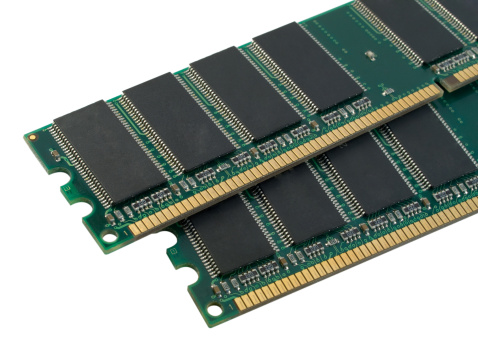
Micron’s Longer Supply Agreements Could Change the Memory Cycle
Micron says it now has 26 strategic customer agreements backed by $32 billion of commitments. Longer contracts improve visibility, but they cannot eliminate pricing, supply and technology-cycle risk.
Nvidia’s $3 Billion Meta Investment Deepens a Two-Way AI Bet
Nvidia will invest $3 billion in Meta’s equity offering while the companies expand work on Muse AI. The deal supports a major customer but also ties Nvidia more closely to Meta’s spending economics.
IBM’s Software Cash Engine Exposes Intel’s Foundry Gap
IBM and Intel are both remaking legacy technology businesses, but IBM’s recurring software revenue and cash flow contrast with Intel’s still-lossmaking foundry and limited external customer proof.
Anthropic’s Compute Commitments Are a Demand Signal, Not a Micron Order

Anthropic’s public IPO filing gave investors a rare look at the scale and cost of building a frontier AI company. Memory-chip shares rose after the filing, but the document supports a broad demand signal, not a direct sales forecast for Micron or SK Hynix.
The filing shows first-half 2026 revenue of $16.3 billion, up from $1.16 billion in the first half of 2025. It also reports a net loss of $80.7 billion, largely because of a $72.4 billion accounting charge tied to convertible notes. Associated Press reporting based on the filing says Anthropic held $131.7 billion of cash and equivalents and that its five largest customers represented about a quarter of revenue. Fast growth therefore sits beside heavy losses and meaningful customer concentration.
The source article highlights roughly $450 billion of long-term cloud and computing commitments over the next seven to ten years. It identifies $111 billion with Google, $110 billion with Amazon Web Services and $31 billion with Microsoft, plus as much as $86 billion for Nvidia-based capacity from Nscale and Lambda. Some contracts require payment regardless of actual usage.
That $450 billion figure should not be described as Anthropic’s complete infrastructure obligation. The filing presents several categories of purchase commitments, leases and other contractual arrangements, and broader totals depend on which obligations are included. The safer conclusion is that Anthropic has committed extraordinary sums to computing capacity, not that one headline number captures every future payment.
For memory suppliers, the mechanism is indirect. Cloud providers and specialist infrastructure companies buy servers, accelerators, high-bandwidth memory and conventional DRAM to build the capacity Anthropic has reserved. If those counterparties add equipment and Anthropic uses the capacity, demand can flow through to Micron, SK Hynix and Samsung. The filing does not identify any of those memory companies as Anthropic suppliers, however, and it does not allocate the contract value among chips, networking, power, buildings and cloud services.
That distinction matters because the market moves were broad. Micron rose about 1% in overnight trading, SK Hynix gained 5.6% in Seoul and Samsung Electronics advanced 4%. South Korea’s Kospi rose roughly 3%, triggering a brief program-trading pause after a sharp futures move. Other US chip stocks did not move uniformly. Correlation on the day does not establish that Anthropic created a specific earnings catalyst for Micron.
The filing still improves the industry picture in two ways. First, it replaces vague statements about AI demand with contractual evidence that a major model developer expects to consume large amounts of computing over many years. Second, the unconditional portions of some agreements can encourage cloud providers to secure hardware before usage is fully visible. Those effects can support the memory cycle, but the benefit depends on build schedules, supplier selection and the mix of memory used in each system.
Investors now have better evidence of infrastructure demand and better evidence of its risk. Anthropic’s revenue grew rapidly, yet losses, capital intensity and customer concentration remain substantial. For Micron and its peers, the next useful proof will come from their own order books, pricing and capacity plans, not from treating Anthropic’s cloud commitments as purchase orders they have already won.
IREN’s 300MW Spain Campus Adds Capacity Before Customers

IREN has secured a civil-works license for a planned 300-megawatt AI data center in Badajoz, Spain, giving the company a second European expansion route. The project is strategically interesting, but it is not near-term revenue. Initial operations are targeted for 2028, no customer has been named, and management has not yet explained how the campus will be financed alongside IREN’s other builds.
The announcement fits a broader European strategy. IREN created IREN Europe to sell AI cloud services to customers that want their data and computing infrastructure located under European jurisdiction. Earlier in 2026, the company acquired the Nostrum Group, adding 490 megawatts of secured grid-connected power in Spain and taking its broader development portfolio to about 5 gigawatts. Badajoz turns some of that portfolio into a licensed project, but a license and grid access are only the beginning of the conversion from power rights to operating revenue.
Timing is the first limitation. IREN says the campus should begin operating in 2028, which leaves design, construction, equipment procurement and customer contracting ahead. A signed anchor tenant would reduce demand risk and could make financing easier. Until then, the site represents capacity that IREN may monetize rather than contracted revenue the company can forecast with confidence.
Funding is the second issue. In the fiscal year ended June 2026, the source article reports that IREN spent $4.33 billion on capital expenditure while generating $2.1 billion of operating cash flow. Capital spending was therefore about twice operating cash flow. That comparison does not by itself show a financing shortfall because project timing, cash balances, debt and customer prepayments also matter. It does show why investors need a clear funding schedule before assigning full value to another large campus.
IREN shares rose about 4% on the day described by the source, but other digital-infrastructure stocks also advanced. Applied Digital gained roughly 4%, while Cipher Mining and Riot Platforms rose about 3.6% and MARA Holdings about 3%. The group move means the stock reaction cannot be attributed to the Spanish announcement alone.
Badajoz still adds something useful. A European campus can diversify IREN beyond its existing geography and address customers with data-residency or infrastructure-control requirements. The earlier Nostrum acquisition also gives the company local grid access and development experience rather than a purely conceptual market entry.
The investment case now turns on evidence that narrows the gap between optionality and cash flow. The most important milestones are a named customer, binding commercial terms, a construction budget, a funding plan and a credible timetable to initial service. Without those pieces, the 300-megawatt figure describes potential scale, not economic output.
IREN’s Spain move is a genuine expansion, not just a market-relief rally. Yet the project’s value will depend on how much capacity is contracted, what returns the contract supports and how much capital existing shareholders or lenders must provide before 2028.
Riot’s Valuation Gap Depends on Turning Power Into Rent

Riot Platforms’ shares closed at $12.53 on October 23, down 37.8% since September 30 and back near their level at the end of 2025. That collapse has left Wall Street’s average price target of $29.84 about 138% above the stock. The gap looks dramatic, but price targets are not operating evidence. Riot’s November 4 update needs to show that its transition from Bitcoin miner to data-center landlord is producing durable rent.
The distinction between contracted capacity and possible capacity is central. Riot delivered AMD’s initial 25 megawatts at its Rockdale, Texas, campus during the second quarter. In April, AMD exercised an option for another 25 megawatts, bringing contracted AMD capacity to 50 megawatts. Riot’s August filing also disclosed a separate lease with a frontier AI lab for 191 megawatts at Rockdale, with 96 megawatts expected in December 2027 and full deployment targeted for June 2028.
Those agreements are firmer than the opportunity at Corsicana. Riot has said that its roughly 1-gigawatt Corsicana campus is covered by a nonbinding letter of intent with one prospective tenant, but it has not identified the customer or disclosed commercial terms. A letter of intent can lead to a lease, yet it does not create the same revenue visibility as a signed contract. Investors should keep the two categories separate.
The second-quarter numbers show how early the shift remains. Riot reported $23.2 million of data-center revenue, including $4.9 million of operating lease revenue and $18.3 million from tenant fit-out services. The lease revenue carried an 84% gross margin, according to the company. AMD’s first 25 megawatts reached full service only in mid-May, so the third quarter should offer the first cleaner look at a full period of rent from that deployment.
The source article cites consensus third-quarter revenue of about $159 million, below $174.2 million in the second quarter, and EBITDA of roughly $10 million. It also notes that Riot missed the EBITDA consensus in each of the previous three reported quarters. That metric can swing with Bitcoin accounting: second-quarter results included a $75 million mark-to-market loss on Bitcoin holdings. Operating lease revenue and cash requirements are more useful measures of whether the data-center strategy is becoming a real second business.
Long-range forecasts deserve similar caution. The cited 2028 revenue consensus slipped only 1.55% during October to $1.21 billion, with 11 analysts contributing. Estimates for 2029 and 2030 fell 16.2% and 27%, respectively, but those averages rested on only two or three analysts. A valuation built on the outer years can move sharply when one estimate changes.
Riot’s next report therefore has three concrete tests. First, operating lease revenue should rise meaningfully from the second quarter’s $4.9 million. Second, management should update the additional 25 megawatts for AMD and explain the capital needed to deliver the larger Rockdale AI lease. Third, any movement at Corsicana should be judged by whether a binding lease replaces the nonbinding letter of intent.
The share-price decline may have created upside if Riot executes, but a wide target-price gap does not prove mispricing. Signed leases, on-time delivery and recurring rent will determine whether the stock’s data-center valuation can hold.
Intel's Classiq Deal Builds a Full-Stack Quantum Platform
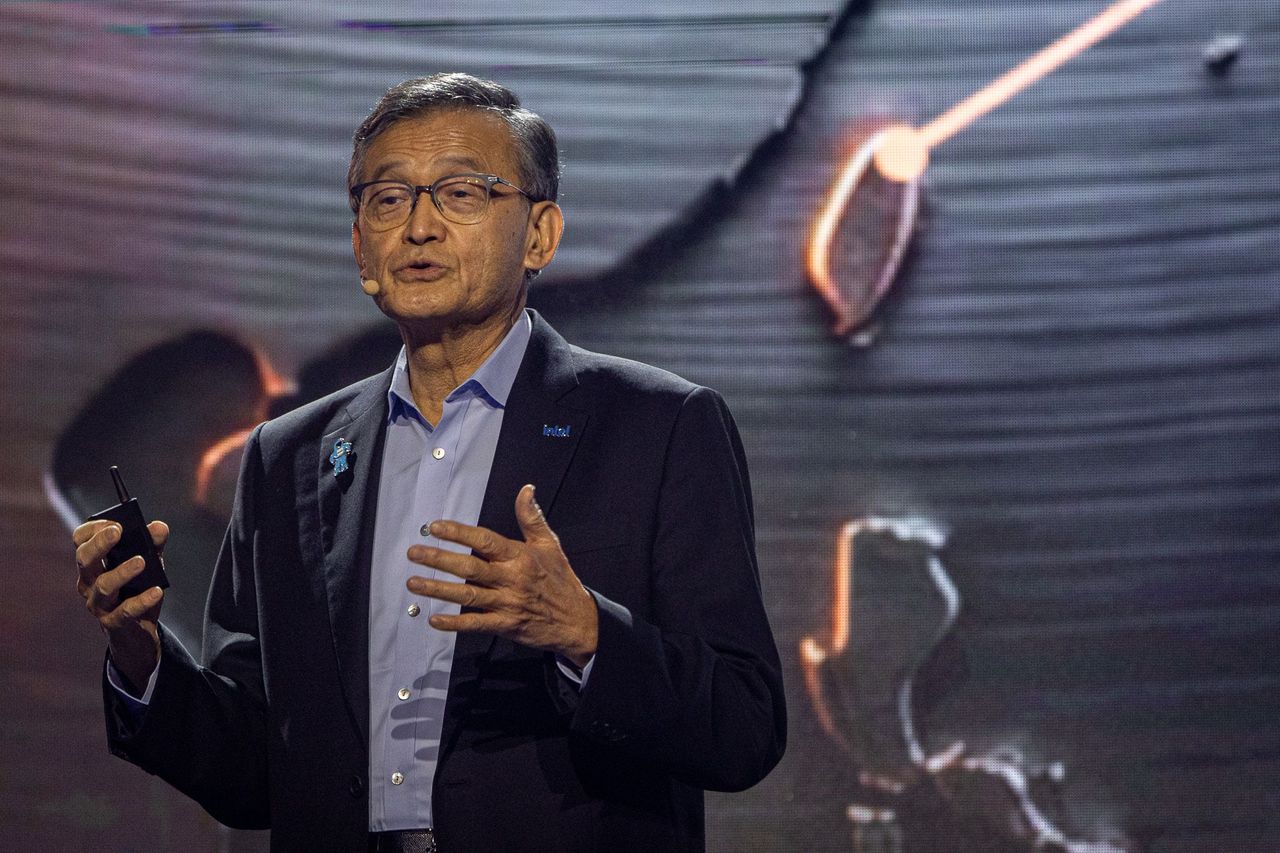
Intel has agreed to acquire Classiq, an Israeli quantum software company, in a deal meant to turn Intel's existing quantum research into a full-stack platform. Financial terms were not disclosed, so investors cannot yet measure the purchase price, near-term earnings effect or likely return on capital.
The proposed combination pairs Classiq's automated quantum-algorithm synthesis software with Intel's silicon spin-qubit technology, quantum software and semiconductor manufacturing expertise. Classiq's platform lets developers describe a quantum problem at a higher level and then generates circuits for different types of quantum hardware. That abstraction is important because useful quantum applications remain difficult to design and because the industry has not settled on one dominant qubit architecture.
Intel said the acquisition is expected to close in the first half of 2027, subject to regulatory approvals and customary closing conditions. Until then, Intel and Classiq will operate as separate companies. Intel also plans to keep supporting Classiq's existing integrations across multiple hardware platforms, including systems that do not use Intel processors. Preserving that hardware-neutral approach may help Classiq retain customers while Intel builds a broader quantum ecosystem.
The strategic logic is clearer than the financial case
Intel has spent more than a decade developing quantum technology and argues that its conventional semiconductor processes can eventually manufacture silicon spin-qubit chips at scale. Classiq adds a software layer that could make those chips easier for enterprises and researchers to use. In principle, Intel could then offer quantum processing units alongside its CPUs, GPUs and other accelerators instead of supplying only a hardware component.
That is a meaningful expansion of Intel's quantum strategy, but it is not evidence of near-term quantum revenue. Intel's announcement did not provide Classiq revenue, profitability, purchase consideration or a commercialization timetable. The company also acknowledged risks around regulatory approval, employee and customer retention, integration, competition and the still-uncertain timing of commercial quantum adoption.
For investors, the acquisition is best viewed as an option on a developing computing market rather than a forecastable earnings catalyst. The next useful disclosures will be the final deal terms, any regulatory conditions, evidence that Classiq's open integrations survive the acquisition, and milestones showing that Intel's spin-qubit hardware and Classiq's software can support commercially relevant workloads.
Reported CoWoS Price Hike Tests TSMC's AI Packaging Power
Taiwan Semiconductor Manufacturing is reportedly considering a 10% to 20% price increase for CoWoS advanced packaging, a critical process that combines AI processors with high-bandwidth memory. If implemented, the increase would test how much of the AI infrastructure boom TSMC can capture through pricing rather than volume alone.
The report came from Taiwan's China Times, citing supply-chain sources. TSMC has not publicly confirmed the specific CoWoS increase, its timing or which customers would be affected. Investors should therefore treat the percentage as a reported proposal, not a formal company price list.
CoWoS, short for Chip on Wafer on Substrate, lets chip designers place processors and high-bandwidth memory in a tightly integrated package. That integration is essential for many AI accelerators because the computing chips need rapid access to large amounts of data.
The reported increase is credible in context. On its October earnings call, TSMC said demand for leading-edge technologies remained extremely robust and described multiyear structural AI demand. High-performance computing accounted for 68% of third-quarter revenue, up 22% sequentially, while advanced nodes of 7 nanometers and below represented 79% of wafer revenue.
TSMC is responding with capacity, not only prices. The company said it is building 13 leading-edge and advanced-packaging fabs in Taiwan over the next several years as part of an unprecedented expansion. The source report estimated monthly CoWoS capacity could exceed 130,000 units in 2026 and 200,000 in 2027, but TSMC did not confirm those unit estimates in the materials reviewed.
For Nvidia, AMD and other customers, a higher packaging price would raise the cost of completing AI chips even if wafer prices were unchanged. The ultimate margin effect would depend on contract terms, product mix and whether customers pass the increase to their own buyers. A 20% rise in one packaging service is not the same as a 20% increase in the total cost of a GPU.
For TSMC, the benefit is clearer but still incomplete. Pricing power can help fund new capacity and protect margins as overseas construction, equipment and materials become more expensive. Yet aggressive increases could encourage customers to redesign packages, negotiate harder or qualify alternatives where technically possible.
The report matters because advanced packaging has become a bottleneck rather than a back-end commodity. Confirmation from TSMC or affected customers would be the next step. Until then, the proposed range is evidence of supply-chain pressure and potential pricing power, not a guaranteed earnings increase.
Latest comments