


 Be The Investor Research
Disc Medicine's Phase 3 Win Clears the Clinical Bar, Not the FDA Bar

Bitopertin met both primary endpoints in Disc Medicine's pivotal APOLLO trial, strengthening its planned response to an earlier FDA rejection. The next value-driving step is regulatory acceptance, not another share-price reaction.
Disc Medicine reported a clean Phase 3 result for bitopertin, sending the clinical-stage biotech's shares sharply higher. In the 183-patient APOLLO trial, the drug met both primary endpoints for erythropoietic protoporphyria, a rare disorder that causes severe pain after light exposure.
The trial measured both biology and daily function. Whole-blood metal-free protoporphyrin IX fell 41.4% versus placebo, with a p-value below 0.0001. During the sixth month of treatment, patients gained an average 12.2 hours per month in light without pain versus placebo, with a p-value of 0.0010. Disc also said every secondary endpoint reached statistical significance.
Safety remains part of the decision. Dizziness was the most common treatment-emergent adverse event, affecting 50% of patients on bitopertin, although the company described the cases as mild or moderate and generally temporary. The trial enrolled adults and adolescents age 12 and older with EPP or X-linked protoporphyria.
The regulatory history explains why the stock reaction was so large. The Food and Drug Administration previously issued a Complete Response Letter after concluding that earlier studies did not establish an association between the PPIX biomarker and sunlight-exposure endpoints. Disc later said a Type A meeting aligned the company and agency on APOLLO as a potential basis for its response if the trial succeeded. Success therefore addresses the central evidentiary gap, but it does not guarantee approval.
Disc plans to submit its response in late 2026 and expects an FDA decision by mid-2027. Bitopertin remains investigational and is not approved in any jurisdiction. With approximately $718 million in cash, equivalents and marketable securities at June 30, the company says it has runway into 2029. The next decisive evidence is whether the FDA accepts the package and how it evaluates the drug's safety-benefit profile.
Related News

Trump Media and Rumble Fell Faster Than the Market as Merger Risk Loomed
Trump Media dropped 6% and Rumble 8% during a broader selloff, highlighting their high volatility. For DJT, the pending TAE merger adds execution, dilution and fusion-development risk.

Carnival's Record 2027 Bookings Shift Attention to Pricing
Carnival reported record booked occupancy and pricing for 2027, supporting demand visibility after a strong share-price rebound. The next test is whether realized yields and costs preserve that advantage.

CoreWeave Credit Insurance Tops 1,000 Basis Points as Debt Fears Rise
CoreWeave's five-year credit-default swaps moved above 1,000 basis points while a 2031 bond yielded about 14.5%. Those market prices signal severe perceived credit risk even though the company continues to add long-term customer commitments.

Reddit's 61% Growth Supports Its Premium, but the Next Quarter Slows
Reddit's second-quarter revenue rose 61% and weekly active uniques reached 514.6 million, supporting a richer valuation than slower-growing peers. Management's third-quarter guide, however, implies a clear deceleration and leaves search traffic as a risk.

Comcast’s 6.5% Yield Beats AT&T’s, but the Spin-Off Adds Uncertainty
Comcast offers the higher dividend yield and lower recent cash payout ratio, while AT&T presents a simpler telecom story. Comcast’s planned separation makes dividend continuity the crucial unresolved issue.
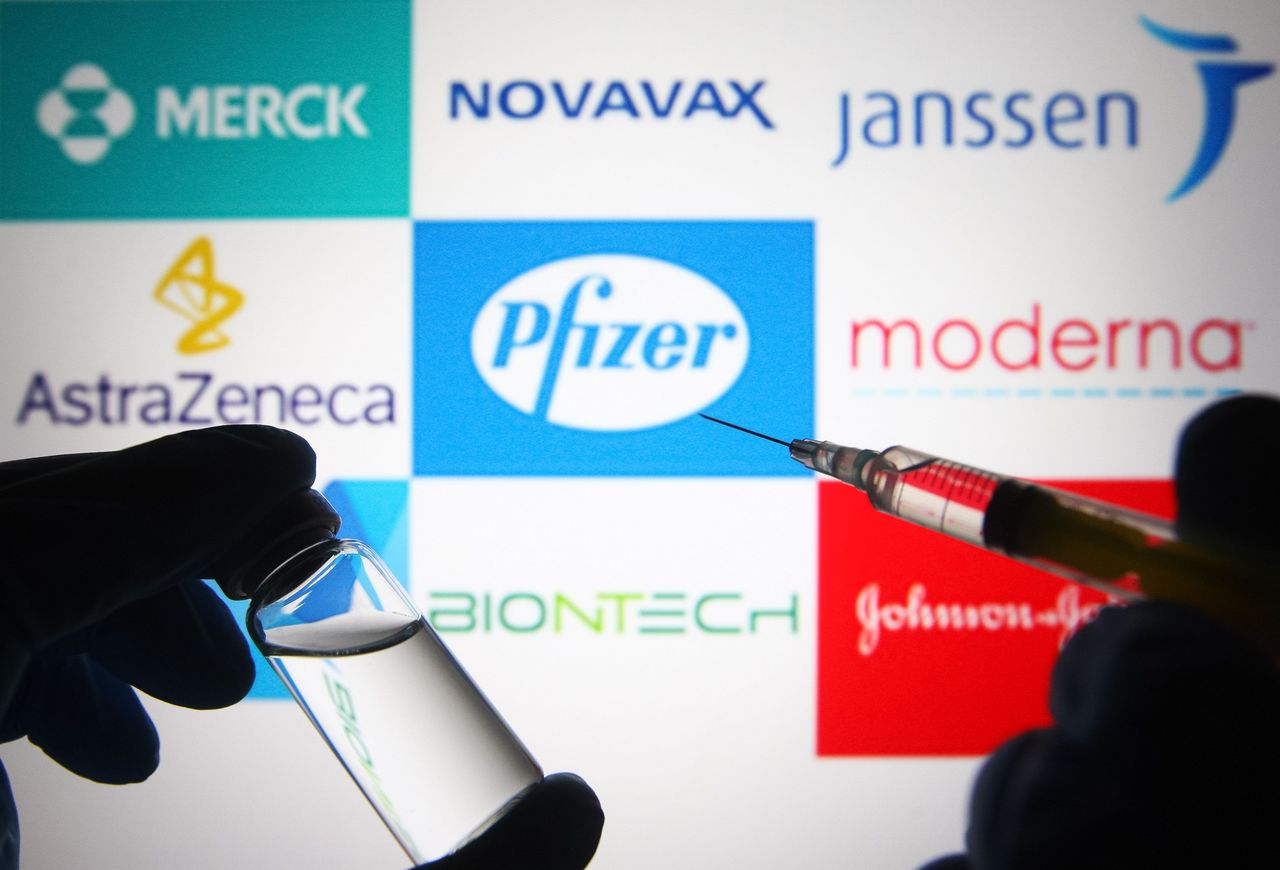
Biotech Catalysts Put Moderna and Achieve Life Sciences in Focus
A dense clinical calendar gives investors several binary events, led by Moderna and Merck’s melanoma program and Achieve Life Sciences’ response to an FDA manufacturing rejection.
Trump Media’s Rumble Deal Cannot Hide a $238 Million Quarterly Loss

Trump Media & Technology Group’s planned merger with Rumble gives investors a new strategic story, but the company’s latest financial results show how far the operating business still has to go. Trump Media shares fell while Rumble rose after the transaction update, a split reaction that reflects different expectations for each side.
Trump Media reported second-quarter revenue of $1.7 million, up 92.5% from a small base. Its net loss was $238.1 million. Most of that loss came from a $190.4 million noncash decline tied to digital assets and equity investments, so it should not be treated as an operating cash outflow. Even after making that distinction, adjusted EBITDA was negative $223.5 million, indicating that the quarter’s weakness was not only an accounting mark.
The company ended the period with roughly $1.9 billion of financial holdings. That pool can fund product development and transactions, but it also makes results more sensitive to market prices and capital-allocation decisions. Legal costs of $25.6 million added another material burden.
Management targets the Rumble transaction for the fourth quarter of 2026, subject to regulatory and shareholder approvals. Until those steps are complete, it remains a proposed merger rather than a finished combination. Investors need details on exchange terms, governance, dilution and the financing of the combined company before assigning value to potential distribution or advertising synergies.
The central question is whether the deal can create a business that generates recurring revenue, not merely a larger collection of users and financial assets. Revenue growth from a low base can look dramatic in percentage terms while remaining immaterial against hundreds of millions of dollars of losses. A credible improvement would require higher monetization, tighter costs and evidence that the merged platform can reduce cash consumption. Until then, the balance sheet buys time, but it does not resolve the economics.
Palantir and Knox Build a Faster Route Into Secure Federal Clouds

Palantir gained about 4% after Knox Systems announced a partnership designed to move commercial software into secure U.S. government cloud environments. The strategic logic is clear: Knox helps vendors through authorization and managed operations, while Palantir supplies accredited infrastructure for deployment.
The commercial value is not yet quantifiable because neither company disclosed financial terms, vendor commitments or expected revenue.
Why accreditation is a bottleneck
Federal Risk and Authorization Management Program approval and Department of Defense Impact Level 5 requirements impose security, documentation and operating controls that many commercial software companies are not built to manage alone. Knox says it can help vendors achieve authorization rapidly and already supports more than 100 AI and enterprise applications.
The partnership creates a route from compliance work to deployment on Palantir infrastructure. That can make Palantir more central to a vendor's federal go-to-market process even when the application is not a Palantir product.
The model has early evidence. Knox has announced recent FedRAMP authorizations for software companies using its managed environment. Those examples show that the compliance service can produce approvals, although they do not establish how many vendors will use the new Palantir route.
A strong government base
Palantir reported $809 million of U.S. government revenue in the second quarter of 2026, up 90% from a year earlier and 18% from the prior quarter. The company also reported $1.6 billion of total U.S. revenue, including $764 million from U.S. commercial customers.
That scale gives the partnership credibility, but it also raises expectations. A channel agreement should eventually appear in customer counts, contract value or government revenue. Until then, the relationship is strategically plausible rather than financially material.
Valuation keeps the proof burden high
The source placed Palantir near 98 times forward earnings before the announcement. At that level, investors are already assuming substantial growth. A partnership without disclosed terms cannot by itself support a major earnings revision.
The next test is adoption. Investors should watch how many vendors reach authorization through the combined offering, how quickly agencies deploy them and whether Palantir reports incremental contract value. The deal may deepen Palantir's federal infrastructure role, but the revenue bridge still needs to be built.
AMD's 10% Pullback Tests a 199x Valuation After a Huge Run

A Reddit user claimed to have made $16 million trading AMD and a leveraged semiconductor fund before selling everything. No brokerage proof had been published, so the gain should be treated as unverified. The useful story is not the trader's fortune. It is the tension between AMD's extraordinary share-price run and equally rapid data-center growth.
The stock rose about 361% from early June 2025 to the October 16, 2026 close, according to the source, then fell almost 10% in a week. That pullback followed a large gain rather than a collapse in the broader market.
The operating case remains strong
AMD reported second-quarter revenue of $11.5 billion, up 50% from a year earlier. Data Center revenue reached $6.7 billion, an increase of 107%, driven by EPYC processors and Instinct accelerators. Non-GAAP diluted earnings were $1.66 a share.
The official filing also shows a stronger product mix and the absence of the prior year's export-control inventory charge. That comparison means not every percentage point of margin improvement represents repeatable underlying growth.
Management expected Data Center sales to accelerate in the second half of 2026. The source also cited commitments from large AI customers and tight server CPU supply. Those conditions support revenue, but supply constraints can delay shipments and cap near-term upside.
Valuation makes execution decisive
The article placed AMD near 199 times trailing earnings. A trailing multiple can look unusually high when profit is accelerating, but it still indicates that investors expect years of growth. Gaming revenue fell 31% in the period cited by the source, showing that not every segment is advancing together.
The unverified Reddit sale says nothing about AMD's intrinsic value. The real question is whether Data Center profit can grow quickly enough to bring the valuation down without a large share-price decline.
AMD's next report should be judged on accelerator shipments, server CPU supply, gross margin and third-quarter revenue around the company's guidance. Strong revenue alone will not settle the debate if capital needs, product mix or margins disappoint. After a run of this size, the market needs evidence that earnings are catching up with the stock.
Samsung's Profit Mix Offers Less Shelter From the Memory Cycle

Samsung Electronics and SK hynix extended their decline on October 19 after their worst week since 2008. Samsung fell less, which fits its image as the diversified alternative to a pure memory producer. Recent segment results, however, show that diversification in products does not necessarily mean diversification in profit.
Chips are carrying the earnings
Samsung's Device Solutions division includes memory and other semiconductor operations. The source analysis estimates that Device Solutions produced nearly all of the combined operating profit from Samsung's three main segments in the first half of 2026. In the second quarter, Device Solutions generated about 89.2 trillion won of operating profit, while company-wide operating profit was about 89.5 trillion won.
Samsung's official second-quarter release supports the direction of that claim: the company said the memory business set quarterly records for revenue and operating profit, while its mobile, television and appliance businesses faced a less favorable mix.
The figures explain why Samsung and SK hynix sold off together when investors questioned the durability of AI infrastructure spending. Phones and appliances can diversify revenue, but they provide limited protection when memory contributes most of the profit.
Cheap multiples can be a warning
The source placed Samsung at roughly 3.5 times normalized next-12-month earnings and SK hynix near 3.1 times. Those ratios look unusually low relative to their recent averages, but memory stocks often trade at their lowest multiples near peak earnings. If pricing weakens, the earnings denominator falls and the apparent discount can disappear.
The cycle still has support. SK hynix reported record second-quarter results and said demand for high-bandwidth memory, advanced DRAM and enterprise solid-state drives exceeded supply capacity. Samsung likewise reported record memory performance. Those disclosures show current strength, not immunity from future oversupply.
What separates the two stocks
Samsung still has a broader balance of businesses, and that can reduce volatility over a full cycle. SK hynix offers more direct exposure to high-bandwidth memory demand. The important conclusion is narrower: Samsung should not be treated as a safe haven from the same memory cycle that drives SK hynix.
Investors should compare memory pricing, shipment commitments and capital spending rather than rely on product labels. If customer commitments remain firm while supply additions stay disciplined, both companies can sustain high profits. If the cycle turns, Samsung's other divisions may cushion the fall, but recent numbers suggest they will not fully offset it.
Latest comments