


 Be The Investor Research
Magic's $616 Million Quarter Raises Hasbro's Outlook and the Next Comparison

Magic: The Gathering revenue rose 34% to $616 million, lifting Hasbro's gaming profits and full-year forecast. About $40 million of sales arrived earlier than expected, making release timing important for the next quarter.
Magic: The Gathering generated $616 million of revenue in Hasbro's third quarter, its first quarter above $600 million and a 34% increase from a year earlier. The performance helped Hasbro raise its full-year outlook and showed how strongly the company's profit mix now depends on games.
Wizards of the Coast and Digital Gaming revenue rose 31% to $747 million. Segment operating profit increased 46% to $367 million, implying an operating margin of about 49%. That margin is far above the economics of many physical toy categories and helps explain why Magic can move the entire company's earnings.
The quarter also contains an important timing caveat. Management said approximately $40 million of Magic sales expected in the fourth quarter arrived in the third, mainly because of the release timing for Reality Fracture. That does not erase the demand signal, but it raises the next quarter's comparison and means investors should not annualize the full sequential jump.
Hasbro reported total quarterly revenue of about $1.6 billion and adjusted earnings of $2.90 per diluted share. It raised expected full-year constant-currency revenue growth to 7% to 9%, from 5% to 7%, and doubled its share-repurchase target to $400 million.
The Hobbit and Reality Fracture releases drove the latest growth, while the back catalog also contributed. The durability question is whether Hasbro can keep attracting players and manage release cadence without exhausting demand or creating inventory volatility.
The earnings mix is favorable because digital and tabletop gaming produce strong margins, but concentration in a small number of major releases increases quarter-to-quarter risk. The next report should be judged on player engagement, backlist sales and whether fourth-quarter Magic revenue holds up after the $40 million timing shift.
Related News

Affirm's Q1 Setup Turns on GMV Growth Above Guidance
Morgan Stanley expects Affirm's GMV growth to exceed management's outlook, but investor expectations may be higher still. Margins, funding costs and revenue less transaction costs will decide the result.

Amazon's AWS Forecast Raises the Bar Ahead of Q3 Earnings
Bank of America expects AWS growth to accelerate to 40%, but Amazon's October 29 report must also show that record AI infrastructure spending can produce durable margins and cash returns.

Exelon's 36 GW Load Pipeline Is Bigger Than Its Near-Term Certainty
Exelon has 36 gigawatts of potential data center demand, but only part is advanced or contract-backed. Its October 30 report must separate credible load growth from early-stage requests.

Novartis Raises Profit Outlook, but Cash Flow Trails Earnings
Novartis raised its 2026 core profit outlook after strong margin expansion, while lower free cash flow and a $5.54 billion remaining del-desiran value preserve important risks.

Starbucks’ Rebound Now Depends on the Quality of Its Comps
Starbucks’ October 29 report must show how much comparable-sales growth came from stronger stores rather than closures and delivery, while revealing margins without a repeat of third-quarter tariff refunds.

General Dynamics’ $136.5 Billion Backlog Puts Execution on Trial
General Dynamics enters its October 30 report with record backlog and strong second-quarter cash flow. The test is whether Gulfstream deliveries, submarine throughput and margins convert those orders into profitable growth.
HSBC's 32% Profit Jump Comes With a $1.4 Billion Caveat
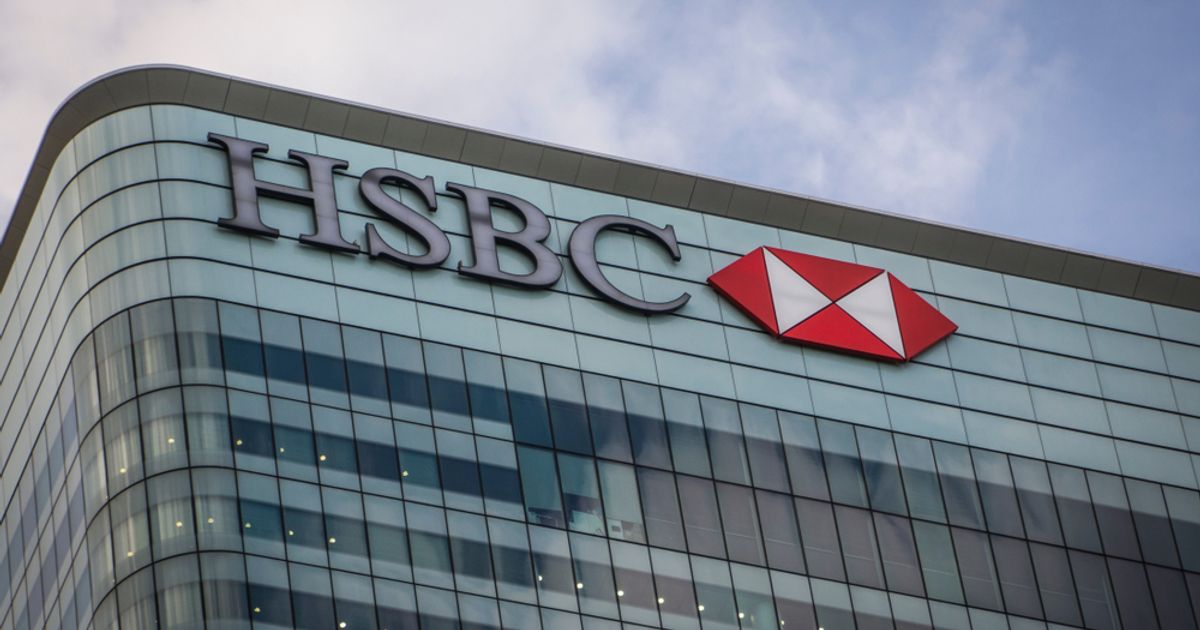
HSBC's third-quarter headline was a 32% increase in reported profit before tax to $9.6 billion. The more revealing number is 10%. That was the increase in profit before tax on a constant-currency basis after excluding notable items, according to the bank's own results. The gap matters because the prior-year quarter included legal provisions that did not recur.
Revenue excluding notable items rose 5% on the same basis to $18.7 billion. Banking net interest income, which adjusts the presentation of interest earned and paid across the group's banking operations, increased by $600 million to $11.7 billion. Stronger transaction banking and capital-markets activity also supported the quarter.
The comparison benefited from a $1.4 billion favorable swing in notable items, mainly because legal provisions recognized in the third quarter of 2025 were not repeated. HSBC's reported profit growth is real, but it overstates the improvement in the underlying business if read without that qualification.
For the first nine months of 2026, annualized return on average tangible equity was 18.0%, or 18.8% excluding notable items. Management kept its target of at least 17% for 2026 through 2028 on the same adjusted basis. It also maintained guidance for at least $46 billion of banking net interest income in 2026.
Shareholders will receive a third interim dividend of $0.10 per share. HSBC also announced another buyback of up to $1 billion, which it expects to complete before reporting full-year results. The wording is important: "up to" sets a ceiling, and the bank still needs sufficient capital and regulatory room to execute the program.
The common equity tier 1 capital ratio was 13.9%, down 0.2 percentage points from the end of the second quarter. That level supported the dividend and buyback announcement, but the sequential decline means future distributions still compete with lending growth, regulatory requirements and investment in the bank's restructuring.
Credit costs remain another constraint. HSBC expects 2026 expected credit losses to equal about 45 basis points of average gross loans, above its medium-term range of 30 to 40 basis points. The bank maintained that outlook even after lower charges related to Hong Kong commercial real estate helped the quarter.
Management also expects target-basis operating expenses to increase about 1% in 2026. That guidance is more useful than the reported 12% decline in quarterly operating expenses cited by the source article because the reported comparison was distorted by last year's legal provisions.
The quarter supports a constructive reading of HSBC's operating momentum: underlying profit increased, banking net interest income grew and capital returns continued. Yet the reported 32% profit jump should not be treated as the bank's sustainable growth rate. Investors now need to see whether HSBC can keep returns above 17% while credit costs run above the medium-term range and the capital ratio absorbs another buyback.
SanDisk's Record Year Raises the Bar for Cash Conversion

SanDisk ended fiscal 2026 with a quarter that looked less like a normal memory upturn and more like a step change. Fiscal fourth-quarter revenue reached $8.965 billion, up 51% from the preceding quarter and 372% from a year earlier. GAAP net income was $6.903 billion, or $43.97 per diluted share, while non-GAAP diluted earnings were $39.25 per share. The scale of that increase makes the comparison period especially important.
Pricing did most of the work. SanDisk said roughly two-thirds of the sequential revenue increase came from higher prices and one-third from volume. That mix drove GAAP gross margin to 84.6%, up 6.2 percentage points from the third quarter and 58.4 points from the year-earlier period. It also explains both the earnings power and the central risk: a reversal in NAND pricing would reach profits quickly.
The customer mix shifted sharply toward infrastructure. Datacenter revenue more than doubled sequentially to $2.977 billion, while edge revenue rose 48% to $5.432 billion. Consumer revenue fell 32% to $556 million. For the full year, datacenter revenue increased 437% to $5.153 billion, helping total fiscal 2026 revenue climb 175% to $20.248 billion.
Management is trying to make that demand more durable through its New Business Model agreements. After announcing five agreements in April, SanDisk signed five more, including three with new customers and two expansions of existing deals. That makes ten agreements in total, correcting the source article's reference to agreements with eight customers. The official release does not disclose the source article's claimed aggregate minimum revenue or financial guarantees, so those figures are not used here.
Capital returns rose with the earnings surge. The board added $14 billion to the repurchase authorization, leaving $15.5 billion available. That is substantial, but an authorization is permission to buy shares, not a commitment to spend the entire amount or a guarantee that repurchases will create value.
The near-term outlook suggests momentum continued into fiscal 2027. SanDisk guided for first-quarter revenue of $10.30 billion to $10.80 billion and non-GAAP diluted earnings of $44 to $46 per share. At the midpoint, revenue would rise about 18% sequentially from the fourth quarter.
The comparison with fiscal 2025 shows how quickly this business can change. SanDisk moved from a full-year GAAP net loss of $1.641 billion to net income of $11.433 billion in fiscal 2026. The same operating leverage that amplified the recovery could work in reverse if new capacity weakens prices, large customers delay purchases or the datacenter mix normalizes.
The investment case therefore rests on two separate questions. The first is whether signed customer agreements and datacenter demand can sustain volumes. The second is whether unusually high pricing and margins can endure. Fiscal 2026 answered the demand question convincingly, but the margin question remains the harder test.
FirstCash's Record Quarter Came With Strong Cash Returns and Real Debt

FirstCash reported a record third quarter, and the strength went beyond an adjusted earnings beat. Revenue rose 18% to $1.10 billion. Reported net income increased to $101.2 million, or $2.33 per diluted share, from $82.8 million, or $1.86 per share, a year earlier. Adjusted earnings were $2.68 per share, up from $2.26.
Pawn operations drove the result. Revenue and segment income from the combined pawn businesses each increased 28% from the third quarter of 2025. Pawn receivables reached a record $908 million, compared with $788 million a year earlier, and every geographic segment posted double-digit same-store growth in receivables and pawn fees. FirstCash added 14 pawn shops during the quarter and had 3,352 locations at September 30.
Shareholders also received more capital. The board raised the quarterly dividend 10% to $0.46 per share, creating an annualized rate of $1.84. FirstCash repurchased $123 million of stock in the quarter and $250 million through the first nine months. Using the quarter's 43.3 million diluted share count, the annualized dividend would require roughly $80 million, about one-fifth of the company's $393 million of trailing adjusted free cash flow. That is a BTI calculation based on company figures, not company guidance.
The balance sheet keeps that payout in perspective. Net debt was 2.7 times trailing adjusted EBITDA at quarter-end, or 2.6 times after lender-permitted acquisition adjustments. FirstCash expanded its unsecured bank facility to $1.055 billion and extended maturity to 2031. The pending Ramsdens acquisition would add more than 175 U.K. stores, but it still required antitrust approval and other closing conditions when the company reported.
Not every segment improved. American First Finance generated $33 million of third-quarter pre-tax income, down from a year earlier because of merchant bankruptcies, while gross transaction volume fell 15% amid weak furniture demand and tighter merchant selection. That weakness matters because it separates the strong pawn cycle from the company's point-of-sale finance exposure.
The post-earnings share decline should not be explained by gold prices without evidence. The company did not identify gold as the cause, and the original article labeled that idea speculation. The durable evidence is a business with strong pawn growth, rising cash returns and meaningful acquisition leverage. Future results must show that store expansion and receivable growth continue to earn returns above the cost of that debt.
First Citizens' Buyback Boosts EPS as Its Capital Cushion Narrows

First Citizens BancShares gave investors two reasons for the stock's 8% jump: adjusted earnings beat expectations, and the board authorized another $1.2 billion of Class A share repurchases through 2027. The capital return is substantial, but it sits beside a thinner regulatory cushion and a cautious credit outlook.
Adjusted net income available to common shareholders was $623 million in the third quarter, or $55.37 a share. That was below the second quarter's $659 million and $57.09 a share because the provision for credit losses swung to a $55 million expense from a $10 million benefit.
The operating balance sheet still expanded. Loans grew 4.1% from the second quarter to $157.2 billion, led by lower-loss capital-call lending in Fund Banking. Deposits rose 6.8% to $185.3 billion, including $4.9 billion associated with 138 branches acquired from BMO. Net interest margin declined three basis points to 3.07%.
First Citizens also repaid another $8 billion of the purchase money note issued to the Federal Deposit Insurance Corporation after the Silicon Valley Bank transaction. It repaid an additional $1.5 billion in October and expects to finish paying the note by the end of 2027, largely with deposit growth.
The buyback is doing visible work. Since July 2024, First Citizens has retired nearly 24% of its common shares, including $600 million purchased in the third quarter. That helps explain why adjusted earnings per share increased 24% from a year earlier while adjusted net income available to common shareholders rose 9%.
Per-share growth is valuable only if capital remains adequate. The common equity Tier 1 ratio fell to 10.24% from 10.77% in one quarter, and buybacks accounted for 0.33 percentage point of the decline. The new authorization could retire roughly another 5% of shares at the price cited in the source analysis, but actual purchases will depend on market conditions and management's capital priorities.
Credit is the other restraint. Management expects fourth-quarter net charge-offs of 0.30% to 0.35% of loans, up from 0.27% in the third quarter. That is not a forecast of severe deterioration, but it means future earnings comparisons will depend more on underlying revenue and funding than on unusually low provisions.
First Citizens is replacing acquisition-related funding with deposits while reducing its share count. The strategy can keep lifting per-share value, provided credit costs and repurchases do not erode the capital cushion faster than retained earnings rebuild it.
P&G's $1.4 Billion Cost Hit Makes Margins the Key Test

Procter & Gamble’s strongest sales quarter in a year did not solve its margin problem. The company now expects higher energy, transportation and raw-material costs to reduce fiscal 2027 profit by about $1.4 billion after tax, up from the $1 billion estimate it gave in July.
The first-quarter results show both sides of the story. Net sales rose 4% to $23.3 billion, and organic sales also increased 4%. Organic volume contributed 2.4 percentage points, favorable mix added 1.1 points and pricing added only 0.4 points. Core earnings were $2.00 a share, up 1%.
That volume-led growth is encouraging because it suggests P&G did not need broad price increases to expand sales. It also means the company has less immediate pricing help against higher costs. Reuters reported that Chief Financial Officer Andre Schulten expects commodity pressure to intensify over the next two quarters.
Margins already absorbed the first hit. P&G’s core gross margin fell 150 basis points from a year earlier, while core operating margin declined 80 basis points. Productivity savings added 250 basis points, but they were not enough to offset commodity and transportation costs, investment behind demand and product mix.
Management kept its fiscal 2027 outlook for organic sales growth of 1% to 3% and core earnings growth of zero to 3%. The guidance includes the $1.4 billion after-tax cost headwind, plus $300 million of higher net interest expense, $150 million of lower non-operating income and a $50 million foreign-exchange headwind. It does not include significant additional commodity inflation or a major supply disruption.
Cash generation gives P&G room to absorb some pressure. The company produced $5.8 billion of operating cash flow and $4.4 billion of free cash flow in the quarter. It returned $3.9 billion through dividends and buybacks, and its full-year plan still calls for more than $10 billion of dividends and about $5 billion of repurchases.
The key investor question is no longer whether higher oil-linked costs matter. P&G has quantified that risk. The question is how much the company can recover through productivity, selective pricing and product mix without damaging volume. Fiscal second-quarter margins will provide the clearest early answer because management expects the cost burden to rise before it eases.
Latest comments