


 Be The Investor Research
Vivmark Merger Inflates Apartment Sales as Financing Spreads Vanish

Rolling apartment sales reached $208.1 billion, but one REIT merger drove most of the jump while deal count fell and cap rates nearly matched Treasury yields.
U.S. apartment sales appeared to surge in the year through the third quarter, but the headline owes more to accounting treatment for one giant REIT merger than to a broad return of buyers.
RealPage reported $208.1 billion of rolling 12-month apartment sales, up 28.1% from the prior quarter and 39.8% from a year earlier. The combination of AvalonBay Communities and Equity Residential into Vivmark Residential accounted for much of the jump because MSCI Real Capital Analytics treated each predecessor as selling its properties to the new entity.
That convention pushed August volume to $80.5 billion and concentrated the increase in coastal markets where the two REITs owned many apartments. Coastal metros added $45.9 billion of annual volume, more than the national gain. The rest of the country slipped to $98 billion, while total deal count fell 2.1% to 6,424, the first quarterly decline since the second quarter of 2024.
Financing conditions explain why the underlying market looks weaker. Average cap rates held at 5.4% for an eighth consecutive quarter, while the 10-year Treasury yield reached about 5.35% in early October. The five-basis-point gap leaves almost no compensation for property risk before considering leverage, capital expenditure or operating volatility.
Pricing has not adjusted much. The average price per apartment rose 0.9% from the second quarter to $228,777 and was little changed from a year earlier. Buyers therefore need rent growth, operating improvements or future rate declines to justify current values.
Investors should look past the $208.1 billion total. Deal count, activity outside coastal merger markets and the spread between cap rates and government bonds provide cleaner signals. If Treasury yields stay above 5%, sellers may eventually need to accept lower prices or higher cap rates. The merger remains in rolling totals through the third quarter of 2027, so the apparent boom will continue to exaggerate organic transaction activity for several more quarters.
Continue your EQR research
Related News

Hedge Fund Leverage Raises the Stakes in Sovereign Bonds
Hedge funds deepen liquidity in government bonds, but their leveraged, crowded trades can transmit shocks across markets when margin calls force rapid selling and synchronized deleveraging.

AI's Job Risk Falls Unevenly, and Women Face More Exposure
Women hold a disproportionate share of clerical and administrative jobs exposed to generative AI. History suggests incumbent workers can suffer even when later generations adapt, making the transition path as important as eventual job creation.

Williams Sees One More 2026 Rate Hike, but None Needed in 2027
New York Fed President John Williams sees a possible 2026 rate increase but no current need for more hikes in 2027. The view is conditional, not a commitment.

Warsh Says AI Will Lift Supply Later, After a Demand Shock Now
Fed Chair Kevin Warsh expects AI to raise productivity and wealth, but says investment is hitting demand before supply. That sequence can keep inflation and markets volatile.
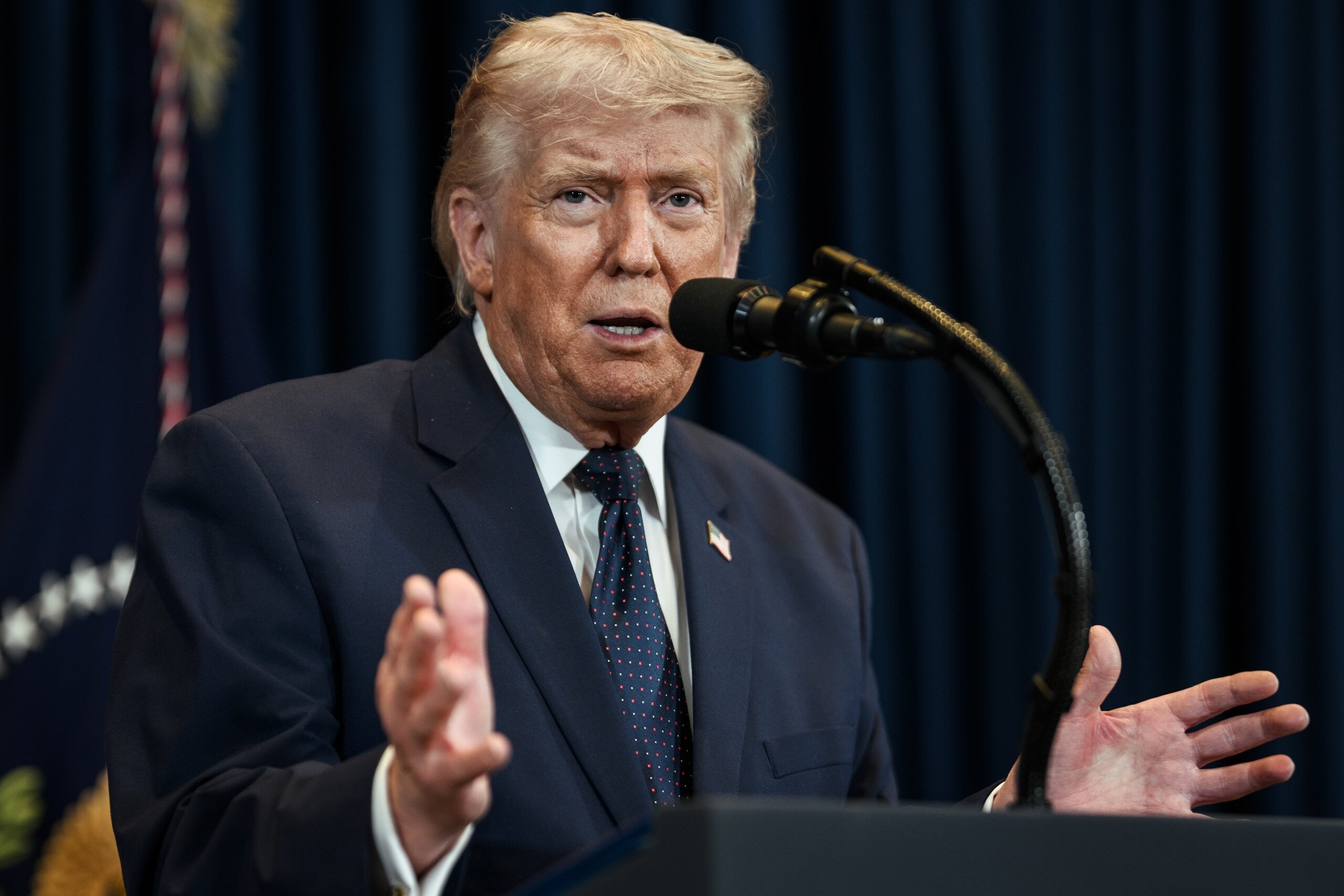
Trump Media and Rumble Fell Faster Than the Market as Merger Risk Loomed
Trump Media dropped 6% and Rumble 8% during a broader selloff, highlighting their high volatility. For DJT, the pending TAE merger adds execution, dilution and fusion-development risk.

JPM Coin Goes Live on Ethereum for Institutional Dollar Transfers
JPMorgan made its dollar deposit token available to institutional clients on Ethereum after launching on Base. The move broadens bank-backed settlement but keeps access inside JPMorgan's permissioned client network.
Ethereum's Faster Proofs Still Need a Worst-Case Cost Limit

Ethereum's zero-knowledge proof systems are becoming fast enough to prove ordinary blocks in near real time, but Vitalik Buterin says speed is no longer the only test. He has called for a hard upper bound on prover cost relative to the amount of gas in a block.
Gas is intended to meter execution work and keep blocks within a resource budget. Proof generation can impose a different workload. A block that is inexpensive for a conventional execution client may contain operations that are unusually expensive for a prover, so a speed result on typical blocks does not establish a worst-case guarantee.
ZKsync reported that one modern GPU proved 99% of a sample of 7,200 Ethereum blocks in under 10 seconds each. That is an important engineering milestone. It still measures the selected historical blocks, not every workload Ethereum rules permit an adversary to assemble.
EIP-7904 reaches a similarly narrow conclusion from the other direction. Its current analysis recommends no change to compute gas costs at a targeted native-execution throughput, but the document explicitly says it does not specifically address zero-knowledge proof generation.
A credible bound would need stated hardware, security settings, implementations and a maximum proving deadline. Without it, independent operators may have to provision for uncertain peaks or risk falling behind. Ethereum's next proof milestone is therefore not another average-speed record. It is a reproducible demonstration that the hardest valid blocks remain within a predictable resource envelope.
Binance's SOXL Perpetual Fell 5.9% Without Breaking Its 3% Price Band
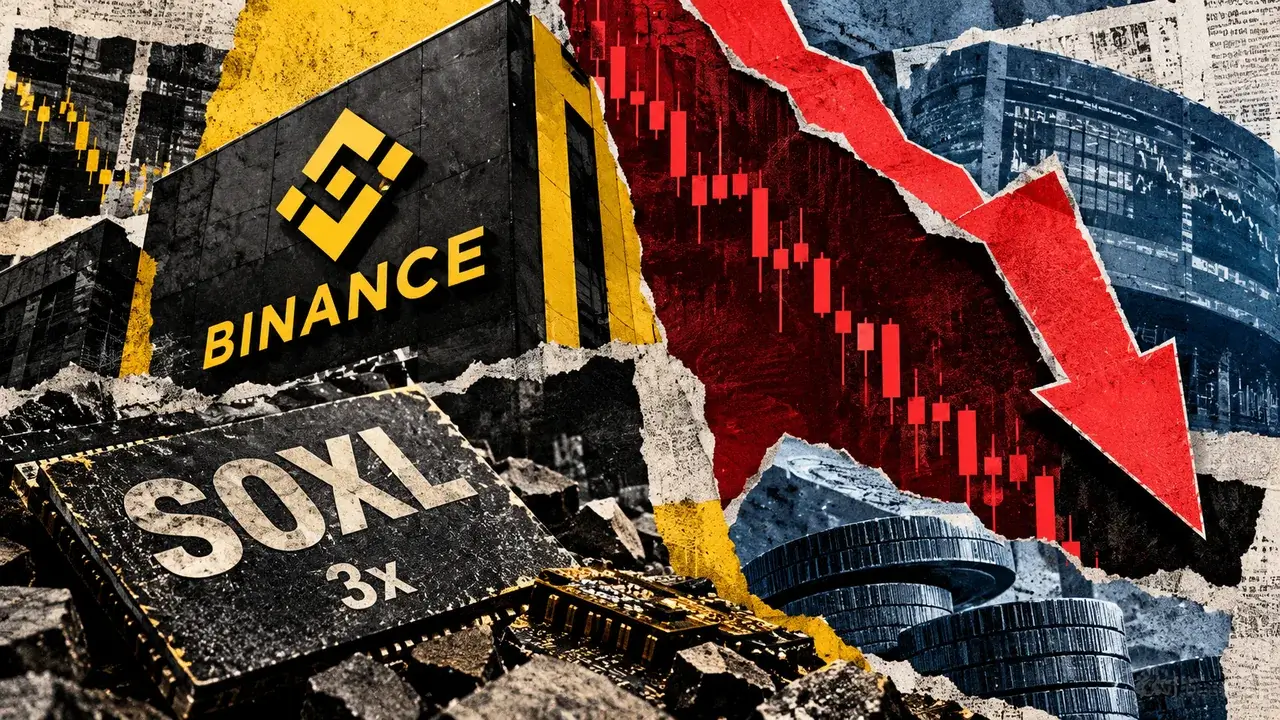
Binance's SOXL-linked perpetual contract fell 5.9% from its opening mark to its intrahour low during an October 17 weekend trading hour. At the same time, all 60 sampled minute-close differences between the mark and its reference index remained below the platform's stated 3% weekend band.
The figures are not contradictory. The 3% rule limits how far the mark can sit from the index at a given time. It does not stop the index itself from moving. During the sampled hour, the reference index declined nearly 4%, carrying the band and the mark lower together.
That distinction matters because Binance's contract trades while the underlying SOXL shares on NYSE Arca are closed. The weekend reference can be derived from crypto order-book inputs and smoothing procedures rather than a new exchange print for the ETF. Traders therefore hold exposure to Binance's reference methodology as well as semiconductor-market expectations.
Liquidation adds another layer. A position is closed when the mark reaches an account-specific threshold determined by collateral, leverage and margin mode. Staying within the mark-to-index band does not protect a highly leveraged position from liquidation after a cumulative price move.
Binance states that the contract tracks the Direxion Daily Semiconductor Bull 3X ETF and permits leverage up to 20 times. SOXL itself targets three times the daily move of a semiconductor index. Combining an equity-based leveraged product with a leveraged perpetual can create risk far beyond what a 3% reference band appears to imply.
Aave's Proposed USAT Gateway Adds Permission Risk to the Return Trip

TokenLogic has proposed a permissioned GHO Stability Module on Avalanche that would let approved counterparties exchange waUSAT for GHO. The design could add institutional stablecoin liquidity to Aave, but it creates an important asymmetry: receiving and transferring GHO would not guarantee the ability to reverse the original swap.
Approval would be checked in both directions. If access were revoked after a counterparty deposited waUSAT and received GHO, the participant could still transfer GHO but could not use the module to recover waUSAT. The proposal says that restriction should be reflected in commercial agreements.
Even a successful reverse swap would return a receipt token rather than dollars. The holder would still need to withdraw USAT from Aave, subject to available liquidity and reserve conditions, and then meet Anchorage Digital Bank's requirements for issuer redemption. Each step has its own permission and operational risk.
The proposal separates 65 million GHO of reserve funding, a 25 million GHO module draw limit and a 20 million waUSAT exposure cap. Some contract addresses and pricing details remain unspecified, and the forum post still requires governance approval and an implementation proposal.
The plan may deepen GHO liquidity, but investors should treat it as a proposal rather than an operating product. The decisive questions are whether governance approves the module, whether final contracts preserve the described limits, and how counterparties are protected if access is revoked after entry.
CFTC Challenges CME's Standing in U.S. Perpetual-Futures Fight

The Commodity Futures Trading Commission has asked a federal court to reject CME Group's challenge to the agency's policy on perpetual futures, arguing that the exchange has not shown a concrete injury. The dispute concerns a CFTC framework that treats certain bitcoin perpetual contracts as futures that regulated exchanges may list.
CME says the policy changes the competitive and regulatory landscape. The agency's response focuses first on standing, a threshold legal question about whether CME is harmed enough to sue. If the court accepts that argument, it could dismiss the case without deciding whether the CFTC's interpretation of the Commodity Exchange Act is correct.
The competitive stakes are real even though the current fight is procedural. Perpetual futures have no fixed expiration date and are widely used on offshore crypto venues. Allowing them on U.S.-regulated exchanges could attract volume from conventional futures and give newer markets a product associated with crypto-native trading.
A dismissal would not automatically guarantee broad adoption. Exchanges would still need product approvals, surveillance, margin rules and sufficient liquidity. A ruling for CME could slow the framework or force the agency to provide a fuller legal justification.
For CME investors, the immediate effect is limited because the company can seek to list comparable products. The longer-term issue is whether the policy lowers barriers for rivals and changes the economics of U.S. crypto derivatives. The next meaningful event is the court's ruling on standing and dismissal, not the rhetoric in either side's filing.
Latest comments