


 Be The Investor Research
AI Agents Barely Touch DoorDash Orders, but the Interface Is Shifting
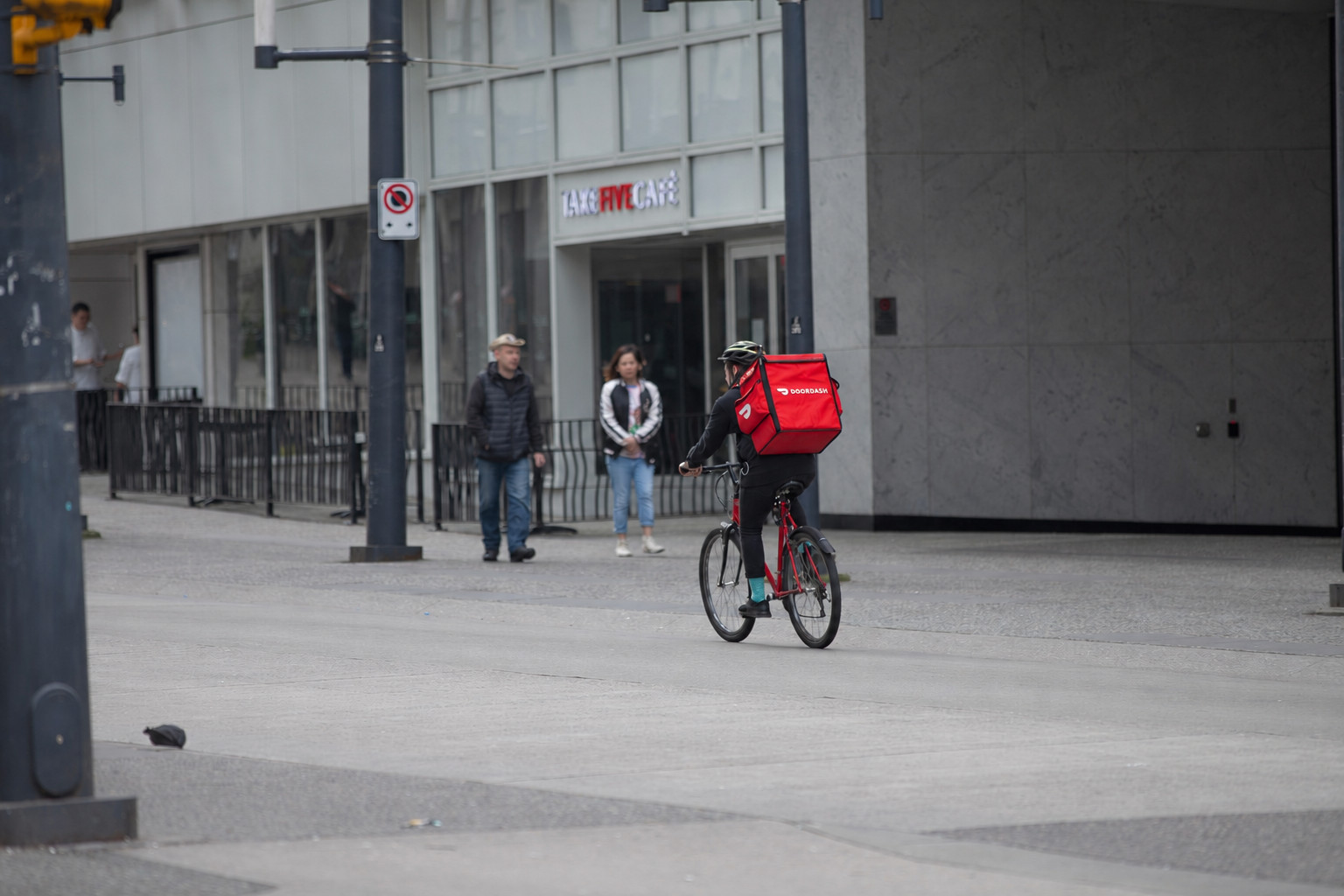
Third-party agents have generated only several hundred DoorDash orders, but Amazon's Uber Eats integration shows how outside interfaces could control customer discovery, fees and advertising economics.
Third-party artificial intelligence agents have barely registered in DoorDash's order flow, but the strategic risk is not the delivery itself. It is the possibility that another interface chooses the restaurant, compares fees and controls the customer's attention before DoorDash ever appears.
Chief Executive Tony Xu said on DoorDash's third-quarter call that third-party agents had generated only several hundred orders in total since they began operating. DoorDash completed 993 million orders in the third quarter alone, up 28% from a year earlier. The periods are different, so the figures should not be treated as a precise market-share calculation. They still show that agent-led ordering remains experimental beside DoorDash's current scale.
DoorDash is not waiting for outside assistants to define the experience. Xu said the company is developing Ask DoorDash, Text DoorDash and a model context protocol connection that third parties can use for tasks such as corporate lunch orders. Management's argument is that agents may add incremental demand, especially for purchases that require more consideration, while simple food orders still tend to start directly in DoorDash.
The harder threat is control of the customer interface. Amazon's new U.S. partnership with Uber Eats lets Prime members order restaurant delivery inside Amazon's website and shopping application without creating an Uber account. Eligible orders of at least $25 receive a zero delivery fee. Uber still performs the delivery, but Amazon owns the entry point, the membership relationship and the surrounding retail data.
That arrangement illustrates how an agent or a large consumer platform could change DoorDash's economics without replacing its logistics network. A neutral interface could compare delivery services on price and speed, reducing brand loyalty. It could also keep customers away from DoorDash's sponsored listings and other advertising surfaces. DoorDash may still fulfill the order, yet capture less value from discovery and promotion.
DoorDash's membership base is an important defense. The company ended 2025 with more than 35 million members across DashPass, Wolt+ and Deliveroo Plus, and said membership continued to grow in the third quarter of 2026. It also reported that DashPass growth helped reduce transaction fees per U.S. restaurant order by 9% over two years. An agent instructed to minimize cost may still favor a service where the customer already receives membership benefits.
The current business is not showing an agent-driven demand problem. Third-quarter marketplace gross order value rose 36% to $33.9 billion, revenue increased 34% to $4.6 billion, and reported net income nearly doubled to $466 million. Adjusted EBITDA reached $1.06 billion, a company-defined non-GAAP measure. Those results establish the scale DoorDash can use to invest in its own tools, but they do not prove the customer interface will remain under its control.
Investors should treat AI agents as an emerging distribution risk rather than an immediate collapse in delivery demand. The useful evidence will be the number of agent-originated orders, whether those orders are incremental, how much traffic bypasses DoorDash's advertising surfaces, and whether membership continues to influence routing decisions. Several hundred orders are not existential, but Amazon's Uber Eats integration shows that the contest for the digital front door has already begun.
Continue your UBER research
Image references: · GoToVan (CC BY 2.0)
Frequently asked questions
What is "AI Agents Barely Touch DoorDash Orders, but the Interface Is Shifting" about?
AI agents remain tiny in DoorDash order volume, but Amazon's Uber Eats integration shows how outside interfaces could reshape discovery and advertising.
Which stocks and assets does this article cover?
This article relates to UBER, AMZN.
What is the market context?
Third-party artificial intelligence agents have barely registered in DoorDash's order flow, but the strategic risk is not the delivery itself. It is the possibility that another interface chooses the restaurant, compares fees and controls the customer's attention before DoorDash ever appears. Chief Executive Tony Xu said on DoorDash's third-quarter call that third-party agents had generated only…
When was this article published?
It was published on 13 / 11 / 2026 by Be The Investor Research.