



Cintas' Premium Multiple Depends on Its Margin Lead
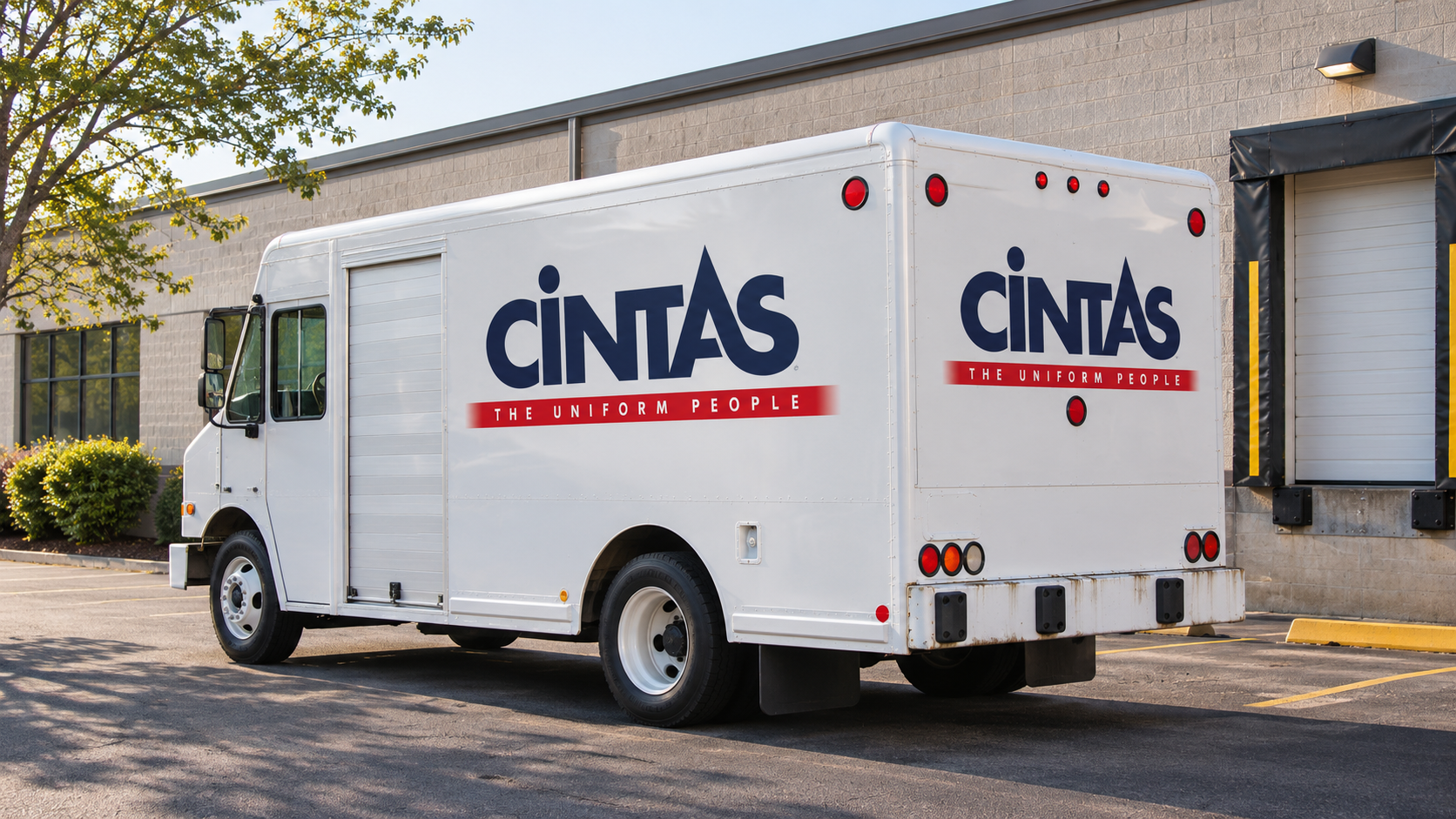
Cintas combines near-double-digit growth with the widest operating margin in its peer set, but slower guidance and regulatory uncertainty around UniFirst make its 43.6 times earnings valuation harder to defend.
Cintas trades like a company expected to keep doing two things at once: grow near double digits and convert more revenue into operating profit than its rivals. Trefis data as of November 2 put the shares at 43.6 times trailing earnings, the highest multiple in a peer group that included Aramark, UniFirst, ABM Industries and Ecolab.
The comparison points to margin rather than growth as the clearest source of the premium. Over the latest four reported quarters, Cintas grew revenue 9.5% and produced a 23.6% operating margin. Ecolab grew 9.3% and posted an 18.1% margin while trading at 41.5 times earnings. Aramark grew faster, at 11.0%, but its 4.4% operating margin was far lower and its multiple was 37.3. UniFirst and ABM also carried lower margins. The figures are not perfectly comparable because the companies sell different services and products, but they show how much investors value Cintas' profitability.
The latest quarter reinforced that advantage. Fiscal first-quarter 2027 revenue rose 10.9% to $3.01 billion, including 8.9% organic growth after adjusting for acquisitions, currency and workday differences. Gross margin expanded 120 basis points to 51.5%, while operating income rose 15.2% to $711.9 million. Operating margin increased to 23.6% from 22.7%. The quarter included $14.4 million of transaction expenses related to the proposed UniFirst acquisition, so reported results already carry some deal cost even though the transaction has not closed.
Cintas' revenue base also helps explain the margin profile. Uniform Rental and Facility Services generated $8.62 billion of the company's $11.3 billion in fiscal 2026 revenue. First Aid and Safety Services was smaller at $1.39 billion but grew faster, at 14.3% versus 8.1% for uniform rental. Management said most growth came from winning customers, retaining them and selling them more services, with pricing consistent with the previous year. That is a healthier signal than relying mainly on price increases.
Management raised fiscal 2027 revenue guidance to $12.15 billion to $12.27 billion and adjusted diluted earnings-per-share guidance to $5.45 to $5.54. The revenue range implies growth of roughly 7.9% to 8.9%, slower than fiscal 2026. The guidance excludes UniFirst and includes one more workday than the prior year. Earnings are expected to grow faster than revenue, which assumes Cintas can keep expanding profit per sales dollar even as top-line growth moderates.
The UniFirst deal adds a separate risk. Cintas and UniFirst told the Securities and Exchange Commission that the Federal Trade Commission issued a second request and that both companies agreed not to close before December 11 unless the FTC ends its investigation earlier. Reuters reported on October 27 that FTC staff had indicated plans to sue to block the $5.5 billion transaction, although the commission had not voted at that point. Cintas continued to expect a year-end closing in its latest filing, but that remains an expectation subject to regulatory approval, not a completed outcome.
For shareholders, the valuation case is straightforward but demanding. Cintas must preserve its margin lead while organic growth settles into the high-single-digit range, and it must manage deal costs and regulatory uncertainty without distracting from operations. The next earnings report should show whether the 51.5% gross margin was durable or benefited from favorable quarterly mix. At 43.6 times earnings, even a well-run business needs continued evidence that its profitability advantage is structural rather than temporary.
Continue your ARMK research
Image references: · Dwight Burdette (CC BY 3.0)