


 Be The Investor Research
CleanSpark Rallies as Bitcoin Recovers, but the Bigger Story Is Its $6.6 Billion Data Center Pivot
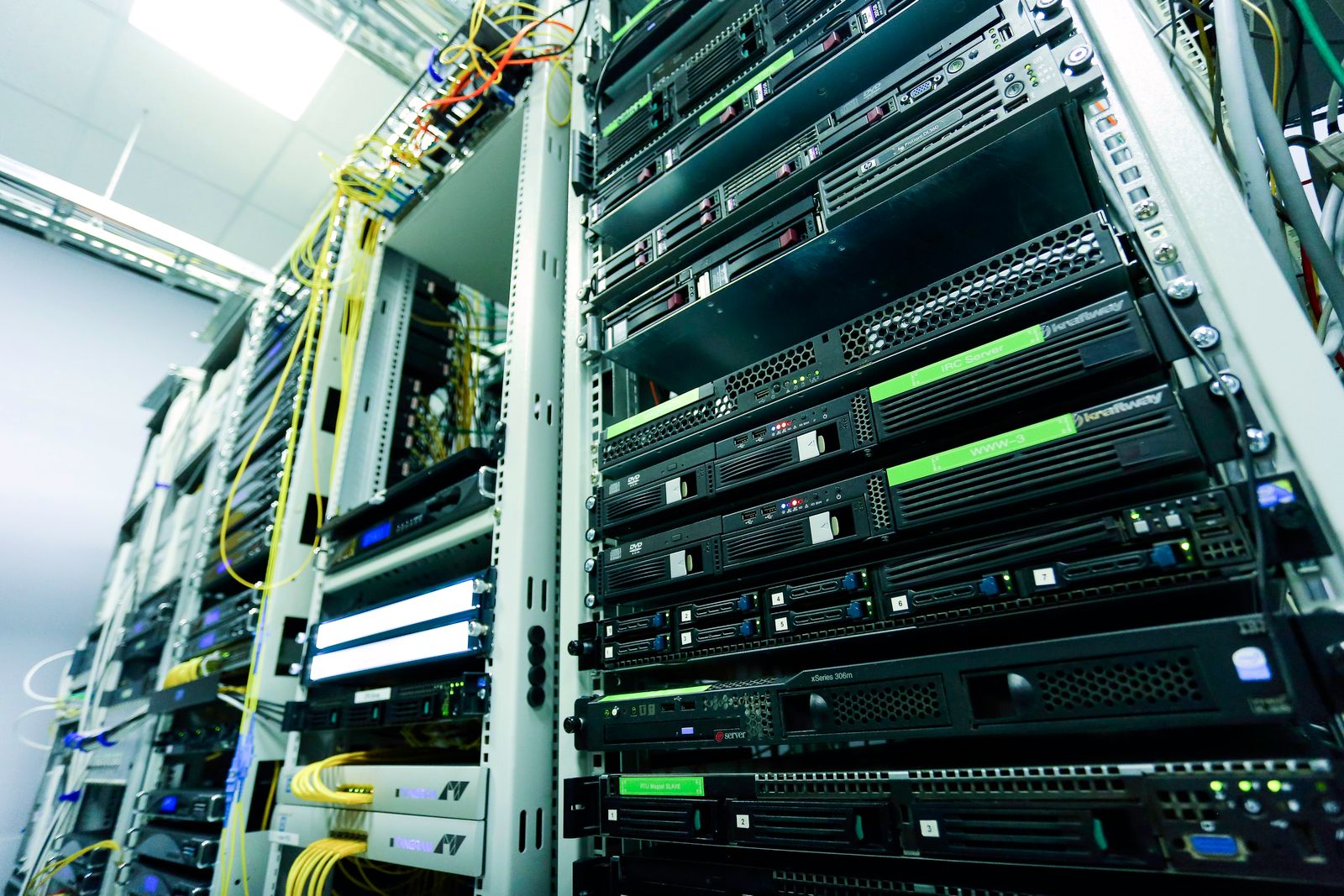
CleanSpark shares rose with Bitcoin, but the company’s August update shows a more important shift: mining remains substantial while a $6.6 billion contracted data-center project starts to reshape the investment case.
CleanSpark shares jumped more than 8% as Bitcoin rebounded toward $79,000, but the stock’s longer-term thesis is increasingly about more than crypto mining.
The supplied source says CleanSpark produced 593 Bitcoin in August, bringing 2026 production to 4,903 BTC. The company ended the month with 13,703 Bitcoin and an operational hashrate of 50 EH/s.
Those mining numbers still matter because Bitcoin price, network difficulty and power costs directly affect cash generation.
But CleanSpark’s August update points to a second business model.
The company is progressing construction at its Sandersville data-center campus under a 20-year triple-net lease representing $6.6 billion of contracted revenue. CleanSpark has described the customer as a high investment-grade global technology company.
That changes the investment question.
A pure Bitcoin miner is valued mainly on mining economics, fleet efficiency, power costs and the value of its Bitcoin treasury. A contracted high-performance computing business can create longer-duration revenue visibility that is less directly tied to daily Bitcoin prices.
CleanSpark also said ERCOT conditionally classified 585 MW of contracted capacity for batch-zero baseload designation and 300 MW for studied-load designation in Texas.
The power portfolio is becoming increasingly important because the company controls 1.8 GW of contracted power capacity while using 808 MW as of the August update.
Power access has become a strategic asset as AI data centers compete with crypto miners, industrial users and utilities for grid capacity.
The transition still carries execution risk.
The $6.6 billion headline represents contracted revenue over two decades, not near-term annual revenue. Deliveries at Sandersville are expected to begin in the fourth quarter of 2027, so investors are underwriting construction, financing and customer-execution risk before meaningful HPC revenue arrives.
Mining remains the financial bridge during that period.
CleanSpark’s Bitcoin holdings also declined from 13,931 at the end of July to 13,703 in August after sales and derivative-related activity, showing that treasury size can move independently of production.
The economics of the Sandersville contract also deserve careful treatment. The $6.6 billion figure is spread across a 20-year lease, so it should not be compared directly with one year of mining revenue or treated as immediate backlog conversion.
What it does provide is duration. A long-term contracted customer can reduce the volatility of a business otherwise tied to Bitcoin price, mining difficulty and power-market conditions.
The power portfolio may become the real strategic asset. CleanSpark has already assembled locations, interconnection work and contracted capacity that can be repurposed across mining and high-performance computing depending on returns.
That flexibility can improve capital efficiency if management allocates megawatts toward the highest-return workload. It can also create execution complexity because AI data centers have different construction, cooling, networking and reliability requirements from mining sites.
The market will ultimately judge whether CleanSpark can deliver HPC economics without sacrificing the operating discipline that made its mining platform competitive.
What investors should watch: Sandersville construction milestones, the Q4 2027 delivery schedule, contracted power conversion, Bitcoin production economics, treasury changes and whether CleanSpark signs additional long-duration compute customers.
BTI’s bottom line: the Bitcoin rally explains the near-term stock move, but CleanSpark’s $6.6 billion data-center contract is the more important strategic development. The investment case is shifting from a miner toward a hybrid power-and-compute platform, and execution on that transition will determine whether the market awards it a different valuation.