


 Be The Investor Research
Unity's Vector Growth Is Real, but the Stock Still Needs Profit Proof

Unity's second-quarter revenue and margins improved sharply as Vector lifted advertising, yet a 10% share drop showed investors still want durable GAAP profitability. in coming results.
Unity's shares fell about 10% on October 14 even after Wedbush raised its price target and highlighted progress in the Vector advertising platform. The decline was larger than moves in AppLovin, The Trade Desk and a broad communications-services fund, suggesting investors were demanding more than another favorable analyst note.
Unity's second-quarter results provide real evidence of improvement. Revenue rose 24% to $546.5 million. Grow Solutions revenue increased 35% to $389 million, driven by Unity's ad network and Vector, while adjusted EBITDA margin expanded to 29% from 21%.
The growth is concentrated
Create Solutions, the game-engine side, grew only 2% in the quarter. That leaves Vector and the advertising business carrying most of the company's expansion. Concentration is not automatically a weakness, but it makes ad demand and product execution especially important.
The stronger growth figures also use different segment definitions. Unity reported strategic Grow revenue of $329 million, up 63%, while total Grow Solutions revenue was $389 million, up 35%. Investors should avoid treating those as interchangeable measures.
Management guided third-quarter strategic revenue to $540 million to $550 million and said Unity could achieve GAAP profitability in the quarter. The company also expects to repay convertible notes issued in 2021 during November. Meeting both milestones would strengthen the balance-sheet and earnings case.
Competition and valuation
Vector competes for advertiser budgets with AppLovin and other platforms. AppLovin remains much larger, while The Trade Desk serves a broader mix of connected television and open-internet advertising. A sector slowdown could pressure all three, even if Unity continues taking share within mobile gaming.
Unity ended June with about $2.36 billion of cash and restricted cash. That liquidity, higher free cash flow and improving margins give management time to execute. The missing proof is whether Vector growth can continue after the easiest comparisons and whether consolidated results become sustainably profitable under generally accepted accounting principles.
The next earnings report should show Vector's contribution, third-quarter strategic revenue and GAAP operating progress. A price-target increase cannot answer those questions; reported results can.
Continue your APP research
Related News

Snowflake's Downside Risk Is About Margin and Financing, Not History
Snowflake's past drawdowns show volatility, not destiny. Its stronger growth, lower GAAP losses and new convertible notes make product margin, cash conversion and dilution the more useful measures of downside risk.

SoFi's Valuation Case Requires More Than Member Growth
A bullish SoFi model assumes years of fast revenue growth and wider margins. The operating trend supports part of that case, but rate exposure, credit and the chosen earnings multiple still drive the outcome.

JNJ-6143 Delivers Early Tumor Responses, but Proof Is Still Ahead
Johnson & Johnson reported a 75% confirmed tumor response rate in 16 measurable patients in a Phase 1 prostate-cancer study. The signal supports further development, but larger comparative trials must establish durability and benefit.
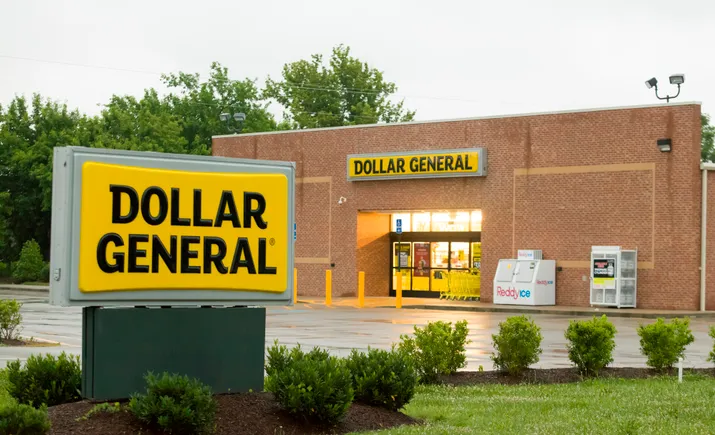
Dollar General Pricing Lawsuit Tests Its Low-Cost Promise
The FTC and 20 states accuse Dollar General of repeated checkout overcharges after more than 29,000 complaints. The case could require costly store-control changes, though the allegations have not yet been adjudicated.

iPhone Duo Waits Near Three Months as Pro Supply Eases
Apple's iPhone Duo still carried roughly three-month shipping waits on October 26, while iPhone 18 Pro availability improved sharply. The split signals concentrated scarcity, but delivery times alone cannot measure demand or revenue.

Manhattan Associates' Cloud Growth Must Carry a Rich Valuation
Manhattan Associates' cloud revenue and backlog are growing much faster than total sales, but the stock's premium valuation leaves little room for a slow conversion of contracted demand into reported revenue and profit.
Walmart Extends Holiday Deals to 14 Days as Retailers Chase Value Shoppers

Walmart is stretching its main holiday promotions across 14 days in 2026, four more than last year, as large retailers compete for value-conscious shoppers before December.
The schedule starts with an early Black Friday event from November 12 through November 15. The main Black Friday sale runs from November 23 through November 29, followed immediately by a Cyber Monday event from November 30 through December 2. Walmart used three events in 2025 as well, but they covered 10 days in total.
The longer calendar changes more than the amount of time a discount appears online. It spreads traffic across several weeks, gives Walmart more chances to adjust promotions, and creates a longer test for inventory planning and fulfillment. A weak opening event could leave the retailer carrying discounted merchandise into the next one. Strong demand, by contrast, could require rapid replenishment while stores and delivery networks are already under seasonal pressure.
Walmart has not yet published the kind of product-level preview it offered ahead of the 2025 events. Instead, it says thousands of gifts will cost less than $20. That broad price message fits the company's traditional value positioning, but it does not reveal the depth of discounts or the merchandise mix that will determine sales and margin.
The events also reinforce Walmart's membership strategy. Walmart+ members will receive varying levels of early access during the two Black Friday promotions. Earlier in October, Walmart introduced a combined Walmart+ and Sam's Club Plus membership for $120 a year, which it says saves about $100 compared with buying both separately. Early access can make the membership more useful during a peak shopping period while giving Walmart a clearer picture of demand before deals open to everyone.
Telsey Advisory Group told Retail Dive that it expects Walmart, Target and Costco to perform well during the holidays, citing Walmart's mix of value-focused and discretionary products. That is an analyst view, not a company forecast, and the extended promotion alone does not establish how much holiday revenue or profit Walmart will generate.
For investors, the useful signals will arrive after the events begin: traffic, digital conversion, delivery performance, inventory levels and the amount of discounting required to move goods. Four additional sale days may help Walmart capture more trips, but the quality of those sales will depend on whether volume rises without a disproportionate hit to merchandise margin.
Monolithic Power's AI Growth Is Outpacing Its Cash Conversion
Monolithic Power Systems is growing fast enough to support a premium valuation, but its cash conversion has not kept pace with sales. Second-quarter 2026 revenue reached a record $980.6 million, up 47.6% from a year earlier and 21.9% from the first quarter. The question is how much of that growth becomes cash available to shareholders.
Enterprise Data was the main engine. Revenue in that market rose 164.3% from a year earlier to $380.6 million and represented 38.8% of company sales. Management attributed the increase to power-management products for artificial-intelligence and server applications. Communications revenue also rose 78.3%, while Storage and Computing grew only 2.3% and Consumer declined 4.8%. The mix is becoming more concentrated in infrastructure demand.
Profit remained strong. Reported gross margin was 55.2%, and operating income was $303.9 million. Net income reached $257.3 million, or $5.22 per diluted share. Stock-based compensation and related payroll costs totaled $53.5 million, which helps explain part of the difference between reported and non-GAAP results.
Operating cash flow was $227.9 million, down from $237.6 million a year earlier despite the much larger revenue base. Trefis calculated that free cash flow fell 23% year over year in the quarter and that trailing free cash flow margin declined to 17.8% from 28% a year earlier and 32% two years earlier. Those figures show weaker conversion, not a cash shortage.
The balance sheet remains a major protection. Monolithic Power ended June with $1.41 billion of cash, cash equivalents and short-term investments and almost no financial debt. Inventory rose to $675.8 million from $619.2 million in the first quarter, but days of inventory fell to 140 from 157 because sales grew faster. Accounts receivable increased to $343.6 million, while days sales outstanding improved to 32 from 34.
Dividend coverage has narrowed as cash conversion fell. Trefis estimated that dividends consumed 56% of trailing free cash flow, up from 37% a year earlier. That is not immediately dangerous with a large net-cash position, but it leaves less room for repurchases and reinvestment if cash conversion remains weak. The board has authorized an additional $500 million of buybacks, bringing the total authorization to $1 billion.
Management guided third-quarter revenue to $1.14 billion to $1.16 billion and reported a book-to-bill ratio above one, meaning orders exceeded shipments. Strong orders are encouraging, but they can also raise working-capital needs when inventory and receivables grow ahead of cash collection.
The downside case is not that the company is financially fragile. It is that a stock priced for exceptional growth could re-rate if cash flow continues to lag revenue. Investors should watch operating cash flow, inventory, receivables and capital spending alongside sales. If the AI infrastructure surge converts into cash, the premium has support. If conversion weakens again, revenue growth alone will not protect the valuation.
Texas Instruments' Premium Now Rests on Cash Flow, Not Hope
Texas Instruments' valuation looks demanding until its latest cash-flow recovery is included. The company reported third-quarter 2026 revenue of $6.06 billion, up 28% from a year earlier, and net income of $2.43 billion, up 78%. Earnings per share rose to $2.62 from $1.48.
The improvement was broad. Management said industrial, automotive and data-center demand all contributed, while Analog revenue increased 32% and Embedded Processing revenue rose 21%. Operating profit climbed 73% to $2.87 billion. These are reported results, not adjusted estimates, and they explain why a trailing valuation based on earlier, weaker quarters can overstate how expensive the current earnings run rate is.
Trefis calculated that the shares traded at 39.3 times adjusted earnings for the twelve months through June 2026 and 42.1 times reported net income. Including the September quarter lowered the reported trailing multiple to about 35.8 times at the price used in that analysis. It also cited consensus multiples of 32.5 times expected 2026 earnings and 27.4 times expected 2027 earnings. Those estimates are price-sensitive and depend on forecasts that can change.
Cash generation strengthened even faster than reported profit. Texas Instruments produced $9.90 billion of operating cash over the twelve months through September. The company reported $8.42 billion of free cash flow under its non-GAAP definition, up from $2.42 billion a year earlier. That definition subtracts capital spending and adds proceeds from U.S. CHIPS Act incentives. The trailing figure includes $1.10 billion of cash from those incentives, so not all of the increase came from ordinary operations.
Capital expenditure fell to $2.58 billion over the same twelve-month period from $4.82 billion a year earlier. That decline reflects the later stage of a multi-year factory expansion and materially improves free cash flow. The new 300-millimeter capacity can lower unit costs when factories are well utilized, but excess capacity would pressure margins if demand weakens.
Management guided fourth-quarter revenue to $5.8 billion to $6.3 billion and earnings per share to $2.45 to $2.79. The range allows for little sequential growth at the midpoint after a very strong third quarter. Semiconductor cycles can turn quickly, and Texas Instruments acknowledged earlier in 2026 that some customers were rebuilding inventories from low levels. Restocking can boost shipments before end demand fully catches up.
The company also has a proposed $7.5 billion all-cash acquisition of Silicon Laboratories at $231 a share. It expects the deal to close in the first half of 2027, subject to shareholder and regulatory approvals, and expects it to add to earnings per share in the first full year after closing, excluding transaction costs. The purchase would expand the portfolio but use financial capacity that might otherwise support repurchases.
The shares can justify a premium only if broad demand, factory utilization and free cash flow remain strong after the cyclical rebound. Investors should compare revenue growth with inventory, gross margin and free cash flow excluding one-time incentives. A lower forward multiple is meaningful only when the forecast behind it proves durable.
Tempus Nears Cash Break-Even as Personalis Raises the Stakes
Tempus AI moved much closer to operating break-even in the second quarter, but its cash position cannot be assessed without separating operating progress from financing and investment gains. Revenue rose 22% from a year earlier to $382.5 million, adjusted EBITDA turned positive at $8.0 million and the company reported net income of $5.6 million.
The reported profit needs context. It included a $98.5 million unrealized gain on marketable securities and $55.6 million of stock-based compensation and related payroll taxes. Tempus still recorded a $75.9 million operating loss under generally accepted accounting principles. Adjusted EBITDA removes several costs and valuation changes, so it does not mean the business generated free cash.
Cash flow improved sharply nonetheless. Tempus used $80.8 million in operating cash during the first six months of 2026. The first quarter accounted for about $73.3 million of that amount, implying second-quarter operating cash use of roughly $7.5 million. Purchases of property and equipment were $14.3 million over the six-month period, with another $6.8 million used for capitalized software. The direction is encouraging, but one quarter near break-even is not yet a durable trend.
Growth came from both major businesses. Diagnostics revenue increased 20% to $289.3 million, helped by 31% growth in oncology test volume. Data and Applications revenue rose 28% to $93.2 million, while the Insights component grew 36%. Tempus raised its 2026 revenue forecast to $1.595 billion to $1.605 billion and kept its adjusted EBITDA target near $65 million. That outlook excludes the proposed Personalis acquisition.
At June 30, Tempus held $820.7 million of cash and marketable securities. The balance includes $599.6 million of cash and $216.4 million of marketable equity securities, whose value can change. The company also completed a $460 million offering of 0% convertible senior notes due in 2032 and used part of the proceeds to repay older borrowings. Zero current interest reduces near-term cash pressure, but conversion can dilute shareholders and the principal ultimately remains an obligation.
The $1.5 billion agreement to acquire Personalis adds another variable. Personalis shareholders are to receive $16.25 a share, primarily in Tempus stock, while Tempus may choose to pay as much as half of the consideration in cash. The transaction is expected to close in late 2026 or early 2027, subject to shareholder, regulatory and customary approvals. A larger cash component would reduce reserves, while more stock would increase dilution.
The acquisition could deepen Tempus's position in molecular residual disease testing, an area where test volume reached 9,000 in the second quarter, up from 6,500 in the first. Strategic fit does not settle the financing question. Investors need to know the final cash-stock mix, any acquisition debt and the combined company's working-capital needs.
The next report should be judged on operating cash flow, not only adjusted EBITDA. If Diagnostics and Data and Applications continue growing while receivables and expenses stay controlled, Tempus can approach self-funding. If the Personalis purchase consumes substantial cash before that improvement becomes durable, the apparent runway will shorten quickly.
Vistra's Contract Upside Meets a Weaker Texas Power Market

Vistra's upside case rests on contracts that monetize power plants it already owns, while its downside case sits in softer Texas power prices. That contrast is more useful than a simple valuation multiple because it separates contracted additions from a commodity-sensitive base business.
The company reported second-quarter 2026 net income of $305 million and ongoing-operations adjusted EBITDA of $1.77 billion. It reaffirmed 2026 adjusted EBITDA guidance of $6.8 billion to $7.6 billion and a 2027 midpoint opportunity range of $7.4 billion to $7.8 billion. Importantly, the 2027 range excludes benefits from the pending Cogentrix acquisition and signed power-purchase agreements with Meta.
Meta's agreements support Vistra's nuclear plants in the PJM market and are scheduled to begin contributing in late 2026. Additional capacity is expected to enter service through 2034, when the full 2,609 megawatts covered by the agreements is planned to be online. Because the contracts use existing and expanded nuclear output, they can add premium revenue without requiring an entirely new fleet.
The source analysis estimated that the Meta premium and Cogentrix together could add roughly $700 million of adjusted EBITDA. Against the midpoint of Vistra's 2027 range, that would be about 9%. Investors should not treat the full amount as organic contract growth because part would come from acquiring Cogentrix's plants. The acquisition adds about 5,500 megawatts of gas generation, expanding Vistra's scale but also adding transaction and integration risk.
A separate 20-year agreement illustrates data-center demand in Texas. A Vistra affiliate agreed to supply a minimum of 200 megawatts, and as much as 207 megawatts, to New Era Energy & Digital's planned Texas Critical Data Center near an Odessa gas plant. The contract begins when deliveries start and then renews annually unless either side gives notice after the initial term.
Vistra has substantial financial capacity. At June 30, it reported about $6.30 billion of available liquidity, including $435 million of cash and $4.41 billion available under its corporate revolving credit facility. It had also hedged about 94% of expected generation volumes for 2027 and 72% for 2028 as of August 3. Hedging reduces near-term price exposure but does not eliminate it.
The main offset is ERCOT, the Texas power market. Management said forward prices used in the original 2027 outlook had weakened. Higher PJM prices and hedges may cushion the effect, but softer Texas pricing could pull results toward the low end of the range before the excluded contract and acquisition benefits arrive.
The cleanest way to evaluate Vistra is to keep three pieces separate: base generation earnings, premium contract revenue and acquired earnings. Contracted data-center and nuclear demand can raise the quality of cash flow, but only after delivery obligations, regulatory approvals and transaction closing conditions are met. The next guidance update should show how much of the $700 million opportunity is becoming visible and how much ERCOT weakness absorbs.
Latest comments