



 Be The Investor Research
American Airlines Faces a Narrower Margin for Error as Fuel Costs Surge

American Airlines’ revenue growth was overwhelmed by an 83% jump in fuel expense, pushing margins and earnings sharply lower. Premium demand and liquidity help, but the carrier’s outlook remains unusually wide.
American Airlines carried more revenue in the second quarter, but fuel costs absorbed much of the benefit. Revenue rose 16.3% to $16.7 billion, while fuel expense jumped 83.3% to $4.9 billion. Operating margin fell to 2.7% from 7.9%, and net income declined 88.2% to $71 million.
Those figures explain the company’s unusually wide full-year outlook. American guided to adjusted earnings per share between a loss of $0.65 and a profit of $0.65. For the third quarter, it projected an adjusted loss of $0.70 to $0.10 per share. A range that crosses zero is not merely conservative presentation; it signals that small changes in fuel prices, fares or operations can determine whether the year is profitable.
There are offsets. Premium unit revenue increased 13.4%, corporate revenue rose 26%, and management said demand improved as the quarter progressed. Premium and business travelers generally provide better yields than price-sensitive leisure traffic, so continued mix improvement could help protect revenue even if industry capacity remains competitive.
The balance sheet leaves less flexibility than the demand figures alone might suggest. American reported $34.7 billion of debt and $11.3 billion of liquidity. That liquidity is meaningful, but higher fuel expense and thin operating margins make debt reduction harder. Investors should also distinguish accounting earnings from cash generation because aircraft spending, debt service and working-capital movements can widen the gap.
The next earnings report should clarify whether stronger premium demand is translating into better unit revenue and whether fuel pressure is easing. The central investment issue is operating leverage in reverse: when margins are thin, an expense shock can overwhelm healthy top-line growth. American does not need record fares to improve results, but it does need a more favorable combination of fuel prices, reliability and capacity discipline than it delivered in the second quarter.
That leaves little room for another cost surprise.
Continue your DAL research
Related News

Mastercard’s Record Run Raises the Bar for October Earnings
Mastercard enters its October 29 report after strong second-quarter growth, leaving investors focused on cross-border volume, service revenue and whether margins can absorb continued investment.

FMC’s Guidance Collapse Signals a Channel Reset, Not a Normal Miss
FMC cut third-quarter revenue expectations to $65 million to $125 million and forecast a steep adjusted EBITDA loss as it discounts inventory and changes U.S. pricing.

RTX's Pratt Sales Rise 16% Even as New-Engine Mix Weighs on Growth
Pratt & Whitney's second-quarter sales rose 16%, but commercial original-equipment revenue fell as engine mix and repair demand redirected parts. RTX's next report should show whether service recovery and new deliveries can advance together.

Tesla, Meta and RTX Earnings Put AI Spending and Industrial Demand to the Test
A concentrated earnings calendar will test two market concerns at once: whether heavy AI spending is producing returns and whether industrial and consumer demand can withstand higher financing costs after a bruising week for technology shares.

Spotify's Buyback and Rogan Renewal Put Q3 Margins in Focus
Spotify renewed Joe Rogan and expanded its repurchase authorization by $1.5 billion ahead of third-quarter results. Subscriber growth and record gross margin support the case, but content costs and advertising remain key tests.

Morgan Stanley's $232 Billion Wealth Inflow Tests Its New Model
Morgan Stanley's wealth unit posted record quarterly revenue and $232 billion of net new assets, but more than half of those flows were tied to IPO activity. The recurring-revenue strategy is working, with a cyclical caveat.
GE Aerospace and RTX Earnings Must Clear Guidance Already Priced Higher

GE Aerospace and RTX enter third-quarter earnings with a demanding setup: both beat estimates and raised guidance last quarter, while analyst expectations already assume at least part of another improvement. The companies report before the opening bell on October 20.
GE Aerospace delivered second-quarter adjusted earnings of $2.02 a share, up 22%, as revenue increased 21%. The company raised full-year adjusted EPS guidance to $7.65 to $7.85 and free cash flow guidance to $8.9 billion to $9.2 billion. Consensus cited in the source article expects $7.92, already above the top of that range.
RTX reported second-quarter adjusted EPS of $1.89 and 16% organic sales growth, with $2.9 billion of free cash flow. It raised full-year adjusted EPS guidance to $7.10 to $7.25 and free cash flow guidance to $8.50 billion to $8.75 billion. Consensus of $7.25 reaches the high end of the EPS range.
The operating questions differ. GE's commercial services revenue rose 26% last quarter, making engine utilization and shop-visit demand central to the outlook. Investors also need evidence that supply-chain investments can translate demand into deliveries without absorbing too much cash.
RTX combines commercial aerospace with defense. Pratt & Whitney's aftermarket grew 25%, while Raytheon benefited from Patriot, Standard Missile and AMRAAM demand. Powder-metal inspections on geared turbofan engines, tariffs and production capacity remain the constraints.
The valuation test is therefore about guidance quality rather than one quarterly beat. If either company merely repeats its existing range, investors may read that as caution because consensus already embeds stronger earnings. Conversely, higher guidance backed by cash generation would be more persuasive than a revenue beat driven by timing.
The two reports will provide a useful cross-check on aircraft service demand, engine output and weapons production. Those operational indicators can reveal whether record backlogs are becoming revenue or remaining constrained by parts and factory capacity.
Fifth Third’s Comerica Deal Starts to Show Operating Leverage

Fifth Third Bancorp’s acquisition of Comerica is beginning to show up in earnings power, even though merger costs kept reported per-share profit nearly flat from a year earlier.
Net income available to common shareholders rose 36% year over year to $828 million in the third quarter. Diluted earnings per share slipped 1% to $0.90, while adjusted earnings per share were $1.13 after excluding $0.23 of merger and other items.
The underlying improvement came from both scale and integration. Net interest income rose 3% from the second quarter to $2.28 billion and increased 49% from a year earlier, largely because Comerica expanded the balance sheet. Adjusted pre-provision net revenue rose 8% sequentially, and the bank reported 450 basis points of positive operating leverage, meaning revenue grew faster than adjusted expenses.
Fifth Third completed the Comerica systems conversion during the quarter and said the full $850 million annual expense-synergy run rate was locked in for the fourth quarter. Management also reported strong client and banker retention, a key risk after large bank combinations.
Funding and credit metrics remained stable. Average deposits increased 3% sequentially to $238.3 billion, while the loan-to-core-deposit ratio improved to 76% from 77%. Net charge-offs were 0.31% of average portfolio loans, compared with 0.30% in the prior quarter, and the provision for credit losses fell to $122 million from $129 million.
Capital moved in the right direction as well. The common equity tier 1 ratio increased to 10.02% from 9.93%. That gives the combined bank more flexibility as it absorbs integration costs and manages a larger credit book.
The main caveat is that reported results still contain sizable deal noise. Fifth Third recorded $215 million of pretax merger costs, plus technology impairments and interchange-litigation expenses. Investors now need evidence that the promised savings persist after conversion work fades, without deterioration in deposits or credit. The quarter supports that case, but the next test is converting locked-in cost synergies into durable per-share growth.
Capital One and Meta Earnings Will Put Spending Discipline on Trial

Capital One and Meta report earnings on consecutive evenings with a common investor concern: both are spending heavily now in pursuit of future advantages.
Capital One reports after Tuesday's close. The bank and card issuer has been investing in technology, integration and business growth, while its shares were down more than 16% for the year in the original report. Investors will want to know how much of that spending continues and when management expects it to support stronger earnings.
The important measures extend beyond one quarter's net income. Credit-card delinquencies and charge-offs show how borrowers are performing. Net interest margin shows how effectively Capital One earns the spread between asset yields and funding costs. Operating expense and integration targets indicate whether investment is becoming permanent overhead or creating future efficiency.
Meta reports after Wednesday's close. Its new Muse personal AI agent had drawn strong early attention, according to CNBC, but expanding the service may require additional data-center capacity and product spending. The stock rose after the September 8 launch and later cooled as investors considered the cost.
Meta's central test is whether AI investment strengthens its advertising engine, user engagement or new paid products. Capital expenditure by itself does not establish value. Investors need evidence that incremental computing capacity supports measurable revenue or operating gains.
For both companies, the useful question is not whether investment rises, but whether each dollar creates enough growth or efficiency to justify the cost. Capital One must balance modernization against credit risk and profit pressure. Meta must balance product momentum against depreciation, energy needs and a larger infrastructure base.
The comparison has limits. One company is a regulated lender exposed to consumer credit and funding markets; the other is an advertising platform financing AI from substantial operating cash flow. Their spending should not be valued with the same multiple or risk assumption.
No reported result was available when this preview was prepared. An earnings preview is a map of uncertainties, not a forecast that those uncertainties will resolve favorably.
Investors should use the companies' official releases and calls to check the numbers: credit performance and expense guidance at Capital One, then capital expenditure, operating expenses and evidence of monetization at Meta. The market reaction will likely depend less on headline revenue than on whether management can define the return on investment.
Bank OZK's Rising Dividend Is Well Covered, but Credit Still Sets the Limit

Bank OZK raised its quarterly common dividend to $0.49 on Oct. 1, the 65th consecutive quarterly increase. The new annualized rate is $1.96 per share, and the source calculated a forward yield of about 4.3% at the price then quoted.
The dividend is well covered by recent earnings. Trailing 12-month earnings of $6.06 imply a payout ratio of about 32%. Put differently, the bank retains roughly two-thirds of reported profit for capital, growth and credit losses.
Second-quarter earnings were $1.49 per diluted share, down from $1.58 a year earlier but up from $1.44 in the first quarter. Net income available to common shareholders was $163.3 million. Those figures support the current payment, even without assuming faster profit growth.
Bank OZK is also returning capital through repurchases. It authorized a new $200 million program in June after using most of a previous authorization over the preceding four quarters. Buybacks below tangible book value can increase value per remaining share, but only if the bank's assets and credit reserves are sound.
That qualification matters because Bank OZK has a large commercial real estate and construction-lending franchise. Management said Real Estate Specialties Group repayments approached $10 billion over four quarters, reducing concentration. It expected construction loans to fall below the relevant concentration guideline around year-end or early 2027.
Credit indicators were not uniformly benign. Special-mention loans increased, and the bank charged off $22 million on a Seattle office property. Special mention is not the same as nonperforming, but it identifies loans that require closer monitoring. Management said reserves had been built before the charge-off and warned that additional problem assets could emerge.
The dividend record is therefore supported by arithmetic rather than tradition alone. A payout near one-third of earnings, steady quarterly profitability and retained capital give the board room for small increases.
The limit is credit. If losses in office, life-science or other construction exposures rise faster than allowances, earnings and capital will absorb the damage before the dividend. Investors should watch special-mention balances, charge-offs, reserve coverage and the pace of RESG repayments alongside the next one-cent increase.
Bank OZK is scheduled to report third-quarter results after the market close on Oct. 20. That release will provide fresher evidence than the dividend history about whether the yield remains comfortably funded.
Moderna's Melanoma Data Must Justify a Rally Analysts Do Not
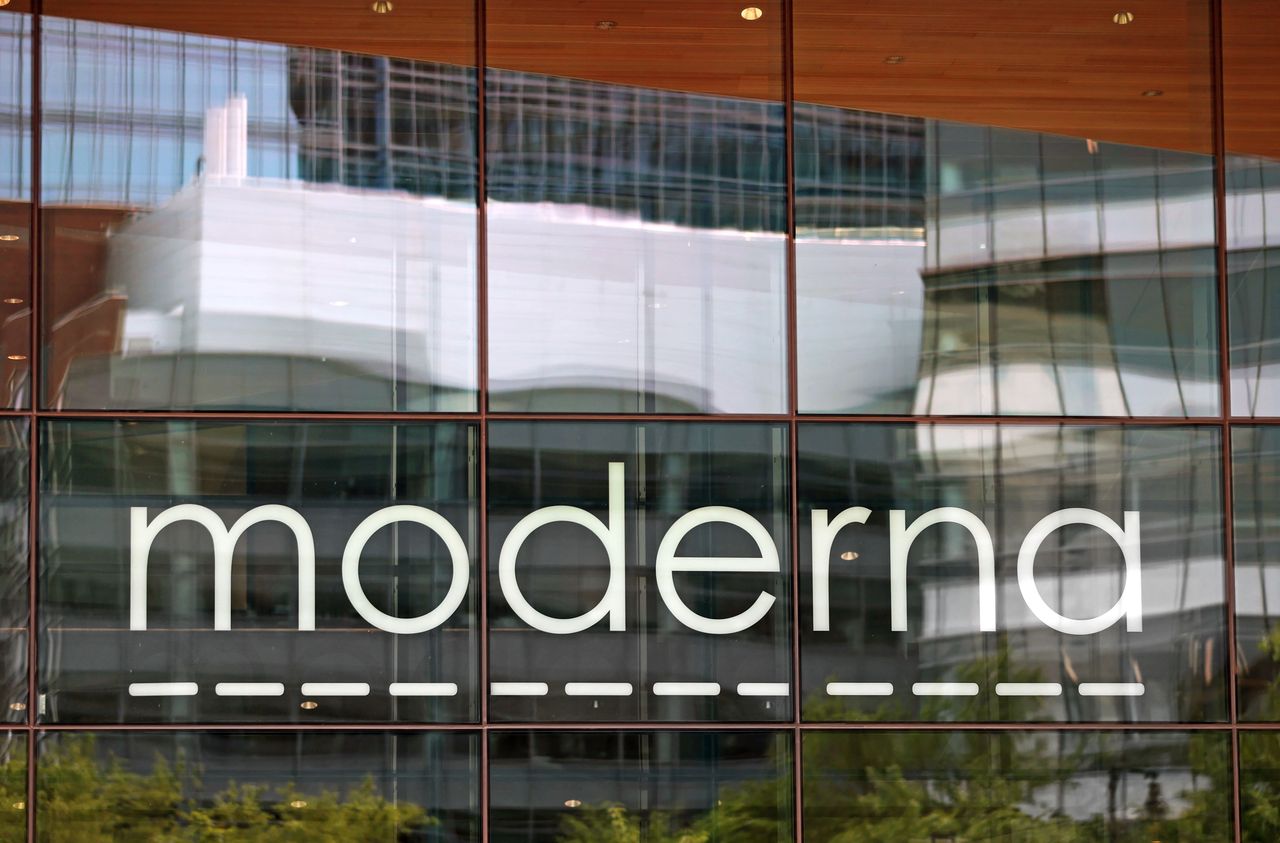
Moderna's shares rose to a fresh 52-week high ahead of a full Phase 3 melanoma presentation scheduled for Oct. 24 at the ESMO Congress. The move put an unusual gap between the market price and the caution embedded in analyst targets.
Goldman Sachs raised its target to $137 from $120 but kept a Neutral rating. At the roughly $238 share price reported by the source, the new target was about 42% lower. The target increase was therefore not a conventional bullish call. It acknowledged greater pipeline value while signaling that the recent rally had already priced in substantial success.
The central asset is intismeran autogene, also known as mRNA-4157 or V940, a personalized cancer vaccine developed with Merck's Keytruda. Moderna said in August that the Phase 3 study in resected high-risk melanoma met its primary endpoint of recurrence-free survival and the key secondary endpoint of distant metastasis-free survival.
Meeting an endpoint is important, but the full dataset determines how important. Investors need the hazard ratios, confidence intervals, follow-up duration, subgroup consistency, treatment discontinuations and adverse-event profile. A hazard ratio below 1.0 favors the combination, while the distance from 1.0 indicates the estimated size of the relative risk reduction. Confidence intervals show the precision of that estimate.
Goldman's analyst said a recurrence-free survival hazard ratio below 0.70 would be needed to support the share price. That is an analyst's valuation threshold, not a regulatory requirement. Regulators and physicians will consider the total evidence, including absolute event rates, durability, safety and clinical relevance.
The stock had gained about 66% over the month described by the source, helped by the positive topline result, a return to the Nasdaq-100 and reports of a public-private cancer-vaccine initiative. Those catalysts can amplify demand for shares before the medical details are known.
That makes the Oct. 24 presentation a validation event rather than merely another update. Strong, consistent and durable benefit could support a broader cancer-vaccine platform. A weaker effect size, wide uncertainty or difficult tolerability would challenge a valuation built on more than one indication.
The distinction is simple: Moderna has already said the trial succeeded statistically. The market now needs to learn how much patients benefited, how confidently that benefit was measured and whether the result can support adoption.
Latest comments