


 Be The Investor Research
Applied Materials plans to double output as chip factories expand
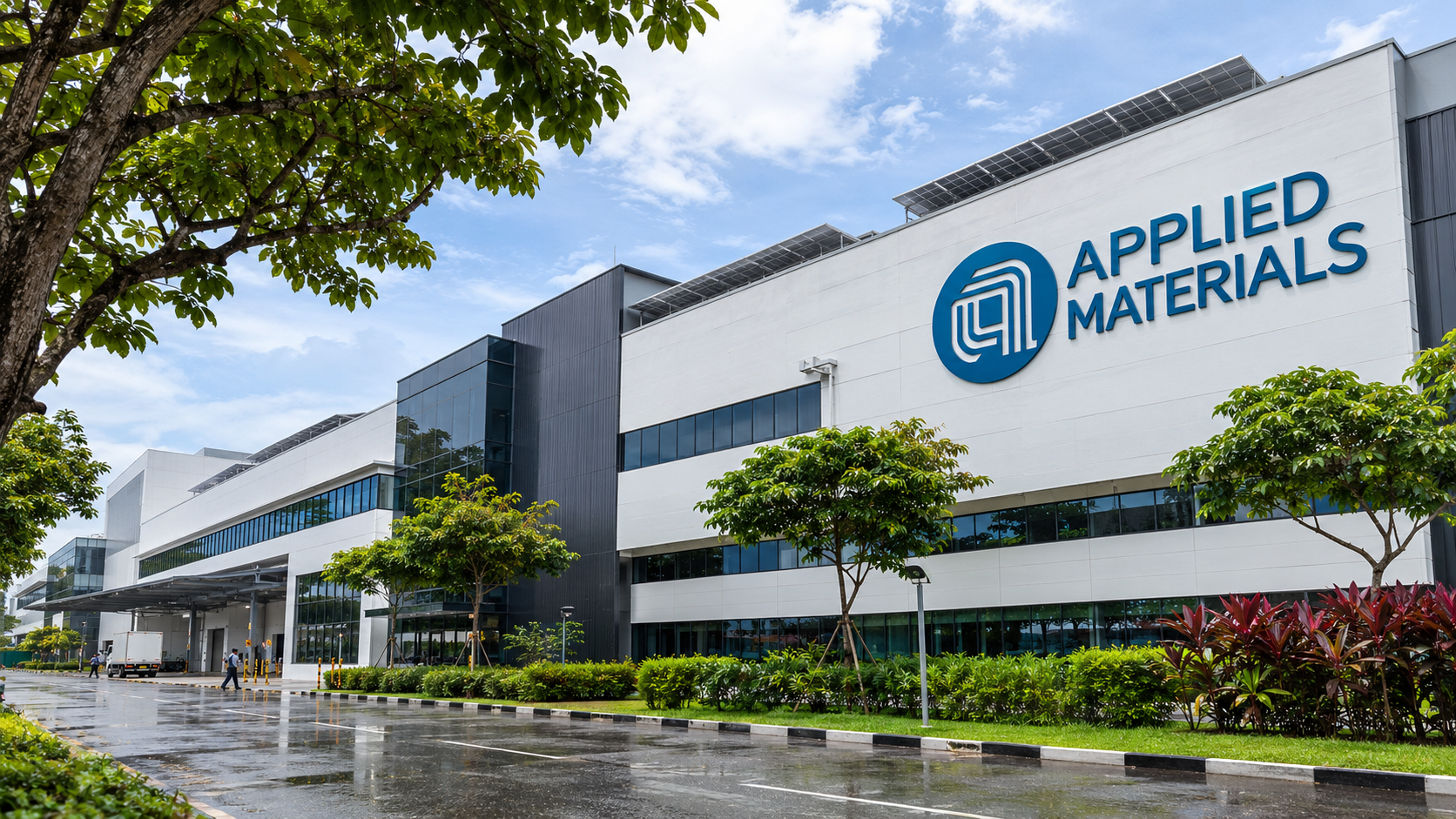
Applied Materials plans to double systems output from October-quarter levels by 2028. Lam Research and KLA also forecast higher sales, while ASML says its planned supply will fall short of customer demand.
Applied Materials plans to double systems output from its October-quarter level by 2028. Chipmakers are asking for more equipment, but toolmakers do not control how quickly their customers can build and prepare factories. That timing matters as Applied invests in capacity before it knows exactly when customers can put the extra machines to work.
Chief Executive Gary Dickerson said Applied expects spending on wafer fabrication equipment to rise more than 30% in calendar 2027. That is an estimate for the market, not Applied’s own revenue forecast. Management is tracking more than 20 factory ramps and expansions in 2027, with some customers asking to move deliveries forward. Tools need clean, climate-controlled space, power and other utilities before they can be installed. Some of the larger projects Applied tracks are not expected to come online until 2029 or 2030. Applied also aims to more than double its manufacturing and lab capacity by 2030, which is a separate target from doubling systems output by 2028.
The November 12 results showed both sides of the capacity problem. Revenue rose 53% to a record $10.41 billion for the quarter ended October 25. Adjusted earnings rose 92% to $4.16 a share and reported earnings were $3.40. Both revenue and adjusted earnings exceeded the estimates cited by TIKR. Applied’s January-quarter revenue forecast is $11.1 billion at the midpoint, plus or minus $500 million. That midpoint was below TIKR’s $11.41 billion consensus figure but above the $10.89 billion average Reuters cited from LSEG. The reports do not give enough comparable detail to reconcile those estimates. That fiscal quarter has 14 weeks rather than 13, so the higher quarterly forecast does not translate into faster sales per week on a simple average. October sales averaged about $801 million a week and the forecast implies about $793 million a week for January. The calculation does not adjust for shipment timing or product mix. Management said it could have sold slightly more with fewer supply constraints. Its $4.35 adjusted earnings midpoint was above the $4.25 consensus cited by TIKR.
Other equipment makers are seeing demand at different steps in chip production. Lam Research, which makes tools that deposit and remove material on wafers, forecast $8.60 billion of December-quarter revenue at the midpoint, up from $8.22 billion in its September quarter. KLA, whose tools help find defects and measure circuit features, forecast $4.7 billion at the midpoint, up from $4.14 billion. ASML, which makes the lithography machines that print those features, said its planned supply for both 2027 and 2028 would not meet all customer demand. It was looking at increasing 2028 capacity beyond a previously announced 30% expansion. These are different products and forecasts. An increase at one supplier does not establish that another can deliver or that a factory is ready for all of its tools.
TIKR reported that Applied shares fell about 6% in its November 13 snapshot and that at least ten firms cut targets. Summit Insights downgraded the stock to Hold, and Jefferies cut its target to $580 from $770 while keeping a Buy rating. Morningstar moved in the other direction, lifting its fair value estimate to $570 from $520 and arguing that concern about artificial intelligence spending was overdone. TIKR put Applied near 22 times expected earnings before the November 13 drop, close to its five-year average of 21 times and below its June peak of 49 times. Its consensus for fiscal 2027 adjusted earnings was about $18.75 a share, roughly 45% above fiscal 2026 adjusted earnings. Those are valuation snapshots and estimates, not sales the company has booked.
Building extra output makes sense if the factory schedules hold. If chipmakers defer those projects, manufacturers can be left carrying the cost of new capacity before it earns a return. The evidence to watch is whether chipmakers take delivery and install the machines on schedule, particularly where their fabs need several suppliers to be ready together.
Continue your LRCX research
Image references: · מקור ייחוס · מקור ייחוס
Frequently asked questions
What is "Applied Materials plans to double output as chip factories expand" about?
Applied Materials plans to double systems output by 2028. Lam and KLA forecast higher sales as ASML warns it cannot meet all expected demand.
Which stocks and assets does this article cover?
This article relates to LRCX, KLAC, ASML.
What is the market context?
Applied Materials plans to double systems output from its October-quarter level by 2028. Chipmakers are asking for more equipment, but toolmakers do not control how quickly their customers can build and prepare factories. That timing matters as Applied invests in capacity before it knows exactly when customers can put the extra machines to work. Chief Executive Gary Dickerson said Applied expects…
When was this article published?
It was published on 17 / 11 / 2026 by Be The Investor Research.