



Analog Devices' Upbeat AI Data Center Opportunity Views Noteworthy, Seaport Says in Upgrade

Seaport’s upgrade follows upbeat commentary from Analog Devices on its artificial intelligence data center opportunity, placing ADI’s potential exposure to AI infrastructure at the center of investor attention.
Analog Devices Inc. (ADI) received an upgrade from Seaport after offering upbeat remarks about its opportunity in artificial intelligence data centers. The commentary makes AI data center exposure the central investor focus. Seaport’s action suggests the firm considers Analog Devices’ remarks meaningful enough to support a more favorable view of the stock. For investors, the potential importance of AI data center demand to Analog Devices is the key takeaway. However, the available report provides no specific revenue figures, forecasts, product details, customer names or timing estimates. It therefore does not establish the opportunity’s scale or quantify its potential contribution to ADI’s financial results. Positive commentary may increase investor attention as AI-related data center demand influences expectations across the technology sector. Still, the upgrade should be viewed as an indication of improving sentiment rather than a detailed outlook for the company’s performance. Investors will need to distinguish between the strategic appeal of an AI data center opportunity and evidence of measurable business growth. The report identifies the opportunity as the principal catalyst behind Seaport’s upgrade, while leaving its magnitude unspecified.
Continue your ADI research
Related News

Pfizer's November 3 Report Must Separate Pipeline Progress From Decline
Pfizer reports on November 3 after raising 2026 revenue guidance. Investors must weigh 18% growth from launched and acquired products against lower COVID sales, a third-quarter research charge and a still-unproven late-stage pipeline.

OKX-ICE Adds More Stock-Token Objections as Venue Risks Stay Unsettled
An October 26 OKX-ICE notice reportedly lists 26 issuer objections, including IBM, Oracle and Intel. The opt-outs matter because the venue's exemption permits issuer objections and leaves important trading, custody and smart-contract protections unresolved.
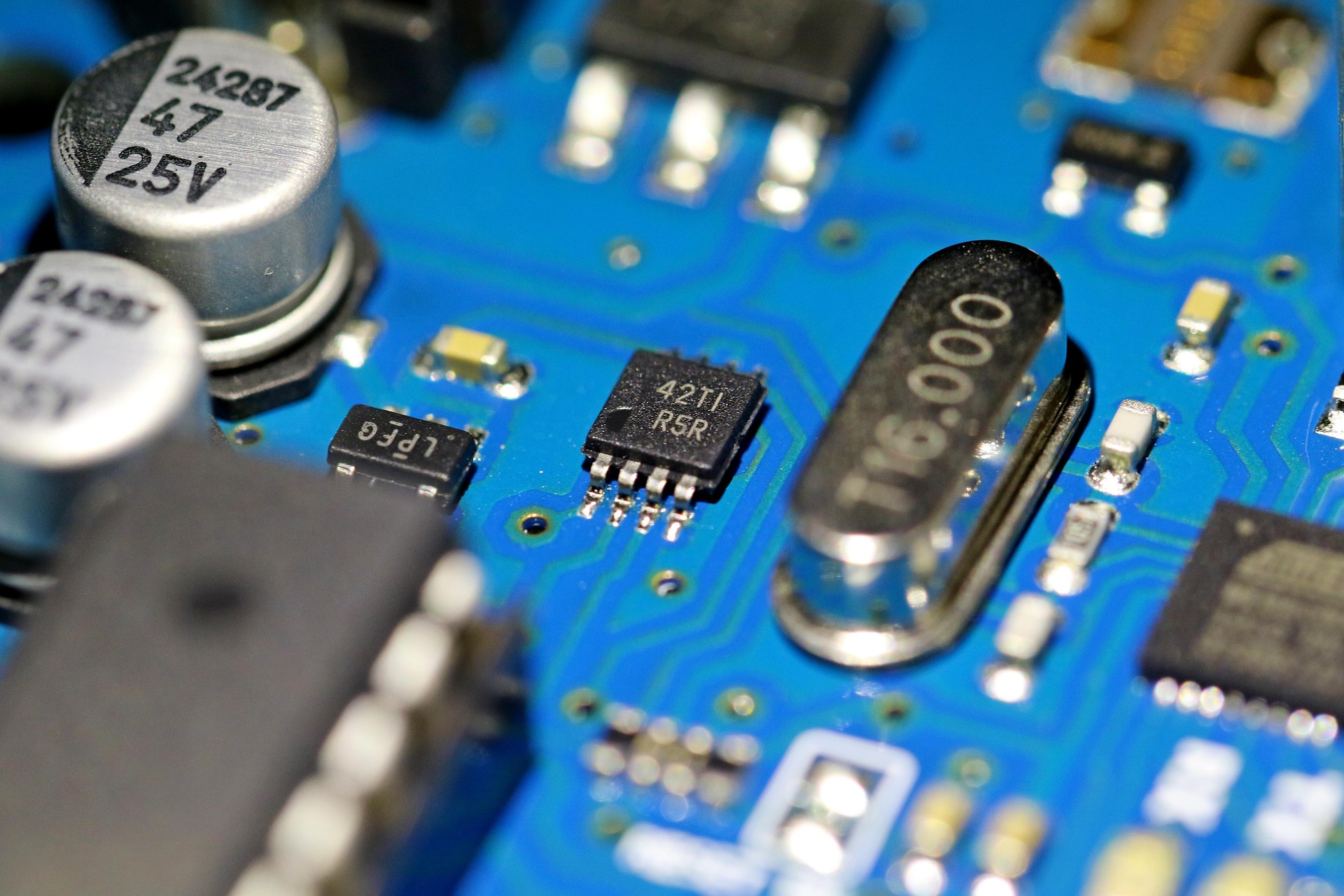
Intel's Data Center Rebound Still Depends on a Mostly Internal Foundry
Intel's data center sales jumped 59% in the June quarter, but outside customers supplied only about 5% of foundry revenue. The October 29 report must show whether manufacturing losses are shrinking as external demand develops.
Nvidia and TSMC Show the Same AI Boom Through Different Risks
Nvidia's fiscal second-quarter revenue doubled, while TSMC's latest quarter delivered 41% growth and a fast 2-nanometer ramp. The results confirm strong AI demand but expose different constraints in products, customers and manufacturing.

Apple Offers iPhone Duo Replacements as Inner Screens Crack
Apple says a small number of iPhone Duo units have inner-display problems and directs affected buyers to AppleCare for replacements. The immediate risk is customer disruption, while the defect's cause, scale and financial cost remain unknown.
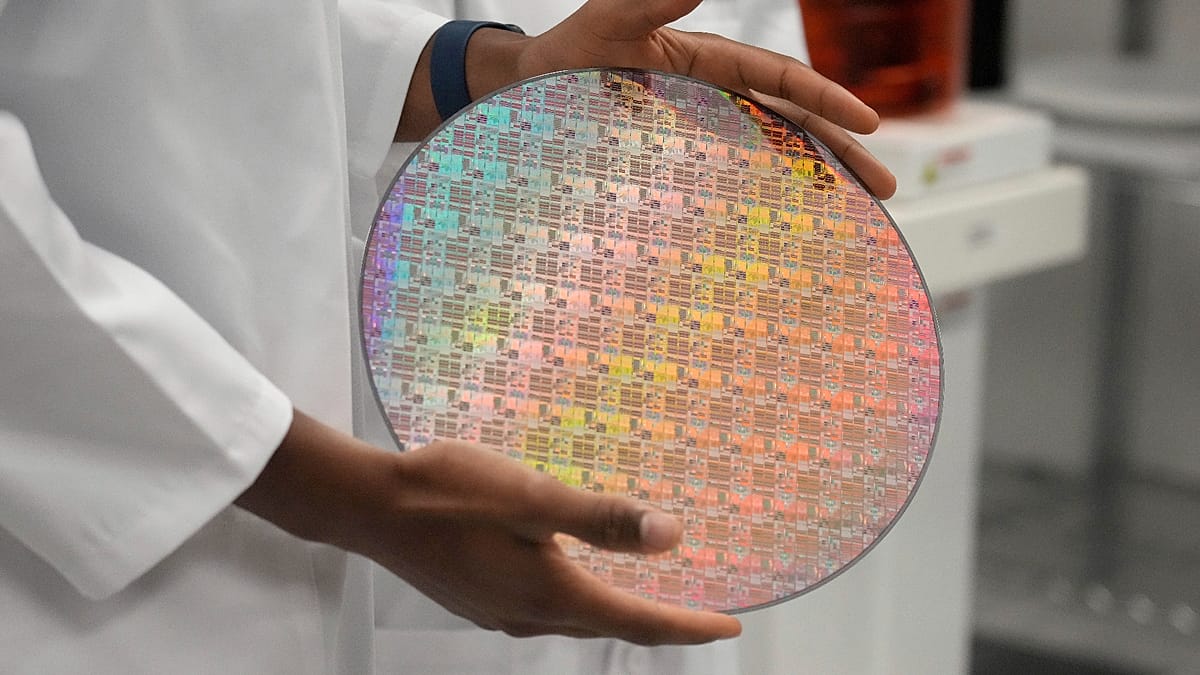
Applied Materials Doubles Down on Besi as Hybrid Bonding Demand Rises
Applied Materials plans to lift its Besi stake from 9% to about 20%, subject to U.S. antitrust review. The minority investment deepens a packaging partnership just as Besi's hybrid-bonding orders are accelerating.
Costco's Cash Engine Is Strong, but Growth Is Getting More Expensive

Costco ended fiscal 2026 with enough operating strength to justify its defensive reputation, but the next phase will require more capital and continued loyalty from members. Net sales rose 10.1% to $297.2 billion, while membership-fee revenue increased 11% to $5.91 billion.
The membership base remains the center of the model. Costco reported renewal rates of 92.3% in the United States and Canada and 89.8% worldwide at the end of the fiscal year. The original analysis also noted that paid executive memberships reached 42.3 million and digitally enabled comparable sales rose 19.5%. Those measures matter because executive members spend more and digital growth broadens Costco's reach without changing its warehouse-led economics.
Cash generation gives the company room to expand. Operating cash flow reached $15.82 billion and capital spending totaled $6.44 billion. Subtracting the latter from the former produces approximately $9.38 billion of free cash flow, a BTI calculation that closely matches the source's $9.39 billion figure. Management plans roughly $7.5 billion of fiscal 2027 capital spending and up to 33 warehouse openings, including five relocations.
That expansion is not risk-free. More warehouses can support sales and membership growth, but they also raise the amount of capital committed before new locations mature. Costco opened 28 warehouses, including three relocations, in fiscal 2026. Its fiscal 2027 plan therefore represents a faster gross opening pace and a larger cash commitment.
The valuation is the harder part of the case. The source analysis put Costco at about 48 times trailing earnings and 40 times forward earnings near $1,005 a share. Those are third-party valuation measures, not company guidance. They imply that investors are already paying for steady mid-single-digit comparable sales, high renewal rates and successful expansion.
Costco does not need spectacular growth to remain a strong business. It does need to prevent slower member growth, higher inventory costs or weaker comparable sales from colliding with a premium multiple. The most useful fiscal 2027 signals will be renewal rates, membership-fee growth, comparable sales excluding gasoline and the cash return from the larger warehouse program.
CoreWeave and Nvidia Show Two Very Different Costs of AI Demand
CoreWeave and Nvidia are benefiting from the same surge in AI computing demand, but their latest accounts show very different ways of carrying that growth. Nvidia sells the computing platform and produces cash. CoreWeave builds and finances data centers before contracted capacity begins generating revenue.
CoreWeave's second-quarter revenue rose 112% from a year earlier to $2.575 billion, and revenue backlog reached about $104 billion. That backlog is substantial, but the company defines it to include remaining performance obligations and estimated future revenue under committed contracts, subject to delivery and service availability. It is evidence of demand, not cash in the bank.
The cost of converting that demand into running infrastructure is visible in the cash-flow statement. CoreWeave produced $679 million of operating cash in the quarter and spent $6.422 billion on property and equipment. Subtracting those figures gives negative free cash flow of $5.743 billion, a BTI calculation that matches the scale cited in the source analysis. Net interest expense rose to $640 million from $267 million a year earlier, and the company reported a $626 million net loss.
CoreWeave's balance sheet reinforces the point. At June 30 it had about $35.1 billion of recourse and non-recourse debt, using the current and long-term amounts in its filing, against $5.0 billion of stockholders' equity. Cash and cash equivalents were $5.5 billion, while property and equipment had climbed to $46.7 billion. The business can grow rapidly, but it must keep financing construction and hardware while new sites ramp.
Nvidia's fiscal second quarter looked different. Revenue reached $96.221 billion, up 106%, and data-center revenue was $89.0 billion. Gross margin was 75%, operating cash flow was $24.1 billion and free cash flow was about $21.3 billion. Nvidia is not free of financing risk, however. Its filing disclosed maximum gross guarantee exposure of $108.5 billion, mostly tied to an SB Energy site under long-term leases to OpenAI, and accounts-receivable days rose to 60 from 45 because of extended terms for some investment-grade customers.
That distinction matters. Nvidia's guarantees show that even a highly profitable chip supplier is helping make large infrastructure projects financeable. But the $105 billion SB Energy guarantee is not a CoreWeave obligation, and it should not be used as direct evidence that Nvidia guarantees CoreWeave's debt. CoreWeave's own risk is clearer in its interest expense, leverage and construction cash burn.
For CoreWeave investors, the next proof point is not backlog growth alone. It is whether new deployments lift adjusted operating margins and operating cash faster than interest and capital spending rise. For Nvidia investors, the watchpoint is whether longer payment terms and guarantees remain small relative to cash generation. AI demand is strong for both companies, but the supplier and the infrastructure borrower absorb that demand on very different balance sheets.
Nvidia's $3 Billion Meta Investment Deepens a Powerful Customer Tie
Nvidia is putting $3 billion into Meta's equity offering while the companies expand their work on Meta's Muse artificial-intelligence models. The investment is more than a financial placement: Meta also plans to deploy additional Nvidia Vera Rubin systems, Vera CPUs, Spectrum-X Ethernet networking and BlueField-4 technology across its data centers.
The transaction needs precise framing. Nvidia said it will invest $3 billion, but its release described the investment as proposed and subject to closing conditions. Meta launched concurrent offerings of Class A common stock and depositary shares representing mandatory convertible preferred stock. Meta later priced $25 billion of Class A shares at $625 each and 250 million depositary shares at $50 each, for a combined $37.5 billion before any over-allotment options.
On those announced amounts, Nvidia's commitment equals 12% of the $25 billion common-stock offering and 8% of the combined offerings. Those percentages are BTI calculations. Meta expects about $24.9 billion of net proceeds before expenses from the common-stock transaction, but the structure uses forward sale agreements that Meta expects to settle on or before November 19, 2027. Investors should not treat the entire amount as immediate cash already received.
The industrial logic is straightforward. Nvidia gets a closer relationship with one of the world's largest buyers of AI infrastructure, while Meta gets capital and engineering support for Muse. The companies said they will work on training and inference efficiency, total cost of ownership and agent security. For Nvidia, the relationship could reinforce demand across compute, networking and data-processing products rather than only GPUs.
The financial relationship also deserves scrutiny. Nvidia generated about $21.3 billion of free cash flow in its fiscal second quarter, calculated from $24.1 billion of operating cash flow less property and equipment purchases. The $3 billion commitment is therefore meaningful but manageable, equal to about 14% of that quarter's free cash flow. Nvidia also ended the quarter with $56.6 billion of cash, cash equivalents and marketable debt securities.
The harder question is whether supplier investments are helping finance demand for the supplier's own products. That does not make the demand artificial, but it can blur the line between an independent customer order and an ecosystem supported by Nvidia capital. Meta's share issuance also dilutes existing holders when the forward contracts settle, while the preferred securities add a 6.5% dividend obligation.
The clearest investor test is execution. If Muse adoption and Meta's infrastructure deployment generate durable workloads, Nvidia's $3 billion investment can strengthen a major customer relationship and support sales across several product lines. If the spending does not produce adequate returns, Nvidia will have used shareholder capital to deepen exposure to a customer's high-cost buildout. The partnership is strategically important, but the economics still depend on Meta converting new compute into useful, revenue-producing services.
Visa's Record Run Faces an Earnings Test on Costs and Regulation

Visa enters its fiscal fourth-quarter report with a demanding combination: the shares are close to a record, transaction growth remains healthy, and costs have recently risen faster than revenue. The company is scheduled to release fiscal 2026 results after the market closes on October 27, followed by a 5 p.m. Eastern call.
The latest reported quarter gives investors a useful starting point. Fiscal third-quarter net revenue rose 14% from a year earlier to $11.6 billion. Payments volume increased 9% on a constant-dollar basis, while processed transactions grew 10% to 71.7 billion. Value-added services revenue, which includes products beyond the core network toll, rose 33% to $3.8 billion. Those figures show that Visa was still benefiting from both payment activity and faster growth in adjacent services.
The pressure point was spending. GAAP operating expenses increased 19% in the quarter, and adjusted operating expenses rose 17%, both faster than revenue. Visa attributed much of the increase to personnel and marketing, including FIFA World Cup campaigns. For the first nine months of fiscal 2026, net revenue rose 15% while adjusted operating expenses increased 17%. The fourth-quarter report therefore needs to show whether that gap was temporary or the start of a less favorable cost trend.
Valuation makes the answer more important. Visa's investor-relations quote showed a closing price of $407.92 on October 26, compared with a 52-week high of $414.60. TIKR's source analysis said the shares traded at roughly 28 times forward earnings, slightly above their five-year average, and cited analyst estimates of $13.23 in normalized fiscal 2026 earnings per share and $15.02 for fiscal 2027. Those are third-party estimates, not company guidance, but they show how much continued growth is already assumed.
Regulation remains the second test. Proposals to require large credit-card issuers to offer merchants a choice of payment networks could increase routing competition and pressure network economics. The proposal's enactment and timing remain uncertain, so investors should treat it as a risk rather than a completed change. What management says about pricing, client incentives and competitive routing matters more than a headline political claim.
A strong report would combine continued high-single-digit payment growth with expense growth moving back below revenue growth. If management instead leans heavily on pricing while costs stay elevated, the current valuation leaves less room for disappointment. The quarter is not just an earnings test; it is a test of whether Visa can preserve its operating leverage while the rules around card routing remain unsettled.
UPS Raises Its 2026 Outlook as Better-Priced Shipments Lift Revenue
UPS raised its 2026 outlook after third-quarter revenue grew across all three business segments, giving investors evidence that its shift toward better-priced shipments and a more efficient network is improving the top line. The quarter also exposed a weak point: Supply Chain Solutions produced much less profit despite sharply higher revenue.
Consolidated revenue increased 6.7% to $22.9 billion. Reported operating profit was $1.7 billion, while adjusted operating profit was $2.1 billion. Reported diluted earnings were $1.37 per share and adjusted earnings were $1.69.
The gap between reported and adjusted earnings reflected a $279 million after-tax net charge, equal to $0.32 per share. UPS said that amount included $130 million of transformation costs and a $182 million goodwill impairment in Supply Chain Solutions, partly offset by a $33 million gain from selling MD-11 assets.
Pricing did more work than volume in the core networks
U.S. Domestic revenue rose 4.5% to $14.87 billion as revenue per piece increased 6.1%. Adjusted operating profit reached $1.03 billion, up from $905 million a year earlier, and adjusted margin improved to 7.0% from 6.4%.
International revenue increased 7.1% to $5.01 billion, supported by a 15% increase in revenue per piece. Adjusted operating profit rose to $746 million from $691 million, while adjusted margin edged up to 14.9%.
These results support management's strategy of favoring higher-quality revenue rather than maximizing package count. Revenue per piece can rise through customer mix, service levels and fuel surcharges, so investors should continue to distinguish pricing from underlying shipment volume.
Supply Chain Solutions remains the exception
Supply Chain Solutions revenue jumped 18.2% to $2.98 billion as forwarding, logistics and healthcare activity grew. Adjusted operating profit nevertheless fell to $274 million from $536 million. Reported operating profit was only $92 million after the goodwill impairment and other adjustments.
The segment's combination of higher sales and lower profit points to a mix or cost problem that consolidated growth can hide. Improvement there would make the companywide outlook more credible.
UPS now expects full-year revenue of about $92.6 billion, adjusted operating profit of about $8.75 billion, adjusted earnings of about $7.28 per share and adjusted free cash flow of about $6.1 billion. It kept capital spending near $3 billion and expects about $5.4 billion of dividends, subject to board approval.
The raised outlook is a positive signal before the holiday season. The next test is whether domestic margin improvement persists and whether Supply Chain Solutions can turn its revenue growth into profit rather than another impairment or adjustment.
Latest comments