 Be The Investor Research
Cleveland-Cliffs' Strongest Quarter in Three Years Shifts Attention to 2027 Contracts
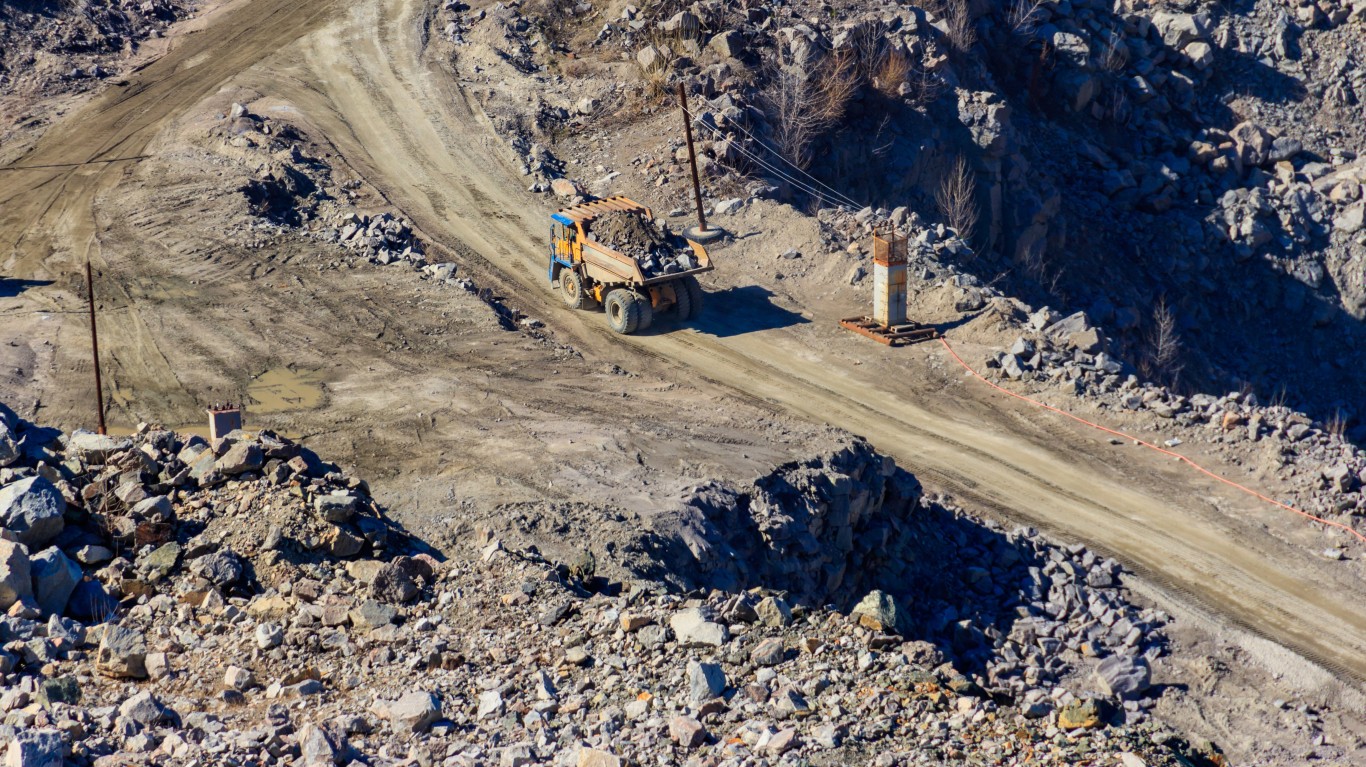
Cleveland-Cliffs delivered $612 million of adjusted EBITDA and guided to $715 million for the fourth quarter. Contract resets now carry the burden of supporting a much larger 2027 profit outlook.
Cleveland-Cliffs reported its strongest quarter in three years, with third-quarter adjusted EBITDA of $612 million, more than double the second quarter's $286 million. Management expects about $715 million in the fourth quarter and more than $4 billion in 2027, making newly negotiated customer contracts the center of the investment case.
Pricing drove the improvement
Third-quarter revenue was $5.61 billion. Average net selling price increased from the second quarter, helping adjusted EBITDA exceed the company's prior $575 million outlook. The quarter also produced adjusted earnings of $0.28 per share.
The fourth-quarter forecast assumes that additional pricing benefits will outweigh normal seasonality, maintenance outages, input costs and incentive compensation. That is a meaningful claim because steel profits can reverse quickly when prices soften or utilization falls.
Contracts are the bridge to 2027
Cleveland-Cliffs said customer negotiations outside automotive had produced take-or-pay commitments for a majority of participating clients. These provisions require customers to purchase agreed volumes or make specified payments, which can improve revenue visibility.
The contracts support management's 2027 adjusted EBITDA expectation of more than $4 billion. That figure is not GAAP net income, and the company said it could not reconcile the forecast without unreasonable effort because future comparability items are uncertain. Investors should therefore treat the number as an operating target with forecasting risk.
Balance-sheet improvement still matters
Cleveland-Cliffs ended September with $3.2 billion of liquidity. Management has ruled out a new share issuance and is targeting net leverage below 2.5 times adjusted EBITDA by mid-2027.
Stronger earnings can reduce leverage, but the calculation depends on the same EBITDA forecast investors are trying to test. Cash conversion, capital spending and working capital are therefore as important as the adjusted profit figure.
What the selloff misses
A one-day decline after an earnings rally can reflect profit-taking, but price action does not prove the quarter was weak or the forecast is safe. The better question is whether realized selling prices and contract volumes produce the cash flow implied by the guidance.
The third quarter establishes real operational improvement. The fourth quarter must confirm that the pricing benefit survives seasonal pressure, and 2027 must show that take-or-pay contracts convert into durable EBITDA and lower leverage. Those are measurable checkpoints, unlike a narrative built around a single day's share move.
Related News

Constellation Brands Must Prove Its Beer Rebound Is Real Demand
Constellation's sales returned to growth, but distributor restocking helped the quarter. Shipments and consumer depletions must converge for the rebound to be durable.

Magic Drives Hasbro's Earnings Beat, but Concentration Is Rising
Hasbro raised its outlook after Magic: The Gathering topped $600 million in quarterly revenue. The franchise's strength boosts cash flow while increasing dependence on release execution.

Exxon's October 30 Report Will Test Guyana Growth and Recovery Elsewhere
Exxon reports third-quarter results on October 30 with Guyana expansion advancing and disrupted production still a risk. Cash generation, project timing and capital returns matter more than any single headline number.

Intel's October 29 Report Must Turn Optimism Into Foundry Evidence
Intel enters its third-quarter report after a sharp share-price pullback and an aggressive analyst target. The investment case rests on revenue, margins and foundry milestones, not the target itself.

Netflix's Strong Quarter Meets a Softer Advertising Reality
Netflix delivered double-digit revenue growth and a record operating margin, but its reduced advertising outlook and fourth-quarter cost pressure shifted investor attention from subscriber momentum to monetization execution.
Stanley Black & Decker’s Margin Recovery Includes a Refund Tailwind
Stanley Black & Decker’s adjusted gross margin reached 33.7%, but about 250 basis points came from tariff refunds, making the underlying recovery less dramatic.
Steel Dynamics’ Record Steel Quarter Could Not Hide Aluminum Losses

Steel Dynamics delivered record steel shipments in the third quarter, yet investors focused on a new aluminum business that remained loss-making.
Revenue reached $6.51 billion and adjusted earnings were $5.26 a share. That was below the company’s September guidance of $5.34 to $5.38 and below the consensus cited in the original analysis. A roughly $14 million revenue shortfall received attention, but the segment mix explains more than the headline miss.
Steel operations generated about $1.03 billion of operating income, up 43% from the prior quarter. Shipments reached a record 3.8 million tons. The average external steel selling price rose to $1,400 a ton while the average scrap cost increased to $404, leaving an indicated spread of $996 a ton. That spread widened from the second quarter rather than narrowing.
The aluminum segment was the weak point. It recorded a $26 million operating loss, improving 21% sequentially, and reached adjusted EBITDA break-even. Shipments were 55,000 metric tons, while hot-band production was 91,000 metric tons. Management’s challenge is to raise utilization, qualify more products with customers and convert fixed startup costs into profitable volume.
This distinction matters because the core steel franchise is not showing the same economics as the aluminum ramp. Treating the quarter as a broad deterioration would miss the record shipments and stronger steel operating income. Treating it as a clean beat would ignore the earnings miss and the capital still tied up in a new platform.
Cash generation remained substantial. Steel Dynamics reported $846 million of operating cash flow and $756 million of net income. It repurchased $276 million of stock during the quarter. Those figures give management room to support the aluminum ramp, but they also increase the importance of clear return targets.
The investment question is now one of duration. A temporary aluminum loss during customer qualification is manageable. A prolonged gap between production and profitable shipments would dilute returns from an otherwise strong steel cycle.
Steel Dynamics needs to show sequential progress in aluminum shipments, margins and working-capital efficiency. Until then, the company’s record steel volume and its aluminum startup should be valued as two different businesses with very different near-term risk.
GE Aerospace Raised Its 2026 Outlook, but the Fourth Quarter Looks Softer

GE Aerospace reported the kind of third quarter that usually supports a stock: adjusted revenue of $13.29 billion topped the cited $12.88 billion estimate, and adjusted earnings of $2.25 a share beat the $2.02 consensus. Orders jumped 49%, adjusted operating profit rose 30% and margin expanded 220 basis points to 22.5%.
Management responded by raising its 2026 adjusted earnings outlook to $8.00 to $8.10 a share from $7.65 to $7.85. The business also generated $2.0 billion of free cash flow in the quarter, while backlog exceeded $170 billion. Those figures show strong commercial demand and provide substantial visibility for engine deliveries and long-term service work.
The market’s hesitation came from what the new annual range implies for the final quarter. After the first nine months, the guidance points to roughly $1.87 to $1.97 of fourth-quarter adjusted earnings per share, below the cited consensus of about $2.04. That calculation is an implication of the full-year range, not separate company guidance, but it explains why a raised annual forecast can coexist with a cautious share reaction.
There is also a 2027 investment issue. GE expects the GE9X program to create about a $300 million profit headwind next year as it prepares the engine for wider commercial service. The spending supports a potentially valuable long-cycle platform, but the near-term cost arrives before the full service revenue stream. Investors therefore need to distinguish strong current demand from the timing of future program economics.
Orders are especially important because GE Aerospace makes money not only when an engine is delivered but also through maintenance over years of operation. A backlog above $170 billion is evidence of future work, although supply-chain execution and production timing determine when that demand becomes revenue and cash. The third quarter’s margin expansion suggests GE is converting current volume well, while the order increase extends the opportunity.
The report was fundamentally strong, but the quarter did not remove every timing concern. The immediate test is whether fourth-quarter earnings land near the implied range without weakening cash generation. Beyond that, investors should watch GE9X milestones and whether the 2027 investment produces the expected installed-base growth. GE’s raised outlook improves the 2026 picture, while the softer implied fourth quarter and next year’s program spending keep the story from being a simple beat-and-raise.
Intuitive Surgical’s Earnings Beat Could Not Hide a U.S. Slowdown

Intuitive Surgical delivered a third-quarter earnings beat, yet the stock fell because the details pointed to weaker economics in its most important recurring business. Adjusted earnings were $3.00 a share on revenue of $3.05 billion, above cited consensus estimates of $2.65 and $2.91 billion. The headline beat was not the issue. The mix of procedure growth and planned pricing was.
U.S. da Vinci procedure volume rose 10%, while international procedures increased 20%. That divergence matters because the United States is Intuitive’s largest and most developed market. A slower domestic pace can limit the growth of instruments and accessories, which are purchased for each procedure and form a recurring revenue stream around the installed robot base.
Management also plans to reduce instrument and accessory revenue per procedure by roughly 3% to 5% at constant mix once the changes are fully implemented by the end of 2027. Lower prices may support adoption and customer economics, but they also require more procedure growth to produce the same revenue. The market reaction suggests investors are recalculating that trade-off rather than questioning demand for robotic surgery itself.
The quarter also included a $450 million pretax charge tied to an antitrust settlement. GAAP net income fell to $523 million, or $1.49 per diluted share, from $1.95 a year earlier. That charge is distinct from operating demand, but it cannot be ignored when assessing reported profit and cash claims. Adjusted earnings exclude the item, which explains part of the gap between the strong adjusted result and weaker GAAP comparison.
Intuitive maintained a full-year procedure growth outlook of 14% to 15%. That guidance still implies healthy system use, and the 20% international increase shows expansion outside the United States. The tension is that investors have valued Intuitive partly for predictable recurring growth, so a domestic slowdown plus lower revenue per procedure changes the slope of that model even if total procedures keep rising.
The next useful checks are U.S. procedure growth, the pace of international expansion and management’s implementation timeline for the price reductions. Investors should also compare reported and adjusted profit separately because the settlement charge is material but not a recurring measure of surgical demand. The quarter did not break Intuitive’s business model. It did show that continued volume growth will have to work harder to offset softer domestic momentum and lower pricing.
Northrop's Record Backlog Supports Growth, but Program Risk Still Matters

Northrop Grumman's third-quarter results gave Baird two reasons to upgrade the stock: stronger near-term earnings and unusually deep revenue visibility. The firm raised Northrop to Outperform from Neutral and increased its price target to $675 from $550 after the defense contractor reported a quarterly beat and lifted guidance.
Sales increased 7% from a year earlier to $11.122 billion. Diluted earnings per share rose to $7.89 from $7.67, while net awards of $16.4 billion pushed total backlog to a record $109.6 billion. The backlog is roughly two and a half times the company's expected 2026 sales range, although backlog is not the same as immediately recognized revenue.
Guidance moved higher
Northrop increased its mark-to-market-adjusted 2026 earnings outlook to $29.35 to $29.75 per share from $28.60 to $29.10. It also raised segment operating income guidance to $4.94 billion to $5.04 billion. For 2027, management expects 5% to 7% sales growth, with expansion across all four operating segments.
The composition of the quarter supports that outlook. Demand for munitions, missile defense, sensors and aircraft remains strong, and international defense budgets are adding to the order pipeline. Aeronautics sales rose 14%, while defense systems grew 12%, according to reporting on the results.
Backlog helps, but execution determines profit
A large backlog reduces demand uncertainty, yet it does not remove cost risk. Total operating margin slipped to 11.4% from 11.9%, and segment operating margin eased to 12.1% from 12.3%. Long-duration defense programs can still produce charges when labor, materials or engineering costs exceed assumptions.
Baird cited unchanged cost assumptions on major franchise programs and a lower perceived risk of a large near-term charge on the B-21 program. That is encouraging, but it remains an analyst judgment rather than a company guarantee.
Northrop also advanced the Sentinel missile program, completing the first full vertical assembly of an inert missile and receiving Air Force approval for design maturity ahead of a planned 2027 flight.
The record backlog and higher guidance make the upgrade understandable. The investment case now turns on converting awards into sales while holding program costs in line. If margins stabilize as revenue grows in 2027, the backlog can support the rerating. If major programs require new charges, the same long duration that provides visibility can delay the payoff.
GM’s $20 Billion Buyback Could Not Outrun a Flat Profit Midpoint

General Motors delivered a third-quarter earnings beat and authorized a new $20 billion share repurchase program, but investors focused on what did not improve: the midpoint of the company’s full-year profit outlook.
GM reported third-quarter 2026 revenue of $50.0 billion, net income attributable to stockholders of $3.3 billion and adjusted EBIT of $4.1 billion. Adjusted earnings were $3.70 a share. The company narrowed its full-year adjusted EBIT forecast to $14.5 billion to $15.5 billion from $14 billion to $16 billion. The midpoint stayed at $15 billion.
That distinction explains much of the negative market reaction. A tighter range reduces uncertainty, but it is not an upgrade. The narrowed adjusted EPS range of $12.75 to $13.75 similarly kept a $13.25 midpoint, below the level some investors expected after a strong quarter.
Cash generation was the cleaner positive. GM raised its adjusted automotive free cash flow outlook to $11.5 billion to $12.5 billion. The board’s multiyear repurchase authorization follows completion of a prior $6 billion program, and the company also declared an $0.18 quarterly dividend. If operating cash flow holds, buybacks can reduce the share count materially.
The challenge is that 2027 cost pressures are becoming more visible. Management pointed to commodity inflation, including copper, steel and memory chips, along with logistics and supply-chain expenses. Planned production changes ahead of redesigned full-size pickups could also reduce near-term volume. International operations were weaker, while China remained competitive.
North America still carried the quarter. Adjusted EBIT in the region rose to roughly $3.6 billion, supported by profitable trucks and disciplined incentives. That concentration is both GM’s advantage and its vulnerability: large pickups fund the business, so cost inflation or a softer consumer can move profit quickly.
The buyback supports per-share value, but it does not remove the operating risk from commodity inflation, production changes and weaker international markets. The next decisive evidence will be GM’s 2027 outlook, particularly expected pickup volumes, pricing and the amount of higher input costs that can be offset through productivity. Until then, the selloff reflects a reasonable demand for proof that this quarter’s cash strength can survive a tougher cost environment.
Latest comments